When a welded metal assembly needs both dimensional accuracy and dependable sealing, the welding process cannot be selected only by considering production speed. Material type, wall thickness, joint design, heat input, deformation risk, and inspection requirements all affect the final result. For components used in industrial equipment, pressure systems, machinery housings, and structural assemblies, these factors become especially important.
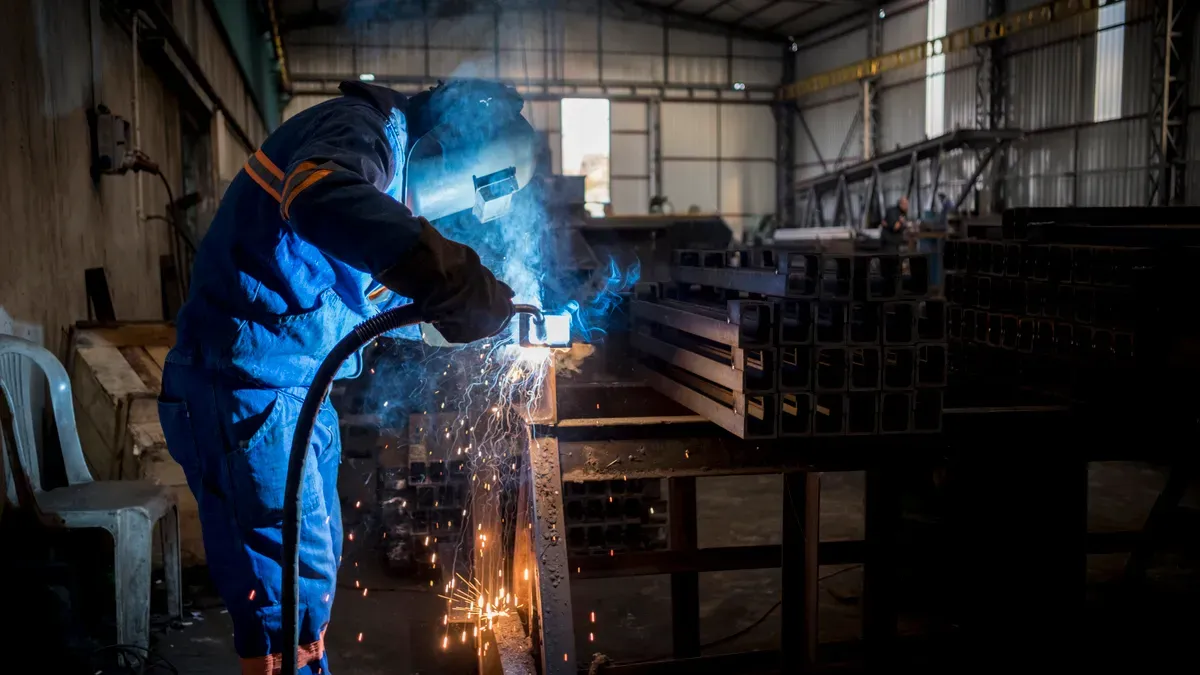
TIG Welding is well suited to applications where controlled heat input, clean weld appearance, and accurate joint formation are important. By using an argon-based shielding environment and a controlled arc, TIG welding can produce stable welds on materials such as stainless steel and aluminum while giving manufacturers better control over the weld zone.
For OEM customers, however, good welding is only one part of the process. The finished assembly may also require straightening, machining, leak testing, surface treatment, and dimensional inspection. A supplier capable of managing these operations together can reduce handoffs and make quality control easier.
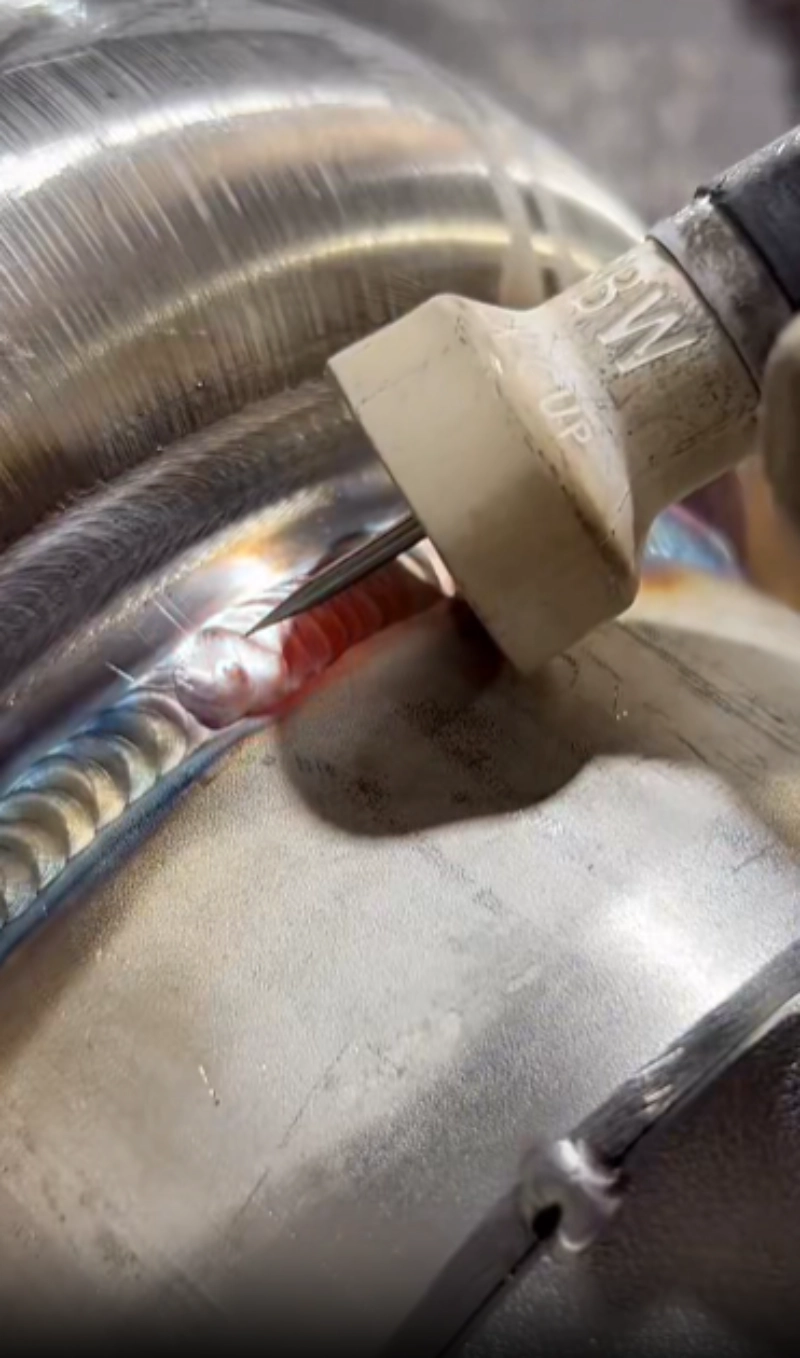
TIG welding is commonly selected when weld quality and control are more important than simply maximizing deposition speed. The process allows the operator to carefully control the arc and filler material, which is useful for relatively thin sections, visible welds, precision brackets, housings, and assemblies with demanding joint requirements.
This is particularly relevant when stainless steel or aluminum components need to maintain their functional dimensions after welding. Excessive heat can cause distortion, making later machining or assembly more difficult. Proper process selection, fixture design, welding sequence, and post-weld straightening can help control these issues.
For custom OEM assemblies, TIG Welding can therefore be integrated into a broader manufacturing workflow rather than treated as an isolated operation.
Stainless steel is widely used where corrosion resistance, cleanliness, and long service life are required. Typical welded products include equipment housings, brackets, fluid-handling components, frames, and protective enclosures.
TIG welding provides a controlled process for stainless steel joints, particularly when the weld will remain visible or when the assembly has relatively thin sections. A properly prepared joint and suitable welding parameters help reduce common problems such as excessive heat distortion, surface contamination, and inconsistent weld formation.
Hehua supports TIG welding for 304 and 316 stainless steel, as well as other metal materials. Material certificates and traceability can be provided for projects that require documented material control.
After welding, components can proceed through straightening, deburring, machining, and surface finishing according to the product requirements. This is useful for customers who need a finished assembly rather than a welded component requiring additional processing from another supplier.
Aluminum presents different welding challenges from stainless steel. Its thermal characteristics can make heat management particularly important, especially when welding thin or precision components.
For aluminum alloy parts, the welding process needs to account for material thickness, joint geometry, fixture stability, and the required appearance of the finished weld. Proper preparation and parameter control can help reduce distortion and maintain the dimensional relationship between connected components.
Aluminum is often selected for equipment parts where weight reduction is important. Depending on the application, welded aluminum assemblies may be used for lightweight housings, brackets, equipment structures, and other fabricated components.
When an aluminum assembly requires subsequent machining, maintaining the required geometry after welding is especially important. Post-weld straightening and dimensional inspection can therefore be incorporated into the production process.
Not every welded part needs to be airtight, but leakage control becomes critical for pressure-related housings, pipe assemblies, fluid equipment, and sealed enclosures.
For these applications, weld quality must be evaluated beyond visual appearance. Porosity, cracks, incomplete fusion, or other weld defects can potentially compromise the sealing performance of the assembly.
Hehua's welding service includes air and water tightness testing for pressure parts. Pressure-related assemblies can also be supported with nondestructive testing such as magnetic particle testing, ultrasonic testing, and hydrostatic testing when required by the project.
This approach allows the welding process and inspection requirements to be considered together. Instead of simply delivering a welded structure, the manufacturer can provide inspection records that correspond to the customer's technical requirements.
Even a properly executed weld can introduce residual stress and deformation. This becomes more noticeable in large frames, thin sheet metal assemblies, precision brackets, and components with long welded seams.
For OEM projects, distortion control should begin before production. Joint design, welding sequence, fixture fabrication, material thickness, and heat input should be reviewed during the engineering stage.
Hehua provides welding DFM optimization during project preparation. Its engineering team can review customer drawings and identify potential welding deformation or cracking risks before production begins. This can be particularly useful when a new welded assembly is being developed from a 2D drawing or 3D CAD model.
After welding, straightening is available to bring components back within the required dimensional range. The stated overall dimensional tolerance can reach ±0.1 to ±0.3 mm depending on the component and process, while flatness after straightening can reach ≤0.03 mm/100 mm under the specified conditions.
A major consideration for custom metal assemblies is how many separate suppliers are involved in the production chain.
A typical project may require material preparation, cutting, fixture manufacturing, welding, straightening, CNC machining, deburring, inspection, and surface finishing. Splitting these operations between multiple vendors can create additional transportation, coordination, and quality-control points.
Hehua can provide a one-stop OEM and ODM welding workflow based on customer drawings, samples, or supplied raw materials. Its capabilities include blanking, fixture fabrication, TIG Welding, straightening, CNC secondary machining, and surface treatment.
The company supports common engineering formats including 2D CAD, STEP, IGS, SolidWorks, and UG. Reverse engineering is also available when customers need to reproduce an existing physical weldment or replace an older imported component.
This makes the service suitable for both new product development and replacement-part manufacturing.
For precision welded assemblies, inspection should not be limited to the final appearance of the weld.
Hehua's quality process includes incoming material inspection, in-process inspection, post-weld straightening checks, and final dimensional inspection. For pressure-related products, air tightness testing and additional NDT methods can be arranged according to project requirements.
The company operates under an ISO 9001 quality management system and also holds IATF 16949 and EN 15085 welding system certifications. Its welders have obtained EN ISO 9606-1 qualification certification.
These qualifications are particularly relevant to customers purchasing components for automotive, rail transit, industrial machinery, energy equipment, and other applications where welding consistency and documentation are important.
The combination of controlled welding and supporting fabrication processes makes TIG welding suitable for a range of custom industrial components.
Typical applications include:
· Stainless steel equipment housings
· Aluminum equipment components
· Precision mounting brackets
· Compressor frames and welded housings
· Pressure pipe assemblies
· Industrial equipment bases
· Construction machinery brackets
· Corrosion-resistant enclosures
· Fluid equipment assemblies
· Custom structural weldments
The correct welding process still depends on the actual material, thickness, joint configuration, load, production volume, and appearance requirements. TIG is not automatically the best choice for every welded component. For high-volume structural parts, MIG/MAG or robotic welding may provide better productivity, while spot welding or other processes may be more appropriate for specific designs.
The advantage of working with a manufacturer offering multiple welding processes is that the process can be matched to the part instead of forcing every project into the same production method.
Welding is often only the midpoint of the manufacturing process. Depending on the application, a welded assembly may require corrosion protection or a specific surface appearance after inspection.
Available post-weld treatments can include grinding, shot blasting, black oxide, electrophoresis, Dacromet, powder coating, galvanization, anodizing, and polishing.
For outdoor equipment, corrosion-resistant finishes may be required. For visible equipment housings, grinding and polishing can improve the final appearance. For aluminum components, anodizing may be selected according to the required surface performance.
By coordinating these operations with welding and dimensional control, the final component can be prepared for direct assembly or further integration at the customer's facility.
Hehua Machinery Technology (Kunshan) Co., Ltd. is part of the Hehua group, which was established in 2005. The Kunshan subsidiary was established in 2018 and operates a manufacturing plant covering more than 17,800 square meters with over 160 employees.
The company serves industries including automotive, rail transit, aerospace, wind power, nuclear power, industrial machinery, semiconductor equipment, and new energy equipment.
For overseas OEM customers, this industrial background matters because welded parts are often only one element of a larger equipment project. Engineering communication, production control, inspection documentation, packaging, and export support all influence the overall delivery process.
Hehua provides online service throughout the project and supports both development samples and batch production. Standard orders can be delivered within the stated 12–25 day range, depending on project requirements, while urgent production scheduling can also be discussed.
For stainless steel and aluminum components, the value of TIG welding is not simply the appearance of the weld. Its real value comes from controlled joining combined with appropriate engineering, inspection, dimensional correction, and finishing.
For projects involving airtight housings, precision brackets, equipment frames, or other custom metal assemblies, manufacturers need to consider the complete production route from drawing review through shipment.
With engineering support, multiple welding processes, CNC secondary machining, straightening, testing, and surface treatment available under one manufacturing system, TIG Welding can become part of a more controlled OEM production workflow.
For customers requiring repeatable welded assemblies rather than one-off fabrication, selecting a supplier with both welding expertise and broader manufacturing capabilities can make it easier to maintain dimensions, inspection standards, and production consistency from prototype to batch production.


 AddressNo. 66 Xingpu Road, Lujia Town,Kunshan City, Factory Buildings 3 and 4
  en
en
 English
 繁体中文
繁体中文 Italian
 Spanish
 Japanese
 Portuguese
 Korean
 Russian
 French
 German
 Estonian
 Arabic
 Indonesian


 Message