You want a CNC machining factory in China that makes complex metal parts very accurately. You should look for workers with good skills, new machines like 5-axis CNCs, and strong quality checks. The best factories use CMMs to check parts and help industries that need very exact work. Hehua Machinery Technology (Kunshan) Co., Ltd. is a trusted company for this.
Pick a CNC machining factory that has modern machines and good workers. This helps make sure the metal parts are made with high accuracy and good quality.
Find factories that have international certificates like ISO. These certificates show the factory follows rules for quality and safety.
Good communication is important. Choose a factory that gives clear updates and answers fast. This helps you know what is happening during production.
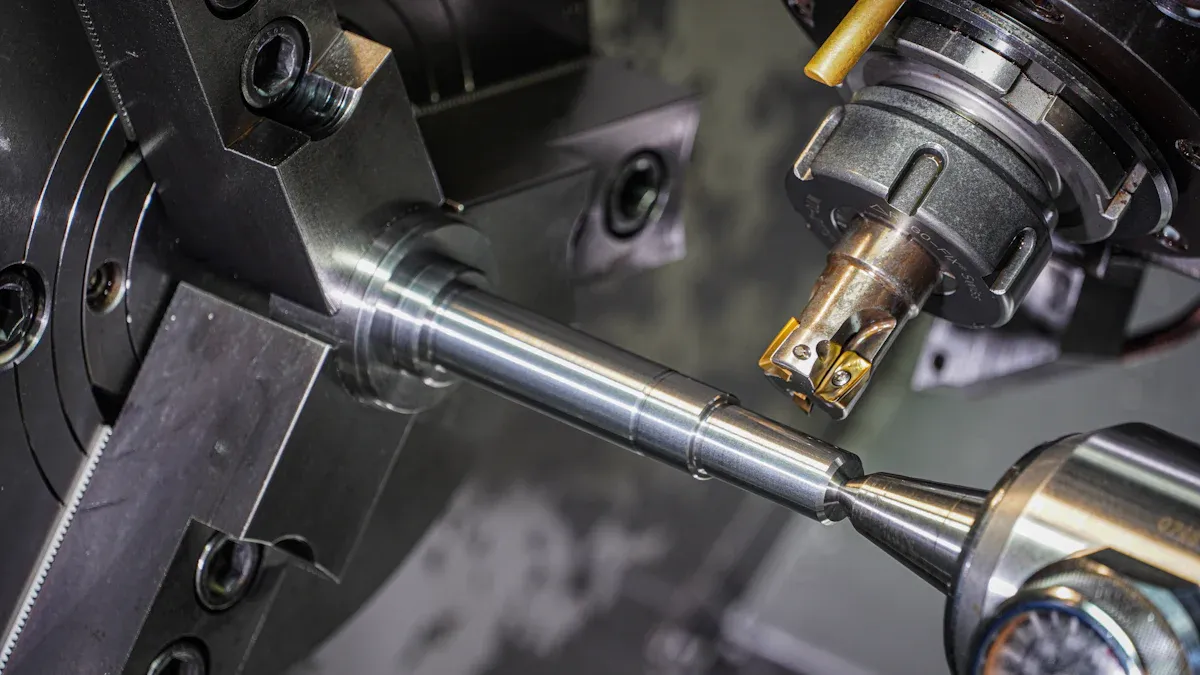
When picking a CNC machining factory, check what machines they use. Good factories have advanced machines like CNC lathes and milling machines. They also use multi-axis centers. These machines make parts with many shapes and tight tolerances. Some factories use real-time measuring systems. These systems check the size and quality of each part as it is made.
Here is a table that shows how different tolerance levels can affect your project:
Tolerance Range | Manufacturing Impact | Lead Time Effect |
|---|---|---|
±0.005" (±0.13mm) | Standard operations | Baseline |
±0.002" (±0.05mm) | Increased precision requirements | +25-50% |
±0.0005" (±0.013mm) | Specialized equipment/environment | +100-200% |
You want a factory that can make parts with many surfaces. They should handle internal features and nonstandard profiles. These features are hard to make with regular tools. Hehua Machinery Technology (Kunshan) Co., Ltd. uses high-speed multi-axis CNC centers. They also use automated tool changers. This helps them make complex parts quickly and accurately.
Tip: If you need very tight tolerances, it will take longer. More checks and special machines are needed for these parts.
Pick a CNC machining factory that has experience with complex metal parts. Factories in China now help industries like aerospace and medical devices. They also work with robotics. They use materials like aluminum, stainless steel, titanium alloys, and copper. This experience helps them solve problems with tricky shapes and tight spaces.
Here are some smart ways factories handle complex parts:
Break the part into sections and put them together later.
Use long tools and special software to plan how to cut deep cavities.
Avoid features smaller than 2.5 mm to make machining easier.
Keep corner radii the same to reduce tool wear.
Use standard hole sizes to save time and money.
Apply tight tolerances only where needed.
Hehua Machinery Technology (Kunshan) Co., Ltd. has a strong record in new energy automobiles. They also work with high voltage motors and electronics. Their team uses advanced machines and software. This makes sure every part meets your needs.
Check if the CNC machining factory follows international standards. Certifications show the factory cares about quality, safety, and the environment. Here is a table of common certifications:
Certification/Standard | Description |
|---|---|
ISO 9001 | Focuses on quality management systems to improve product quality |
ISO 14001 | Manages environmental impact and resource use |
ISO 45001 | Ensures workplace safety |
CE mark / UKCA mark | Shows compliance with EU and UK safety and environmental rules |
RoHS | Limits hazardous substances in electronics |
UL certification | Confirms safety for electrical and electronic parts in North America |
When you see ISO certification, you know the factory follows strict rules. These rules help make and check parts. This lowers the risk of defects. It helps you get parts that match your drawings. Hehua Machinery Technology (Kunshan) Co., Ltd. has important certifications. They use strong quality control systems. This gives you confidence that your complex metal components will meet high standards.
You want your metal parts to be very good. A CNC machining factory in China checks parts many times. Workers look at materials before making anything. Machines watch the process as parts are made. Inspectors use special tools like laser interferometers and coordinate measuring machines. These tools help measure parts very closely.
Here is a table that shows common quality control steps:
Quality Control Process | Description |
|---|---|
ISO 9001:2015 | Certification that helps factories improve and keep customers happy. |
Real-time Monitoring | Data checks to find and fix problems while making parts. |
Advanced Inspection | Using special equipment to check every step of making parts. |
Factories use real-time data to make work better. They follow strict rules from start to finish. Workers get training so they know how to keep quality high.
Note: Special inspection tools help workers find mistakes early. This keeps your parts correct and dependable.
Factories also use outside inspectors. These checks happen while making parts and at the end. Inspectors look for mistakes and check if parts match your drawings. Here is a table of common outside inspection ways:
Inspection Method | Description |
|---|---|
During Production Inspection (DPI) | Done when 20%-80% of parts are finished. DPI finds size problems, molding mistakes, assembly issues, and coating errors. It helps spot problems early and lowers mistakes. |
Final Inspection (FAI) | A full report with size checks, material papers, and process papers. It checks if parts are made right and follow the rules. |
You need clear updates and fast answers. Good factories in China have strong teams. These teams speak English and Chinese. You get quick answers and easy updates. Workers tell you about production and important steps. You know what happens at every stage.
Here are ways factories help you:
They give you technical help to make your designs better.
They answer your questions fast.
They share updates about your order.
They help you fix problems before they get big.
Tip: Clear communication builds trust and helps you avoid surprises.
Factories use a simple plan. Here is a table that shows the steps from quote to delivery:
Step | Description |
|---|---|
1 | Upload your STEP file and get free feedback in 24 hours. |
2 | Get a clear quote with no hidden costs. |
3 | Confirm your order and sign an NDA. |
4 | Production starts and checks happen during making. |
5 | Factory sends a report before mass production. |
6 | Final check and on-time shipping around the world. |
7 | Get engineering help after delivery. |
You upload your design file. The factory checks it and gives feedback. You get a clear price. You confirm the order and sign an NDA. Production starts with checks during making. The factory sends you a report before making many parts. They check the final parts and ship them on time. You get help even after your parts arrive.
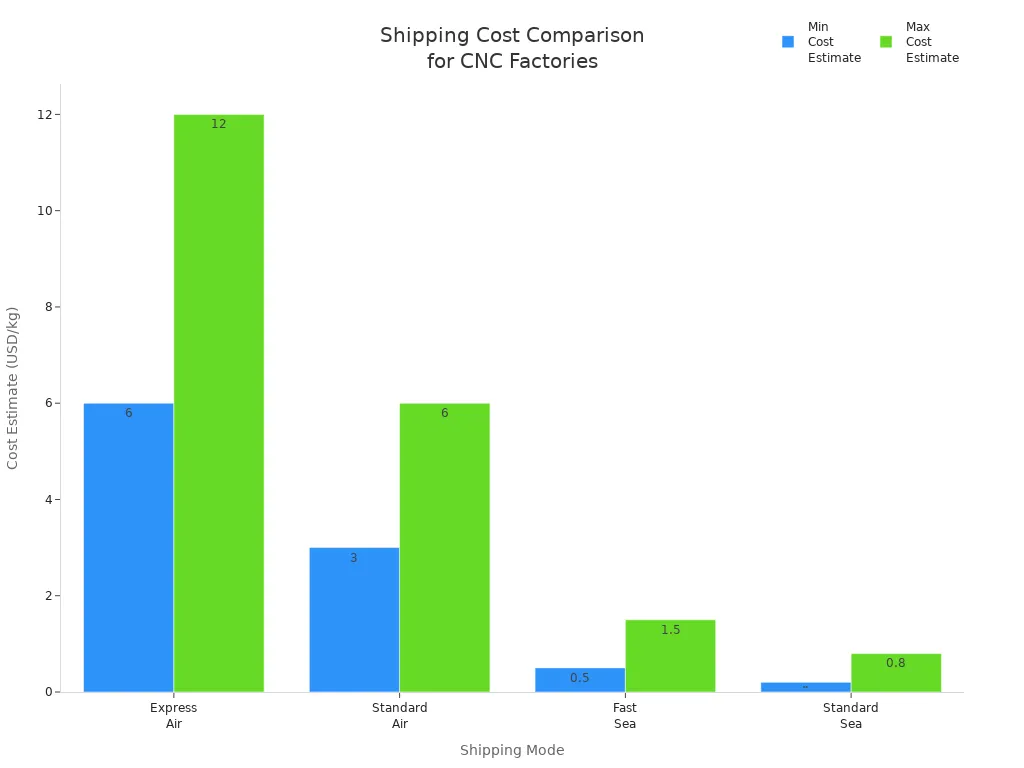
You want your parts to arrive safe and on time. Factories use different ways to ship parts. You can pick express air for fast delivery. Standard air is good for medium batches. Sea shipping is best for big orders. Here is a table of shipping ways:
Shipping Mode | Transit Time to U.S. | Best For | Cost Estimate (per kg) |
|---|---|---|---|
Express Air (DHL/FedEx/UPS) | 3–5 days | Prototypes under 50 kg, urgent samples | $6–$12 |
Standard Air Freight | 5–8 days | Medium batches 50–500 kg | $3–$6 |
Fast Sea (Express LCL) | 14–18 days | Production runs, West Coast delivery | $0.50–$1.50 |
Standard Sea Freight | 30–45 days | Big orders, not urgent | $0.20–$0.80 |
Factories track every part from start to finish. They check materials when they arrive. They watch production with machines. Inspectors use coordinate measuring machines for final checks. You get reports and papers that show your parts are good. These papers help you check every batch.
Here is a list of ways to track parts:
Check materials when they arrive
Control during making
Final check
CMM measurement
SPC monitoring
Automated checks during making
PPAP papers
Inspection reports and quality papers
Callout: Tracking helps you prove your parts are good. You can check every step if you need.
You see that a CNC machining factory in China uses strict checks, clear updates, and safe shipping. You get correct parts, fast answers, and strong help from start to finish.
You can save a lot of money with a CNC machining factory in China. Labor costs are lower. Materials cost less. Modern machines help keep prices down. The table below shows how these things compare:
Competitive Advantage | Description |
|---|---|
Labor Costs | China offers lower labor costs, making production more affordable. |
Material Costs | Factories get raw materials at better prices, which lowers your total cost. |
Equipment Investment | New CNC machines work faster and use less energy, saving money. |
Shipping Costs | Strong shipping networks help deliver parts worldwide at a good price. |
Factories in China have a strong supply chain. They buy lots of materials at once. Automation helps them work faster. Skilled workers and good planning stop mistakes and waste. This means you get high-quality parts for less money.
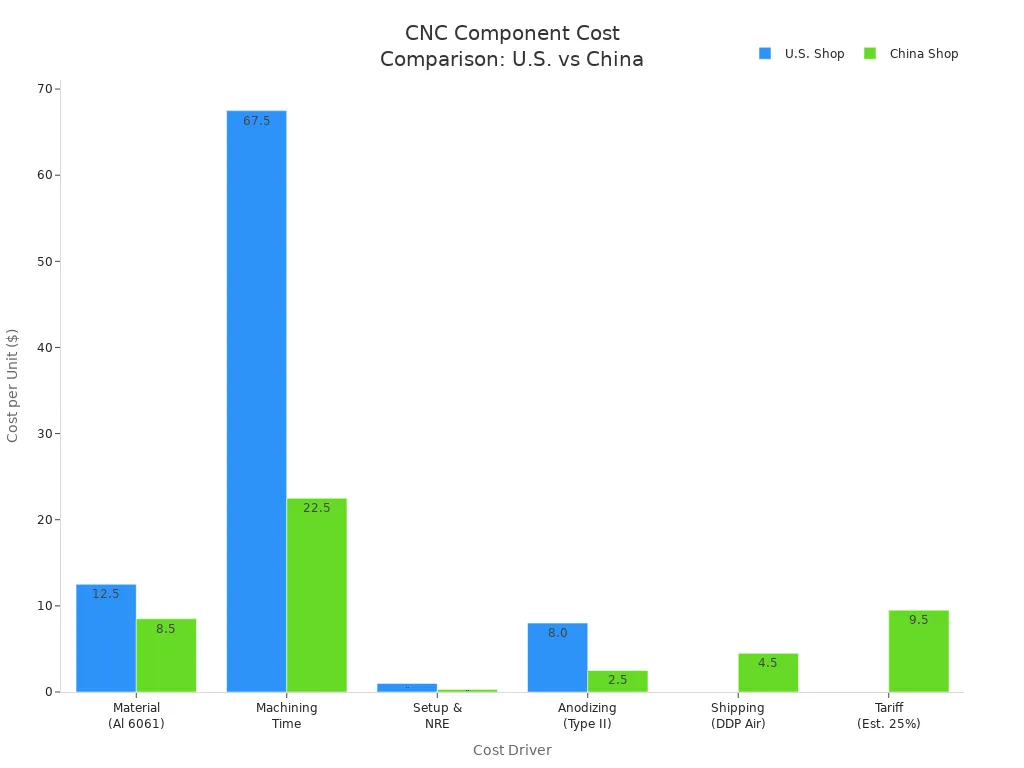
Here is a cost comparison for a complex metal part:
Cost Driver | U.S. Shop Cost ($) | China Shop Cost ($) | Notes |
|---|---|---|---|
Material (Al 6061) | 12.50 | 8.50 | Domestic sourcing advantage |
Machining Time | 67.50 | 22.50 | Labor rate gap |
Setup & NRE | 1.00 | 0.30 | Lower engineering costs |
Anodizing | 8.00 | 2.50 | Cluster efficiency |
Shipping (DDP Air) | 0.00 | 4.50 | Logistics add-on |
Tariff (Est. 25%) | 0.00 | 9.50 | Geopolitical cost |
Total Unit Cost | 89.00 | 47.50 | ~47% net savings |
Lead times are short too. You can get custom metal parts in 2 to 6 weeks. If the parts are very complex, it might take 5 to 8 weeks.
Chinese CNC factories can handle small or big orders. Automated systems and 24/7 lines help finish big jobs fast. Lean manufacturing keeps work flexible and quick. Factories can change plans if you need more or fewer parts.
Evidence | Description |
|---|---|
Automated Systems | Machines and robots speed up production and reduce errors. |
24/7 Production | Factories work day and night to meet tight deadlines. |
Lean Manufacturing | Smart planning helps factories adapt to different project sizes. |
Factories in China use new technology. Robotic arms move materials. Cameras and sensors check parts right away. IoT and AI tools help machines work better and last longer. New CNC machines use less energy and make less waste. Digital systems let you see your order at every step.
Tip: Advanced technology and flexible production make Chinese CNC factories a top choice for complex metal components.
When picking a CNC machining factory in China, follow these steps. First, see if they have ISO and safety certifications. Next, check what services they offer and what industries they know. Then, compare their prices and how fast they deliver. Also, make sure they have good customer support.
Communication Factor | Benefit |
|---|---|
Bilingual project teams | You get updates quickly and feedback is clear |
Timely responses | Projects finish faster with fewer problems |
Hehua Machinery Technology is known for good quality and strong checks. They also deliver parts on time. Use these ideas to help you choose the best partner for your complex metal parts.
You should send 3D CAD files, like STEP or IGES. Drawings with dimensions help too.
You can get a quote in 24 hours if you send clear files and details.
Yes. You can order one part or thousands. Hehua Machinery Technology can scale production for your needs.


 AddressNo. 66 Xingpu Road, Lujia Town,Kunshan City, Factory Buildings 3 and 4
  en
en
 English
 繁体中文
繁体中文 Italian
 Spanish
 Japanese
 Portuguese
 Korean
 Russian
 French
 German
 Estonian
 Arabic
 Indonesian


 Message