Industrial equipment frames are not simply welded metal structures. They often support motors, compressors, electrical components, hydraulic systems, control cabinets, or other critical equipment, which means the frame must provide sufficient strength while maintaining accurate dimensions for final assembly. For OEM buyers, selecting the right welding supplier is therefore important not only for weld quality, but also for fixture control, dimensional accuracy, production capacity, inspection, and delivery.
Robot Welding offers a practical solution for industrial equipment frames when the design is standardized and production quantities justify automation. With programmed welding paths, dedicated fixtures, controlled process parameters, and supporting post-weld operations, robotic welding can help manufacturers produce repeatable structural components while integrating other manufacturing processes into one supply chain.
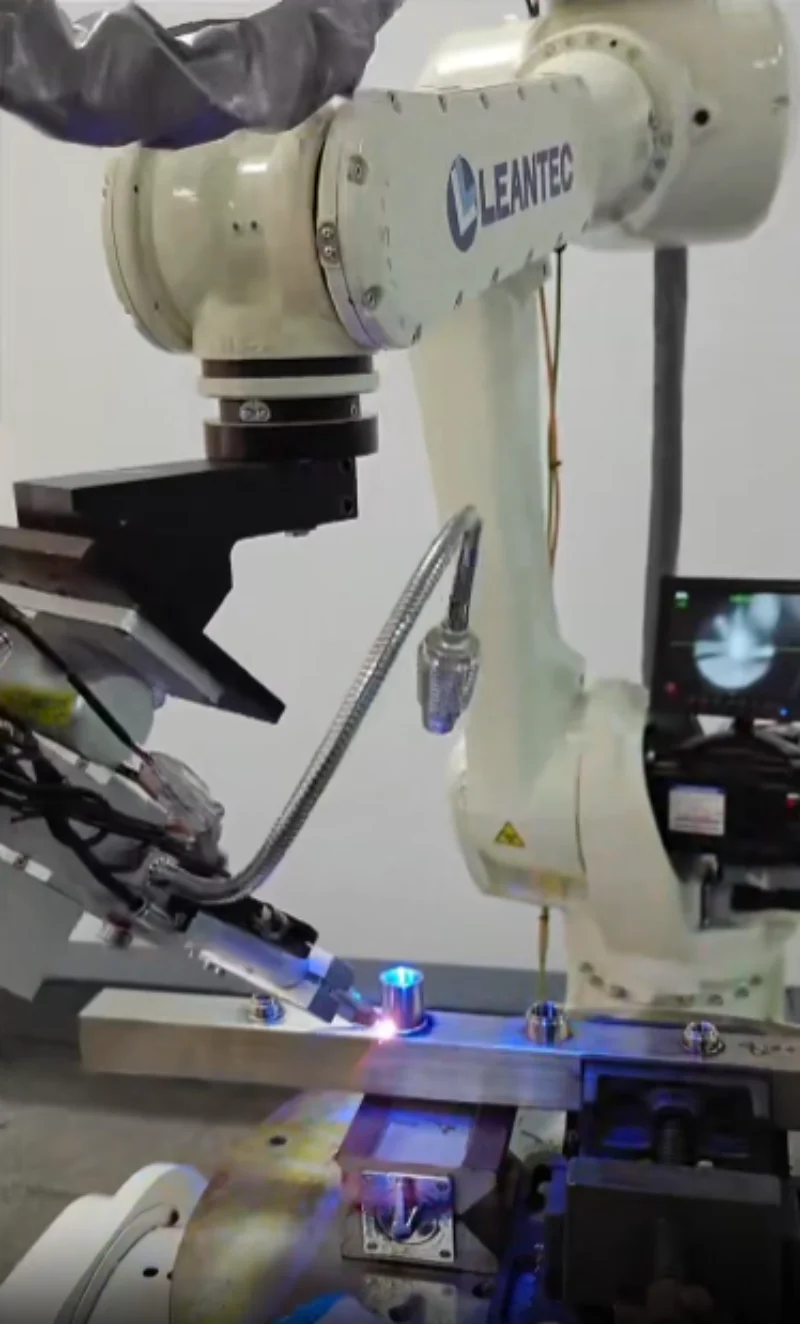
Equipment frames can contain multiple plates, brackets, mounting points, reinforcement ribs, and welded joints. During fabrication, welding heat causes localized expansion and contraction, which can affect the final geometry of the frame. If the distortion is not controlled, mounting holes may become misaligned, surfaces may lose flatness, or the finished frame may require additional rework before assembly.
This becomes more important when OEM customers need repeated batches of the same frame. A frame that meets the drawing requirements in one production run but changes dimensionally in the next can create problems further down the assembly line.
Robotic welding helps address this issue by providing repeatable welding movements for suitable components. However, automation alone is not enough. Consistent results depend on fixture design, material preparation, welding sequence, heat input, and post-weld correction. A reliable OEM welding supplier needs to control the complete process rather than focusing only on the welding robot.
Robotic welding is particularly suitable for equipment frames with repeatable structures and clearly defined welding sequences. Typical applications include compressor frames, equipment bases, construction machinery brackets, structural supports, welded housings, and other metal assemblies used in industrial machinery.
For example, a compressor frame may require multiple brackets to be positioned at fixed locations before welding. If these positions are inconsistent, subsequent equipment installation can become difficult. A properly designed welding fixture can hold the components in a repeatable position, while a robotic welding cell follows the programmed welding path.
For OEM buyers, this combination can provide a more stable manufacturing process for recurring orders while reducing dependence on manual positioning during repetitive welding operations.
Industrial equipment frames are manufactured from different materials depending on structural requirements, operating conditions, weight limitations, and corrosion resistance.
Hehua supports welding for carbon steel, galvanized steel, 304 and 316 stainless steel, aluminum alloys, cast iron, ductile iron, and copper alloys. Dissimilar metal welding is also available for applications where different materials need to be joined.
Carbon steel is commonly used for heavy-duty structural frames where strength and durability are priorities. Stainless steel may be selected for equipment exposed to moisture or corrosive environments, while aluminum can be used where lower weight is important.
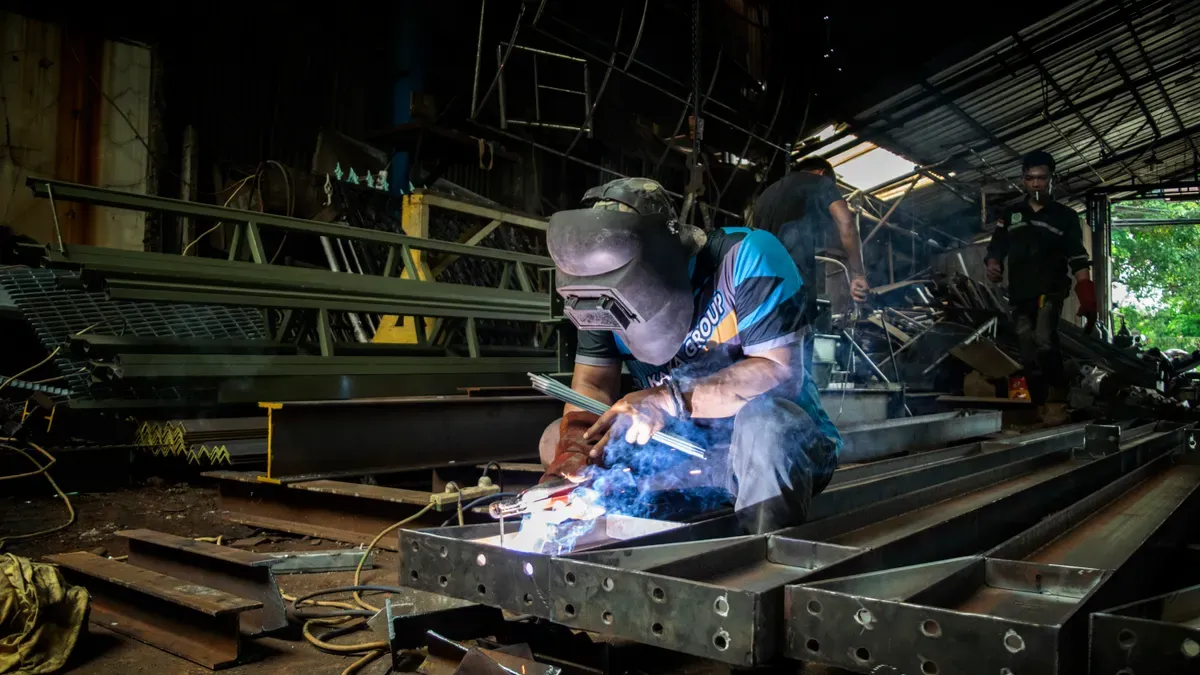
The welding method needs to be matched to the material and joint design. Depending on the project, the available processes include MIG/MAG CO2 welding, TIG GTAW argon welding, spot welding, fillet welding, submerged arc welding, brazing, and robotic automatic welding.
One of the most important considerations for robotic welding is how the workpiece is positioned. If the components are not held consistently, the robot will repeat the same welding path but may still produce an inconsistent final assembly.
For this reason, fixture fabrication is integrated into Hehua's OEM and ODM welding service. Based on customer drawings, samples, or supplied raw materials, the engineering team can evaluate the assembly structure and develop a suitable manufacturing approach.
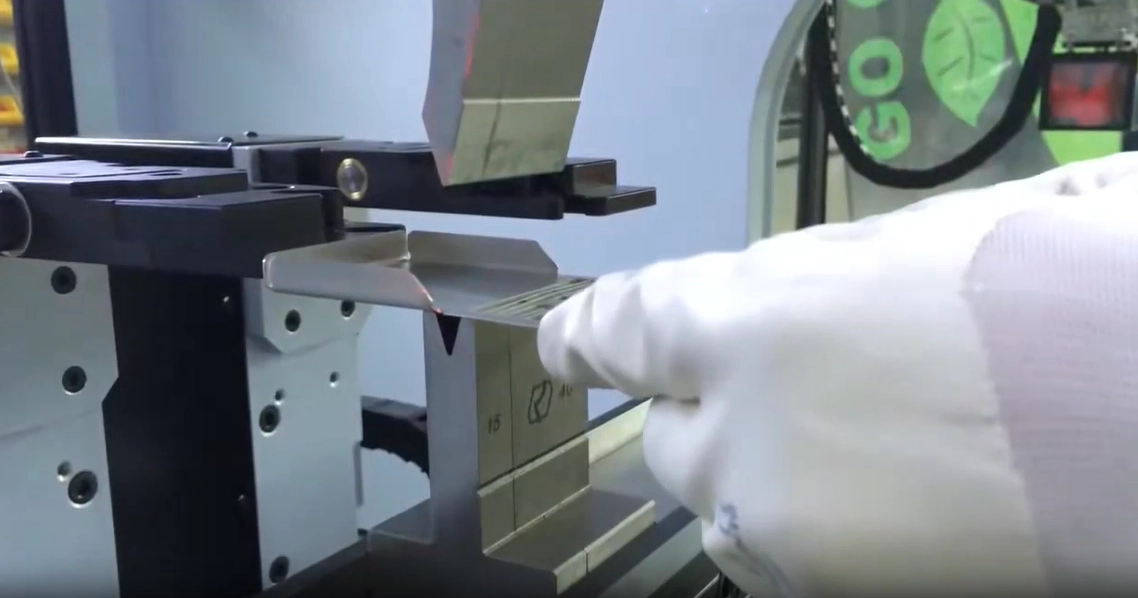
The process can include blanking, fixture fabrication, welding, straightening, CNC secondary machining, and surface finishing. This allows fixture requirements and downstream machining requirements to be considered before production starts.
For new projects, drawing review can be completed within 24 hours. The engineering team can also identify potential welding deformation and cracking risks during the design stage and provide DFM optimization suggestions.
For industrial equipment frames, dimensional accuracy is often as important as weld strength. A frame may need to connect with machined parts, mounting plates, bearings, electrical equipment, or other assemblies. Excessive deformation can increase assembly time and create additional machining or rework requirements.
Hehua combines robotic and manual welding with post-weld straightening and dimensional inspection. Depending on the part and process, overall dimensional tolerance can reach approximately ±0.1 to ±0.3 mm, while flatness after straightening can reach ≤0.03 mm/100 mm for applicable components.
This does not mean every welded frame automatically requires the same tolerance. The actual requirement should be established according to the drawing, material, structure, and assembly function. For OEM production, setting realistic tolerances during engineering review can help avoid unnecessary manufacturing difficulty while maintaining the required performance.
A professional welding supplier should be able to demonstrate how welded assemblies are inspected rather than relying only on a final visual check.
Hehua's quality control system includes incoming material inspection, in-process patrol inspection, post-weld straightening checks, and first-article dimensional inspection. Welded assemblies are checked for common defects such as porosity, slag inclusion, and cracks.
For critical applications, magnetic particle testing, ultrasonic testing, and hydrostatic testing are available. Pressure-related welded assemblies can also undergo air and water tightness testing. For pressure parts, 100% air tightness testing can be performed according to project requirements.
Material test certificates and traceability are also available. Batch inspection certificates and NDT or airtightness test reports can be supplied for applicable products, giving OEM buyers documentation to support their own quality control procedures.
OEM buyers do not always provide a complete manufacturing package. Some projects start with a 2D CAD drawing, while others require the supplier to work from 3D files or physical samples.
Hehua supports 2D CAD and 3D STEP, IGS, SolidWorks, and UG formats. Reverse engineering is also available for physical samples and legacy weldments. This can be useful when an OEM needs to reproduce an older frame, replace an imported assembly, or localize a component for continued production.
After drawing review, the manufacturing process can move from blanking and fixture preparation to welding, straightening, CNC secondary machining, surface treatment, and final inspection. This reduces the need to coordinate separate suppliers for each operation.
For sampling projects, Hehua supports fast sampling within approximately 3–7 days depending on project requirements. Small-batch and mass-production orders can both be accommodated.
Industrial equipment frames may operate indoors, outdoors, or in environments where corrosion protection is important. Welding and fabrication therefore do not necessarily end with the completion of the weld.
Post-weld treatment can include grinding, straightening, shot blasting, black oxide, electrophoresis, Dacromet, powder coating, galvanization, anodizing, and polishing. The appropriate treatment depends on the base material, operating environment, appearance requirements, and corrosion protection requirements.
For outdoor equipment frames, for example, an appropriate protective finish can help improve resistance to environmental exposure. Salt spray test reports can also be provided when required by the project.
For OEM buyers, a supplier's ability to move from prototype production to recurring manufacturing is an important consideration. A frame may initially require only a small number of samples, but successful product development can lead to regular production orders.
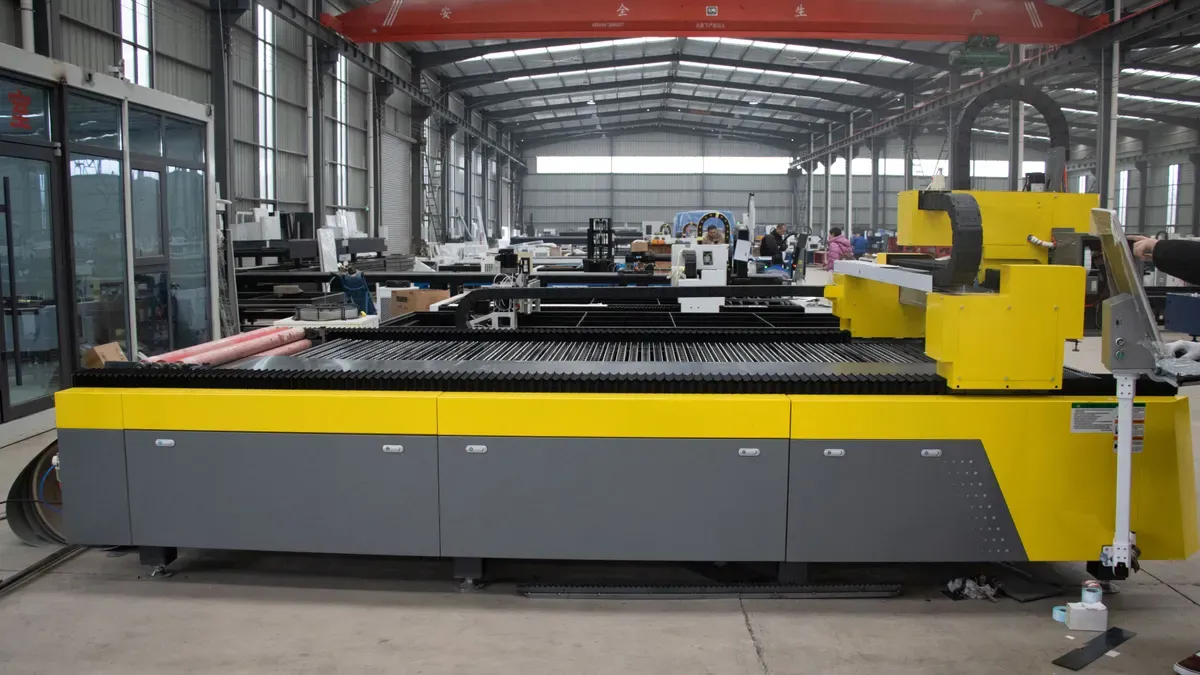
Hehua operates manual welding stations and automatic robotic welding cells, supported by cutting, straightening, and polishing workshops. The integrated production system combines stamping, CNC machining, and welding capabilities, with monthly production capacity of up to 30,000 sets for applicable products.
Standard orders can generally be delivered within 12–25 days, while urgent orders can receive priority scheduling. The company also supports export documentation and overseas customers requiring complete production-to-export services.
Choosing a robotic welding supplier should not be based only on whether the supplier has welding robots. For industrial equipment frames, the more important question is whether the supplier can control the entire manufacturing chain surrounding the welding operation.
This includes drawing review, material traceability, fixture fabrication, process selection, welding, straightening, CNC secondary machining, dimensional inspection, NDT where required, surface treatment, and final documentation.
Hehua Machinery Technology (Kunshan) Co., Ltd. has provided metal manufacturing services since 2005 and operates a manufacturing plant of more than 17,800 square meters with over 160 employees. The company serves industries including automotive, rail transit, aerospace, wind power, nuclear power, industrial machinery, semiconductor equipment, and new energy equipment.
Hehua has obtained ISO 9001, IATF 16949, and EN 15085 certifications, while its welders hold EN ISO 9606-1 qualifications. These systems and qualifications provide a structured foundation for manufacturing welded components used in demanding industrial applications.
For OEM manufacturers,Robot Welding is most valuable when it is integrated into a complete manufacturing process. Repeatable welding paths can improve consistency, but fixture design, engineering review, deformation control, inspection, machining, and finishing determine whether the final frame is actually ready for assembly.
For standardized equipment frames and recurring production requirements, robotic welding can help create a stable process from prototype to mass production. When combined with material traceability, dimensional inspection, NDT capabilities, post-weld treatment, and one-stop OEM/ODM manufacturing, it gives buyers a more practical way to manage welded equipment frame production.
For industrial equipment manufacturers looking for a supplier capable of handling both welding and supporting processes, Robot Welding provides an efficient option for producing repeatable, durable, and assembly-ready metal frames.


 AddressNo. 66 Xingpu Road, Lujia Town,Kunshan City, Factory Buildings 3 and 4
  en
en
 English
 繁体中文
繁体中文 Italian
 Spanish
 Japanese
 Portuguese
 Korean
 Russian
 French
 German
 Estonian
 Arabic
 Indonesian


 Message