Material selection is one of the most important decisions in any machining project. Even with advanced equipment and experienced operators, the final performance of a machined part depends heavily on choosing the right material for the application. Factors such as strength, corrosion resistance, machinability, weight, and operating environment all influence the selection process.
Modern CNC lathes can process a wide range of metals and engineering plastics with exceptional precision. Whether manufacturing automotive shafts, aerospace fittings, hydraulic components, or semiconductor equipment parts, selecting the appropriate material helps improve product reliability, reduce machining challenges, and extend service life.
In this article, we'll explore the most common materials used in CNC lathing, their advantages, and how to choose the best option for your project.
The turning process removes material from a rotating workpiece to create precise cylindrical or rotational components. Different materials behave differently during machining, affecting:
Cutting speed
Tool wear
Surface finish
Dimensional stability
Production efficiency
Component lifespan
Working with an experienced provider of Lathing services helps ensure that both the machining process and material selection are optimized for your application.
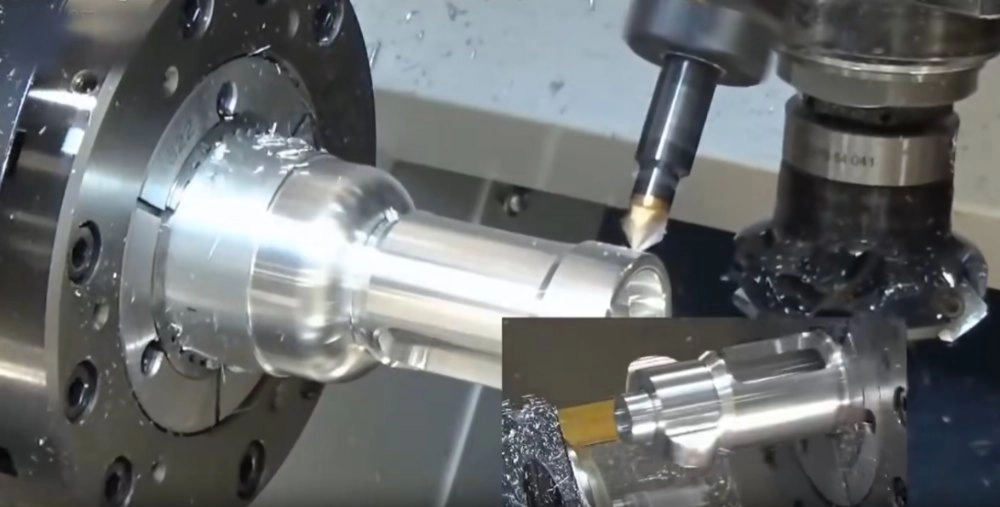
Stainless steel is one of the most frequently machined materials in precision turning because it offers an excellent balance of strength, corrosion resistance, and durability.
Excellent corrosion resistance
High mechanical strength
Long service life
Attractive surface appearance
Good heat resistance
Stainless steel turned parts are widely used in:
Medical equipment
Food processing machinery
Chemical equipment
Marine applications
Industrial automation
Semiconductor equipment
Although stainless steel is highly durable, it generates more heat during machining than many other materials. Proper cutting parameters, high-quality tooling, and rigid machine structures are essential for maintaining dimensional accuracy.
Carbon steel remains one of the most economical materials for CNC turning and is suitable for many structural and mechanical components.
High strength
Good toughness
Easy availability
Excellent machinability
Suitable for heat treatment
Carbon steel components include:
Shafts
Gears
Fasteners
Machine frames
Industrial equipment parts
After heat treatment, carbon steel can achieve higher hardness for wear-resistant applications.
Aluminum is widely used when lightweight components are required without sacrificing strength.
Low weight
Excellent machinability
High cutting speed
Good corrosion resistance
Excellent thermal conductivity
Aluminum turned parts are commonly found in:
Automotive components
Aerospace equipment
Electronic housings
Robotics
Automation equipment
Consumer products
Because aluminum cuts easily, manufacturers can achieve shorter machining cycles while maintaining excellent surface finishes.
Brass is one of the easiest materials to machine, making it ideal for high-volume precision components.
Outstanding machinability
Excellent corrosion resistance
Attractive appearance
Good electrical conductivity
Stable dimensional accuracy
Brass components include:
Hydraulic fittings
Pneumatic connectors
Electrical terminals
Instrument parts
Plumbing components
Its ability to produce smooth surfaces with minimal tool wear makes brass highly suitable for CNC turning.
Copper is valued primarily for its superior electrical and thermal conductivity.
Excellent electrical conductivity
High thermal conductivity
Strong corrosion resistance
Good ductility
Copper turned components are widely used in:
Electrical equipment
Power distribution systems
Heat exchangers
Renewable energy equipment
Because pure copper is relatively soft, machining parameters must be carefully optimized to avoid deformation.
Titanium combines high strength with low weight, making it a preferred material in demanding industries.
Exceptional strength-to-weight ratio
Excellent corrosion resistance
High temperature resistance
Outstanding fatigue performance
Titanium is commonly used for:
Aerospace components
Medical implants
High-performance automotive parts
Defense equipment
Marine engineering
Titanium generates significant cutting heat and requires slower machining speeds. Advanced CNC equipment and high-performance cutting tools are essential for maintaining productivity and part quality.
Not all turned components are made from metal. Engineering plastics provide lightweight alternatives for many industrial applications.
Common materials include:
POM (Delrin)
Nylon
PTFE
PEEK
UHMW-PE
Lightweight
Corrosion resistant
Electrical insulation
Low friction
Chemical resistance
Plastic turned parts are frequently used in:
Semiconductor equipment
Food machinery
Medical devices
Packaging equipment
Automation systems
Advances in CNC technology have greatly expanded the range of materials that can be machined efficiently.
Today's CNC lathes provide capabilities that improve both quality and productivity across various materials.
Modern spindle systems can achieve:
Spindle runout ≤ 0.003 mm
Concentricity ≤ 0.01 mm
By completing inner diameters, outer diameters, end faces, and grooves in a single clamping operation, machining accuracy remains consistent regardless of material type.
Materials such as aluminum, stainless steel, and titanium often require intricate geometries.
Using X-Z axes combined with a Y-axis module, CNC lathes can machine:
Polygonal profiles
Eccentric shafts
Non-circular surfaces
Complex rotational contours
This capability reduces secondary operations and improves overall efficiency.
Thread quality depends not only on machine accuracy but also on material behavior.
Modern CNC lathes equipped with encoders offering 0.001° positioning accuracy can produce:
Metric threads
Imperial threads
Module threads
Radial pitch threads
with cumulative thread errors controlled within ≤ 0.02 mm per 25 mm.
Many carbon steel and alloy steel parts undergo heat treatment before finishing.
Using CBN cutting tools, CNC lathes can directly machine hardened components above HRC 62, achieving surface roughness as fine as Ra ≤ 0.4 μm.
This process often eliminates secondary grinding, reducing production time and simplifying manufacturing.
Regardless of material selection, automation improves consistency.
Modern production systems incorporating:
Automatic bar feeders
Automatic loading systems
Feeding equipment
enable continuous 24-hour machining with monthly production capacities reaching approximately 300,000 parts.
This combination of automation and precision supports stable, high-volume manufacturing across a wide variety of materials.
Every application has unique performance requirements. Before selecting a material, engineers typically evaluate several factors.
Will the component experience heavy loads, vibration, or repeated stress?
High-strength steels and titanium are often preferred for demanding structural applications.
For humid, marine, or chemical environments, stainless steel and titanium generally provide superior protection.
Where weight reduction is important, aluminum or engineering plastics may offer significant advantages.
Copper and brass remain preferred choices for electrical and conductive applications.
For general industrial components requiring reliable mechanical performance, carbon steel often provides an excellent balance between machinability and strength.
Material selection alone cannot guarantee part quality. Precision machining capabilities are equally important.
Founded in 2005, Shanghai Hehua Machinery Technology Co., Ltd., together with Hehua Machinery Technology (Kunshan) Co., Ltd., established in 2018, specializes in manufacturing precision metal components for high-end industries.
The company serves customers in:
Automotive
Rail transit
Aerospace
Wind power
Nuclear power
Industrial machinery
Semiconductor sealing and testing equipment
New energy equipment
With advanced CNC turning centers, automated production systems, and strict quality management, Hehua helps customers machine a broad range of materials while maintaining high dimensional accuracy, excellent repeatability, and stable production efficiency. Whether producing prototypes or large-volume orders, the company focuses on delivering components that meet demanding engineering standards.
Choosing the right material is one of the most important steps in any CNC turning project. Stainless steel offers corrosion resistance, carbon steel provides strength and versatility, aluminum reduces weight, brass and copper excel in conductivity, titanium delivers exceptional performance in demanding environments, and engineering plastics meet specialized application requirements.
Combined with advanced CNC lathing technology, these materials can be machined into high-quality components with outstanding precision, consistency, and efficiency. By partnering with an experienced manufacturer that understands both material characteristics and precision machining processes, businesses can improve product performance while ensuring reliable production for even the most demanding industries.


 AddressNo. 66 Xingpu Road, Lujia Town,Kunshan City, Factory Buildings 3 and 4
  en
en
 English
 繁体中文
繁体中文 Italian
 Spanish
 Japanese
 Portuguese
 Korean
 Russian
 French
 German
 Estonian
 Arabic
 Indonesian


 Message