Manufacturers today have more machining options than ever before, but one question continues to come up when sourcing precision metal components: should you choose CNC lathing services or conventional turning? While both methods are designed to produce cylindrical and rotational parts, they differ significantly in terms of precision, efficiency, consistency, and production capability.
For businesses in industries such as automotive, aerospace, rail transit, energy, and industrial equipment, selecting the right machining process can directly affect product quality, production lead time, and long-term manufacturing costs.
In this guide, we'll compare CNC lathing services and conventional turning from multiple perspectives to help you understand which solution best fits your application.
What Is Conventional Turning?
Conventional turning is a machining process performed on a manual lathe. During operation, the workpiece rotates while an operator manually controls the cutting tool to remove material and achieve the desired shape.
Manual turning has been used for decades and remains valuable for:
Simple cylindrical components
Small repair jobs
One-off prototypes
Educational workshops
Low-volume production
Because most operations rely heavily on the machinist's experience and manual adjustments, the final quality depends largely on operator skill.
Although conventional turning is still widely used in certain applications, it has limitations when high precision, complex geometries, or large production volumes are required.
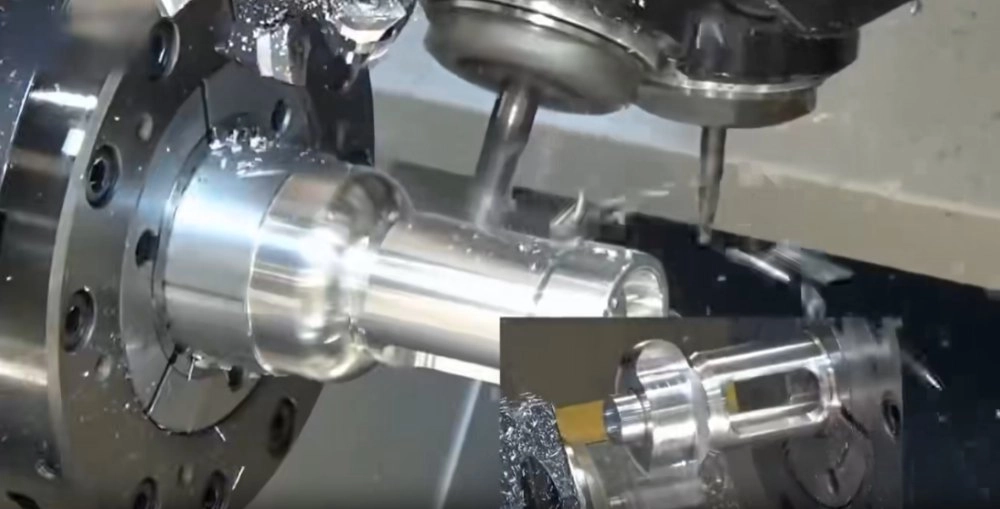
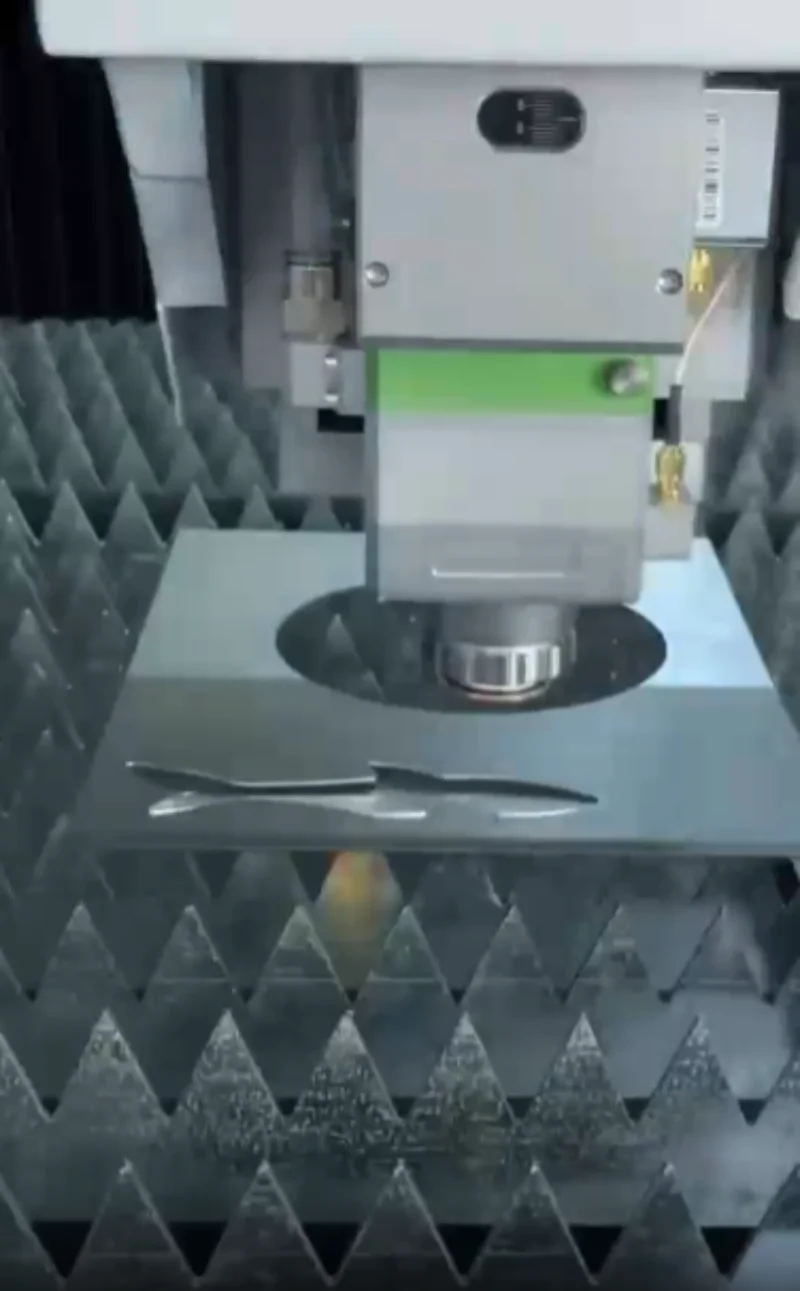
CNC (Computer Numerical Control) lathing services use computer-programmed machines to automate the turning process. Every movement of the cutting tool is controlled digitally, allowing highly accurate and repeatable machining.
Professional Lathing services utilize advanced CNC lathes capable of completing multiple machining operations during a single setup, reducing handling time while improving dimensional accuracy.
Modern CNC lathes can produce:
Precision shafts
Bushings
Sleeves
Flanges
Hydraulic fittings
Threaded parts
Valve components
Bearing housings
Custom industrial components
This makes CNC turning the preferred choice for industries where quality and consistency are critical.
Although both methods remove material through rotational cutting, the technologies behind them are fundamentally different.
Precision is often the deciding factor.
Manual adjustments introduce slight variations during machining. Achieving tight tolerances depends heavily on operator experience and frequent measurements.
Typical applications usually allow moderate tolerances.
Computer-controlled motion significantly improves machining precision.
Advanced CNC lathes can achieve:
Spindle runout ≤ 0.003 mm
Concentricity ≤ 0.01 mm
Complete machining of inner diameters, outer diameters, end faces, and grooves in one clamping
Reducing multiple setups minimizes accumulated errors and produces more consistent parts.
Efficiency becomes increasingly important as production volume grows.
Each machining operation requires manual intervention, including:
Tool positioning
Speed adjustments
Measurements
Workpiece handling
As production increases, labor requirements increase proportionally.
CNC machines automatically execute programmed machining cycles with minimal operator involvement.
When combined with:
Automatic bar feeders
Automatic loading systems
Material feeding equipment
production can continue around the clock.
Modern automated production lines can manufacture approximately 300,000 components per month, making CNC turning ideal for high-volume manufacturing.
Component designs have become increasingly sophisticated across modern industries.
Manual lathes perform well for:
Straight turning
Facing
Simple grooves
Basic threading
However, producing complicated geometries usually requires multiple setups or secondary machining.
Modern CNC machines equipped with X-Z axes and Y-axis modules can machine:
Polygon profiles
Eccentric shafts
Non-circular surfaces
Complex rotary contours
These capabilities allow engineers greater design freedom while reducing manufacturing time.
Thread quality directly influences assembly performance.
Manual threading requires careful operator control, making it difficult to maintain consistent pitch over large production batches.
High-resolution encoder systems with positioning accuracy of 0.001° support machining of:
Metric threads
Imperial threads
Module threads
Radial pitch threads
Thread cumulative error can be controlled within ≤ 0.02 mm per 25 mm, providing excellent consistency.
Surface quality affects both appearance and functionality.
Surface finish depends largely on operator technique, tool condition, and machining parameters.
Additional polishing or grinding may be necessary.
Optimized cutting parameters and stable spindle control produce smoother finishes.
Using CBN cutting tools, hardened components above HRC 62 can achieve surface roughness as fine as Ra ≤ 0.4 μm, often eliminating secondary grinding operations.
Consistency is essential for batch production.
Even experienced machinists may produce slight dimensional differences between individual parts.
Once a machining program is validated, identical parts can be reproduced repeatedly with extremely small dimensional variation.
This level of repeatability is especially important for:
Automotive manufacturing
Aerospace components
Semiconductor equipment
Medical devices
Precision industrial machinery
Many buyers assume manual machining is always less expensive, but this isn't necessarily true.
Lower equipment investment is offset by:
Higher labor costs
Longer machining times
Increased inspection requirements
Lower production efficiency
Although CNC machines require higher initial investment, they reduce:
Labor input
Scrap rates
Setup time
Production cycle time
For medium- and high-volume production, CNC turning typically offers a lower cost per part.
Modern industries increasingly demand precision, traceability, and production consistency.
CNC lathing is widely used in:
Manufacturing:
Engine components
Steering shafts
Brake system parts
Transmission components
Producing:
Titanium fittings
Precision bushings
Hydraulic connectors
Structural fasteners
Machining:
Axle components
Couplings
Bearing assemblies
Brake system parts
Manufacturing:
Valve components
Pump shafts
Sealing assemblies
Turbine parts
Producing highly accurate metal components for sealing, testing, positioning, and automation equipment.
For manufacturers seeking dependable CNC turning solutions, experience and engineering capability are just as important as advanced equipment.
Shanghai Hehua Machinery Technology Co., Ltd., established in 2005, along with its subsidiary Hehua Machinery Technology (Kunshan) Co., Ltd., established in 2018, specializes in manufacturing high-precision metal parts for demanding industrial applications.
Its expertise spans industries including:
Automotive
Rail transit
Aerospace
Wind power
Nuclear power
Industrial machinery
Semiconductor sealing and testing equipment
New energy equipment
High-end equipment manufacturing
Leveraging advanced CNC lathes, automated bar feeding systems, and rigorous quality control, Hehua delivers components with high dimensional accuracy, excellent repeatability, and reliable production efficiency. From prototypes to large-scale manufacturing, the company supports customers throughout the entire production process with a focus on precision and consistency.
The right choice depends on your production requirements.
Conventional turning remains a practical option for simple repair work, one-off parts, or projects where dimensional tolerances are less demanding.
However, if your application requires:
Tight tolerances
Complex geometries
Precision threading
Excellent surface finishes
Batch consistency
High production efficiency
Automated manufacturing
then CNC lathing services offer clear advantages.
As manufacturing continues to move toward automation and higher quality standards, CNC turning has become the preferred solution for companies that value precision, productivity, and long-term reliability.
Both conventional turning and CNC lathing have their place in modern manufacturing, but they serve different needs. Manual turning is well suited for simple, low-volume work, while CNC lathing delivers the precision, repeatability, and efficiency required by today's advanced industries.
Whether you're producing a handful of prototypes or hundreds of thousands of precision components, choosing the right machining method can have a lasting impact on product quality and operational performance. By working with an experienced manufacturing partner equipped with advanced CNC technology, businesses can confidently meet increasingly demanding engineering and production requirements.


 AddressNo. 66 Xingpu Road, Lujia Town,Kunshan City, Factory Buildings 3 and 4
  en
en
 English
 繁体中文
繁体中文 Italian
 Spanish
 Japanese
 Portuguese
 Korean
 Russian
 French
 German
 Estonian
 Arabic
 Indonesian


 Message