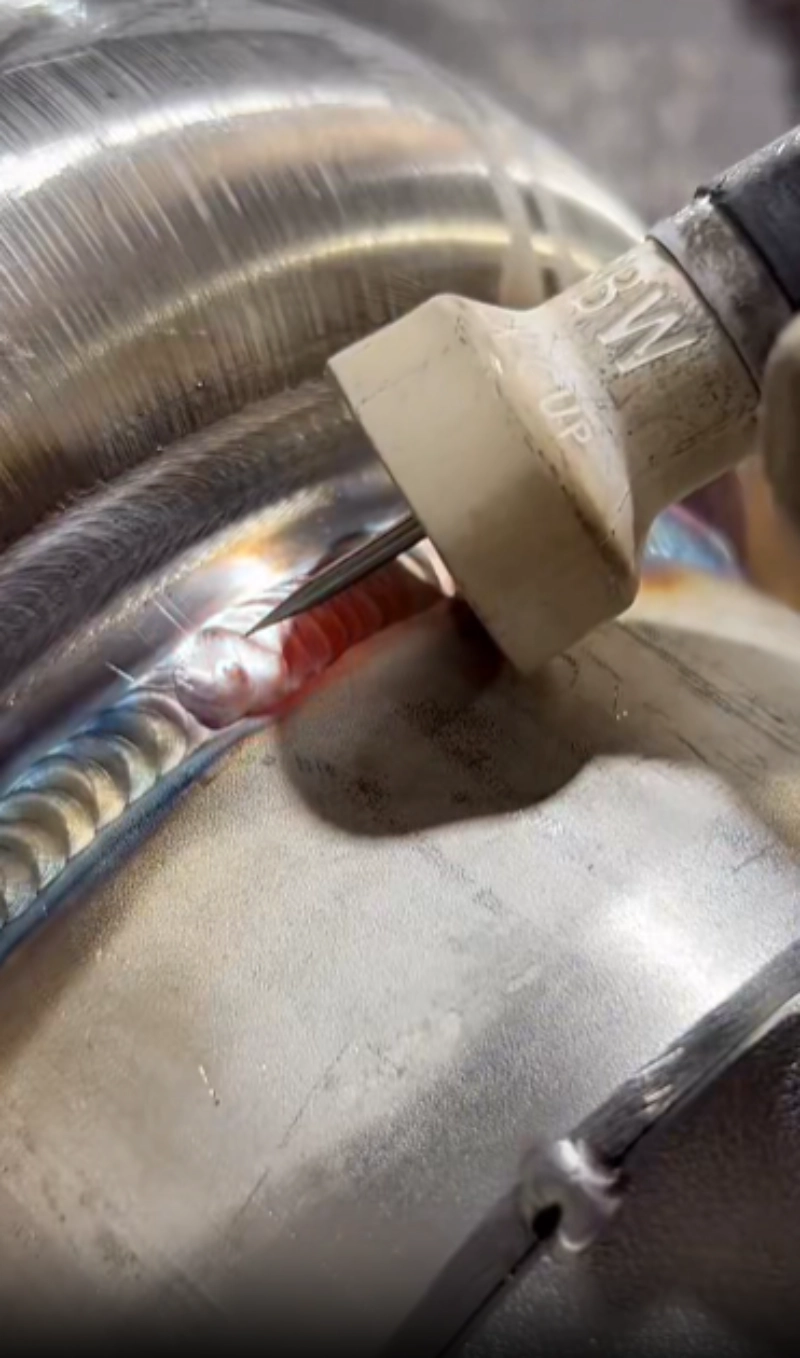
A welded metal assembly can look perfect on the outside and still fail in service if the joint is not airtight. For compressor housings, pressure pipe assemblies, sealed equipment enclosures, and fluid-handling components, weld integrity is not simply an appearance issue. It directly affects leakage performance, reliability, and whether the finished assembly can be used in its intended application. Laser Welding can be a useful solution for manufacturers that need controlled weld geometry, low thermal distortion, and consistent results on suitable metal assemblies.
However, achieving an airtight welded part requires more than choosing a welding machine. Joint design, material, fit-up, welding parameters, fixture stability, post-weld straightening, inspection, and leak testing all need to work together. For OEM buyers, the manufacturing process behind the weld is often just as important as the welding method itself.
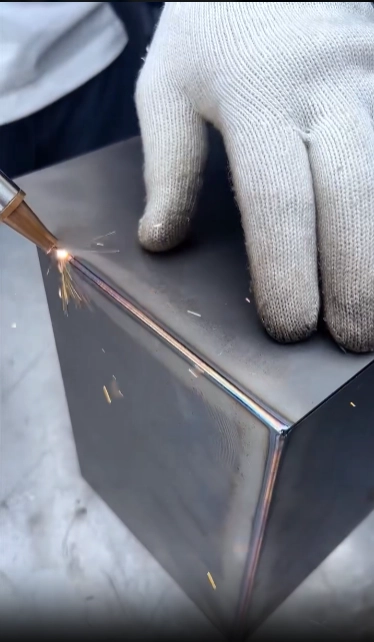
Airtightness means that a finished assembly prevents gas or air from passing through unintended openings in the welded structure. This sounds straightforward, but several common manufacturing issues can compromise sealing performance.
Typical causes include:
· Porosity inside the weld
· Cracks or incomplete fusion
· Insufficient penetration
· Poor joint fit-up
· Excessive welding deformation
· Slag inclusion
· Inconsistent welding parameters
· Distortion around ports, covers, or mounting surfaces
· Small gaps created during assembly
A weld can therefore pass a basic visual inspection and still require additional testing before it can be accepted as a pressure or sealed component.
For manufacturers producing compressor frames, pressure-welded housings, pipe assemblies, and other sealed structures, the production process should be designed around the final airtightness requirement from the beginning.
Laser welding concentrates energy into a relatively small area, allowing manufacturers to create controlled welds with limited heat input when the application and parameters are appropriate.
This can be particularly useful for sheet metal assemblies where excessive heat may cause warping. If a cover, flange, or enclosure deforms during welding, the resulting dimensional change can affect subsequent assembly or sealing surfaces.
For precision metal parts, controlling deformation can reduce the amount of post-weld correction required.
Laser welding can also be considered for assemblies where weld appearance and consistency are important. A stable process can help produce repeatable welds along properly designed joints, which is especially valuable when the same sealed component is produced repeatedly.
That said, laser welding is not a universal replacement for other welding methods. The actual choice should be based on material, thickness, joint geometry, accessibility, production volume, and required weld performance.
One of the most practical mistakes in welded pressure assemblies is treating welding as something that happens only after the part has been designed.
For airtight assemblies, joint design needs to consider how the weld will be formed, inspected, and tested.
The joint should provide sufficient access for the selected welding process while maintaining appropriate fit-up. Excessive gaps can make it more difficult to achieve consistent fusion. Poor alignment can also increase deformation and make the finished assembly harder to bring back into dimensional tolerance.
Drawing review is therefore an important stage before production begins.
At Shanghai Hehua Machinery Technology Co., Ltd., engineering teams can review 2D CAD drawings and 3D files in formats including STEP, IGS, SolidWorks, and UG. For legacy parts, reverse engineering from physical samples is also supported.
This allows potential welding deformation and cracking risks to be considered before production rather than after a finished batch has already been manufactured.
Airtight welding requirements vary significantly depending on the material.
Carbon steel, stainless steel, aluminum alloy, galvanized steel, cast iron, ductile iron, and copper alloys each have different thermal and metallurgical characteristics. The welding process, shielding conditions, joint preparation, and parameters may therefore need to be adjusted according to the material.
Stainless steel housings, for example, may be selected for corrosion resistance and clean surfaces, while carbon steel frames are often used where structural strength is the primary requirement. Aluminum components can offer weight advantages but require careful control because aluminum conducts heat differently from steel.
Shanghai Hehua Machinery Technology Co., Ltd. supports welding of carbon steel, galvanized steel, 304/316 stainless steel, aluminum alloy, cast iron, ductile iron, and copper alloy. Dissimilar metal welding can also be evaluated for suitable applications.
For OEM projects, this material flexibility is useful because the supplier can select the welding process according to the actual part instead of limiting production to a single material or welding method.
Although the article focuses on Laser Welding, airtight assemblies often require a combination of manufacturing processes.
Depending on the component, a complete production route may include:
Blanking → Fixture Fabrication → Welding → Straightening → CNC Machining → Surface Treatment → Inspection → Airtightness Testing
This sequence matters because welding can change the geometry of a component. A flange or mounting surface that was dimensionally correct before welding may require straightening or machining afterward.
Hehua provides integrated OEM and ODM welding services covering blanking, fixture fabrication, welding, straightening, secondary CNC machining, and surface finishing. This one-stop approach can help maintain better control over dimensional requirements between individual production stages.
Thermal deformation is one of the main concerns when manufacturing airtight assemblies.
When heat is concentrated unevenly across a metal component, different areas expand and contract at different rates. This can cause warping, angular distortion, or changes in the position of mounting points.
For sealed assemblies, these dimensional changes can create additional problems. A distorted flange may affect mating surfaces. A warped housing may make subsequent machining more difficult. Excessive correction can also increase production time and affect consistency between batches.
Practical deformation control starts with the welding sequence and fixture design. It can also involve selecting the appropriate welding process, controlling heat input, optimizing joint design, and planning straightening operations.
Hehua provides welding DFM optimization and fixture fabrication support, with engineers reviewing potential deformation risks during the project development stage. After welding, straightening is available to bring applicable components back within the required dimensional range.
The company specifies overall dimensional tolerances of approximately ±0.1 to ±0.3 mm for applicable components, with flatness controlled to ≤0.03 mm/100 mm after straightening.
For pressure-related welded assemblies, visual inspection alone is not enough.
Hehua performs airtightness testing for pressure parts and can provide air and water tightness testing according to project requirements. For critical pressure welds, additional inspection methods such as magnetic particle testing, ultrasonic testing, and hydrostatic testing are available.
A typical quality control process can include:
1. Incoming material inspection
2. First-article dimensional inspection
3. Welding process inspection
4. Post-weld straightening verification
5. Weld appearance and defect inspection
6. NDT when required
7. Airtightness or pressure testing
8. Final dimensional inspection
9. Inspection report preparation
This approach is more practical for OEM buyers than relying on a single final visual check because defects can be identified at different stages of production.
For pressure parts, Hehua can also provide inspection and test reports with shipments, helping customers maintain production traceability and quality documentation.
Airtight assemblies do not always require laser welding.
For some thick structural components, MIG/MAG welding can be a practical solution. TIG welding may be appropriate where controlled welding and surface appearance are important. Spot welding can be useful for specific sheet metal configurations, while robotic welding is advantageous for standardized high-volume production.
Hehua's welding capabilities include MIG/MAG CO2 welding, TIG/GTAW argon welding, spot welding, fillet welding, submerged arc welding, brazing, and robotic automatic welding.
The selection should therefore be based on the actual component rather than the assumption that one welding process is always superior.
For a thin precision housing, the priority may be minimizing deformation. For a heavy equipment frame, structural strength and productivity may matter more. For a pressure assembly, weld integrity and leak testing may become the dominant considerations.
A sealed welded assembly may require additional protection after welding, particularly when it will operate outdoors or in a corrosive environment.
Depending on the application, post-weld processing can include grinding, straightening, shot blasting, black oxide, electrophoresis, Dacromet, powder coating, galvanization, anodizing, and polishing.
Surface finishing should be planned alongside welding rather than treated as an unrelated final step. Excessive grinding, for example, can affect the geometry of a weld area, while poor surface preparation can reduce coating performance.
For outdoor equipment, corrosion resistance may be as important as the initial weld quality. For visible enclosures, grinding and polishing may be required to achieve the desired appearance.
Airtight welded assemblies often involve several manufacturing stages, making supplier coordination a significant part of project management.
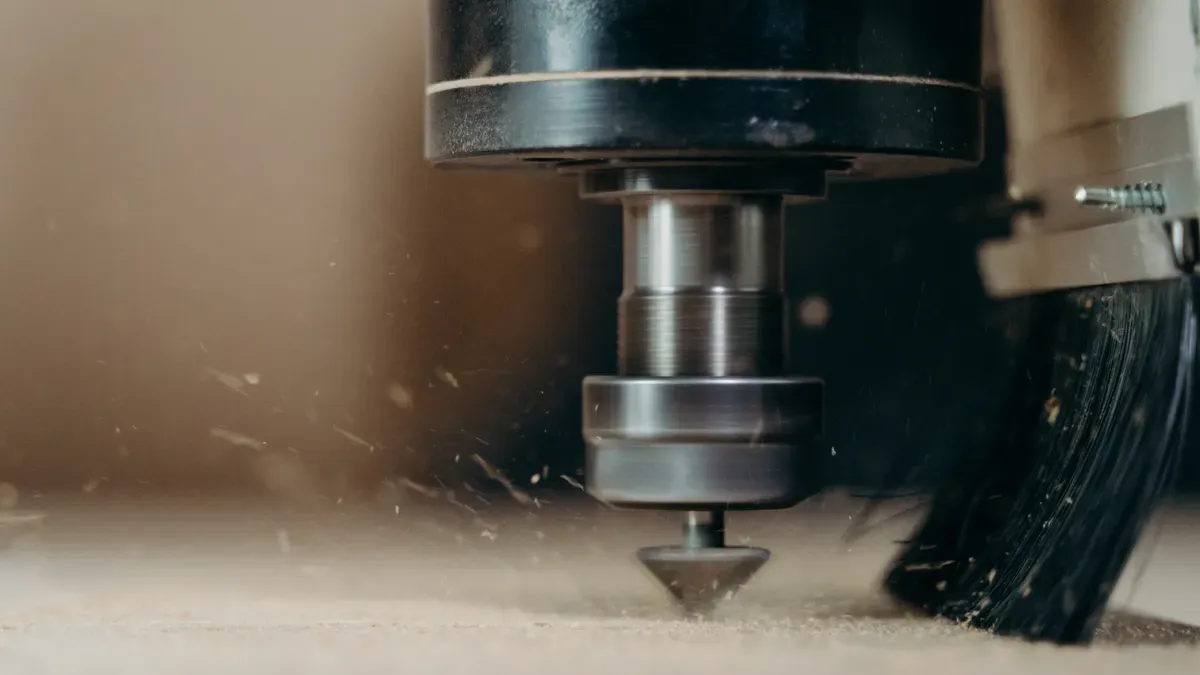
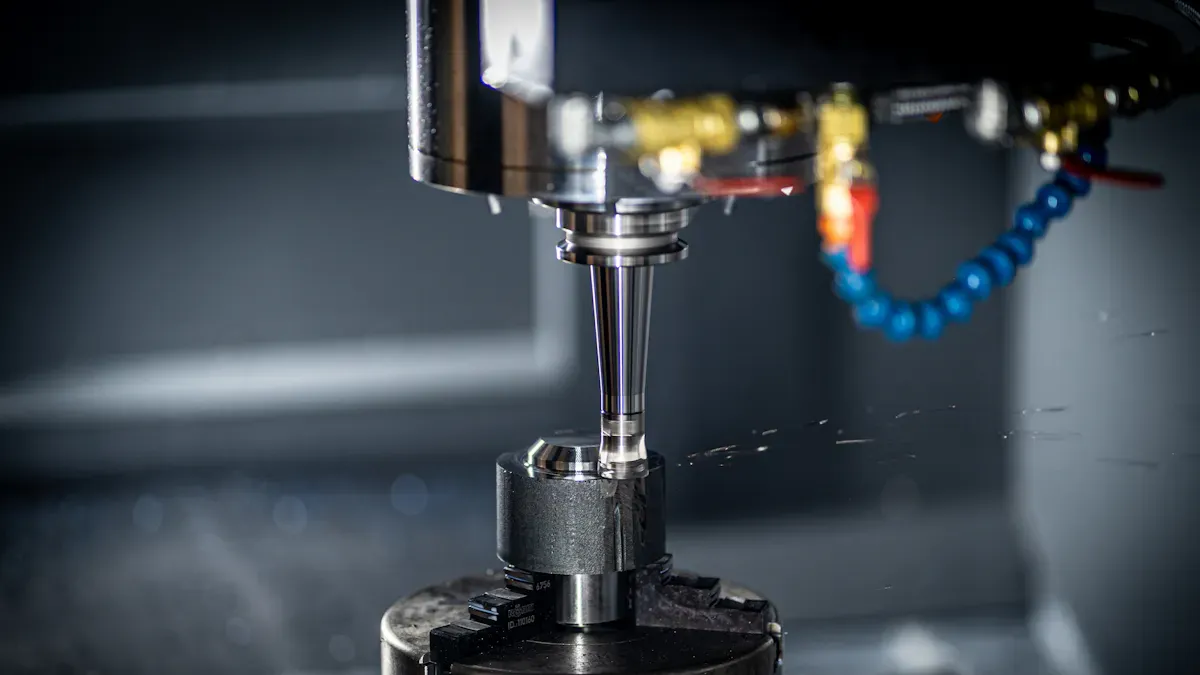
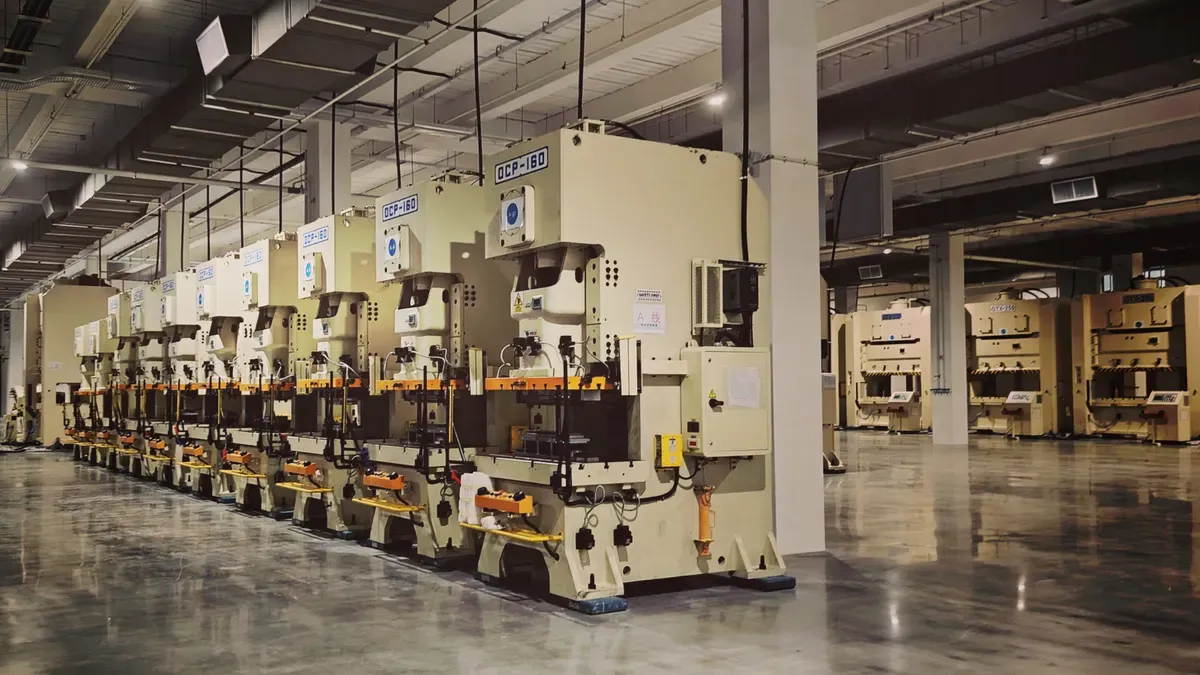
Shanghai Hehua Machinery Technology Co., Ltd., established in 2005, operates a manufacturing plant of more than 17,800 square meters and employs over 160 people. Its capabilities cover welding as well as cutting, stamping, CNC machining, straightening, polishing, and surface treatment.
The company is certified to ISO 9001, IATF 16949, and EN 15085, while its welders have obtained EN ISO 9606-1 qualification certification.
For overseas OEM customers, both Hehua Machinery Technology Co., Ltd. and its Kunshan subsidiary have independent import and export rights, supporting an integrated process from manufacturing to export.
This is particularly useful when the finished component requires more than welding. Instead of coordinating separate suppliers for fabrication, welding, machining, finishing, and inspection, OEM buyers can work with one manufacturing partner for the complete assembly.
Before sending a drawing for an airtight welded assembly, manufacturers should define several points clearly:
l Material: Specify the exact metal grade and any required material certificates.
l Thickness: Include the thickness of each welded section, especially when different thicknesses are joined.
l Weld requirements: Identify critical welds, visible welds, continuous welds, and areas where intermittent welding is not acceptable.
l Dimensional requirements: Mark critical mounting surfaces, sealing surfaces, and post-weld tolerances.
l Leak requirements: Define whether air, water, hydrostatic, or another testing method is required.
l Surface treatment: Specify the required corrosion protection or appearance after welding.
l Production volume: State prototype, small-batch, or mass-production requirements so that the appropriate fixtures and welding equipment can be considered.
These details allow the manufacturer to develop a more reliable welding and inspection plan before production starts.
For airtight metal assemblies, successful welding is not just about producing a continuous weld bead. It requires appropriate joint design, material control, welding process selection, deformation management, dimensional inspection, and leak testing.
Laser Welding can be an effective option for suitable precision metal assemblies where controlled heat input, consistent weld formation, and reduced deformation are important. But the final result depends on the entire manufacturing chain surrounding the welding process.
With integrated fabrication, welding, straightening, CNC machining, surface treatment, NDT, and airtightness testing capabilities, Shanghai Hehua Machinery Technology Co., Ltd. can support OEM customers from drawing review through finished welded assembly production.
For manufacturers developing compressor housings, pressure pipe assemblies, sealed equipment enclosures, machinery components, or other airtight metal structures, the most useful question is not simply whether laser welding can make the joint airtight. The better question is whether the supplier has the engineering, production, inspection, and testing capabilities needed to consistently deliver an airtight finished assembly.
Laser Welding is one part of that solution, supported by a complete welding and metal manufacturing process designed around the requirements of the final component.


 AddressNo. 66 Xingpu Road, Lujia Town,Kunshan City, Factory Buildings 3 and 4
  en
en
 English
 繁体中文
繁体中文 Italian
 Spanish
 Japanese
 Portuguese
 Korean
 Russian
 French
 German
 Estonian
 Arabic
 Indonesian


 Message