A wholesale progressive die stamping manufacturer from China offers high-volume, multi-step metal stamping services at competitive prices. You get in-house tooling and support from design through mass production. China makes up about 32% of global metal stamping market revenue, according to Custom Market Insights. That scale gives you many supplier choices.
As a buyer, you should check five things: process capability, tooling investment, lead times, quality assurance, and supplier reliability. A qualified progressive die stamping manufacturer will review your drawings, suggest cost reductions, and confirm tolerances before quoting. Ask about press capacity, certification, and inspection methods. These details separate a true production partner from a trading company.
Progressive die stamping makes large amounts of exact metal parts fast and at a low cost for each part.
Look at a supplier's certifications, such as ISO 9001 and IATF 16949, to make sure of quality and reliability.
Tooling costs are high at the start, but they pay off for big orders with millions of parts.
Chinese factories offer fair prices, accept any order size, and ship fast.
Send us your drawings for a free check. This helps you get exact prices and avoid pricey errors.
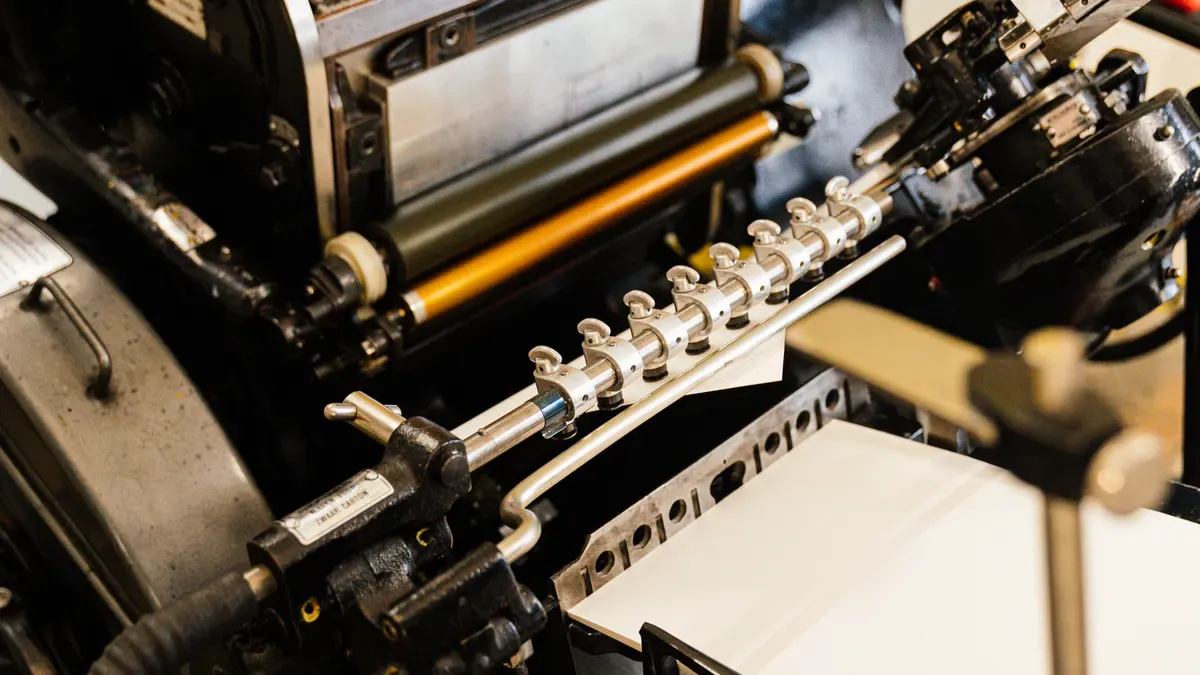
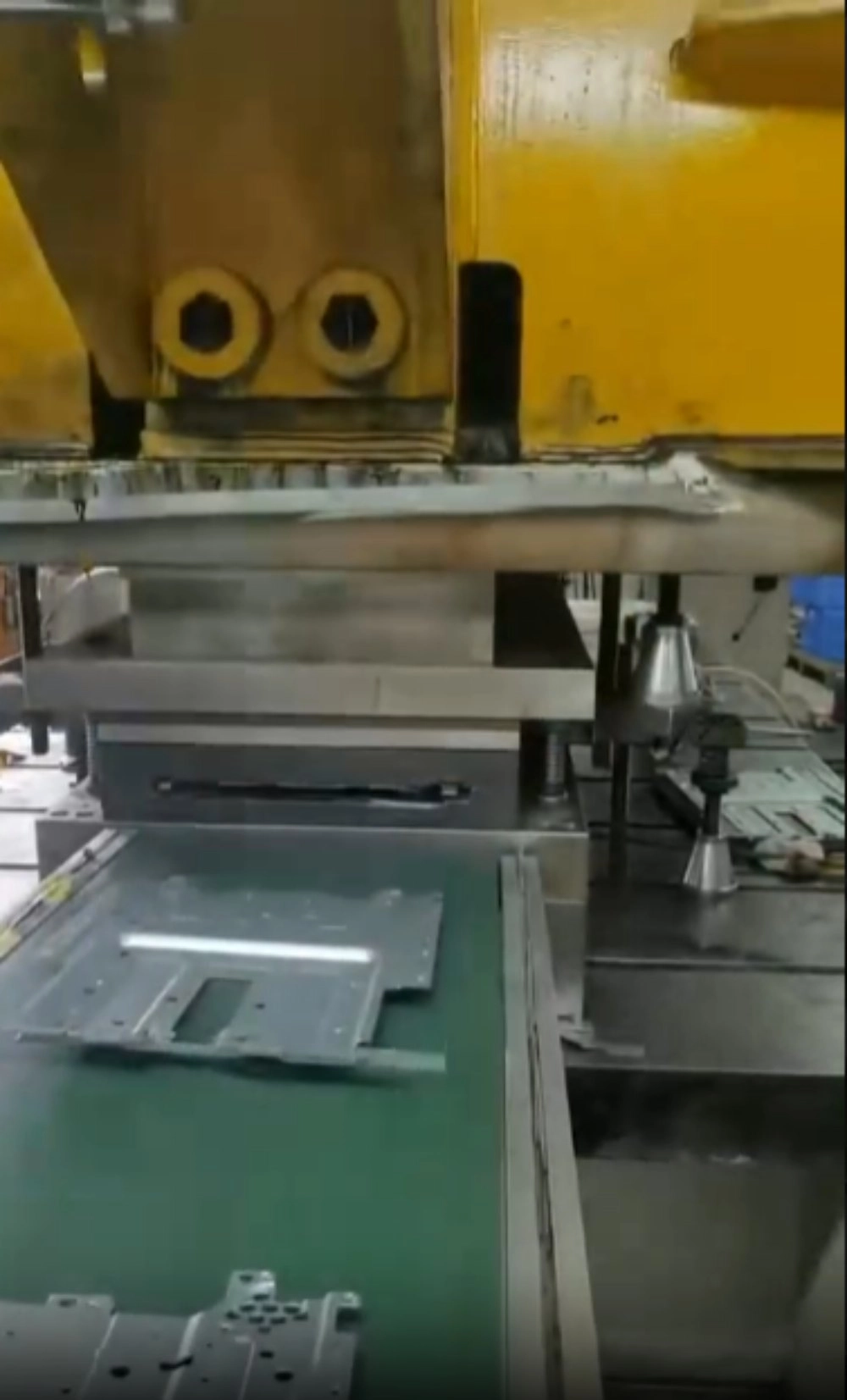
Progressive die stamping forms metal in a continuous process. A metal strip moves through a progressive die with multiple stations. Each press stroke moves the strip forward by a fixed feed pitch. At the same time, every station does one operation: punching, blanking, bending, deep drawing, or forming. The final station separates the finished part from the carrier. This is the core process of progressive metal stamping, and it makes tight-tolerance parts in one cycle.
Usually, a progressive die needs more than one stroke to make a custom stamped part. Compound dies finish a part in one stroke and work best for simple flat parts. Transfer dies first separate the workpiece, then carry it between stations for deep-drawn or complex designs. Because the strip stays in one carrier, the line stays aligned without resetting. At high volume, the progressive stamping process gives the best mix of speed and precision.
These abilities create many parts. Automakers use progressive die stamping parts for structural brackets, clips, sensors, and electrical connectors. Electronics companies rely on terminals, shielding, and heat sinks. Medical devices depend on small surgical parts and device housings. Hehua supplies construction machinery, rail transit, and new energy with custom metal stamping.
Hehua is a wholesale progressive die stamping manufacturer. It offers full OEM production support with its own die design and manufacturing. Materials include carbon steel, galvanized steel, stainless steel (304/316), aluminum, copper, and special drawing steel. Before cutting progressive die tooling, a typical die design takes into account material thickness, grain direction, and springback.
Precision shapes the final product. Hehua keeps stamping tolerances from ±0.008 to ±0.03mm. It holds flatness at or below 0.02mm. Deep drawing wall thickness deviation stays within 5%. Your order gets a full CMM inspection and 100% key dimension checks, plus full inspection reports.
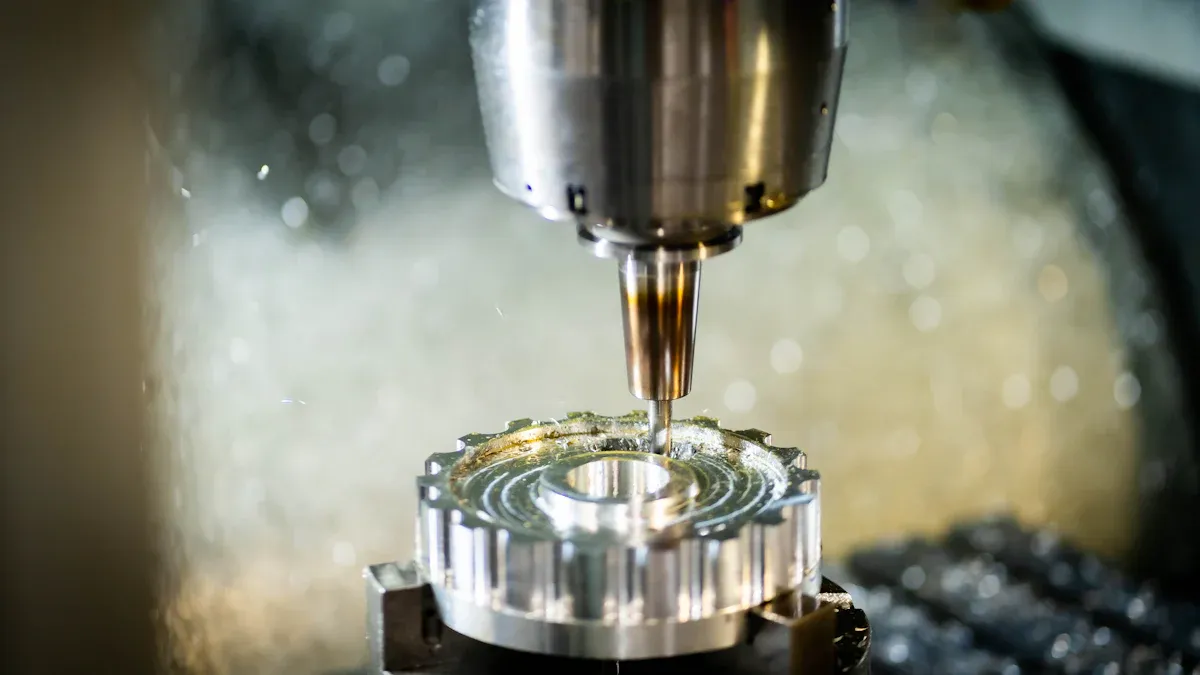
Secondary services finish the job. Parts can then go to CNC machining, welding, deburring, threading, surface finishing, or assembly. Hehua handles this process — mold design, sampling, mass production, and finishing — under one roof. The result is a precision part.
Progressive die stamping works best when you need millions of the same part. The steady feed lets presses run very fast. High-speed progressive dies can reach 1,800 strokes per minute, and high-speed presses can reach 1,500 strokes per minute. This speed gives you hundreds of parts per minute with little downtime.
You get several real benefits from this process:
Fast production with short cycle times and quicker delivery
Low labor cost because one worker can watch many machines
Long runs with fewer material changes
Very little waste thanks to smart tool design
Fast setup because you only set up once for finished parts
Complex shapes and tighter tolerances from step-by-step die stations
Good repeatability because hard-tooled dies resist wear
Low part cost from all these factors combined
These benefits make progressive stamping great for high-volume metal stamping. You get more parts in less time, better value per order, and steady inventory levels. The cost per part drops a lot at high volume.
Progressive die tooling needs a large upfront investment. A simple progressive die with 3 to 5 stations costs $25,000–$60,000 and works for 100,000–500,000 parts per year. A complex progressive die with 6 or more stations, deep drawing, and in-die features costs $60,000–$150,000+ for 300,000–1,000,000+ parts per year. You spread this progressive die stamping cost over your order volume.
Design choices drive the tooling cost. Tight tolerances raise the complexity of die design and tooling, and they increase inspection needs and waste risk. Deep drawing needs added tooling accuracy and process control. Multiple bends need more die design work and careful clearance planning.
Limitation | Constraint |
|---|---|
Part complexity | Detailed shapes require costly tooling; complex parts may need to be split into simpler parts joined by riveting or welding |
Material thickness | Thick materials suit single-stage or transfer dies instead |
Deep draws | Metal can only stretch so far; annealing between draws may be needed to avoid cracking |
Progressive die stamping cost stays competitive for large orders, but small orders rarely justify the tooling. Match your yearly demand with the right die complexity before you commit.
When you buy progressive die stamping parts from China, you will see many different prices. The final progressive die stamping cost depends on how complex the part is, the material, and how many you order. Tooling is the main upfront cost. You pay for this cost across your whole order amount.
Chinese manufacturers give different prices based on how complex the die is. The table below shows common price ranges.
Die Complexity | Typical Quoted Price Range (USD) |
|---|---|
Simple blanking / single-station dies | $5,000 – $15,000 |
Small / simple progressive dies | from $10,000 |
Mid-range progressive dies (automotive/electronics) | $15,000 – $50,000 |
Complex multi-station progressive dies | $50,000 – $200,000+ |
A simple progressive die tooling project starts at about $2,000 for basic designs. Complex progressive die tooling starts at $8,000 and can go over $20,000. You spread this investment over your production run.
Lead times change based on the die type and order size. Steel stamping dies take 30–40 days to build. Casting-based dies take about 70 days. A progressive die stamping manufacturer in China often offers flexible MOQs. You can place small trial orders or commit to yearly bulk contracts. Hehua keeps a 98% on-time delivery rate.
Quality control shows the difference between a reliable supplier and a risky one. A good progressive die stamping manufacturer has key certifications. Look for ISO9001, IATF16949, and EN15085. Hehua has all three, plus EN 9606-1. These certificates prove the factory meets international standards for manufacturing and welding.
Inspection happens at every stage. Material verification checks mill test reports against your purchase order. In-process checks include first-article approval and scheduled dimensional checks. Final inspection produces a full dimensional report against your drawing. Critical features get measured on a CMM. You receive 100% key dimension checks and full inspection reports with every shipment.
Third-party inspection is available if you ask. You can hire SGS, TUV, BV, or your chosen agency to verify high-quality progressive die stamping parts at any stage. For long-term supply agreements, the manufacturer supports PPAP-style documentation. This includes material certificates, first-article inspection reports, SPC charts for critical dimensions, and tool-life tracking records.
Export packaging protects your parts during shipping. Standard protection includes VCI anti-rust paper, poly bags, and foam separation. Outer cartons are five-layer corrugated boxes. Heavy parts ship in plywood crates with ISPM-15 stamps. Heat-treated pallets support the load. Each carton carries a label matching your PO line, part number, and quantity. Shipping methods include sea, air, and express courier with full tracking. Incoterms range from EXW to DDP.
The progressive die stamping process in China gives you access to high-volume production at competitive rates. You get precision progressive die stamping parts, documented quality, and export-ready packaging. A qualified manufacturer handles the entire workflow from progressive die design to final shipment.
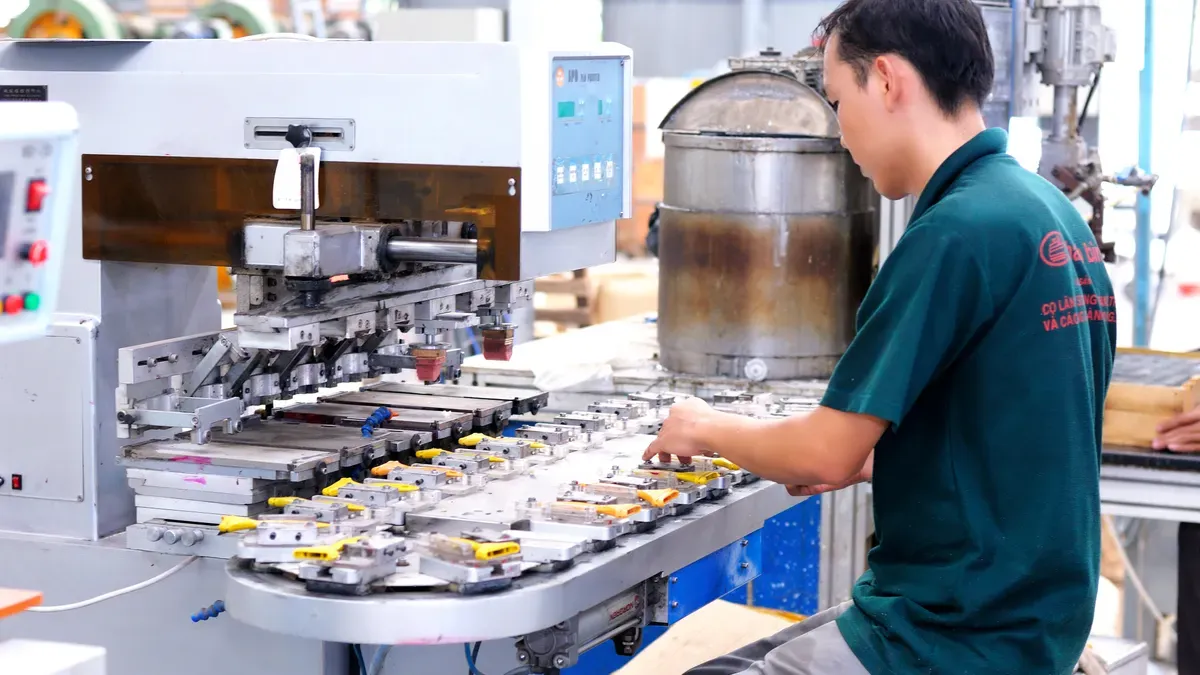
You need a partner who runs the whole production process. Start by checking certificates. Make sure they have ISO 9001 for quality management, IATF 16949 for automotive work, and EN 15085 for rail welding. These certificates show a manufacturer meets world standards. Hehua Machinery Technology (Kunshan) Co., Ltd. has all three, plus EN ISO 9606-1 for welder qualification. Its parent company, Shanghai Hehua Machinery Technology Co., Ltd., started in 2005. The Kunshan factory opened in 2018 with over 17,800 square meters of space and more than 160 workers.
Check these areas before you sign:
Evaluation Area | What You Should Verify |
|---|---|
Tooling capability | Whether the manufacturer designs, builds, and maintains progressive dies in-house |
Press capacity | Whether tonnage, feeding systems, and automation match your part geometry |
Engineering support | Whether the supplier provides DFM review and process optimization |
Quality control | Whether inspection equipment and processes are clearly defined |
Manufacturing experience | Whether the supplier has produced similar stamped parts |
An in-house mold workshop gives you real benefits. Hehua's tooling team does mold upkeep and repair on site. This way, they don't depend on outside suppliers. It also speeds up engineering changes and makes delivery faster. A progressive die stamping supplier with this skill reacts fast to tooling changes while keeping quality under control.
Press capacity is important too. Hehua runs 63T to 315T precision presses and automatic stamping lines. This range covers small trial orders and yearly bulk contracts. The company's ERP system helps control costs and production lead times. Yearly sales top 130 million RMB, which shows steady operations. A trusted metal stamping manufacturer also gives 24-hour online service for urgent questions.
The sourcing process begins with your drawings. Share 2D CAD files or 3D STEP, IGS, or SolidWorks files. If you only have a physical sample, reverse engineering can rebuild the design. A qualified progressive die stamping manufacturer checks your files and confirms feasibility before quoting.
Ask for a one-on-one drawing review. Hehua's engineers look at your design and suggest ways to cut costs. They spot features that make progressive die tooling harder and offer simpler choices. This step saves money on tooling and production. For a custom OEM project, clear talk at this stage stops costly mistakes later.
Follow these steps to get progressive die stamping parts from China:
Send your 2D or 3D files with material specs and tolerance needs.
Ask for a feasibility review and a first quote.
Talk about the progressive die design and any suggested changes.
Approve the final drawing and tooling plan.
Get samples to check before mass production.
A fast RFQ process shows a good partner. Hehua answers inquiries within 24 hours and gives you a dedicated engineer for your account. The company supports custom metal stamping for compressors, construction machinery, automotive, rail transit, aerospace, and new energy industries. With ISO 9001, IATF 16949, and EN 15085 certifications, Hehua shows the credentials you should ask for from any progressive die stamping supplier. This manufacturing experience since 2005 gives you trust in long-term supply.
From a good Chinese supplier, you should expect tight tolerances, a big investment in tooling, fair unit prices, realistic lead times, and strong quality control. A progressive die stamping manufacturer in China can be your long-term production partner. Clear drawings, valid certifications, and open communication make this partnership work.
The progressive die stamping process rewards careful planning. You pay for tooling upfront. You get consistent parts in high volume. The progressive die gives repeatable results across millions of cycles. This way of manufacturing works well for automotive, electronics, and industrial uses.
Send your part drawings or physical samples to a qualified supplier today. Ask for a feasibility review and a quote. Your production goals deserve a partner who understands the details.
Hehua keeps stamping tolerances between ±0.008 and ±0.03mm. Flatness stays at 0.02mm or less. Deep drawing wall thickness deviation stays within 5%. Every shipment comes with full CMM inspection reports and 100% key dimension checks. These numbers give you the precision that automotive, electronics, and industrial parts require.
Steel stamping dies take 30–40 days to build. Casting-based dies take about 70 days. Hehua keeps a 98% on-time delivery rate. You can place small trial orders or commit to yearly bulk contracts. The company runs 63T to 315T precision presses and automatic stamping lines for both small and large volumes.
Look for ISO 9001 for quality management, IATF 16949 for automotive work, and EN 15085 for rail welding. Hehua has all three, plus EN ISO 9606-1 for welder qualification. These certificates show the factory meets international manufacturing standards. Ask for copies before you sign any supply agreement.
Send 2D CAD files or 3D STEP, IGS, or SolidWorks files. If you only have a physical sample, reverse engineering can rebuild the design. Hehua's engineers give one-on-one drawing review and cost reduction optimization. They confirm feasibility before quoting. Talking clearly at this stage stops costly mistakes during production.
Hehua runs 63T to 315T precision presses with automatic stamping lines. This range covers small trial orders and yearly bulk contracts. An in-house mold workshop handles die design, building, and maintenance on site. The company's ERP system controls costs and production lead times. Yearly sales top 130 million RMB, showing steady operations.


 AddressNo. 66 Xingpu Road, Lujia Town,Kunshan City, Factory Buildings 3 and 4
  en
en
 English
 繁体中文
繁体中文 Italian
 Spanish
 Japanese
 Portuguese
 Korean
 Russian
 French
 German
 Estonian
 Arabic
 Indonesian


 Message