Manufacturers across many industries rely on precision metal components to keep their products performing reliably. Whether producing automotive brackets, compressor housings, industrial machinery parts, or new energy equipment, consistent quality and efficient production are essential. This is why Progressive Die Stamping has become one of the most widely used manufacturing processes for high-volume metal parts.
Compared with traditional fabrication methods, progressive die stamping combines multiple operations into a single automated production cycle. Blanking, punching, bending, forming, embossing, and even certain deep drawing operations can all be completed within one progressive tooling system. The result is faster production, stable dimensional accuracy, reduced material waste, and improved consistency from the first part to the millionth.
But which industries gain the greatest advantages from this process? In this article, we'll explore the sectors where progressive die stamping creates the most value and why it continues to be the preferred manufacturing solution for precision sheet metal components.
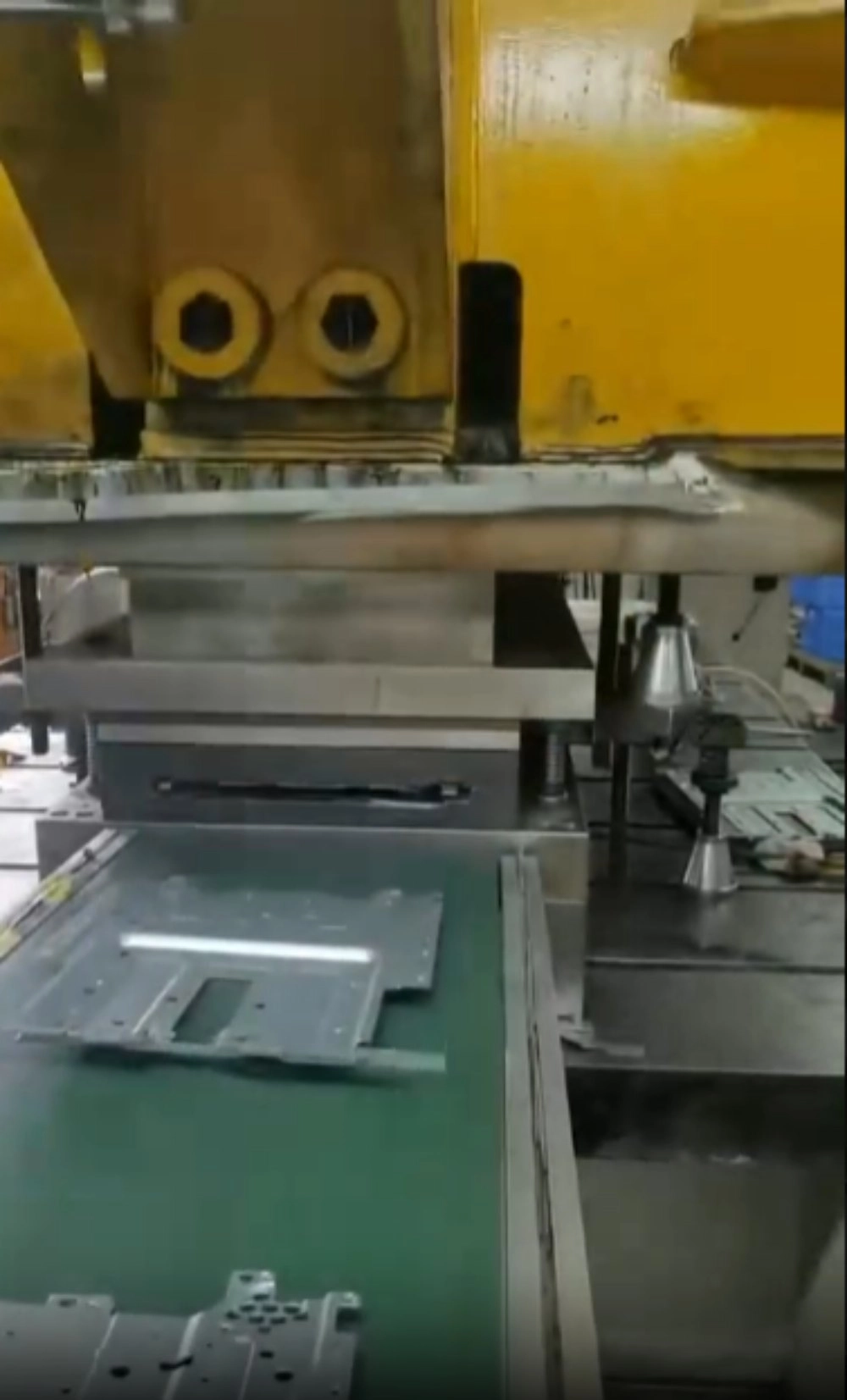
Before looking at individual applications, it's important to understand why this manufacturing process has become so popular.
A progressive die consists of multiple workstations inside one precision tool. As a continuous strip of metal advances through the die, each station performs a specific operation until the finished part is separated from the strip.
Because the entire process is automated, manufacturers benefit from:
· High production efficiency
· Excellent repeatability
· Tight dimensional tolerances
· Lower labor requirements
· Reduced material waste
· Stable quality during long production runs
These advantages make progressive die stamping especially suitable for companies producing thousands—or even millions—of identical metal parts every year.
The automotive industry is one of the largest users of progressive die stamping.
Modern vehicles contain hundreds of stamped metal components, many of which require tight tolerances to ensure proper assembly and long-term durability.
Common automotive applications include:
· Mounting brackets
· Reinforcement plates
· Seat frame components
· Battery connectors
· Motor housings
· Electrical terminals
· Heat shields
· Sensor brackets
These parts must not only meet strict dimensional requirements but also support automated vehicle assembly lines.
Manufacturers serving the automotive sector typically require:
· Stable production capacity
· Consistent material quality
· Full dimensional inspection
· Complete traceability
· International quality certifications
Suppliers capable of maintaining stamping tolerances between ±0.008 mm and ±0.03 mm while providing CMM inspection reports are well positioned to meet these demanding requirements.
Industrial machinery often operates under heavy loads and continuous working conditions, making component reliability critical.
Progressive die stamping is widely used to manufacture:
· Equipment brackets
· Protective covers
· Structural reinforcements
· Mounting plates
· Precision shims
· Fastening hardware
· Mechanical supports
Many of these components require additional manufacturing processes such as CNC machining, welding, or surface treatment after stamping.
Working with a supplier that offers one-stop manufacturing services can significantly simplify project management by reducing the number of subcontractors involved.
Compressors contain numerous precision sheet metal components that require excellent dimensional consistency.
Typical stamped parts include:
· Compressor shells
· Valve plates
· Mounting brackets
· Support frames
· Protective covers
· Pressure-related components
Some products also involve deep drawing stamping, particularly when manufacturing shell-shaped or pressure-resistant components.
By combining progressive die stamping with deep drawing technology, manufacturers can improve production efficiency while maintaining stable wall thickness and forming quality.
This integrated manufacturing approach is especially valuable for OEM compressor manufacturers seeking long-term production consistency.
Pneumatic systems require compact, lightweight, and highly accurate metal parts.
Applications include:
· Air cylinder brackets
· Valve mounting plates
· Pneumatic connectors
· Precision housings
· Air compressor accessories
Since many pneumatic components are assembled automatically, dimensional accuracy is essential.
Progressive die stamping supports this requirement by delivering highly repeatable parts suitable for automated assembly environments.
Construction equipment operates in demanding environments where metal components must withstand vibration, impact, and heavy loads.
Progressive die stamping is commonly used to manufacture:
· Reinforcement brackets
· Heavy-duty supports
· Protective shields
· Structural hardware
· Mounting components
Depending on the application, manufacturers may use carbon steel, galvanized steel, stainless steel, or high-strength drawing steel to achieve the required mechanical performance.
Combined with appropriate surface treatments, stamped components can provide excellent durability for outdoor applications.
Rail transportation requires extremely high manufacturing standards because safety and long service life are essential.
Typical stamped components include:
· Equipment mounting brackets
· Interior structural parts
· Cable management hardware
· Electrical supports
· Sheet metal assemblies
Manufacturers supplying the railway industry often need certified production systems and qualified welding capabilities to meet international project requirements.
Companies with certifications such as EN 15085 and ISO 9001 demonstrate stronger quality management systems for rail-related manufacturing projects.
Although aerospace production volumes are generally lower than automotive manufacturing, many precision sheet metal components still benefit from progressive die stamping.
Examples include:
· Equipment brackets
· Precision retaining clips
· Lightweight support structures
· Mounting hardware
· Electronic enclosure components
These products require exceptional precision, stable material properties, and strict inspection procedures.
Material traceability and comprehensive quality documentation are often mandatory throughout the manufacturing process.
As renewable energy and clean power projects continue to expand worldwide, manufacturers require metal components that can perform reliably in demanding operating environments.
Progressive die stamping is widely used to manufacture parts for:
· Electrical cabinets
· Control systems
· Mounting brackets
· Cable fixing components
· Structural connectors
· Protective covers
These components often require high dimensional accuracy because they are integrated into large assemblies where installation tolerances are very limited.
For projects in the energy sector, manufacturers also expect stable material quality, documented inspection records, and reliable batch traceability. Suppliers capable of providing material spectrum test reports and complete production documentation help customers meet increasingly strict quality requirements.
Semiconductor manufacturing equipment contains a large number of precision sheet metal parts that support highly automated production systems.
Typical applications include:
· Equipment racks
· Sensor mounting brackets
· Protective enclosures
· Precision support plates
· Connector hardware
· Mechanical positioning components
These products require excellent flatness and dimensional consistency to ensure precise equipment assembly.
With flatness control of ≤0.02 mm and tight stamping tolerances, progressive die stamping provides an efficient solution for manufacturing these high-precision components.
For many semiconductor projects, manufacturers also require customized production based on 3D CAD files, STEP models, or reverse engineering of imported parts, making engineering support just as important as production capability.
The rapid growth of electric vehicles, battery systems, and energy storage equipment has created increasing demand for precision metal components.
Progressive die stamping is commonly used to manufacture:
· Battery pack brackets
· Cooling system supports
· Electrical connection plates
· Structural reinforcements
· Busbar supports
· Mounting frames
These products often require lightweight materials such as aluminum while maintaining sufficient structural strength.
Because production volumes are typically high, progressive die stamping offers manufacturers an effective way to improve efficiency while maintaining consistent product quality throughout long production runs.
Electronic products contain numerous small metal components that require excellent repeatability.
Examples include:
· Shielding covers
· Connector terminals
· Metal clips
· Precision brackets
· Mounting plates
· Heat dissipation components
Many of these products involve intricate geometries and narrow dimensional tolerances that are difficult to achieve consistently using conventional fabrication methods.
Progressive die stamping enables manufacturers to produce these parts at high speed while maintaining stable quality across large production batches.
Today's OEM customers are looking for more than a parts supplier. They want a manufacturing partner capable of supporting the entire product development cycle.
A one-stop service can significantly simplify project management by integrating multiple manufacturing processes into a single workflow.
Typical services include:
· Mold design and manufacturing
· 7-day rapid sampling
· DFM (Design for Manufacturability) optimization
· Progressive die stamping
· Deep drawing stamping
· Precision punching
· Thick plate forming
· CNC machining
· Welding and assembly
· Full surface treatment
· Final quality inspection
· Export packaging
Instead of coordinating several suppliers, customers can manage the complete project through one engineering team, reducing communication costs and improving production efficiency.
Different industries require different material properties, and progressive die stamping is compatible with a wide range of metals.
Commonly processed materials include:
· Cold rolled steel
· Carbon steel
· Galvanized steel
· 304 stainless steel
· 316 stainless steel
· Aluminum
· Copper
· Special deep drawing steel
The appropriate material is selected according to the product's strength, corrosion resistance, weight, conductivity, or forming requirements.
Combined with precision tooling and optimized forming processes, these materials can meet the performance expectations of industries ranging from heavy machinery to precision electronics.
Many projects begin with an idea rather than a finalized drawing.
Experienced manufacturers help customers move efficiently from concept to production by providing technical support throughout the development process.
Engineering services may include:
· 2D CAD drawing review
· 3D STEP, IGS, and SolidWorks compatibility
· Reverse engineering from physical samples
· Design optimization
· Cost reduction recommendations
· Manufacturing feasibility analysis
These engineering capabilities are especially valuable for new product development, localization of imported components, and custom industrial equipment.
For companies seeking a reliable progressive die stamping partner, manufacturing capability and engineering experience should be evaluated together.
Established in 2005, Shanghai Hehua Machinery Technology Co., Ltd. and its subsidiary Hehua Machinery Technology (Kunshan) Co., Ltd., established in 2018, specialize in manufacturing key metal components for high-end industries including automotive, rail transit, aerospace, wind power, nuclear power, semiconductor equipment, industrial machinery, and new energy equipment.
Operating from a 17,800-square-meter manufacturing facility with more than 160 employees, Hehua combines in-house mold development, automatic stamping lines, precision presses ranging from 63T to 315T, CNC machining, welding, and complete surface finishing to provide comprehensive OEM and ODM solutions.
The company supports projects from prototype development to annual bulk production, offering:
· 7-day fast sampling
· Dedicated engineering support
· DFM optimization
· Complete dimensional inspection
· Material traceability
· Export-ready packaging
· A 98% on-time delivery rate
Its commitment to quality is demonstrated through internationally recognized certifications, including ISO 9001, IATF 16949, EN 15085, and EN 9606-1, ensuring products meet the requirements of demanding global industries.
From automotive manufacturing and industrial machinery to semiconductor equipment and new energy systems, progressive die stamping has become an essential manufacturing process for industries that depend on precision, efficiency, and repeatable quality.
By integrating multiple forming operations into a single automated production cycle, the process delivers consistent dimensions, high productivity, and reliable performance for large-scale production. When combined with engineering support, in-house tooling, deep drawing capabilities, CNC machining, welding, and comprehensive quality control, it provides OEM manufacturers with a complete solution for complex metal components.
Whether you are developing a new product, replacing imported parts, or expanding annual production capacity, partnering with an experienced manufacturer can help reduce development time while ensuring dependable production quality. Learn more about Progressive Die Stamping and discover how a one-stop manufacturing solution can support your next metal stamping project.


 AddressNo. 66 Xingpu Road, Lujia Town,Kunshan City, Factory Buildings 3 and 4
  en
en
 English
 繁体中文
繁体中文 Italian
 Spanish
 Japanese
 Portuguese
 Korean
 Russian
 French
 German
 Estonian
 Arabic
 Indonesian


 Message