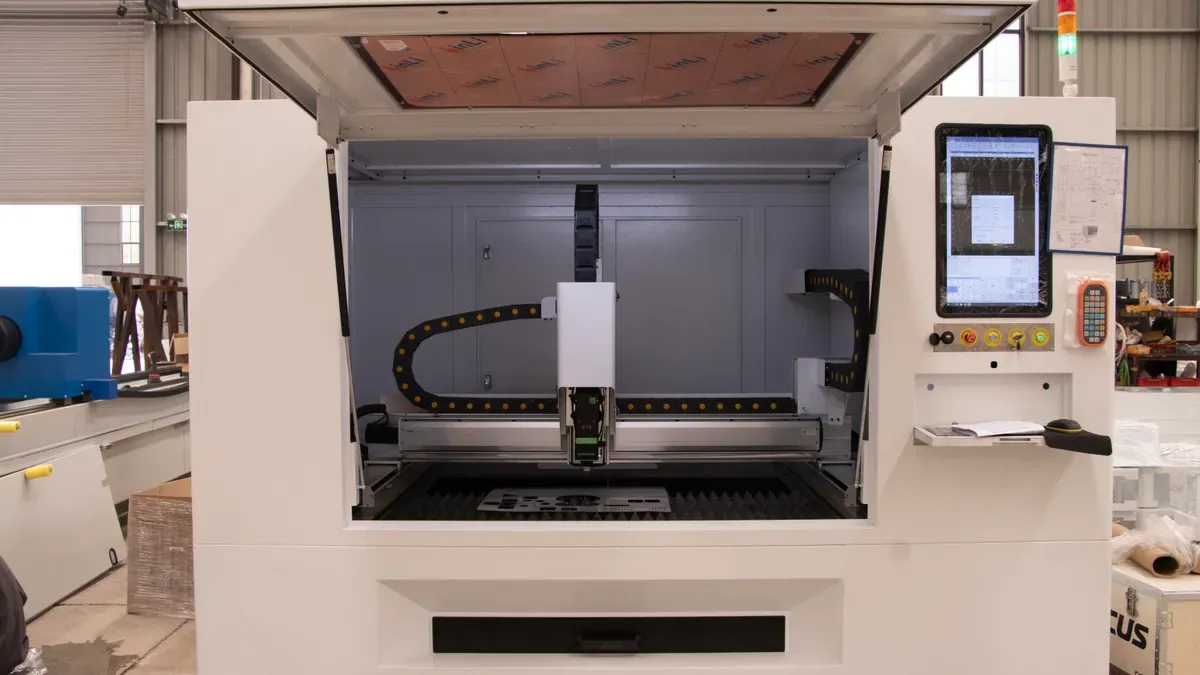
Finding a trustworthy China CNC machining factory for your OEM metal parts should not feel like a guess. You need to look at the right things. This guide gives you a simple plan to follow. First, you will learn the main things to check, like certifications and what machines they have. Next, you will go through a step-by-step way to check them out. Finally, you will learn the warning signs that show the difference between a reliable direct factory and a risky supplier. With this checklist, you can judge any machining partner with confidence. You will know exactly what to ask and what proof to get before you place an order.
Look for certifications such as ISO 9001 and IATF 16949 to make sure of quality.
Check what the machine shop can do, like how precise it is and what metals it can use.
Use a checking process: research, ask for prices, and test samples.
Look out for warning signs, such as quick quotes and no inspection reports.
Pick a direct factory so you get better control and dependability.
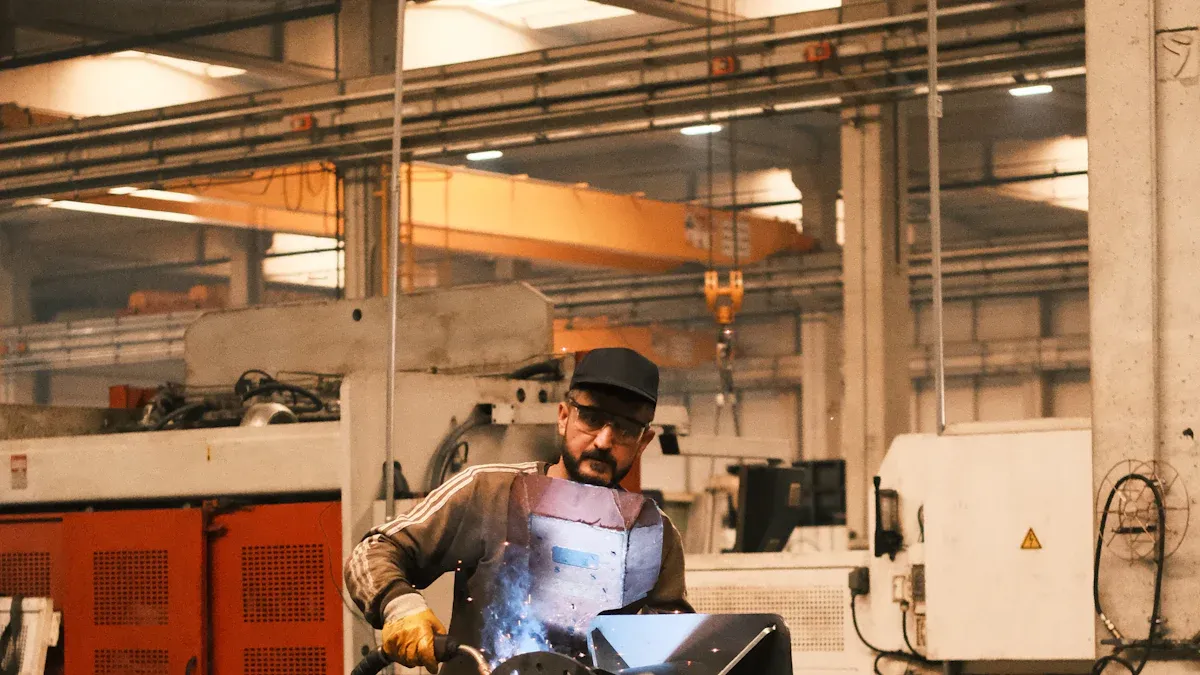
You need real proof before you trust any supplier with your OEM project. Two things matter most: certifications and machining capabilities. These separate a reliable china cnc machining factory from one that just talks big.
Certifications give you written proof of a factory's quality control system. They are not just marketing badges. They show verified systems for process control, documentation, and traceability.
Certifications like ISO9001:2015 and IATF16949:2016 are not just optional papers; they show verified systems for process control, documentation, and traceability. ISO9001 sets the base for quality management systems, while IATF16949 adds stricter automotive-grade process control, risk management, and traceability standards.
ISO 9001 gives the base. It requires standard quality checks at each production stage, written procedures, and regular audits. IATF 16949 goes further. It is the required base for any production automotive part sold to an OEM or Tier 1 supply chain. It adds PPAP, APQP, FMEA, and SPC requirements. For aerospace work, AS9100 is a must. Medical projects need ISO 13485.
How do you check these claims? Follow this process:
Ask for certificate copies and check expiration dates.
Verify certification through the issuing body's database.
Look for the certification body's accreditation information.
Ask for recent audit reports and corrective actions.
A trusted precision machining manufacturer will give all of this without hesitation. For example, a well-established precision machining manufacturer may hold certifications like ISO 9001, IATF 16949, and others, and operate a large facility with a substantial workforce to support high annual sales. They often have self-operated import/export rights and use ERP systems for production tracking.
Certifications prove process discipline. Equipment and tolerances prove execution ability. You need both.
Tolerance capability is the clearest sign. General CNC milling usually holds ±0.05 mm. A 5-axis CNC machining supplier in China working under good conditions can reach ±0.005 mm. That level of precision matters for complex shapes, thin walls, and tight positional requirements.
Machining Type | Typical Tolerance Range |
|---|---|
General CNC Milling | ±0.05 mm (±0.002 in) |
5-Axis CNC Machining | ±0.01–0.02 mm (±0.0004–0.0008 in) |
5-Axis (favorable conditions) | ±0.005 mm (±0.0002 in) |
Ask about single-setup machining. Finishing precision parts without moving them prevents tolerance stack-up and keeps datum accuracy. Simultaneous 5-axis capability lets a factory cut complex contours, undercuts, and compound angles in one pass. This cuts lead times and improves surface finish.
Material range also shows capability. Top factories machine aluminum 6061 and 7075, stainless steel 304 and 316, titanium, brass, and engineering plastics like PEEK and PTFE. Surface finishing services such as anodizing, plating, and heat treatment should be available in-house or through qualified partners.
Top factories offer integrated services such as CNC lathing, milling, metal stamping, sheet metal fabrication, welding, and mold manufacturing, supporting OEM-grade reliability across various industries.
When you evaluate precision machining manufacturers, ask for inspection reports and material certificates. A verified cnc machining factory will document every step from raw material to final inspection. Look for CMM inspection reports that confirm dimensional accuracy. Precision cnc suppliers with CMM inspection give you measurable proof, not just promises.
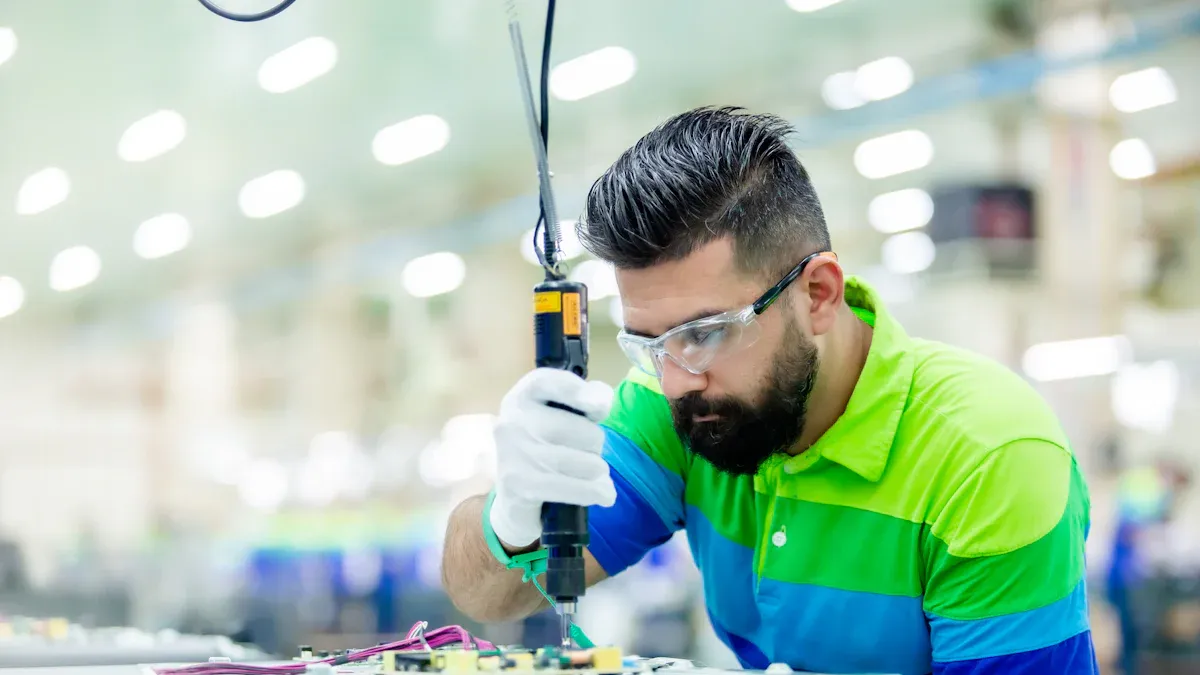
You have your evaluation rules ready. Now you need a clear process to tell serious suppliers apart from risky ones. This vetting path goes from research to quotes to real samples. Each step gives you stronger proof than the one before.
Begin with online directories and referrals. Sites like Alibaba and Made-in-China link you to manufacturers, not resellers. Look for verified supplier badges, Trade Assurance protection, and full profiles. Check customer reviews and transaction histories before you reach out. Buyers today want real-time reviews before they connect.
Your shortlist should have factories with clear strengths. Find shops that do 3-, 4-, and 5-axis machining plus finishing in-house. A direct factory that sends core work outside adds risk and delay. Check if the supplier has ISO 9001:2015 certification and uses CMM inspection. Ask for case studies or client testimonials from projects like yours.
You can search for specific factory names to find established players with multiple certifications and integrated capabilities. This one-stop model supports reliable, scalable machining solutions for OEMs in automotive, rail transit, and electronic industries.
Use this audit table to score each candidate:
Audit Criterion | What to Verify | Red Flag |
|---|---|---|
Machine Fleet | Ratio of 3-axis to 5-axis machines | Only standard 3-axis VMCs available |
Metrology | Presence of precision CMMs | Inspection relies only on calipers |
Traceability | Material Test Certificates (MTCs) | Refuses or delays providing certificates |
Certifications | AS9100 / IATF 16949 | Expired or missing ISO certifications |
A detailed quote shows how well a supplier understands your project. Give native 3D CAD files in STEP or IGES format so CAM toolpaths can be programmed right away. Include 2D PDF drawings with critical tolerances, datums, and threaded holes using strict GD&T standards. State the exact aluminum grade and temper, such as Al 6061-T6 or 7075. Define cosmetic zones, acceptable surface roughness (Ra), and coating requirements like Type II Anodizing. Ask for staggered pricing for different volumes, such as 10, 50, and 500 units, to check scaling efficiency.
Compare every quote using the same factors. Confirm whether the price covers machining only or also material, finishing, packaging, and inspection reports. Match the exact alloy and temper with certificate type. Verify that tight tolerances apply only where needed and confirm the inspection method. Ask for a committed ship date, not just an estimate. Check the quote validity period and what conditions may trigger a re-quote.
Red flags appear when a supplier returns a quote in minutes on a complex part with no questions. A price much lower than all others with no explanation signals trouble. Refusal to provide an FAI report or material certificate is a serious warning. Reluctance to sign an NDA or a request for full payment upfront should end the conversation.
Once you accept a quote, request sample parts. Compare first fabrication parts against your drawings. Keep an approved reference sample for future orders. This validates whether the factory can deliver precision metal components that meet your specifications. For high-precision small-batch custom parts, rapid cnc machining for custom parts is possible from capable suppliers. Precision cnc machining companies that document every step from raw material to final inspection give you measurable proof. When you work with precision cnc machining companies that use digital CMM test papers and first-piece inspection, you reduce risk before full production begins.
Warning signs show up early. You just need to know where to look. The table below lists common failure modes you may see when you vet cnc machining companies in china.
Red Flag | What It Looks Like |
|---|---|
Trading company posing as a factory | Your order goes to whichever shop has capacity, so no single factory stays accountable. |
Instant quote with no questions | A complex drawing gets a quote quickly without engineering review. |
Unverifiable ISO certificate | The issuing body's database does not list the supplier as currently certified. |
No First Article Inspection (FAI) | The supplier treats FAI as an extra-cost option instead of a standard step for new parts. |
Slow replies and unclear answers often come before production mistakes. A supplier who cannot explain DFM feedback or tolerance concerns will have trouble once your job begins. Watch for a communication blackout during active production. If you have to chase updates now, you will chase deliveries later.
Tolerance promises need extra attention. A shop that claims ±0.005 mm on every feature without proof is just guessing. Reaching ±0.005 mm or tighter requires special machining and inspection, and it applies to critical fits, not to every surface. Ask how the supplier will measure the feature. A caliper cannot check GD&T on complex geometry, but a CMM can. A lack of CMM capability is a major red flag, because without it a supplier cannot reliably confirm that precision parts meet tight specifications. No DFM pushback is also a warning, not a green light.
A quote far below competing bids usually hides something. For orders under 500 units, setup costs make up a significant portion of total job cost. A supplier who leaves out setup, deburring, inspection, or expedite fees from the line items will add them later. Ask for a line-by-line breakdown before you sign anything.
Lead times tell a similar story. Prototype runs usually take a few days, while production orders of 200 or more pieces take several weeks. A factory that promises a large, complex order in a very short time is not being honest. Choose a direct factory that states realistic schedules and confirms start dates. That discipline protects your high-precision small-batch custom parts and your production timeline.
You need three steps to check a china cnc machining factory. First, look at certifications and machining capabilities as real proof. Second, follow a clear vetting process: research candidates, ask for detailed quotes, and test sample parts. Third, watch for red flags like poor communication and promises that seem too good. A direct factory that passes each checkpoint will give you steady quality parts. You lower risk by testing supplier performance before you commit to big orders.
Use this checklist on your next project. Ask your shortlisted factories for quotes and production samples. Compare their answers against the criteria in this guide. You will find a partner that meets your standards for precision and reliability.
Begin with ISO 9001:2015 as the basic standard for quality management. For automotive OEM parts, IATF 16949:2016 is required. Aerospace work needs AS9100. Always look up the issuing body's database to make sure the certificate is still valid. A trustworthy supplier will share audit reports without any delay.
General CNC milling holds ±0.05 mm. A skilled 5-axis machining supplier can reach ±0.005 mm when conditions are good. Ask for CMM inspection reports to prove the accuracy. A shop that claims tight tolerances on every feature without measurement proof is just guessing, not machining.
Ask for sample parts after you accept a quote. Compare the first articles against your drawings. Keep an approved reference sample for future orders. This proves whether the factory makes precision metal components that meet your specs. Fast CNC machining for custom parts is possible from capable suppliers.
A complete quote lists material specs, tolerances, finishing, inspection, packaging, and lead times. Ask for a line-by-line breakdown. For orders under 500 units, setup costs make up a significant portion of the total job cost. A price far below others with no explanation points to hidden fees or quality shortcuts.
A direct factory owns its machines and controls production schedules. Trading companies send your order to whichever shop has open capacity. Ask for a live video tour of the floor. Request machine lists with model numbers. A real direct factory answers these questions fast and without excuses.


 AddressNo. 66 Xingpu Road, Lujia Town,Kunshan City, Factory Buildings 3 and 4
  en
en
 English
 繁体中文
繁体中文 Italian
 Spanish
 Japanese
 Portuguese
 Korean
 Russian
 French
 German
 Estonian
 Arabic
 Indonesian


 Message