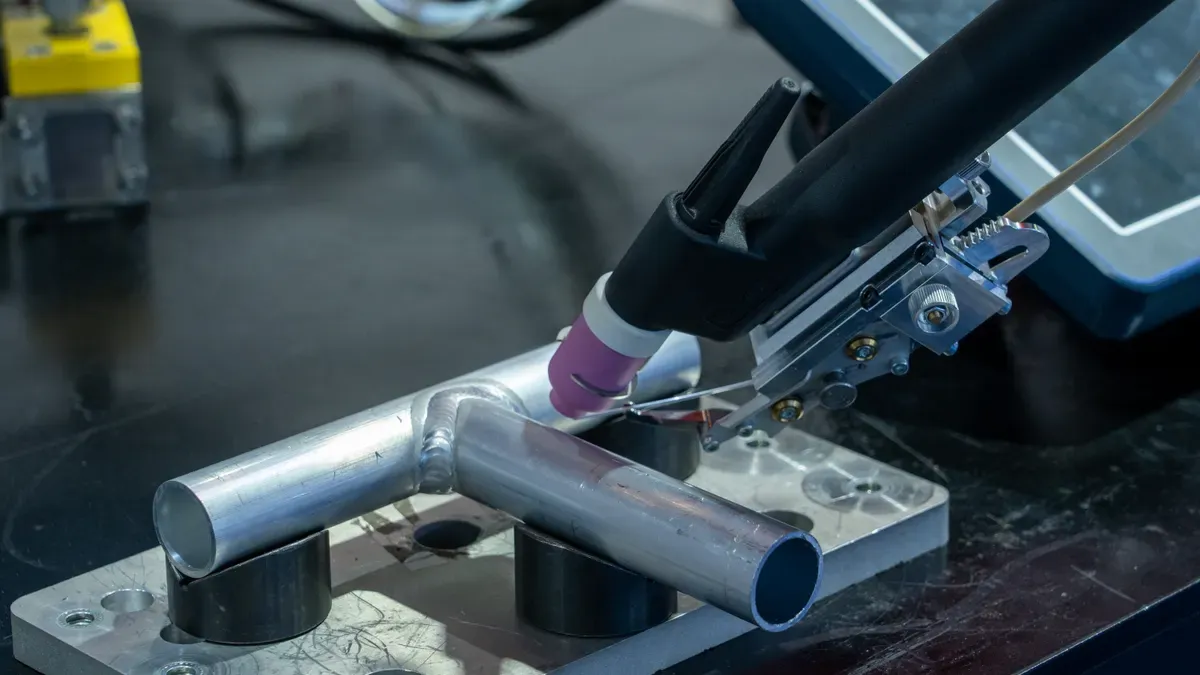
Picking the right TIG welding supplier for stainless steel parts needs a clear checklist. Check these seven things before you sign a contract:
Certification: following welding procedure specifications and relevant standards.
Stainless steel expertise: knowledge of metals and a proven project history.
Quality control: inspection and testing done in-house.
Equipment: a proper TIG welder setup and what it can do.
Capacity: how much they make each month and on-time delivery rates.
Communication: fast sample making and a dedicated engineering team.
Pricing: clear costs and good value over time.
A dependable partner meets every single point. Use this list to tell qualified suppliers apart from the rest. Focus on these criteria to protect your project and ensure success in the long run.
Look for ISO 9001 certification and welding procedure documents.
Pick a supplier who knows stainless steel well and has a strong record of past projects.
Make sure they have in-house quality control and right TIG welding equipment.
Check how much they can make each month and how often they deliver on time.
Focus on clear prices and good value over time, not just the cheapest option.
ISO 9001 certification shows a supplier's promise to keep quality management consistent. You need to check this basic credential when you evaluate a TIG welding supplier for stainless steel parts. Beyond ISO 9001, other certifications matter depending on your application.
Certification | Relevance to Stainless Steel TIG Welding |
|---|---|
AWS D9.1 | Sheet metal welding standard; relevant for thin stainless steel TIG applications |
AWS D1.6 | Stainless steel structural welding; specifies filler metals, cleanliness, and corrosion resistance |
ASME Section IX | Required for pressure vessels and piping; critical for TIG welding stainless steel in such applications |
AWS Certified Welding Inspector | Ensures TIG welding processes meet required standards for stainless steel projects |
A qualified supplier keeps Welding Procedure Specifications (WPS) and Procedure Qualification Records (PQR) for these certifications. These documents spell out every parameter — amperage, voltage, travel speed, and preheat temperature — needed to make code-compliant welds. A qualified supplier, for example, maintains Welding Procedure Specifications and Procedure Qualification Records and has a dedicated engineering team. This mix of documentation and engineering support makes sure your stainless steel parts meet industrial quality standards.
Stainless steel brings unique challenges in TIG welding. You need a supplier that knows how to handle different grades correctly — austenitic, ferritic, and martensitic. Each grade needs specific filler metals, shielding gases, and heat control methods.
Compliance goes beyond basic welding standards. Suppliers should follow regulatory frameworks such as the FDA Food Code, EU Regulation 1935/2004, 3-A Sanitary Standards, ASME BPE, and AWS D18.1. These standards apply when stainless steel parts touch food, pharmaceuticals, or other sensitive materials.
Heat management is critical. Proper control of heat input stops sensitization and keeps corrosion resistance. Suppliers must use low-heat processes and controlled cooling to avoid issues like oxidation and warping.
Welder qualification confirms competency. Formal tests include visual examination, destructive testing like bend tests, and non-destructive testing such as radiography or ultrasonic inspection. Documentation of qualified procedures and periodic requalification ensures consistent quality.
For structural stainless steel welding, follow AWS D1.6. This standard specifies special filler metals, cleanliness protocols, and corrosion resistance requirements. A supplier that shows compliance with these standards proves their capability to handle your stainless steel TIG welding project.
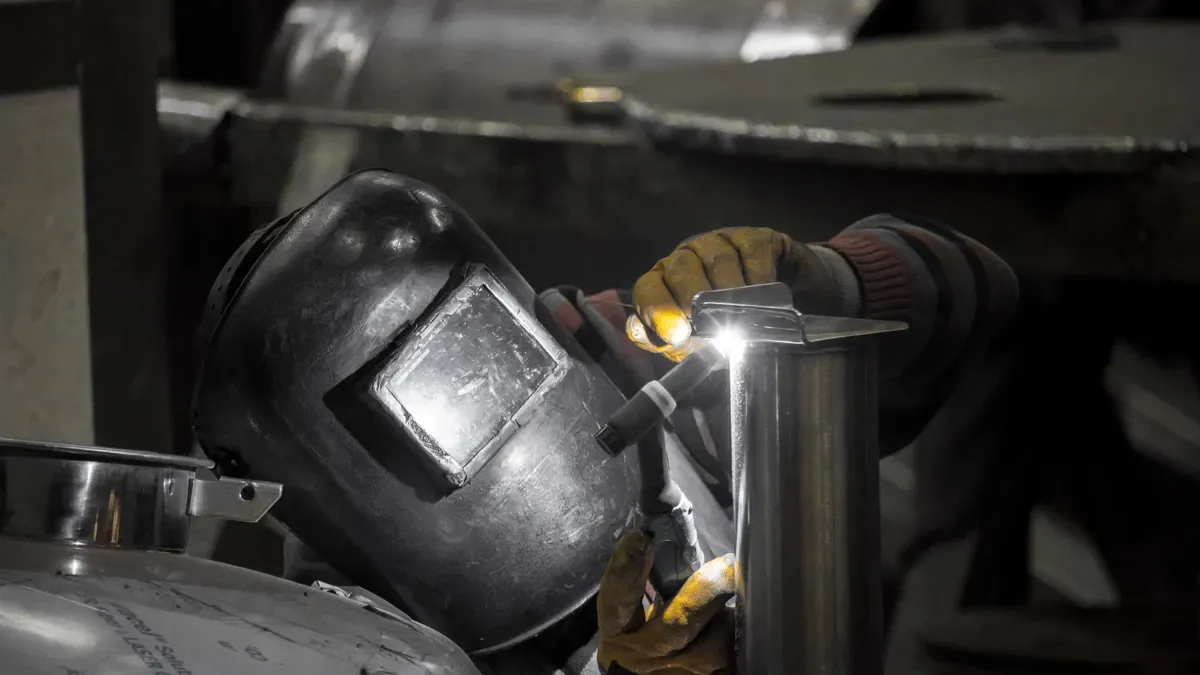
A good TIG welding supplier understands how tungsten, gas, and filler metals work together. Picking the wrong one in any area causes weak or discolored welds. Use this table as a fast guide when you check a supplier's technical skills.
Knowledge Area | Specific Requirement |
|---|---|
Tungsten Selection | Use 2% lanthanated tungsten (blue tip) for most stainless jobs; it gives a steady arc and fights contamination. Sharpen it to a fine point for a more focused arc. |
Shielding Gas | Use 100% argon at 20-30 CHF (10-15 L/min) to keep oxygen and nitrogen away from the weld. For thicker stainless steel, you can mix in a little helium to help it penetrate deeper. |
Back Purging | Use argon gas for back purging when you weld stainless tubing or thin sheets. This stops the back of the weld from oxidizing, so you get a smooth, silver finish instead of a burnt black color. |
Stainless steel traps heat because the melted joint and heat-affected zone do not let heat escape well. If the material sits at 800–1400°F (426–760°C), chromium and carbon join to form chromium carbide at grain boundaries. This drains chromium and leaves spots for intergranular corrosion. Weld color tells you what is happening: straw-colored or bright yellow is safe, light blue is probably safe, dark blue and purple mean a higher chance of carbide precipitation, and black means it has happened and the part needs rework.
Common problems include discoloration, distortion, porosity, cracking, and burn-through on thin stainless. Good techniques stop them. Use clamps, fixtures, or tack welds and switch weld locations to spread heat evenly. Dry filler rods and gas lines well to stop porosity. Back purging with argon stops oxidation on the underside. For thin stainless, use lower amperage and smaller filler rods like ER308L 0.035" and use pulsed TIG to cut heat input. Control heat input with pulsed TIG, lower amperage, and shorter welding cycles. Use back-stepping sequences and intermittent welds so the material cools between segments. Proper clamping and heat sinks keep alignment and release heat.
A strong portfolio shows a supplier can handle your material and industry. A supplier with broad material experience and both manual and robotic TIG welding capabilities can handle prototypes and mass production. This range matters because each material needs different heat control and filler metals.
Industry experience shows depth. In oil and gas, suppliers handle refinery repairs, subsea valves, and clad Inconel welds. Medical work needs cosmetic weld quality, low distortion, and minimal hexavalent chromium fumes for MRI and hospital equipment. Food and beverage projects use stainless and duplex for sanitary fabrication, where TIP TIG removes spatter, visible fumes, distortion, and rework. When you check a TIG welding supplier, ask for project examples in your field. Suppliers serving these industries often have a dedicated engineering team to lower deformation and rejection rates.
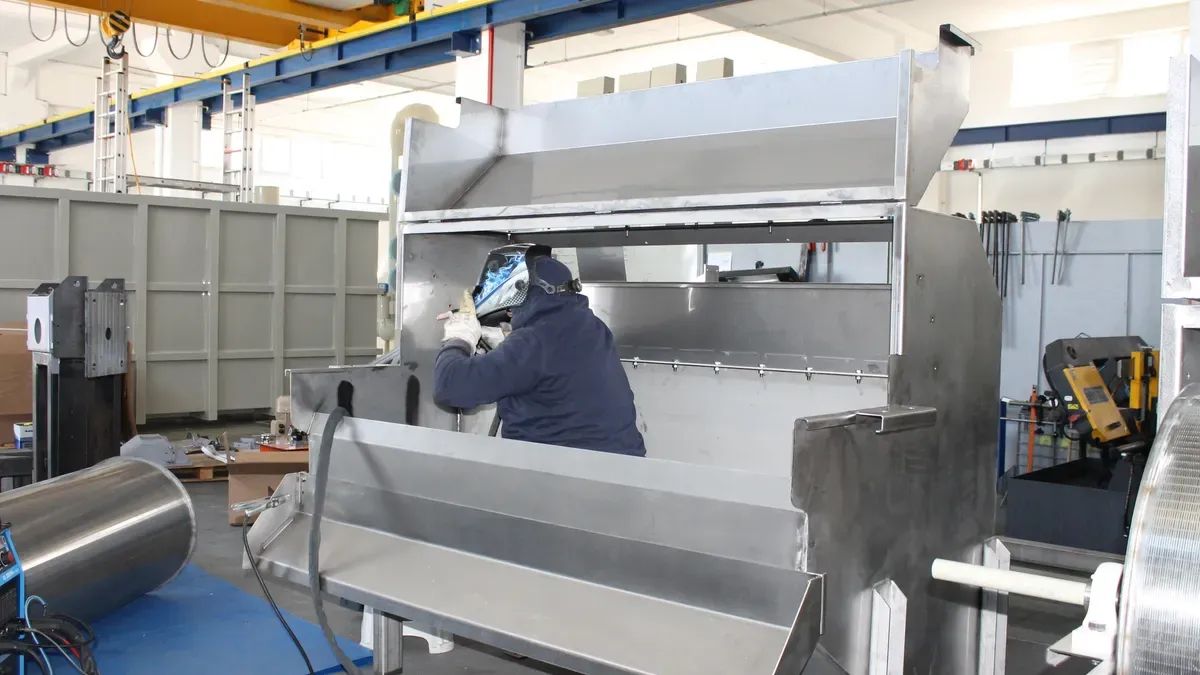
A good TIG welding supplier checks every weld before it ships. Your supplier should look for six common problems: cracks, porosity, undercut, slag inclusion, incomplete fusion, and overlap. These flaws make the joint weak and lead to corrosion.
For multi-pass TIG welding on stainless steel, all slag must be removed before the next bead is laid. Your supplier should clean between passes with a stainless steel wire brush. This step stops contamination that causes porosity, slag inclusion, and cracks.
A reliable supplier has a complete inspection line and offers one-stop service including blanking, fixture fabrication, welding, machining, and finishing. You get a finished part from a single source.
The right machine setup is the difference between clean welds and defective ones. Your supplier must control polarity, amperage, gas flow, tungsten type, and interpass temperature. The table below lists the key settings.
Parameter | Recommended Setting |
|---|---|
Polarity | DCEN (Direct Current Electrode Negative) |
Amperage | Controlled based on material thickness |
Shielding Gas | 100% Argon at 20-30 CFH with gas lens |
Tungsten | 2% lanthanated or 2% ceriated, sharp point |
Interpass Temperature | Controlled to avoid sensitization for austenitic grades |
Robotic TIG welding makes results even more consistent. A robotic system uses a non-consumable tungsten electrode and a separate filler rod. It creates clean, precise welds with a better surface finish. Robots follow programmed movements that remove human variation. They also keep running without getting tired.
TIG robotic welding produces the highest-quality, lowest-distortion welds. Where weld integrity, appearance, and traceability are non-negotiable, TIG is the process of choice.
A supplier may offer both manual and robotic TIG welding for prototypes and mass production, with equipment that handles various materials.
How much a TIG welding supplier can make tells you if they can handle your order size. A supplier with high capacity can ship large volumes without slowing down. They also maintain a high on-time delivery rate. This matters because late shipments mess up your own production plan. For stainless steel parts, welding delays can stop your whole assembly line. You need a partner who meets deadlines every time. High capacity plus reliable delivery keeps your project on track from prototype to mass production.
Fast sample turnaround is a sign of responsiveness. This speed matters because you must approve weld quality, fit, and surface finish before full production. Any delay in sampling pushes back your whole timeline and can cause missed market windows.
Clear communication matters just as much for complex stainless steel work. A dedicated engineering team helps you avoid problems before they start. A dedicated engineering team is key to keeping high quality and documentation standards. Engineers help cut material costs, make manufacturing smoother, and help clients improve product designs for easier production. This support matters when you weld complex stainless steel parts with tight tolerances.
Skilled welders also make a difference. They handle tricky jobs with precision and care. TIG welding is chosen for detailed, custom work and special alloys, so it is great for complex stainless steel projects. Certifications like AWS D1.6 prove welder skills and ensure compliance with industry standards. When you pick a supplier with a dedicated engineering team and qualified welders, you lower the risk of rework, wasted material, and project delays. Good communication means fewer surprises and a smoother path to finished parts.
A clear quote shows every cost line. You should see material, labor, setup, welding time, inspection, and finishing listed on their own. A supplier who gives one lump sum hides where your money goes. Ask for a detailed estimate before you sign. This lets you compare bids fairly and find hidden fees.
Good suppliers also explain what drives cost. Stainless steel grade, part thickness, weld length, and tolerance requirements all change the final number. When a supplier walks you through these factors, you learn enough to make smart design choices. Some suppliers provide design for manufacturability (DFM) optimization as part of their quoting process. This service helps you catch manufacturability issues early and avoid costly surprises later.
The lowest bid rarely gives you the lowest total cost. A cheap quote often means cut corners — thinner material, fewer inspections, or less skilled welders. Those shortcuts show up later as defects, delays, and field failures. Look at the full picture instead.
Factor | Why It Matters |
|---|---|
Total Cost of Ownership (TCO) | Covers acquisition, operation, maintenance, and lifecycle costs — not just the quoted price |
Rework and Rejection Rates | Poor weld quality raises production costs, wastes time, and creates warranty exposure |
Delivery Reliability | Late shipments disrupt your schedule and add expedite fees or buffer inventory |
After-Sales Support | Warranty coverage and technical help reduce long-term disruptions |
A cheaper machine might save money upfront but cost more in the long run due to inefficiency, high maintenance, or limited functionality. When viewed from a total cost of ownership perspective, a higher-quality welder with strong after-sales support may deliver a better return on investment than a budget option.
Design for manufacturability optimization shows how value-added service lowers long-term costs. Early design changes — like moving a hole away from a bend line or adding bend relief — stop scrap at zero extra cost. These small adjustments lower rejection rates and keep your total cost of ownership down. A supplier that combines relevant certifications with a dedicated engineering team delivers this kind of proactive support.
Certification, stainless steel expertise, quality assurance, equipment, capacity, communication, and pricing form the seven pillars of a reliable TIG welding supplier for stainless steel parts. Use this quick checklist when you evaluate potential partners:
Verify relevant certifications and WPS documentation
Confirm metallurgy knowledge and relevant project experience
Inspect in-house testing procedures and equipment setup
Assess monthly capacity and on-time delivery rates
Review quoting transparency and total cost of ownership
A supplier that meets every criterion provides the necessary certifications, engineering support, and value-added services. Prioritize long-term partnership value over short-term cost savings. A supplier who invests in quality today prevents costly rework and project delays tomorrow. Choose a partner focused on your project's long-term success.
Pulsed TIG welding is ideal for thin stainless steel. It uses less heat and reduces warping. You avoid melting through thin material. This method gives you better control of the weld puddle.
Argon gas is used to shield the back of stainless steel TIG welds, keeping oxygen away and producing a smooth finish without discoloration or scaling.
List the stainless steel grade, wall thickness, weld length, and tolerance needs. Include any relevant standards like AWS D1.6 or ASME Section IX. These details help the supplier give you a correct price.
Yes. Some suppliers offer manual TIG welding for prototypes and robotic TIG welding for large batches, providing fast samples and consistent quality for high volumes.
DFM optimization catches design problems before production begins, checking hole placement, joint shape, and wall thickness. These changes cut rejection rates and keep total cost per part low.


 AddressNo. 66 Xingpu Road, Lujia Town,Kunshan City, Factory Buildings 3 and 4
  en
en
 English
 繁体中文
繁体中文 Italian
 Spanish
 Japanese
 Portuguese
 Korean
 Russian
 French
 German
 Estonian
 Arabic
 Indonesian


 Message