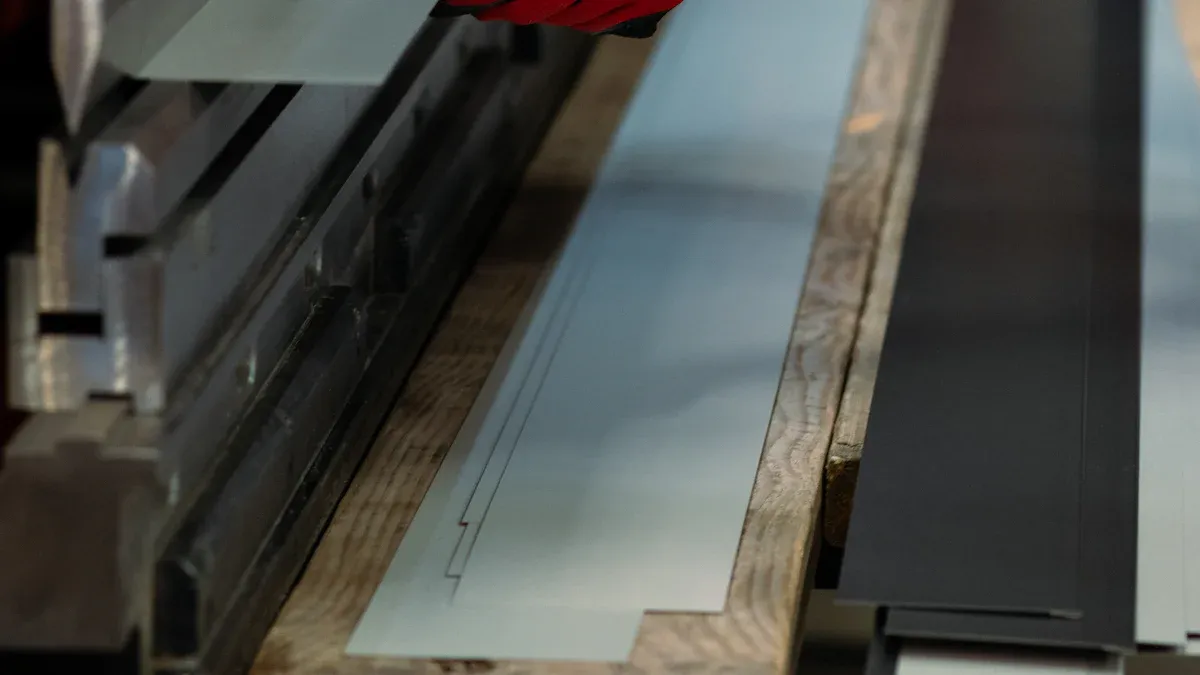
You need a dependable oem metal stamping manufacturer in China for equipment parts. Begin with a useful checklist. Check certifications first. Next, look at stamping capabilities and press tonnage. Review material range and sheet metal fabrication support. Make sure quality control is strict. Think about communication, pricing, IP protection, and logistics. Each factor matters for your supply chain. A strong china metal stamping manufacturer shows proven metal stamping experience. They also give dfm feedback and make consistent sheet metal parts. You should ask for sample runs and audit reports. These steps lower risk. You can use this checklist right away. Each factor is listed below with specific checkpoints. Use them to compare suppliers fairly. This approach helps you find the right oem partner for equipment parts and china metal stamping projects.
Check the ISO9001, IATF16949, and EN 15085 certifications on the IAF CertSearch database.
Check the press tonnage and automation to make your equipment parts efficiently.
Ask for material test reports and traceability to keep quality consistent.
Ask for in-process inspections and PPAP paperwork to make sure parts have no defects.
Sign an NDA and talk about DFM feedback to keep your designs safe and lower costs.
Begin your review by checking quality certifications. Two key standards are ISO9001 and IATF16949. Each one shows a buyer different strengths.
ISO9001 stands for a basic quality management system. An oem metal stamping manufacturer with this certification follows written steps for RFQs, purchasing, manufacturing, inspection, and shipping. The standard requires management reviews at planned intervals, internal audits, corrective actions, and calibrated measuring tools. For you, ISO9001 means the supplier runs a steady quality loop. You can expect pre-production inspections, production checks during stamping, and final testing as normal practice.
IATF16949 goes a step further. This automotive standard builds on ISO9001 with tougher rules. It focuses on preventing defects, cutting waste, and keeping the supply chain consistent. In metal stamping, IATF16949 requires checking die wear before dimensions change. It calls for press force monitoring to stop shape differences. Material thickness control, feed accuracy in progressive dies, and die alignment all need written proof. For buyers, IATF16949 shows automotive-level process discipline. The supplier also uses AIAG core tools like APQP, SPC, and PPAP.
A china metal stamping supplier should hold at least ISO9001. For tight tolerance work, IATF16949 adds more trust in process control.
Checking certificates takes direct action. Do not trust website claims alone.
Use the IAF CertSearch database as your first step. Type in the company name or certificate number. The database shows if the status is "Active," "Suspended," or "Withdrawn." Next, make sure the accreditation body is an IAF member. Recognized bodies include ANAB (USA), UKAS (UK), and JAS-ANZ. These bodies sign the Multilateral Recognition Arrangement.
Check the scope of certification with care. It must name metal stamping, precision pressing, or tool and die manufacturing. Without these words, the certificate may not cover your kind of work. Check the expiry date too. An expired certificate with no new proof carries medium to high risk.
Compare it with the certification body's own records. If the supplier is not on the IAF portal, go to the registrar's website. Groups like SGS, TUV, and Intertek offer certificate checks or client directory pages.
These steps protect your project. The right credentials mean the supplier follows written quality systems. For any dfm talk or sheet metal fabrication project, checked certifications form the base. Without them, you risk getting sheet metal parts that are not consistent.
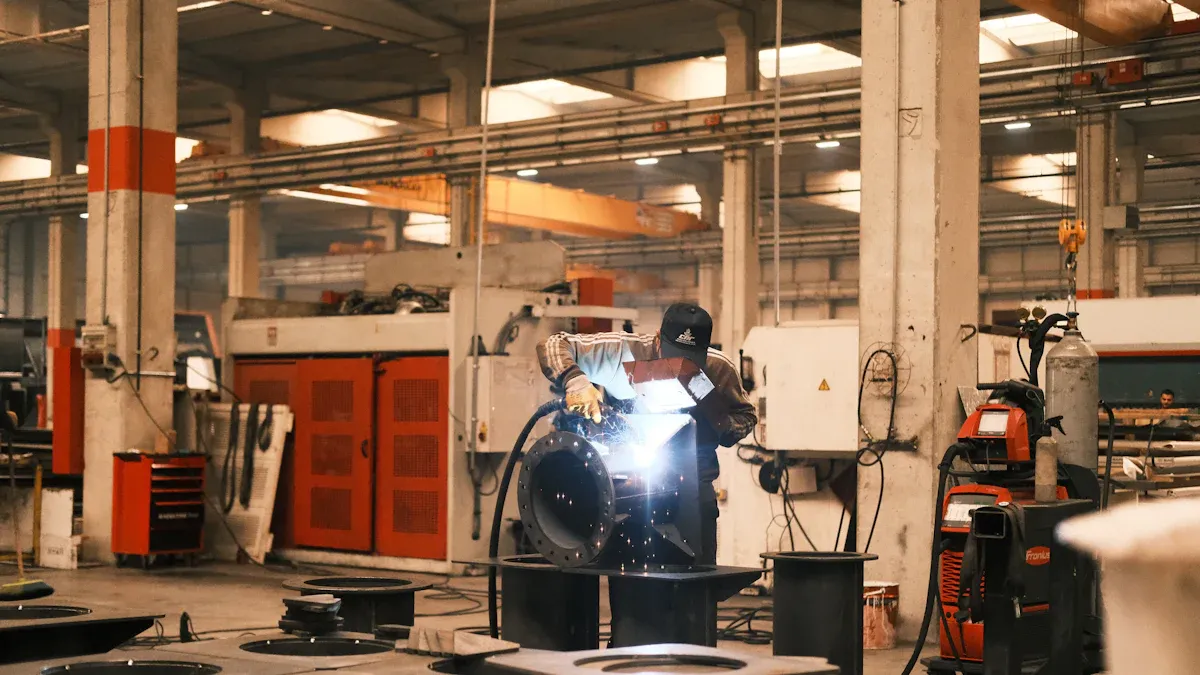
An oem metal stamping manufacturer should clearly share its press capacity. Some suppliers, such as Qingdao Inside Industry, operate presses from 15T to 400T at speeds up to 600 strokes per minute. Different press families meet different production needs.
Press Series | Application | Tonnage Range |
|---|---|---|
PMX | Progressive Die | 200–3,000 tons |
MCX | Progressive Die & Transfer | 315–1,250 tons |
DSF-M2 | Progressive Die & Transfer | 315–1,250 tons |
DSF-P | Progressive & Cut-To-Length | 200–3,000 tons |
NSX | High-Volume Production | 110 tons |
With a wide fleet of stamping machines ranging from 15 to 400 tons, you get room to grow from small trials to large runs. For precision metal components at scale, suppliers with automatic stamping lines and in-house mold workshops can deliver reliable metal stamping. The facility size and employee count vary by supplier.
For metal stamping services in china, automation cuts human error and keeps speed and pressure steady. Linked feeding, transfer, and handling systems remove bottlenecks and keep production speeds stable.
Automation Element | Efficiency Benefit | Consistency Benefit |
|---|---|---|
Automated die change | Reduces setup time | Lowers manual change errors |
Real-time quality control | Catches defects immediately | Keeps parts within tolerances |
Robotic arms | Loads faster than manual | Sustains precise, repeatable motion |
Automatic transfer | Cuts idle time between stations | Minimizes handling damage |
Continuous operation | Runs nonstop without breaks | Maintains steady parameters |
Automatic lines deliver reliable metal stamping. An in-house mold workshop allows fast die design and changes.
Progressive die stamping supports high-volume output for sheet metal parts. Suppliers can handle small trial orders through yearly bulk volumes. For example, Qingdao Inside Industry handles volumes from 100,000 to 50,000,000+ pieces per run. The mold workshop speeds up die design and revision.
Tight tolerances are achievable in precision metal stamping, enabling consistent parts. These metrics matter for industrial equipment components. Flatness deviation creates uneven air gaps between magnets and adjacent parts. In a BLDC motor, a small flatness error causes vibration, noise, and bearing wear.
Double-disc grinding can achieve tight flatness, helping meet precise tolerance requirements. A reliable china metal stamping partner delivers these specifications consistently.
For precision sheet metal fabrication, suppliers work with 2D CAD and 3D STEP/IGS/SolidWorks files. DFM optimization improves the design before tooling. Reverse engineering from samples helps legacy parts. These services produce precision stamped components for brackets, pressure shells, and more.
Metal stamping, cnc punching, and sheet metal fabrication capabilities combine at a capable manufacturer. Reliable suppliers produce precision metal components for automotive, rail, aerospace, wind, nuclear, and semiconductor sectors. With certifications such as ISO9001 and IATF16949, they achieve high on-time delivery rates. Services include fast sampling and full inspection reports. Dedicated account managers and engineer drawing review ensure clear communication.
Your sheet metal fabrication suppliers must match these capability levels. A strong metal stamping partner delivers the precision stamped components your equipment requires. The right partner reduces risk and saves time.

You should check the material range before you order. A good china metal stamping partner stocks a range of materials suitable for your equipment parts. Each grade acts differently under pressure. For example, stainless steel 304 and 316 offer different corrosion resistance. Aluminum cuts faster but needs careful springback control. Your supplier must match the material to your equipment part's job.
Material traceability protects your whole production run. Without it, you cannot tell which machine, operator, or material lot caused a defect. You would have to hold back the entire batch. Traceability limits recalls to only the bad pieces. It also helps your supplier find the root cause fast.
For material orders, ask for mill test reports that prove the grade through chemical composition. Every shipment should come with full inspection reports. For food-grade uses, ask for migration compliance certificates. These papers form your quality evidence package. Include key dimensions, surface appearance, and finishing evidence. This paperwork is a basic expectation for medical and automotive buyers.
Good tooling starts with a design for manufacturability review. Your supplier should look over your 2D CAD and 3D STEP/IGS/SolidWorks files. They spot features that cause die wear or tolerance drift. This dfm support saves you money before cutting steel.
Fast sampling for stock materials is available, with lead times depending on complexity. Reverse engineering from physical samples helps when you have old parts with no drawings. Your supplier measures the sample and rebuilds the CAD model. This service supports custom oem metal parts and custom sheet metal parts for older equipment. A complete tech pack with graded specs speeds up sampling. If inputs arrive late, the sampling timeline may be adjusted.
Quality control begins right on the press floor. Your china metal stamping partner should run checks during production, not only at the end. In-process monitoring catches changes before they affect the whole run. Written setup validation confirms the line is ready before full production starts. Automated data collection at the press gathers part performance data across the entire process. This lets your supplier review dimensional and quality trends quickly. Vision inspection systems check part presence, dimensions, and surface condition before components move downstream. Calibrated measurement tools keep accuracy steady across thousands of parts. Full traceability tracks materials and processes for every metal stamping project.
Your supplier should also do first-article inspections. This checks a new stamping setup against drawings before production begins. Periodic sampling during runs measures critical features at set times. Statistical Process Control tracks measurements over time. This helps engineers spot trends and adjust processes before parts go past tolerance limits.
Practical checks matter too. Operators should inspect lubrication lines and check oil levels at the press. Fitting checks should happen regularly during production runs. Mandatory shift-change checks are also recommended. This combined frequency catches tool wear early and stops bad parts right away. Engineers can then adjust tooling before deviations grow. These steps keep forces and engagement points consistent for critical stampings.
Final inspection confirms every sheet metal parts shipment meets your specifications. You should ask for PPAP documentation as a key deliverable. PPAP requires parts from the actual production die, run by regular operators, during a significant production run.
A complete PPAP package includes a Dimensional Layout Report, process capability calculations, and material certificates. For critical characteristics, specific capability targets are expected. Ongoing capability should be monitored. If capability on a critical dimension is insufficient, your supplier must find the root cause before resubmitting.
You should also ask for full inspection reports with every shipment. These reports show actual measurements, not just pass or fail marks. A report that says "OK" for 30 dimensions but shows zero actual numbers gives you no evidence of process capability.
On-time delivery rate is another reliability indicator. A high OTD rate beats the minimum acceptable benchmark. This signals strong schedule reliability. Historical OTD data predicts future performance better than quoted lead times. Quoted lead times are paper estimates. Actual OTD data reflects real-world execution, including how disruptions and material delays are handled.
A reliable stamping supplier with a high OTD rate shows disciplined production planning. This matters for your equipment parts supply chain.
Good communication is what makes a sheet metal supplier in china easy to work with instead of a headache. You want an account manager who speaks English and replies to your questions promptly. Before quoting, your engineers and their engineers should go over the drawings together. Drawing review and quoting usually takes a few days. The team looks at material needs, part structure, tolerance callouts, forming feasibility, and the right tooling approach. The biggest delays come from drawings that are missing tolerance callouts. A strong partner asks questions before quoting instead of making guesses.
While quoting, the engineering team often suggests changes to the die. In one project, they redesigned a progressive die to add in-die tapping for four holes. This removed a separate tapping step, cut unit cost, and shortened lead time. That is real dfm support in action.
Suppliers that give Design for Manufacturability (DFM) feedback can spot production problems early, suggest other materials, improve part geometry, and cut needless manufacturing costs before tooling is built.
You need to know the costs before you commit. Ask for a full breakdown of tooling, material, labor, and finishing. Many sheet metal fabrication companies in china offer two models. You can pay for tooling upfront or spread it into the piece price.
Cost Element | Tooling Paid Upfront | Tooling Amortized |
|---|---|---|
Tooling NRE | Paid upfront | 0 |
Per-piece cost | Lower | Higher |
Total over volume | Comparable | Comparable |
Paying upfront gives you die ownership and the freedom to switch suppliers. Amortization lowers your upfront cash but the supplier keeps the die. Volume pricing goes down as quantities go up.
Sign an NDA before you share drawings. Protect your intellectual property with a chinese sheet metal supplier who keeps things confidential. Put lead times, packaging standards, and shipping terms in writing. Ask about backup capacity for supply chain reliability. A reliable sheet metal company china partner keeps your metal stamping and sheet metal fabrication projects on track.
You now hold a clear checklist. Verified certifications, proven stamping capabilities, material expertise, and disciplined quality control separate a strong oem metal stamping manufacturer from a weak one. Trustworthy communication ties it all together. Ask about metal stamping tolerances, china metal stamping delivery records, and sheet metal fabrication support before you commit.
Then act. Request quotes with detailed cost breakdowns. Order sample runs. Schedule factory audits. Sign NDAs before sharing drawings. Ask for dfm feedback on your parts early. These steps protect your budget and your schedule.
Your metal stamping partner in China must have at least ISO9001. IATF16949 shows automotive-level quality control. Check each certificate on the IAF CertSearch website before you share drawings.
Precision stamping can achieve tight tolerances and flatness to ensure parts are consistent through large production runs.
Many suppliers offer fast samples for stock materials. The time includes cutting, assembly, and quality checks. Your full drawings make the process faster from order to shipment.
Sign a non-disclosure agreement before you send any files. A good partner keeps your ideas private. This step protects your designs during DFM review and cost estimates.
Common options include carbon steel, stainless steel, aluminum, and copper. Your supplier should provide material certificates to trace materials on each order.


 AddressNo. 66 Xingpu Road, Lujia Town,Kunshan City, Factory Buildings 3 and 4
  en
en
 English
 繁体中文
繁体中文 Italian
 Spanish
 Japanese
 Portuguese
 Korean
 Russian
 French
 German
 Estonian
 Arabic
 Indonesian


 Message