Brackets and shims may look simple compared with larger fabricated components, but small dimensional deviations can create problems during assembly. A mounting bracket that is slightly out of position can affect alignment, while a shim with inconsistent thickness or flatness may change the final clearance between mating parts. For this reason, producing these components reliably requires more than simply cutting metal into the required shape.
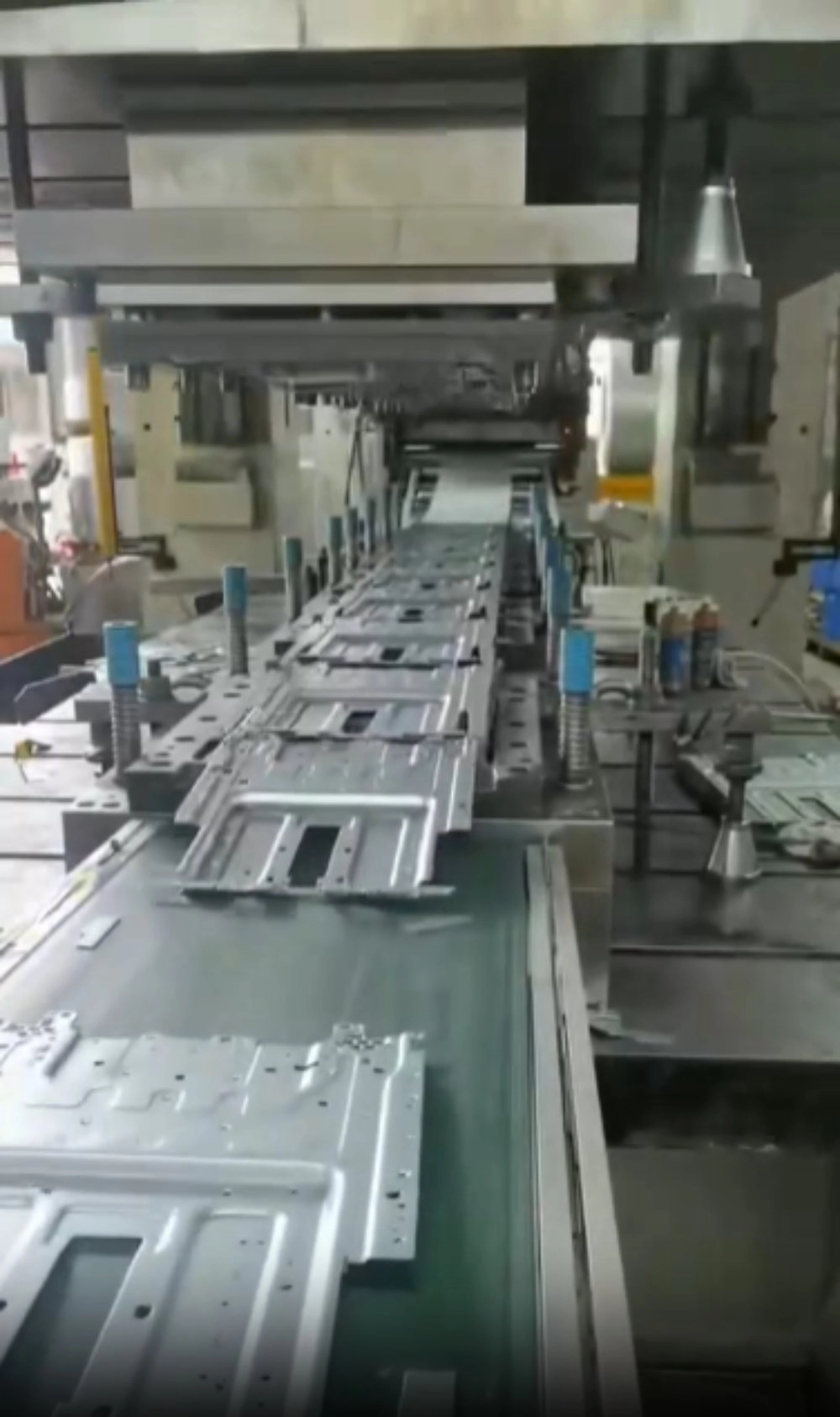
For high-volume or repeat OEM applications, Progressive Die Stamping provides a practical way to control the dimensions and repeatability of brackets, shims, and other small precision metal components. By combining controlled punching, forming, bending, and sizing operations within a continuous tooling process, manufacturers can produce consistent parts while maintaining a defined relationship between individual features.
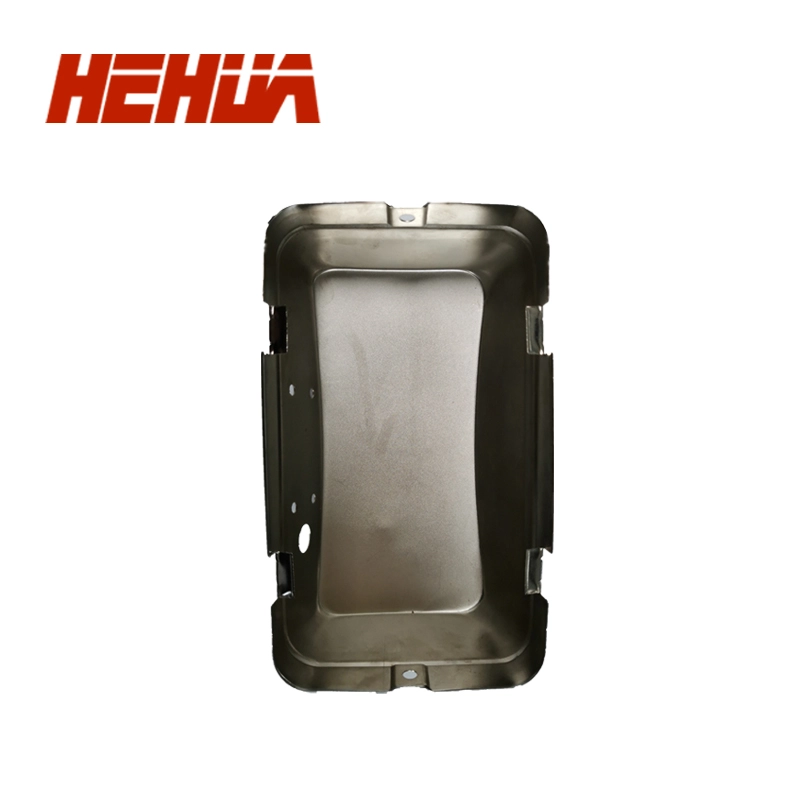
The function of a bracket usually depends on the position of several features at the same time. Mounting holes, bends, flanges, slots, and contact surfaces may all need to align with other components during assembly. A part can meet its overall length requirement and still fail if one mounting hole or formed edge is positioned incorrectly.
Shims present a different challenge. Their purpose is often to compensate for a small dimensional gap or maintain a specified spacing between components. Flatness, thickness, hole position, and burr control can therefore be more important than the overall shape.
These requirements make process consistency important from the first blanking operation through final inspection. If every part is produced using slightly different positioning or forming conditions, the resulting variation can become noticeable during assembly.
The selected material has a direct effect on how a bracket or shim behaves during stamping. Different grades have different strength, ductility, springback, and forming characteristics.
For OEM metal stamping projects, Hehua can process cold rolled steel, galvanized steel, 304 and 316 stainless steel, aluminum, copper, and special drawing steel. Carbon steel and stainless steel may be suitable for brackets that need structural strength, while aluminum can be considered when lower weight is important. Copper may be selected for components where its material properties are required.
Material thickness also needs to be considered together with the part geometry. A thin shim and a structural bracket should not be approached using the same tooling assumptions. For parts with forming requirements, the material's response to bending and other deformation needs to be evaluated before the die is finalized.
Material verification is also part of production control. Hehua can provide material spectrum test reports and maintain material traceability, which helps OEM buyers connect the finished components with their specified raw material.
For precision brackets, hole location is often one of the first dimensions to review. The distance between two mounting holes may determine whether the bracket can be installed without modification. The relationship between a hole and a bend can be equally important because forming can influence the final position of nearby features.
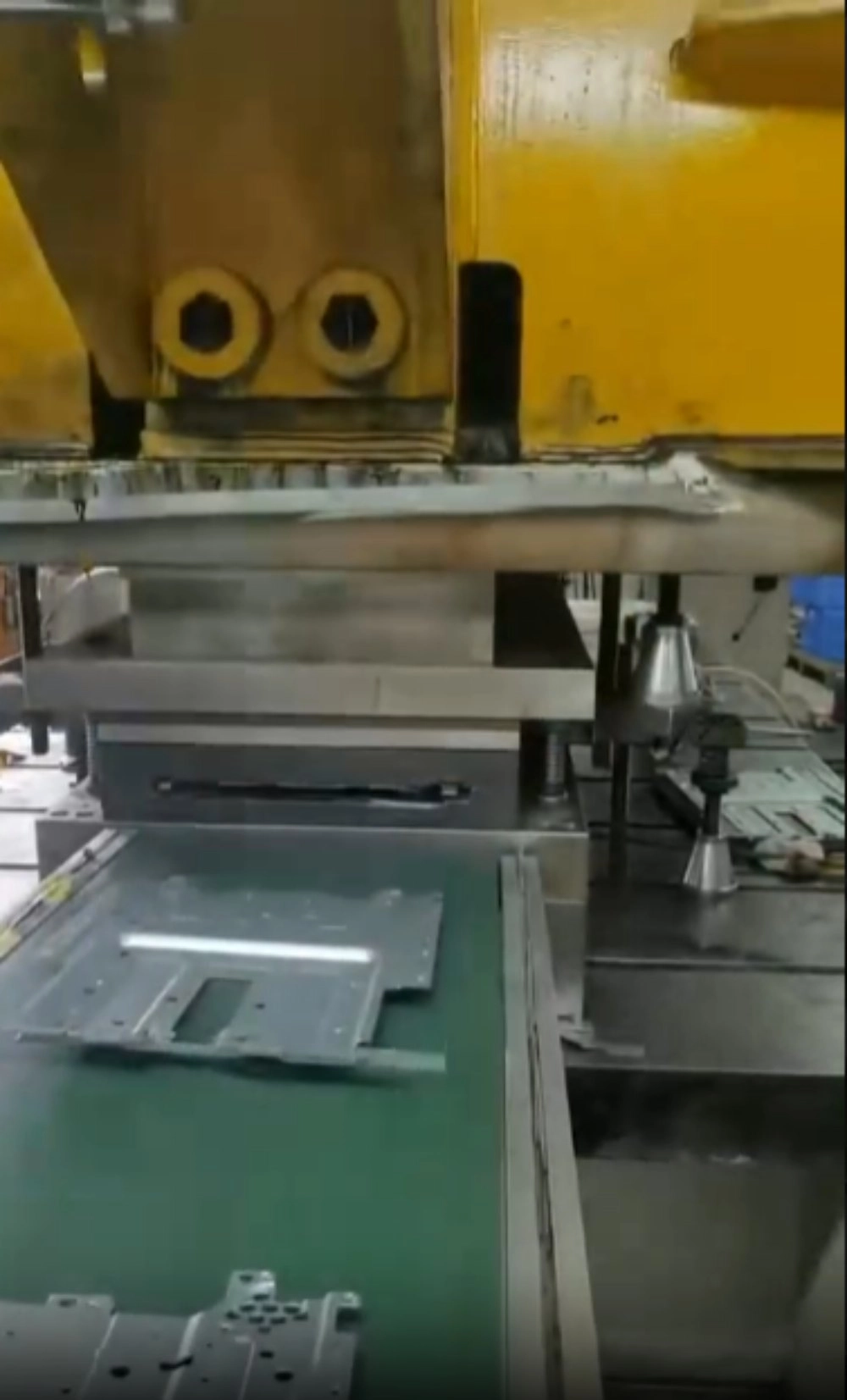
A progressive die allows these operations to be planned as part of one controlled tooling sequence. Blanking, punching, bending, and forming stations can be arranged according to the component's geometry and production requirements.
Tool guiding and strip positioning are particularly important. If the material shifts as it moves through the die, dimensional errors can accumulate between stations. Proper pilot positioning, guiding components, punch and die alignment, and controlled clearances help maintain repeatability.
The actual tooling design should be based on the customer's drawing rather than on a standard process template. This is where DFM review can provide value before production tooling is completed.
Flatness can be critical for shims and bracket mounting surfaces. A part may have accurate external dimensions but still cause assembly problems if a contact area is distorted after stamping.
Hehua specifies stamping tolerances of approximately ±0.008 to ±0.03 mm and flatness of up to 0.02 mm, depending on the component and its process requirements. These capabilities are particularly relevant when a drawing includes tight dimensional relationships between holes, edges, and formed surfaces.
For shims, flatness may need to be checked across the functional contact area rather than only at several isolated points. For brackets, inspection may need to focus on the relationship between the mounting plane and formed features.
The inspection method should therefore reflect how the component will actually be used. A tolerance on the drawing is not meaningful unless the measurement method can consistently verify it.
Inspection should start before mass production. During the sampling stage, engineers can compare the formed part with the original drawing and determine whether any tooling or process adjustment is required.
Hehua supports 2D CAD drawings and 3D STEP, IGS, and SolidWorks files. Physical samples can also be used for reverse engineering when an existing part does not have complete technical documentation. Engineers can conduct one-on-one drawing reviews and identify potential manufacturing or cost-reduction opportunities before production.
For finished components, CMM inspection can be used for dimensional verification, while 100% checking of key dimensions can be applied when the application requires it. Full inspection reports provide a record of the measured results.
This is particularly useful for brackets used in equipment assemblies where hole position, flatness, or formed height affects installation. It is also useful for shims where small variations can influence the final assembly clearance.
Not every bracket or shim requires deep drawing, but some industrial stamping projects combine flat or formed features with drawn sections. Pressure-related parts, shells, or special-shaped components may require a deeper forming operation before additional features are completed.
In these cases, Deep Drawing Stamping can be incorporated into the broader OEM manufacturing plan. The material, drawing depth, wall thickness, tooling radius, and subsequent forming operations need to be evaluated together.
Hehua's deep drawing capability includes a stated wall thickness deviation of no more than 5% for applicable components. This is relevant when a drawn section later needs to connect with other stamped or machined features.
The important consideration is not simply whether a supplier can perform deep drawing. The supplier needs to understand how the drawn geometry interacts with the rest of the component and its dimensional requirements.
Precision stamping depends heavily on the quality of the tooling. Hehua operates an in-house mold workshop and uses precision presses ranging from 63T to 315T, together with automatic stamping lines.
Having mold development and stamping production under the same manufacturing system can simplify communication when a part requires tooling changes. If sampling reveals that a bend position or hole relationship needs adjustment, engineers can review the tooling and process rather than treating sampling and production as completely separate activities.
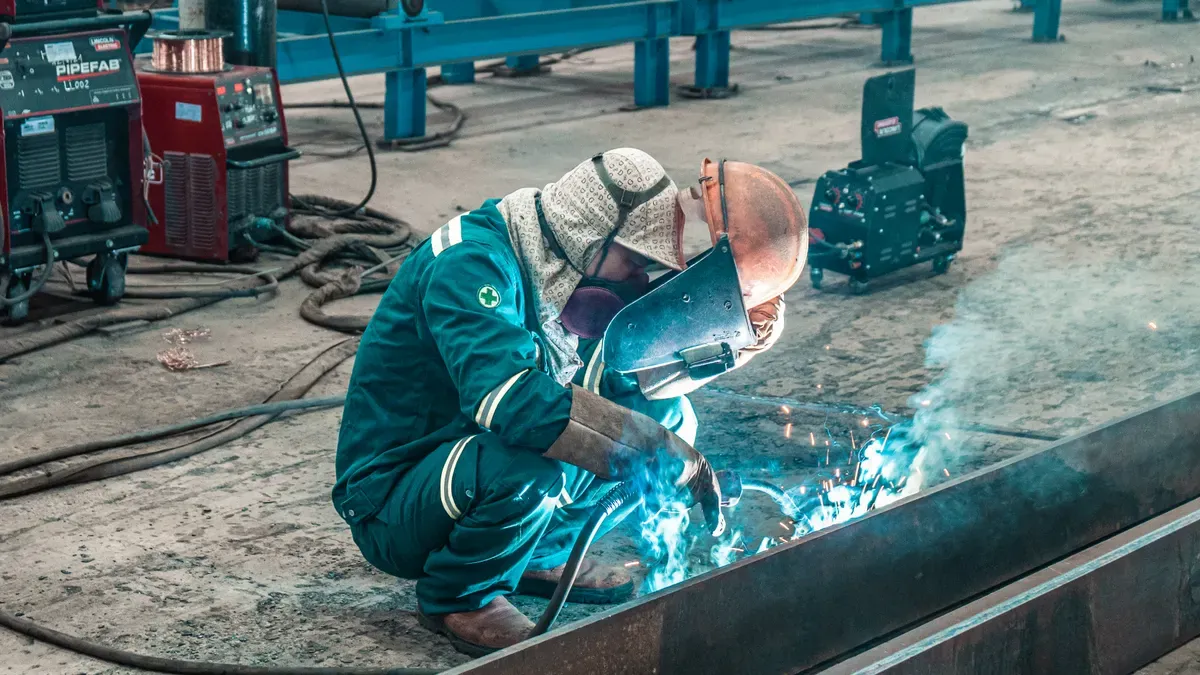
The company also supports the full OEM/ODM route, including mold design, sampling, mass production, CNC machining, welding, and surface treatment. This can be useful when a bracket requires additional machining or when a stamped component becomes part of a welded assembly.
Progressive tooling is most useful when the part geometry, production volume, and tolerance requirements justify a continuous multi-station process. It is not automatically the best option for every stamped component.
Before selecting the process, an OEM buyer should review several factors:
· Material type and thickness
· Critical hole and feature locations
· Required flatness
· Bend geometry and springback
· Production volume and repeatability requirements
· Inspection requirements
· Secondary machining or welding
· Surface finishing requirements
· Available drawing and 3D model information
For small trial orders, sampling can establish whether the proposed process achieves the required dimensions before moving into regular production. For recurring orders, stable tooling and controlled production parameters become increasingly important.
Hehua Machinery Technology (Kunshan) Co., Ltd. provides OEM and ODM metal manufacturing services for industrial and high-end equipment applications. The company operates a plant of more than 17,800 square meters and has more than 160 employees.
Its manufacturing experience covers automotive, rail transit, aerospace, wind power, nuclear power, industrial machinery, semiconductor equipment racks, new energy equipment, and other equipment manufacturing fields. The company holds ISO 9001, IATF 16949, and EN 15085 certifications, while its welders hold EN ISO 9606-1 qualifications.
The company supports projects from design and development through manufacturing and export. Its project technical team, in-house mold workshop, precision stamping equipment, inspection capabilities, and ERP-based production management provide a connected workflow for OEM projects.
For brackets, shims, and other precision stamped components, the objective is not simply to achieve a tight number on a drawing. The manufacturing process must consistently reproduce the functional relationships between features. Material selection, tooling design, forming sequence, measurement, and production control all contribute to that result.
When these elements are considered together, Progressive Die Stamping can provide a repeatable production route for tight-tolerance brackets, shims, and other precision metal parts used in demanding industrial assemblies.


 AddressNo. 66 Xingpu Road, Lujia Town,Kunshan City, Factory Buildings 3 and 4
  en
en
 English
 繁体中文
繁体中文 Italian
 Spanish
 Japanese
 Portuguese
 Korean
 Russian
 French
 German
 Estonian
 Arabic
 Indonesian


 Message