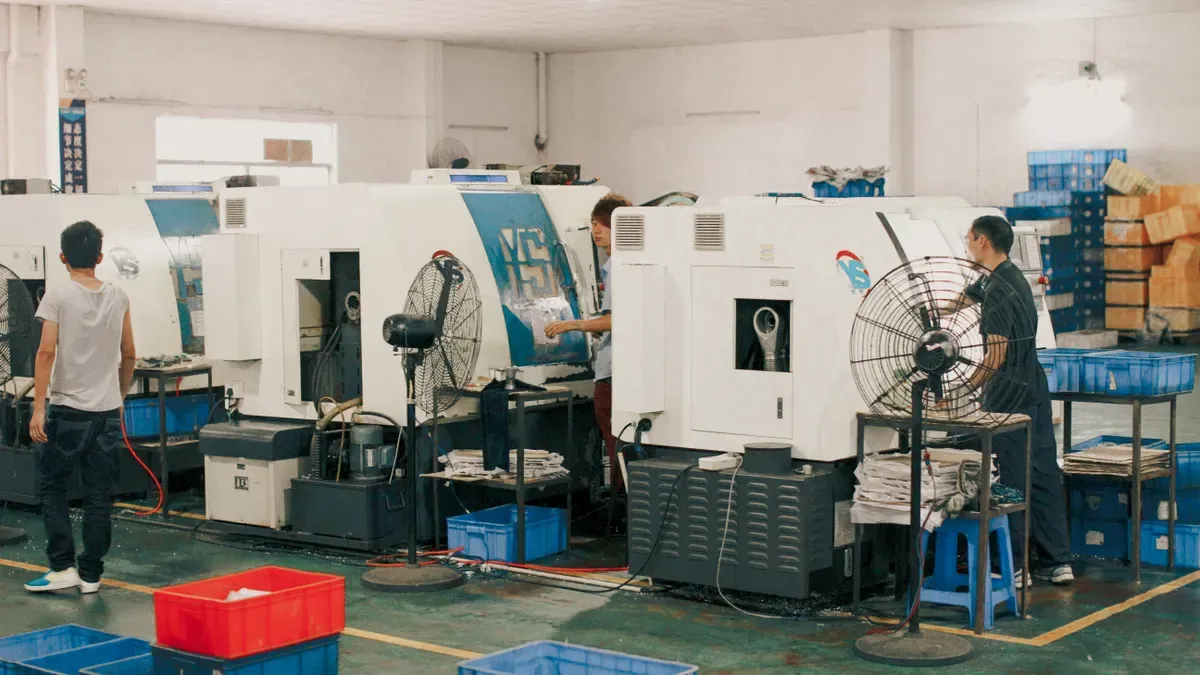
The best Chinese milling factory for your project is not the same for everyone. It is the one that fits your bracket's precision, volume, and budget.
You have a real problem. Hundreds of suppliers say they can deliver. Quality signals stay unclear. One wrong choice wastes money and delays your launch.
This guide gives you a step-by-step framework. You can use it on any shortlist of Chinese milling factories. You will learn how to define your specs, check suppliers, compare quotes, test samples, and judge finished parts.
Start with your needs. Then find the factory that fits them. That approach beats chasing a ranking every time.
Decide what material, tolerance, and finish you need for your bracket before you reach out to factories.
Look at each factory's certifications, quality control, and machine capabilities.
Compare quotes closely and look out for prices that are too low.
Check a sample part to make sure the quality and communication are good before mass production.
Check the factory by taking a video tour, and confirm who owns it and its references.
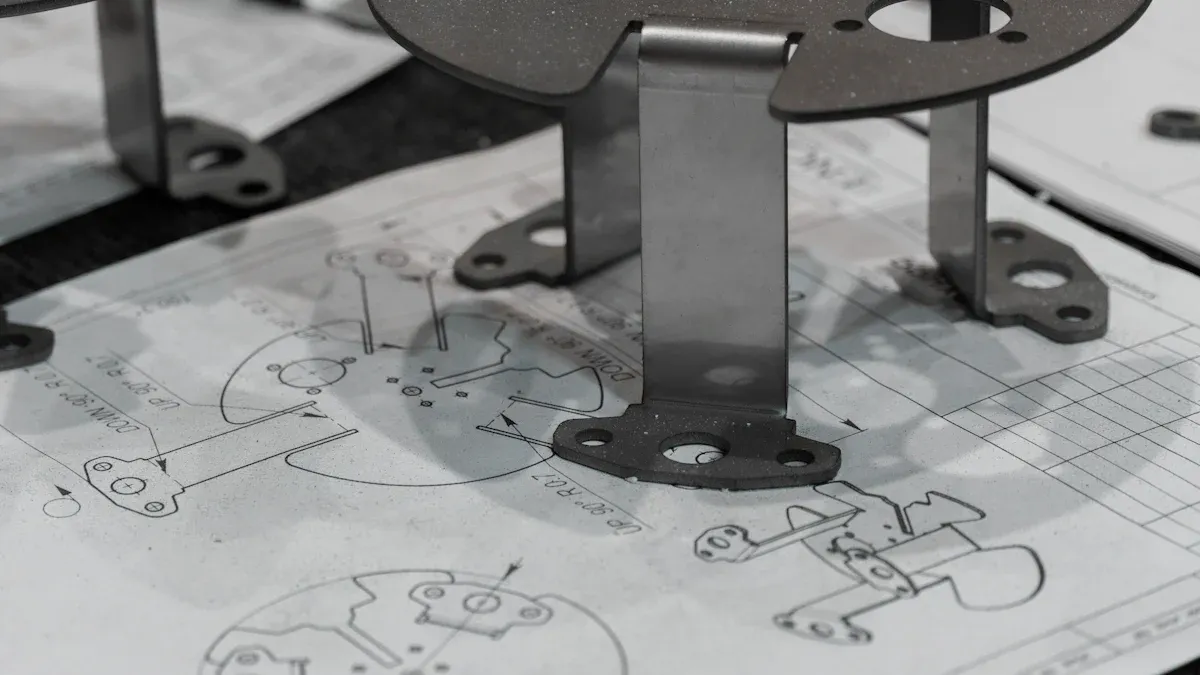
CNC machining is the best pick for high-precision custom mounting brackets. It gives accuracy and repeatability that other methods cannot match. Before you contact any factory, you must define your specs clearly. This step saves time and stops costly mistakes.
Your spec sheet should list the material first. Common choices include 6061-T6 aluminum, 304 stainless steel, 316 stainless steel, A36 steel, and Delrin (acetal). Each material fits different needs. For example, 6061-T6 aluminum is a default choice for its strength and machinability. You might pick 316 stainless steel for marine brackets that face chloride exposure. Delrin works well for sliding or bearing surfaces.
Tolerance and surface roughness come next. High-precision CNC machining can hold tolerances down to ±0.005 mm standard and ±0.002 mm for high-precision. Surface roughness can go down to Ra0.8. The table below shows typical Ra values for CNC milling of aluminum brackets.
Surface roughness (Ra) | Typical machining condition | Common applications |
|---|---|---|
6.3–12.5 µm Ra | Rough machining, high feed rates | Non-functional surfaces, structural parts |
3.2 µm Ra | Standard CNC machining finish | General-purpose brackets, housings |
1.6 µm Ra | Controlled finishing passes | Mating surfaces, light sliding contact |
0.8 µm Ra | Fine finishing passes, sharp tooling | Precision components, bearing fits |
0.4 µm Ra and below | Specialized finishing, polishing | Sealing surfaces, critical wear interfaces |
Aluminum 6061 can reach Ra 0.4–0.8 μm with ease. Finish options include anodizing, powder coating, black oxide, and passivation. Your choice depends on corrosion resistance and appearance needs.
Volume shapes which factory can serve you. A prototype run of a few custom CNC parts needs a different partner than an order of 50,000+ pieces per month. Geometry complexity matters too. Simple brackets may need only 3-axis CNC capabilities. Complex shapes with undercuts or tight tolerances require 5-axis or multi-axis machining centers. Share your drawings early. A factory that offers free DFM analysis can flag issues before production starts. This step protects your budget and timeline.
Your specs are ready now. The next step is to check custom CNC machining manufacturers. Use eight factors as your screening checklist: experience, machining capabilities, certifications, quality control, communication, production capabilities, and small first order options. These factors help you tell reliable partners apart from risky ones.
Machine range decides what your factory can make. A 3-axis mill moves the cutting tool along X, Y, and Z axes. This setup works for simple brackets with features on one or two faces. A 5-axis machining center adds two rotary axes. The tool can reach almost every angle of the part in one setup.
Complex bracket shapes need more axes. Angled holes, undercuts, and curved surfaces become easy on a 5-axis machine. You skip multiple setups, which cuts down on tolerance stacking and handling errors. Tighter tolerances and complex shapes need this higher-axis ability. Ask each supplier about their machine work envelope, spindle capacity, and tooling options. Send your drawing for engineering review before you confirm it can be made.
Quality control works as a full workflow, not just one checkpoint. Look for incoming material checks, first-article inspection, in-process measurement, final dimensional inspection, and packing checks. Ask which tools inspect critical features. Micrometers, height gauges, thread gauges, roughness testers, and CMM machines are standard tools. Calibration matters too. ISO/IEC 17025 sets the benchmark for measurement credibility.
Certifications give you a screening signal. ISO 9001 is the baseline for any CNC machining factory in China. Factories with proper ISO 9001 implementation often achieve defect rates below 3.1%. Treat ISO 9001 as a screening factor, not a replacement for part-specific evaluation.
A strong example of these standards in practice is a factory like Hehua, which emphasizes rigorous quality control including first-article CMM inspections, in-process checks, and dimensional reporting. Such practices ensure consistent quality.
When you vet custom CNC machining manufacturers, ask for quality documents before you order. Ask for dimensional reports, material certificates, and first-article inspection records. Set your sampling method using ISO 2859-1. Treat ISO 9001 as a screening factor, not a replacement for part-specific evaluation. A certified factory may quote higher prices than an uncertified shop. But certified suppliers give you lower total cost of ownership through fewer rejects and steady quality.
Your CNC machining capabilities assessment should also cover material experience. Check that the factory regularly machines your exact material family. Aluminum, stainless steel, steel, and engineering plastics like Delrin each need different tooling strategies. Ask what tolerances they can realistically hold on your specific part. This question shows whether their CNC machining capabilities match your project needs.
CNC machining in China can save you 30–50% compared to local suppliers with similar lead times. Those savings are real. But you must read every quote with care. A good CNC machining supplier in China shows you the full cost picture, not just a unit price.
A complete quote breaks down each cost component. Ask for material, setup and programming, machine time, tooling, finishing, inspection, and shipping. A real example from the industry: an aluminum 6061 bracket in a quantity of 100 pieces with anodizing costs around $25 per part from China, reflecting typical savings of 30–50%.
Cost ≈ Material + Setup/Programming + (Machining Time × Hourly Rate) + Tooling + Finishing + Inspection + Overhead + Shipping
MOQ depends on setup costs. Manufacturing costs vary by volume — setup and programming are fixed, so per-part cost decreases as quantity increases. It is important to get a breakdown from each supplier.
Responsive suppliers often provide quick quotes and free DFM analysis. That speed helps you compare options fast.
An unusually low MOQ or price should make you pause. It often signals weak quality control, unclear material sourcing, or hidden fees.
Low-Price Strategy | Potential Risk |
|---|---|
Reduced QC | Higher defect risk |
Cheap Tooling | Poor surface quality |
Lower Material Grade | Reduced performance |
Extra costs can appear later as hidden tooling fees, rework charges, and air freight due to late delivery. Ask for the total cost, not just the unit price. A reliable CNC machining supplier asks clarifying questions about tolerances and materials before quoting. If a supplier says yes to everything without questions, they may not pay attention to your custom bracket needs.
Good communication prevents expensive mistakes. You need a partner who understands your drawings and answers questions fast. Look for English-speaking staff or a dedicated project manager. This person becomes your single point of contact. They translate your needs to the production team and keep you updated.
Ask technical questions before you order. A strong CNC machining partner in China will explain their process and flag design issues. They offer DFM feedback to improve your bracket. A responsive supplier provides quick quotes and free DFM analysis. That speed shows they value your time. Slow or vague replies signal trouble ahead.
Never commit to mass production without a sample. A small test order proves three things: tolerance capability, surface finish, and on-time delivery. You can measure the part yourself and confirm it meets your specs. This step protects your budget and your schedule.
Rapid prototyping timelines vary by complexity. For simple brackets, delivery can be as fast as 1–5 days; more complex parts may take longer. Urgent prototypes can be expedited. A sample run also tests their CNC quality and communication. You learn whether they hit deadlines and how they handle feedback. This trial run builds trust before you scale up.
How a factory plans its work decides if your brackets show up on time. A good CNC machining parts manufacturer in China sets aside capacity based on your order size. A reliable supplier will have stable production capacity and a strong on-time delivery record.
Late orders can come from material shortages, machine breakdowns, and quality holds. Ask each supplier how they deal with these problems. A factory with extra capacity can fit in new work faster. Compare lead times across sourcing options before you sign off.
Sourcing Option | Total Lead Time |
|---|---|
China (by air) | 2–4 weeks door to door |
China (by sea) | 6–10+ weeks |
US shop | 2–4 weeks (including ground freight) |
Machining typically takes 1–5 days for prototypes and 2–4 weeks for production. Quotes take about the same time from both regions. Freight and customs make the real difference. Plan your timeline around shipping method and customs clearance.
Incoterms spell out who pays freight, who clears customs, and where risk moves. Pick the term that fits your logistics setup.
Incoterm | Risk Transfers | Who Pays Freight | Who Handles Import Customs |
|---|---|---|---|
EXW | At seller's factory | Buyer | Buyer |
FOB | At origin port | Buyer | Buyer |
DDP | At destination | Seller | Seller |
FOB is the workhorse of China sourcing. The seller handles everything on the China side up to loading. You control the international leg and can shop your own freight rates.
Full export paperwork keeps clearance smooth. Work with a CNC machining parts manufacturer that gives you commercial invoices, packing lists, and certificates of origin. Ask for DFM feedback early so design changes do not delay shipping. A partner with strong logistics keeps your CNC machined parts from China moving without customs surprises.
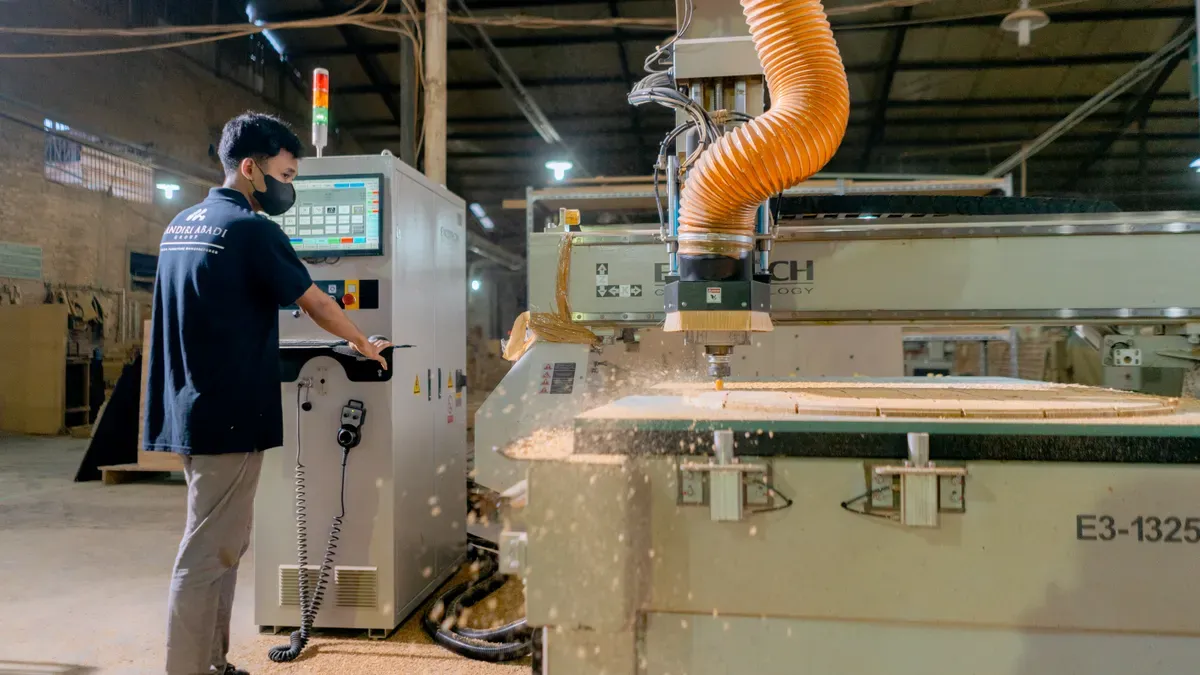
You have your specs, your vetting checklist, and your quote comparisons. Now you need to narrow the field and commit. This step separates a good shortlist from a final choice.
Pick three to five factories for your shortlist. Send each one a complete RFQ. A strong RFQ has your 2D drawing with dimensions, units, tolerance notes, threads, holes, finish notes, and a revision number. Add a 3D model when the shape is complex, like milled pockets, bores, slots, or assemblies. State the exact material grade, such as 6061-T6, plus any acceptable alternatives. List your first order quantity and repeat-order expectations. Include finish requirements, tolerance priorities, inspection notes, application context, destination country, and packing needs. Mark flexible items as preferences so suppliers can suggest practical alternatives.
A quality CNC machining factory in China will reply with DFM feedback, not just a price. They ask about tolerances, undercuts, and thread depth before quoting. That habit shows they care about manufacturability.
Run a virtual audit next. Ask for a live video call tour of the production floor. Make sure the footage is real-time, not pre-recorded. Request a real-time view of machines in production, the quality control area, and finished goods storage. Meet the chief engineer, quality manager, and after-sales team. Ask for a live test cut to check actual performance. Check the quality lab for CMM machines, surface roughness testers, and up-to-date calibration certificates.
Verify ownership before you commit. Ask whether you are dealing with a direct-factory CNC machining supplier or an intermediary. Request a breakdown of which processes happen in-house versus subcontracted. Check the business license and the 18-character Unified Social Credit Code to confirm the registered scope covers production, not just sales. Match the address on ISO certificates to the factory floor you toured. Check certificate numbers in accredited databases like IAF CertSearch. Ask for references and past bracket projects with similar geometry and materials.
Some warning signs should end the conversation. Use this table as your filter.
Red Flag | Why It Signals an Unreliable Supplier |
|---|---|
No DFM feedback before quoting | They will machine exactly what is drawn, even if unmanufacturable. |
Quote 30%+ below market average | Hidden costs or non-certified material surface later. |
Vague about tolerances and QC process | The tolerance is aspirational, not real. |
Cannot provide material certificates | May indicate uncertified or secondary-market material. |
Response time over 48 hours | Slow quoting rarely improves after an order. |
No sample parts or reference photos | Every legitimate shop has example work. |
Refuses a factory video tour | A brief walkthrough is reasonable; refusal is a credibility gap. |
Resists written acceptance criteria | They avoid accountability for rework or rejection. |
Watch for one-line quotes with only price and lead time. Notice when a supplier never asks about your drawings. Treat unclear ownership of the factory as unverified. Any of these signals means you keep searching. The best Chinese milling factory for your brackets will answer every question and welcome your audit.
Your search ends with a match, not a ranking. The best Chinese milling factory for your brackets fits your precision, volume, and budget. You now have a six-step framework: define your specs, vet manufacturers, compare quotes, test communication and samples, evaluate finished parts, and audit factories.
Pick three to five suppliers for your shortlist. Send each one a complete RFQ with drawings and tolerances. Test every candidate with a sample run before you commit to mass production. This CNC machining step protects your budget and your timeline.
Do the homework once. The right CNC partner for your custom brackets becomes clear. Factories like Hehua welcome that close look.
Look up the certificate number in trusted databases like IAF CertSearch. Make sure the address on the certificate matches the factory floor you visited. Ask for a live video tour of the quality lab. A real supplier is happy to show you these things.
Good factories can hold tolerances down to ±0.005 mm standard and ±0.002 mm for high-precision. Surface roughness can reach Ra0.8 or finer. The important thing is matching the factory's machines to your part. Complex shapes need 5-axis machining centers. Simple brackets work fine on 3-axis machines. Always check tolerance ability with a sample run before mass production.
Machining for prototypes can be as fast as 1–5 days. Shipping times vary; air freight is faster than sea freight. Plan your timeline around shipping method and customs clearance. Pick FOB terms so you can control your international shipping rates.
Send a 2D drawing with dimensions, units, tolerance notes, threads, and finish requirements. Add a 3D model for complex shapes. State the exact material grade, like 6061-T6. List your first order quantity and repeat-order expectations. Include destination country and packing needs. A good factory replies with DFM feedback, not just a price.
Yes. Never commit to mass production without a sample. A small run proves tolerance ability, surface finish, and on-time delivery. You can measure the part yourself and confirm it meets your specs. Many suppliers offer rapid prototyping within 1–5 days. This step protects your budget and timeline before you scale up.


 AddressNo. 66 Xingpu Road, Lujia Town,Kunshan City, Factory Buildings 3 and 4
  en
en
 English
 繁体中文
繁体中文 Italian
 Spanish
 Japanese
 Portuguese
 Korean
 Russian
 French
 German
 Estonian
 Arabic
 Indonesian


 Message