When a metal part requires several operations before it reaches its final shape, running each process separately can create extra handling, alignment issues, and inconsistent results between operations. A progressive tooling approach can combine several forming steps into one continuous production route, allowing the material to move through a sequence of stations while the part gradually takes shape. This approach is particularly useful when blanking, bending, drawing, and forming must work together within tight dimensional requirements.
Progressive Die Stamping is well suited to this type of production because different operations can be arranged within the same die. Instead of treating blanking, bending, or deep drawing as completely separate processes, the tooling can be designed around the actual forming sequence of the component. The result is a more controlled manufacturing process for repeatable industrial parts.
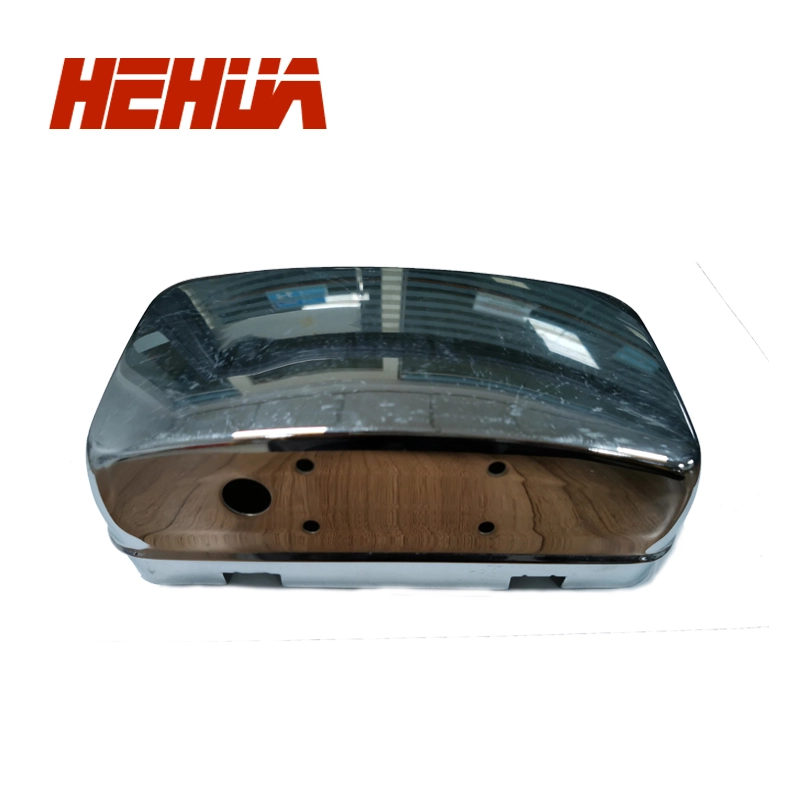
A progressive die normally uses a strip or sheet of material that advances through multiple stations. Each station performs a defined operation, and the part becomes progressively closer to its final geometry as it moves through the die.
For example, an industrial component may begin with blanking to establish the basic profile. The following stations can introduce bends, draw a section into a shell shape, form specific features, and complete the final geometry. Depending on the part, additional operations may be required to control holes, flanges, steps, or other functional features.
The important point is that the sequence is not simply a collection of individual processes. Each operation must be designed to work with the previous and following stations. Material flow, available forming space, tooling clearance, and part positioning all need to be considered during die development.
This is especially important for parts with deep drawn or partially drawn sections. A drawing operation can change the material distribution and geometry, so subsequent forming operations need to accommodate the condition of the part after drawing.
Different metal forming operations place different demands on the material. Blanking focuses on cutting accuracy, while bending depends heavily on material thickness, bend radius, springback, and tooling geometry. Deep drawing introduces additional concerns such as material flow, punch and die radii, drawing depth, and wall thickness.
For this reason, combining these operations requires careful process planning.
Deep Drawing Stamping can be integrated into a progressive production sequence when the part design and material are suitable. A typical route may involve initial blanking, controlled drawing, intermediate forming, bending, and final sizing. Not every deep drawn component should be forced into a single progressive die, but for suitable geometries, integrating operations can reduce unnecessary transfers between machines.
Material selection also has a direct influence on the sequence. Hehua supports cold rolled steel, galvanized steel, 304/316 stainless steel, aluminum, copper, and special drawing steel. These materials do not behave identically during forming, so the tooling and process parameters must be matched to the selected material.
For deeper shells, special attention should be given to wall thickness. Hehua's stated deep drawing capability controls wall thickness deviation within 5%, supported by inspection procedures that verify critical dimensions after forming.
The main challenge in multi-operation stamping is often not the individual operation but the relationship between operations.
A die designer needs to determine where the material should be cut, where it should be bent, when drawing should take place, and how the part should be supported afterward. Poor sequencing can cause interference between features, excessive material deformation, or difficulty maintaining the intended dimensions.
Strip layout is another important consideration. The layout needs to provide sufficient material support while maintaining efficient material utilization. Pilot positioning and guiding features must also keep the strip correctly aligned as it advances through the die.
For complex parts, a DFM review before tooling manufacture can identify problems at an early stage. Drawing files in 2D CAD and 3D STEP, IGS, or SolidWorks formats can be reviewed by engineers. When an existing component has no usable drawing, reverse engineering from a physical sample can also support new product development or import-part replacement projects.
Adding more forming operations does not automatically improve production. Each additional station creates another opportunity for dimensional variation, which is why process control becomes increasingly important as the geometry becomes more complicated.
Hehua's precision stamping capability specifies stamping tolerances of approximately ±0.008 to ±0.03 mm and flatness of up to 0.02 mm, depending on the part and process requirements. These figures should be evaluated against the actual drawing rather than treated as universal tolerances for every stamped component.
Inspection can include CMM measurement, 100% checking of key dimensions, and a complete inspection report. Material spectrum test reports and traceability records can also be provided when material verification is required.
For OEM buyers, this type of inspection is particularly useful when a stamped part will later be assembled with machined, welded, or purchased components. Dimensional consistency at the stamping stage can reduce problems during downstream assembly.
A multi-operation die is only one part of the manufacturing route. For many industrial components, the final production process may also involve CNC machining, welding, deburring, or surface treatment.
Hehua provides full OEM and ODM support covering mold design, sampling, mass production, CNC machining, welding, and full surface treatment. This makes it possible to review the stamped component as part of the complete part rather than optimizing one operation in isolation.
The company operates 63T to 315T precision presses, automatic stamping lines, and an in-house mold workshop. This production setup supports small trial orders as well as larger recurring production requirements.
Fast sampling is also part of the process. Hehua provides a 7-day sampling service, with DFM optimization and one-on-one engineer drawing review. This can be useful when an OEM customer is developing a new component and needs to verify forming feasibility before moving into larger production quantities.
The process is particularly relevant when a component contains several features that can be formed sequentially without removing the material from the production line.
Typical examples include compressor accessories, pneumatic components, construction machinery hardware, precision brackets, shims, pressure shells, and other special-shaped industrial parts. These applications often require repeatable dimensions and stable geometry rather than simply achieving a basic stamped shape.
The approach can also be considered when a manufacturer wants to reduce repeated loading and unloading between separate forming processes. Keeping the part within a controlled tooling sequence can help maintain positioning consistency and simplify production flow.
However, the right process depends on the component. Very large parts, extremely deep geometries, unusual material behavior, or operations requiring extensive post-processing may be better suited to separate forming stages. A practical engineering assessment should therefore be completed before selecting the tooling structure.
Hehua Machinery Technology (Kunshan) Co., Ltd. operates as part of the Hehua group, with the parent company established in 2005 and the Kunshan subsidiary established in 2018. The Kunshan operation has more than 17,800 square meters of plant space and more than 160 employees.
Its manufacturing scope covers automotive, rail transit, aerospace, wind power, nuclear power, industrial machinery, semiconductor equipment racks, new energy equipment, and other high-end equipment applications. The company holds ISO 9001, IATF 16949, and EN 15085 certifications, while its qualified welders hold EN ISO 9606-1 certification.
Production and project management are supported by an ERP system covering sales, projects, production, inventory, procurement, and other operational areas. With independent import and export rights, the company can also support customers from production through export.
For an OEM project involving several forming operations, the key is to evaluate the complete process rather than focusing only on the press or the die. Material behavior, forming sequence, tooling design, dimensional requirements, inspection, and downstream processing all influence the final result.
When these factors are planned together, Progressive Die Stamping can provide a practical route for producing repeatable metal components that require multiple forming operations within a controlled production cycle.


 AddressNo. 66 Xingpu Road, Lujia Town,Kunshan City, Factory Buildings 3 and 4
  en
en
 English
 繁体中文
繁体中文 Italian
 Spanish
 Japanese
 Portuguese
 Korean
 Russian
 French
 German
 Estonian
 Arabic
 Indonesian


 Message