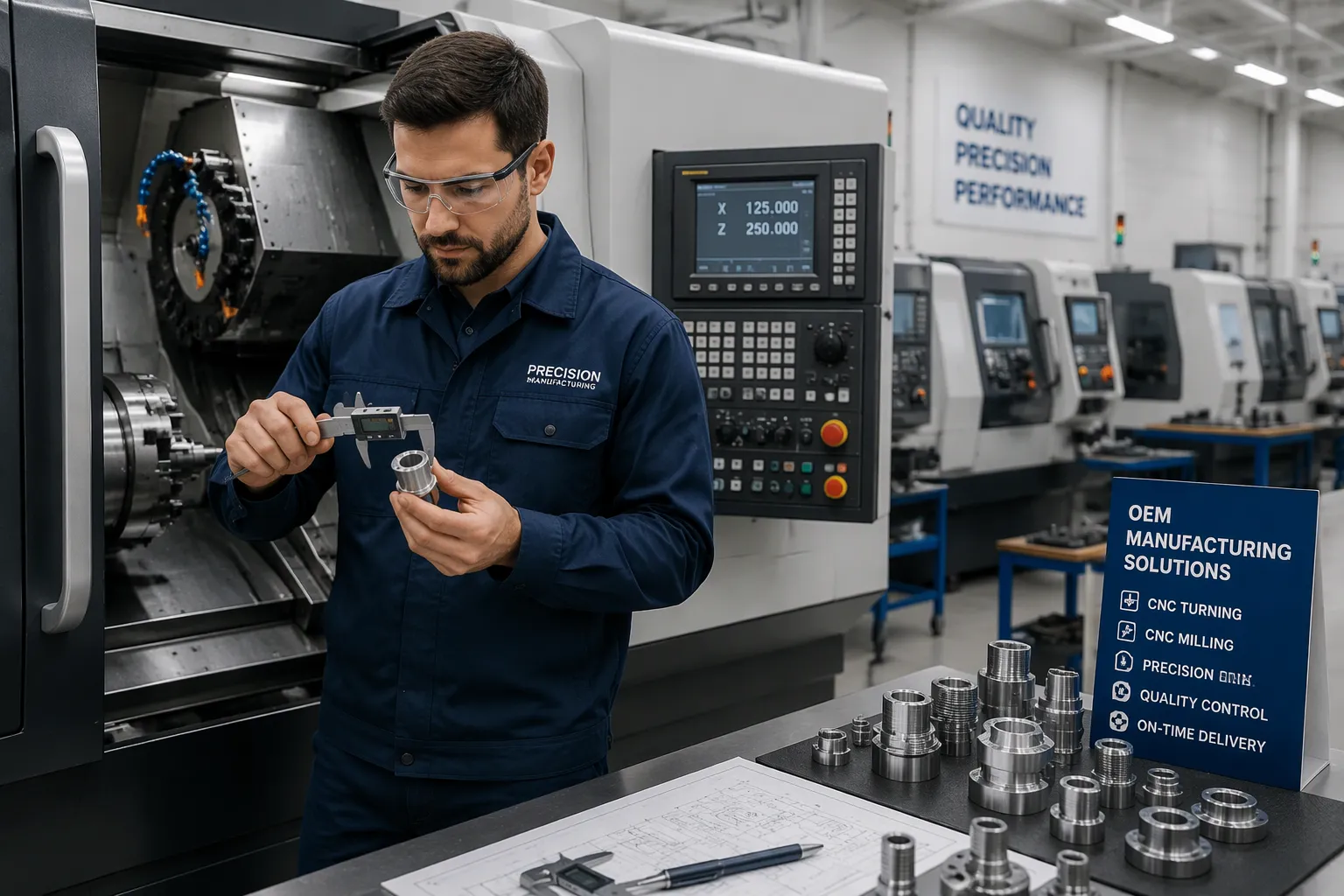
More OEM buyers now get machined parts from China. This change brings real problems. Finding a partner you can trust takes more than a low price.
Success comes from checking suppliers step by step. You need to check four things: technical skills, quality systems, cost structure, and open communication. A trusted Chinese factory meets your specifications and also helps your project with design feedback and clear updates.
This guide gives you a practical checklist for checking suppliers. A high-precision CNC milling factory is the working example throughout. You will see how each criterion looks on a real shop floor, and how CNC milling partners earn long-term business.
Check a factory's machines and what it says about precision. Ask which features get the tight tolerances.
Check quality certificates and material tracking records. Look up the certificates in public databases.
Ask for a detailed quote that lists every cost line. A low unit price can hide big total costs.
Test communication early. Quick replies and clear English stop problems later.
Begin with a small test batch and an outside audit. Only grow the order after you trust the partner.
A trusted Chinese factory shows three habits before you sign anything: it answers fast, it shares bad news early, and it lets you look inside. Transparency matters most. A reliable partner gives regular production updates and speaks openly about problems, according to China Smart Win, a sourcing advisory firm. How quickly it responds is the second signal. Slow replies to a simple drawing question often mean slow replies during a production crisis. Language skills matter too, because many issues start with miscommunication. Ask whether your contact speaks clear English or whether the factory provides an interpreter.
You should also test the quality control system, not just read about it. Arrange a factory audit or a third-party inspection. Walk the floor. Check how the team stores raw material and whether it can trace a defect back to a specific batch. Quality control works best at several stages: pre-production samples, in-process checks, and pre-shipment inspection. Relying on one final inspection is the most common mistake in China OEM work, notes Sourcing Allies.
A long track record tells you the factory has survived real problems. Hehua Machinery Technology (Kunshan) Co., Ltd. is a useful example. The company started as Shanghai Hehua in 2005 and opened its Kunshan subsidiary in 2018. Its plant covers over 17,800 square meters and employs more than 160 people. Annual sales exceed 130 million RMB, and registered capital stands at 10 million RMB. The firm holds independent import and export rights and runs an ERP system across its operations.
Those systems support the certifications that matter to OEM buyers: ISO 9001, IATF 16949, EN 15085, and EN ISO 9606-1. Many Chinese OEM factories claim certificates. Fewer can show how those protocols run on the shop floor. Ask for audit reports and examples of past projects. A proven history usually means fewer operational surprises. It also means the factory has handled scale-up before, from a pilot sample to full production. That continuity is what separates serious CNC machining suppliers in China from trading agents.
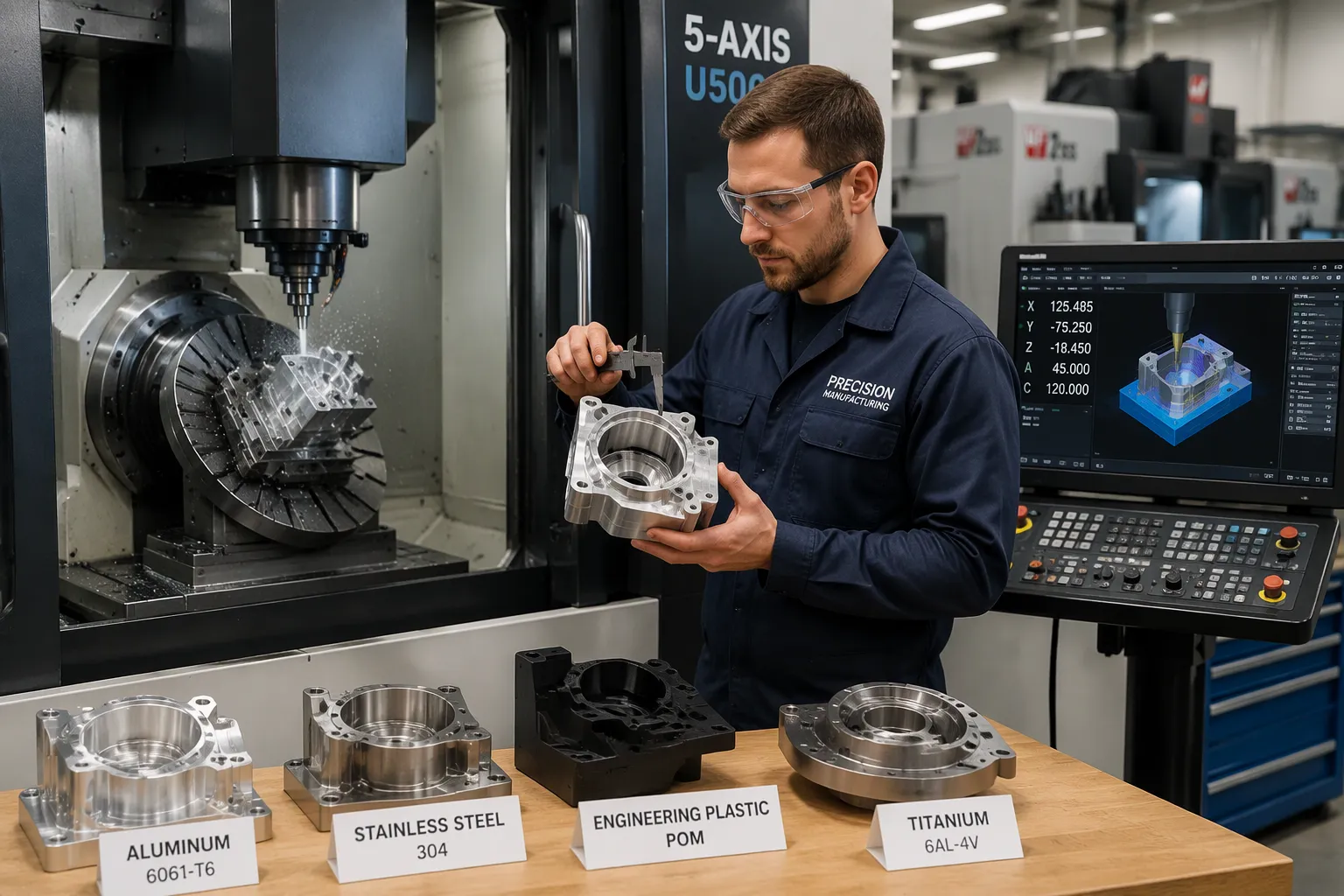
Begin with the list of machines. Ask which platforms the shop uses, since each one suits different shapes. Criterion Precision sorts them into three tiers.
Machine Type | Axes of Motion | Motion Behavior | Typical Applications |
|---|---|---|---|
2.5-Axis | X, Y (simultaneous) + stepwise Z | Flat layer-by-layer cuts | Pockets, plates, brackets |
3-Axis | X, Y, Z (simultaneous) | Continuous 3D cutting | Molds, housings, fixtures |
5-Axis | X, Y, Z + A, B (rotary) | Multi-angle machining | Aerospace, medical, optical parts |
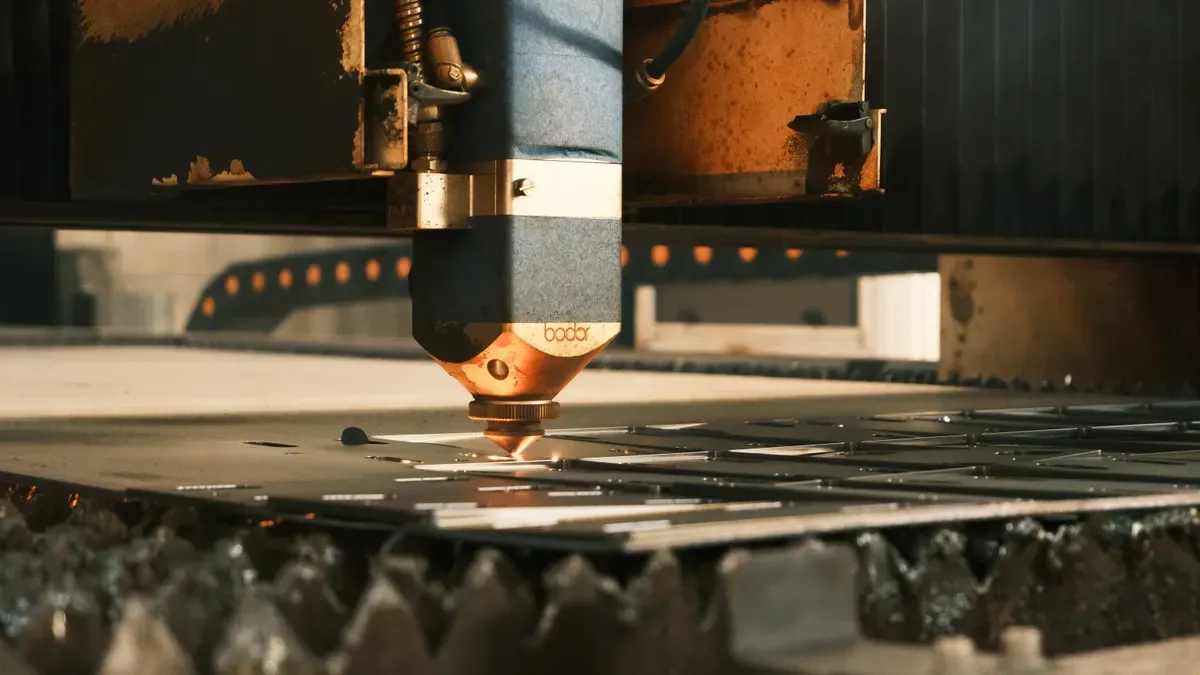
A CNC machine shop in China that runs only 3-axis platforms will still give you a quote. Ask if that quote assumes several setups. Every re-clamp adds alignment variation, Criterion Precision notes, and that error builds up across features. For OEM custom machining with tight feature relationships, 5-axis CNC machining takes away that risk. Hehua runs 10+ machining centers, including CNC turning-milling compound machining centers, so the shop fits the platform to the part.
Tolerance claims need material context. HONSCN reports ±0.005 mm as its tightest milling result, and that number applies to selected features, not the whole part. In their precision range, aluminum holds ±0.005 mm to ±0.015 mm, stainless steel ±0.008 mm to ±0.020 mm, and engineering plastics ±0.020 mm to ±0.050 mm. A CNC precision machining manufacturer that quotes one number for every material is guessing. Ask which features get the tight callout.
Send a material list and watch how they reply. A serious partner confirms machinability, suggests alternatives, and points out heat treatment needs. Hehua machines ductile iron, cast iron, steel, stainless steel, aluminum, and engineering plastics such as POM, PEEK, and nylon. That range covers most OEM custom machining work, from housings to custom CNC precision machined shafts.
In-house secondary work decides your lead time. Outsourced anodizing adds transit days and splits quality control across two sites. JLCCNC notes that hardcoat anodizing at roughly 0.025-0.030 mm thickness changes dimensions, so tolerance-critical features need planning before finishing. Ask whether deburring, anodizing, powder coating, plating, and laser marking all happen under one roof. Confirm CMM inspection, thread gaging, and surface-roughness checks too. Full in-house flow keeps one reference system from raw material to final inspection.
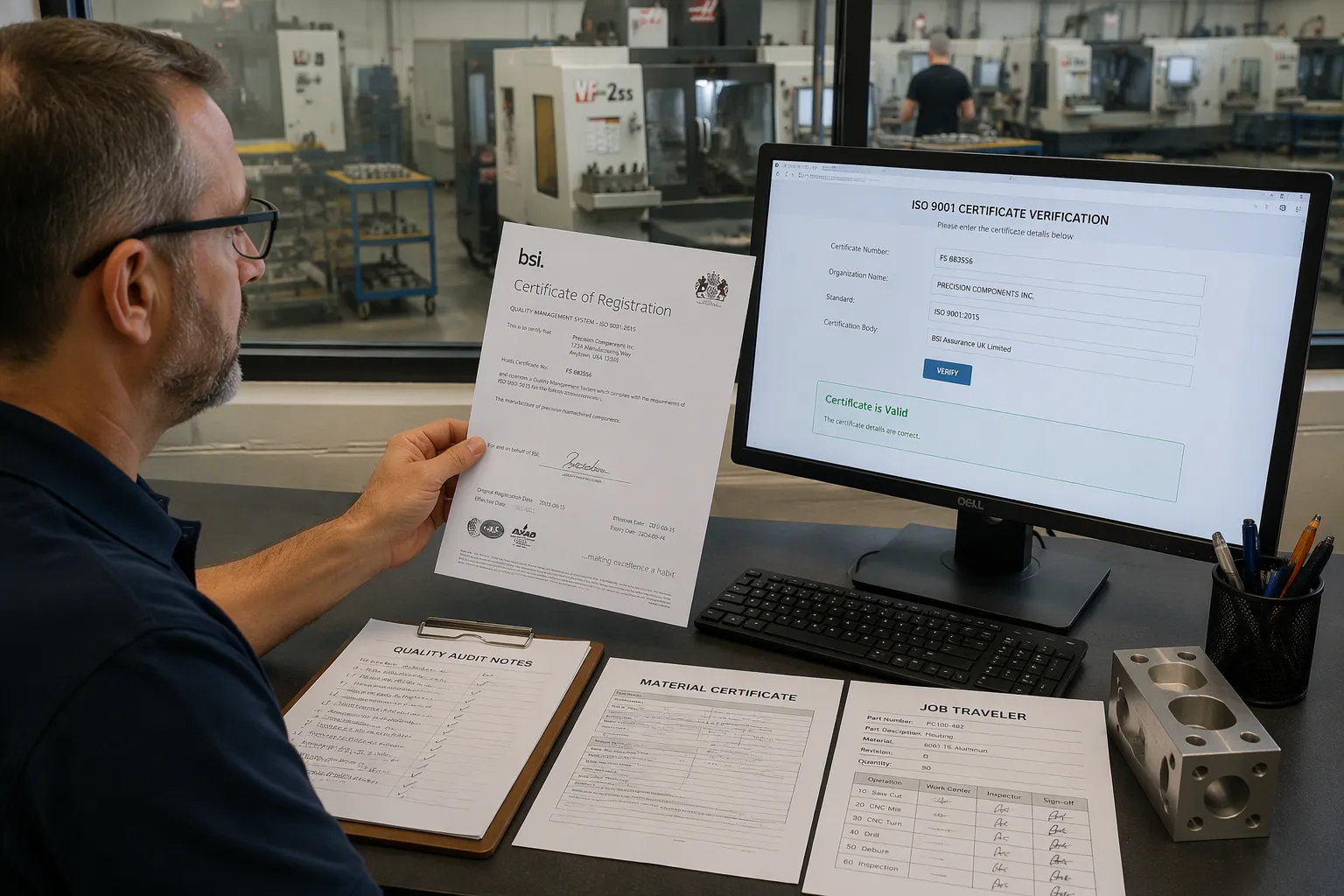
A certificate on a PDF does not prove much by itself. You need to make sure the document is real, up to date, and covers the work you are buying. Trupart Precision lists the fields to check: the certificate number, the certified organization's name and address, the scope, the certification body, and the issue and expiry dates. ISO 9001 certificates stay valid for three years with yearly audits, so an expired or unlisted document is a warning sign.
Follow these steps to check a claim:
Find the certification body named on the certificate.
Go to that body's official website and open its certificate verification page.
Type in the certificate number or the organization name.
Make sure the status shows valid and the scope matches machining.
Check the accreditation of the body itself through the national accreditation authority.
For Chinese suppliers, the CNCA public database lets you search by company name. Treat any certificate you cannot find in a public database as suspect.
Read the scope line closely. It should say something like manufacturing of CNC machined precision parts. Vague wording such as metal products should make you ask questions, Haizol notes, because ISO 9001 and IATF 16949 certify production systems, not trading activity. A trading company may list certificates held by its suppliers, but those documents do not cover its own operations. Confirm the address on the certificate matches the plant you plan to visit.
Ask for audit reports, then ask how the system runs day to day. A useful audit report records non-conformances, corrective actions, and workflow findings, per GoAudits. On the floor, look for written SOPs, control plans, and a stop-call-wait habit among operators. Traceability should link the purchase record, material certificate, job traveler, machining batch, inspection record, and shipment, according to UNEED Precision Manufacturing.
Material paperwork has grades. The EN 10204 standard defines four document types, as Davantech explains:
Type | Name | Issued by | Test results? |
|---|---|---|---|
2.1 | Declaration of compliance | Supplier or manufacturer | No, signed statement only |
2.2 | Test report | Supplier or manufacturer | Yes, from general testing |
3.1 | Inspection certificate (MTC) | The mill | Yes, specific to the delivered batch |
3.2 | Validated inspection certificate | Mill plus independent inspector | Yes, countersigned by a third party |
A machine shop cannot issue a mill test certificate. It can only pass along the one its material supplier provides. State your EN 10204 3.1 requirement in the RFQ and confirm availability before ordering. A trusted partner also supplies a Certificate of Conformance that links finished parts to the heat lot number on the MTR. Specify CMM report format and inspection frequency at the quote stage, and require these documents for every batch.
A low unit price can hide a big bill. PCBCart says a supplier with a 10% lower unit cost may cause 30–40% higher total costs. This happens through poor quality, long lead times, and air freight. Hidden cost drivers can add 20–30% or more to the total cost of a product. Watch for these drivers:
Late deliveries
Quality escapes
Premium freight
Inventory carrying costs
Production downtime
Ask for a quote that lists each line. Prolean lists the main lines: programming, machine setup, material, and tooling. Setup and programming spread across a large batch, so small runs carry a higher per-unit share. Davantech returns a reviewed quote in 24–48 hours with each line broken out. A factory that offers custom machining services should explain every line, not hand you one number.
Free DFM feedback separates a partner from a vendor. A mature supplier shares guides on material limits, standard components, and cost-saving options, according to QualityInspection.org. Design choices set up to 80 percent of final production cost before production starts, so early feedback protects your budget. Hehua's engineers review drawings and suggest changes before tooling is cut.
Clear English matters here. Many CNC machining companies in China staff English-speaking project engineers, and Haizol advises confirming tolerances and revisions in writing. That habit prevents costly rework on OEM custom machining jobs. Whether you source turning services or CNC milling, insist on written confirmation. Good communication is the cheapest quality control you will ever buy.
Picking a trusted Chinese factory is a smart long-term move, not just a buying job. When you check a partner with care, you protect your timeline, your budget, and your reputation.
Four pillars carry that evaluation. Check technical capability first. Verify quality systems next. Demand cost transparency. Then confirm proactive communication. Use these criteria as a working checklist on every plant visit and every quote review.
A step-by-step approach lowers risk. Run a pilot batch. Book a third-party audit. Start small, then scale with confidence.
A trusted Chinese factory becomes a long-term asset for your OEM custom machining programs. Strong OEM custom machining support keeps your OEM custom machining projects on schedule. Reliable OEM custom machining partners sharpen your OEM custom machining quality. Good OEM custom machining relationships win market share. Your OEM project deserves that foundation.
It depends on the material and the feature. Hehua reaches ±0.005 mm on selected features and surface finishes down to Ra0.8. Aluminum holds tighter than stainless steel, and engineering plastics run looser still. Ask which features get the tight callout before you approve a quote.
Look up the certificate number on the certification body's website. Then check the CNCA public database by company name. Confirm the scope covers machining, not trading. Verify the address matches the plant you plan to audit. An expired or unlisted document is a warning sign.
Ask directly. Hehua runs anodizing, powder coating, plating, deburring, and laser marking under one roof, plus CMM inspection and thread gaging. Full in-house flow keeps one reference system from raw material to final inspection and shortens your lead time.
Request an EN 10204 3.1 mill test certificate, a Certificate of Conformance tied to the heat lot number, and a CMM inspection report. State these requirements in the RFQ. A machine shop passes along the mill's certificate; it cannot issue one itself.
Hehua's engineers review drawings free of charge and suggest design changes before tooling is cut. Rapid sampling runs within 3–7 days. Monthly capacity exceeds 50,000 pieces, so the same team can carry your project from prototype to mass production.


 AddressNo. 66 Xingpu Road, Lujia Town,Kunshan City, Factory Buildings 3 and 4
 en
 English
 繁体中文
 Italian
 Spanish
 Japanese
 Portuguese
 Korean
 Russian
 French
 German
 Estonian
 Arabic
 Indonesian



 Message