Industrial equipment enclosures do much more than cover internal components. They protect electrical systems, mechanical assemblies, and sensitive instruments from dust, accidental contact, and environmental exposure. Their dimensions also affect mounting, ventilation, cable routing, maintenance access, and the way an entire machine fits together. For equipment manufacturers, getting these details right requires careful coordination between design and fabrication.
A custom enclosure may involve flat panels, mounting brackets, bent flanges, welded joints, fastener holes, and finished exterior surfaces. Each feature must work with the others, which makes the manufacturing sequence an important part of the project.Laser Cutting provides a flexible way to produce the initial sheet metal profiles, while subsequent forming, joining, and finishing operations turn those profiles into functional assemblies.
For OEM projects, working with a fabrication partner that can coordinate these operations helps reduce unnecessary handoffs and makes it easier to address design issues before they affect production.
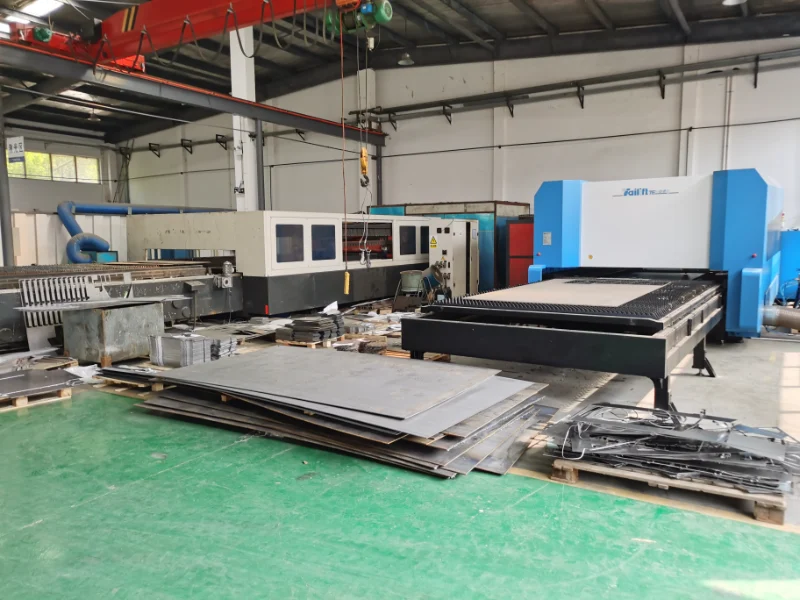
Equipment enclosures vary considerably according to their intended application. An industrial control cabinet may require accurately positioned mounting holes and openings for switches, displays, and cable glands. A compressor enclosure may need structural panels, service openings, and features that accommodate vibration and routine maintenance. New energy equipment housings may have specific requirements for component positioning, protection, and assembly access.
These differences influence material selection, sheet thickness, cutting geometry, bending allowances, and joining methods. A design that works well for a simple protective cover may not be suitable for a load-bearing enclosure or a cabinet containing closely arranged electrical components.
Manufacturers should therefore evaluate an enclosure as a complete structure rather than treating each panel as an independent part. Hole locations must align with mounting components, edges must meet correctly, and bent sections must provide the intended clearances. If these relationships are not considered early, adjustments may be needed during assembly.
At Hehua Machinery Technology (Kunshan) Co., Ltd., custom sheet metal fabrication supports applications across industrial machinery, automotive components, rail transit, aerospace, wind power, nuclear power, semiconductor equipment, and new energy equipment. Reviewing the intended application and assembly requirements helps establish an appropriate manufacturing route for each project.
The first major stage in many enclosure projects is cutting sheet metal into the required profiles. Laser Cutting is well suited to producing external contours, mounting holes, slots, access openings, and other detailed features directly from engineering drawings.
Compared with processes that require dedicated tooling for each profile, laser cutting offers flexibility when designs change or when a project includes multiple custom components. It can also accommodate complex shapes that would be difficult to produce efficiently using simpler cutting methods.
However, a suitable cutting process begins with a suitable design. Engineers should consider the relationship between sheet thickness and feature size, the spacing between holes, the dimensions of narrow slots, and the distance between openings and bend lines. Closely spaced features or narrow sections may require additional review to avoid compromising the finished part.
Material selection also affects the cutting plan. Hehua processes sheet metal materials including SPCC cold rolled steel, SGCC and SECC galvanized steel, 304 and 316 stainless steel, and aluminum. The stated processing thickness range is 0.5 mm to 12 mm, allowing different material and structural requirements to be addressed within its sheet metal fabrication capabilities.
For enclosure panels, the objective is not simply to reproduce a two-dimensional outline. The cut parts must also provide the correct interfaces for bending, fastening, welding, and final assembly.
Material selection should reflect the equipment's working conditions, structural requirements, and appearance expectations.
Cold rolled steel is a practical option for many industrial cabinets and protective housings. Its suitability for a particular application depends on the required strength, sheet thickness, and corrosion protection. Where the enclosure will be exposed to moisture or other corrosive conditions, galvanized steel or stainless steel may be more appropriate.
Stainless steel grades such as 304 and 316 are used where corrosion resistance and durability are important. The specific grade should be selected according to the environment and applicable project requirements rather than assuming that all stainless steel performs identically.
Aluminum sheet is useful when reducing component weight is a priority. It can be used for lightweight covers, panels, brackets, and other equipment structures, provided its mechanical properties meet the application's needs.
The choice of material also influences subsequent operations. Different materials require appropriate cutting parameters, bending allowances, welding procedures, and finishing methods. A surface treatment suitable for one material may not be appropriate for another.
During project planning, buyers should specify the material grade and thickness on the drawing, together with any requirements for corrosion resistance, surface appearance, or traceability. This gives the fabrication team a clear basis for reviewing the design and selecting compatible processes.
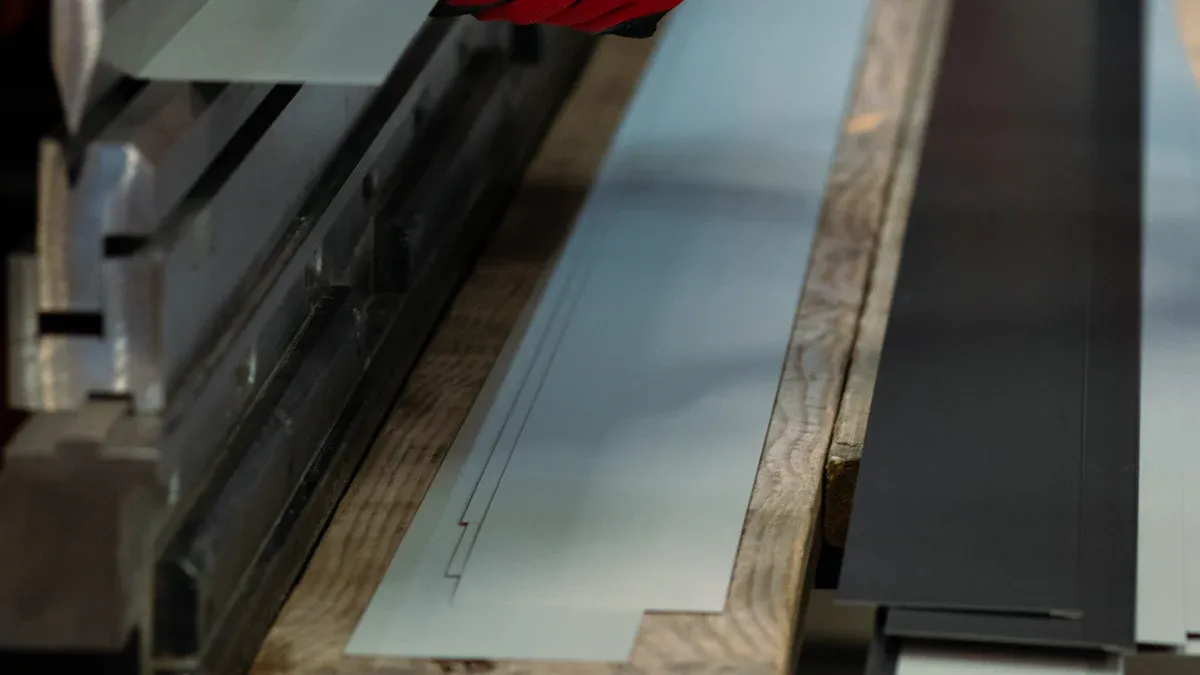
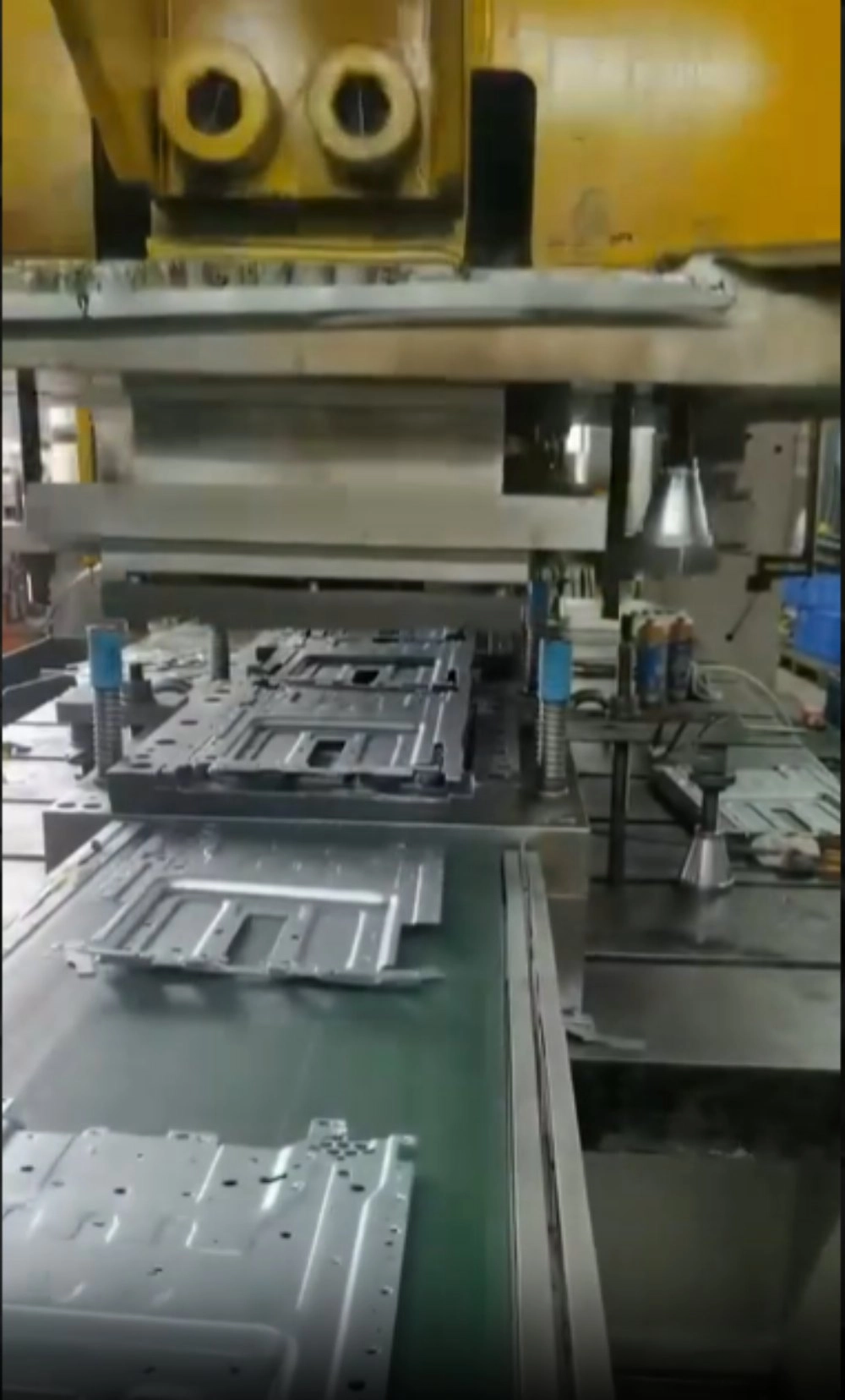
Once the profiles have been cut, CNC bending forms the flat sheets into the three-dimensional shapes required for the enclosure. Side walls, mounting flanges, reinforcing edges, and return bends can provide structural support and establish the interfaces needed for assembly.
Bending accuracy depends on several factors, including material properties, sheet thickness, bend radius, tooling, and the angle specified on the drawing. Springback can cause the material to partially return toward its original shape after the bending force is removed. If this effect is not considered, the finished angle or overall dimensions may differ from the intended geometry.
Designers should also check for potential interference between bends, holes, and adjacent features. A hole positioned too close to a bend may distort during forming, while a poorly planned flange can obstruct a fastener or prevent a panel from fitting against its mating component.
For this reason, laser cutting and bending should be planned together. The location of each cut feature must account for the subsequent forming operation, and the completed geometry should be checked against the enclosure's assembly requirements.
Hehua provides CNC bending and related sheet metal forming services alongside cutting. Its stated CNC bending dimensional tolerance is ±0.05 to ±0.1 mm, with a bending angle tolerance of ±0.5°, subject to the applicable part and processing conditions. These figures provide a technical reference for project discussions, while actual requirements should be confirmed through drawing review.
After forming, enclosure panels and supporting components are joined according to the product design. The appropriate method may involve riveting, self-clinching fasteners, rivet nuts, TIG welding, MIG welding, or mechanical fastening.
The choice depends on the enclosure's structure, access requirements, serviceability, appearance, and expected operating conditions. A removable cover may need threaded attachment points, whereas a permanently joined structural housing may require welded seams or reinforced connections.
Assembly planning should account for the order in which components are installed. Internal brackets, mounting plates, and reinforcement pieces may need to be fitted before the enclosure is closed. If access is restricted too early in the process, workers may find it difficult to position fasteners or complete welds consistently.
Welding can also introduce heat-related distortion. For assemblies with tight dimensional requirements, fixture design, weld sequence, and inspection checkpoints should be considered before production. Critical interfaces may need to be measured after joining rather than relying solely on the dimensions of the individual cut panels.
Integrated manufacturing makes it easier to coordinate these operations because the cutting, forming, and joining requirements can be reviewed as parts of the same assembly. It also provides a clearer route for addressing design changes when prototype results reveal a fit or access issue.
Surface finishing affects both the appearance and performance of an equipment enclosure. Depending on the material and application, options may include powder coating, liquid painting, brushing, polishing, anodizing, galvanizing, passivation, or other suitable treatments.
The finish should be selected according to the operating environment and the required appearance. Outdoor enclosures may need additional corrosion protection, while exposed panels may require consistent color, texture, or brushed grain direction. Aluminum components intended for anodizing need a compatible material and surface preparation process.
Before finishing, cut edges and formed surfaces should be checked for burrs, scratches, deformation, and other defects that could affect the final result. Dimensional checks may also be needed before coating, especially where holes, fastener interfaces, or close-fitting components must remain functional after treatment.
Final inspection should verify that the assembled enclosure meets the approved drawing and quality requirements. Typical checks include overall dimensions, mounting-hole positions, bend geometry, joint condition, surface appearance, and assembly fit. For projects with specific documentation requirements, dimensional reports and appearance inspection records can support customer acceptance.
Hehua follows an ISO 9001-certified quality management system and also holds IATF 16949 automotive quality system certification and EN 15085 certification for rail vehicle and component welding. Its quality processes include first-article inspection, in-process checks, and dimensional inspection of key features. Additional testing can be discussed when required by the application.
Building a prototype before releasing a custom enclosure into full production helps confirm whether the design works as intended. Engineers can inspect the fit between panels, verify mounting points, assess access for installation and maintenance, and identify potential interference between components.
When a problem is found, the drawing can be revised before the same issue affects a larger batch. Prototype evaluation can also help determine whether the selected material, bend geometry, joining method, and surface finish are suitable for the intended application.
Hehua supports projects from prototype development and small-batch trial production through mass production. The company operates a manufacturing plant of more than 17,800 square meters and has over 160 employees. Its technical team supports drawing review and manufacturing coordination, while its production management system helps coordinate project, purchasing, inventory, and production information.
For an initial technical review, buyers should provide the latest 2D drawings and, where available, 3D CAD files in formats such as STEP or IGES. The submission should identify the material, thickness, critical dimensions, surface finish, joining requirements, and expected production quantity. If the enclosure must fit existing equipment, reference dimensions and mating-component information are also useful.
These details allow the manufacturing team to assess the proposed design, identify potential production issues, and determine the appropriate process sequence before work begins.
A successful equipment enclosure depends on more than the quality of its cut panels. Material selection, profile accuracy, bending, joining, finishing, and final inspection must work together to produce a component that fits the equipment and performs its intended function.
By planning these stages as a coordinated process, OEM manufacturers can address design risks earlier, improve assembly consistency, and establish clearer quality requirements for repeat orders. Laser Cutting provides the starting geometry, while the subsequent fabrication operations determine how well the individual parts become a complete enclosure.
Hehua Machinery Technology (Kunshan) Co., Ltd. provides integrated sheet metal fabrication for custom equipment cabinets, chassis, protective housings, brackets, and other industrial metal components. With capabilities covering cutting, forming, joining, finishing, and inspection, the company supports customers from initial design review through prototype validation and batch manufacturing.
For your next enclosure project, prepare the engineering drawings and material specifications early, identify the dimensions that are critical to assembly, and review the full manufacturing sequence before production. This approach helps ensure that the finished enclosure meets both the design requirements and the practical demands of the equipment in which it will be installed.


 AddressNo. 66 Xingpu Road, Lujia Town,Kunshan City, Factory Buildings 3 and 4
 en
 English
 繁体中文
 Italian
 Spanish
 Japanese
 Portuguese
 Korean
 Russian
 French
 German
 Estonian
 Arabic
 Indonesian


 Message