Choosing the right welding process is not simply a matter of selecting the newest technology. For metal parts, the best process depends on material, thickness, joint design, dimensional requirements, production volume, appearance, and whether the finished assembly must pass airtightness or other quality tests. Laser Welding can deliver high precision and low heat input, while MIG and TIG remain highly practical for different types of structural and fabricated parts.
For manufacturers sourcing custom welded components, understanding these differences can help avoid excessive post-weld correction, unnecessary machining, and inconsistent production results. Laser Welding is particularly useful when precision, clean welds, and controlled thermal distortion are important, but MIG and TIG may still be the better choice for certain materials, thicknesses, and joint configurations.
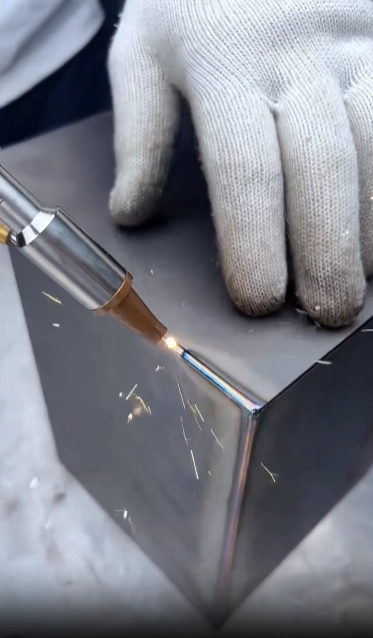
The main difference between these processes is how heat is delivered to the workpiece and how much control the welder has over the weld pool.
Laser welding uses a concentrated laser beam to create a narrow, highly controlled weld. Because the heat-affected zone can be relatively small, it is suitable for applications where deformation and dimensional changes need to be minimized. This makes it attractive for precision sheet metal parts, equipment housings, brackets, and assemblies requiring a clean appearance.
MIG welding uses a continuously fed wire electrode and shielding gas. It is widely used for structural components because it provides good productivity and works well on carbon steel, stainless steel, and aluminum. For thicker load-bearing structures, equipment frames, and brackets, MIG can often provide an efficient balance between welding speed, strength, and production cost.
TIG welding uses a non-consumable tungsten electrode and offers precise control over the welding arc. It is often selected for applications where weld appearance, control of heat input, or careful welding of thinner materials is important. TIG is commonly used for stainless steel and aluminum components where surface quality and controlled weld formation matter.
The right choice therefore depends less on which process is universally “better” and more on which process matches the part.
Laser welding becomes especially valuable when dimensional accuracy and controlled heat input are major concerns.
For thin sheet metal components, excessive heat can cause warping, distortion, discoloration, or dimensional changes. These problems can create additional work during straightening and machining. A properly controlled laser welding process can help reduce the amount of thermal deformation and maintain tighter part geometry.
Laser welding can also be a strong option for assemblies with visible welds. When the joint is designed correctly, the process can produce a relatively narrow and consistent weld, reducing the amount of grinding and finishing required afterward.
Typical applications include:
· Precision sheet metal housings
· Equipment enclosures
· Small and medium brackets
· High-precision welded assemblies
· Components requiring clean external surfaces
· Parts with tight dimensional requirements
· Certain dissimilar metal welding applications
However, laser welding is not automatically the best option for every part. Joint accessibility, fit-up accuracy, material combination, thickness, and production requirements all need to be evaluated before selecting the process.
MIG welding remains one of the most practical processes for industrial fabrication, particularly when strength and productivity are priorities.
For heavy carbon steel frames, machinery brackets, equipment bases, and other structural weldments, MIG welding can handle a broad range of joint configurations and material thicknesses. It is also well suited to production environments where repeatability and welding speed are important.
At Shanghai Hehua Machinery Technology Co., Ltd., MIG/MAG and CO2 welding are part of a broader in-house welding capability covering carbon steel, galvanized steel, stainless steel, aluminum alloy, cast iron, ductile iron, and copper alloy.
For example, a heavy-duty equipment frame may not benefit significantly from switching from MIG to laser welding if the part has thick sections, large joints, or structural welds where high penetration and production efficiency are more important than an ultra-narrow heat-affected zone.
In these cases, MIG can provide a more practical manufacturing solution.
TIG is often selected when weld control and appearance are more important than maximum welding speed.
For stainless steel or aluminum parts with thinner sections, TIG can provide precise control over the weld pool. This can be useful for components where the weld is visible or where the material requires careful heat management.
TIG is also valuable when the geometry of the part makes a highly controlled manual welding process more appropriate than a faster automated process.
For OEM projects, the decision between TIG and laser welding should therefore consider more than sheet thickness. Joint accessibility, tolerance, required appearance, weld length, production quantity, and the operator or equipment available can all influence the final process selection.
Material selection is one of the first factors to consider when choosing a welding process.
Carbon steel, stainless steel, aluminum alloy, galvanized steel, cast iron, ductile iron, and copper alloys can behave very differently during welding. Thermal conductivity, surface condition, melting characteristics, and susceptibility to cracking or distortion all influence the process window.
Thickness is equally important. A thin stainless steel enclosure and a heavy carbon steel equipment frame may both be called “welded parts,” but they have completely different manufacturing requirements.
For this reason, Shanghai Hehua Machinery Technology Co., Ltd. does not rely on a single welding method. Its welding capability includes MIG/MAG, TIG, spot welding, fillet welding, submerged arc welding, brazing, and robotic automatic welding.
This process flexibility allows the welding method to be matched to the actual part rather than forcing every project into the same production route.
A good welded assembly is not defined only by how the weld looks.
For industrial machinery, pressure assemblies, equipment frames, and safety-related components, dimensional accuracy and structural integrity can be equally important. After welding, components may require straightening, deburring, machining, surface treatment, or airtightness testing before they are ready for assembly.
Hehua's quality control process includes incoming material inspection, in-process inspection, post-weld straightening checks, and final dimensional inspection. For critical applications, magnetic particle testing, ultrasonic testing, hydrostatic testing, and airtightness testing are available.
For pressure parts, air and water tightness testing is particularly important. A weld that looks acceptable visually may still fail if the finished assembly does not meet its sealing requirements.
Hehua supports overall dimensional tolerances of approximately ±0.1 to ±0.3 mm depending on the component and process, with flatness controlled to ≤0.03 mm/100 mm after straightening for applicable parts.
The most suitable welding process can change as production volume increases.
For prototypes and small-batch orders, manual MIG or TIG welding may offer flexibility when designs are still being adjusted. For repeat production, dedicated fixtures and robotic welding can improve consistency and reduce variation between parts.
For standardized high-volume assemblies, robotic automatic welding can be especially useful because the same welding parameters and tool path can be repeated across large batches.
Shanghai Hehua Machinery Technology Co., Ltd. combines manual welding stations with robotic welding cells and supporting cutting, straightening, polishing, stamping, and CNC capabilities. Its monthly production capacity can reach up to 30,000 sets, supporting both prototype development and long-term bulk production.
This is important for OEM buyers because welding is rarely an isolated operation. A supplier that can handle cutting, fixture fabrication, welding, straightening, CNC secondary machining, and surface finishing under one production system can reduce coordination between multiple subcontractors.
The final appearance and corrosion resistance of a welded part should also be considered before welding begins.
Depending on the application, Hehua can provide post-weld grinding, straightening, shot blasting, black oxide, electrophoresis, Dacromet, powder coating, galvanizing, anodizing, and polishing.
For an exposed equipment housing, for example, weld appearance and surface preparation may be important because the finished component will remain visible. For outdoor equipment, corrosion protection may take priority. For a structural frame hidden inside machinery, appearance may be less important than strength, dimensional stability, and production efficiency.
This is why welding process selection should be treated as part of the complete manufacturing process rather than as an isolated technical decision.
A practical selection process can start with five questions:
1. What material is being welded?
Carbon steel, stainless steel, aluminum, cast iron, and other alloys require different welding approaches.
2. How thick is the material?
Thin sheet metal may require tighter heat control, while thick structural sections may favor MIG or other high-productivity processes.
3. How important is appearance?
Visible welds may justify TIG or laser welding, depending on the joint and production requirements.
4. What are the dimensional and sealing requirements?
Precision assemblies and pressure parts may require tighter process control, straightening, and NDT or airtightness testing.
5. What is the production volume?
Prototype, small-batch, and mass-production projects may require different combinations of manual, fixture-assisted, and robotic welding.
The most effective supplier should be able to evaluate these factors together rather than recommending a process based on a single characteristic.
Laser welding is a strong option when low heat input, precision, clean welds, and reduced deformation are important. MIG remains highly effective for structural frames, brackets, equipment bases, and many medium- to heavy-duty welded assemblies. TIG is valuable when controlled welding, appearance, and careful heat management are priorities.
In real OEM manufacturing, there is no single welding process that fits every metal part. The best approach is to match the process to the material, joint design, thickness, tolerances, production volume, and final application.
With more than 17,800 square meters of manufacturing space, over 160 employees, integrated production capabilities, and certifications including ISO 9001, IATF 16949, and EN 15085, Shanghai Hehua Machinery Technology Co., Ltd. provides a broader solution than welding alone. Its technical team can support projects from drawing review and DFM optimization through welding, straightening, secondary CNC machining, surface finishing, inspection, and export delivery.
For OEM buyers comparing laser welding, MIG, and TIG, the best starting point is not simply asking which process is strongest. It is asking which process delivers the required quality, dimensional stability, production efficiency, and finished-part performance for the specific component.
For custom welded metal parts, Laser Welding is one of the available solutions within Hehua's wider welding and OEM manufacturing capabilities.


 AddressNo. 66 Xingpu Road, Lujia Town,Kunshan City, Factory Buildings 3 and 4
  en
en
 English
 繁体中文
繁体中文 Italian
 Spanish
 Japanese
 Portuguese
 Korean
 Russian
 French
 German
 Estonian
 Arabic
 Indonesian


 Message