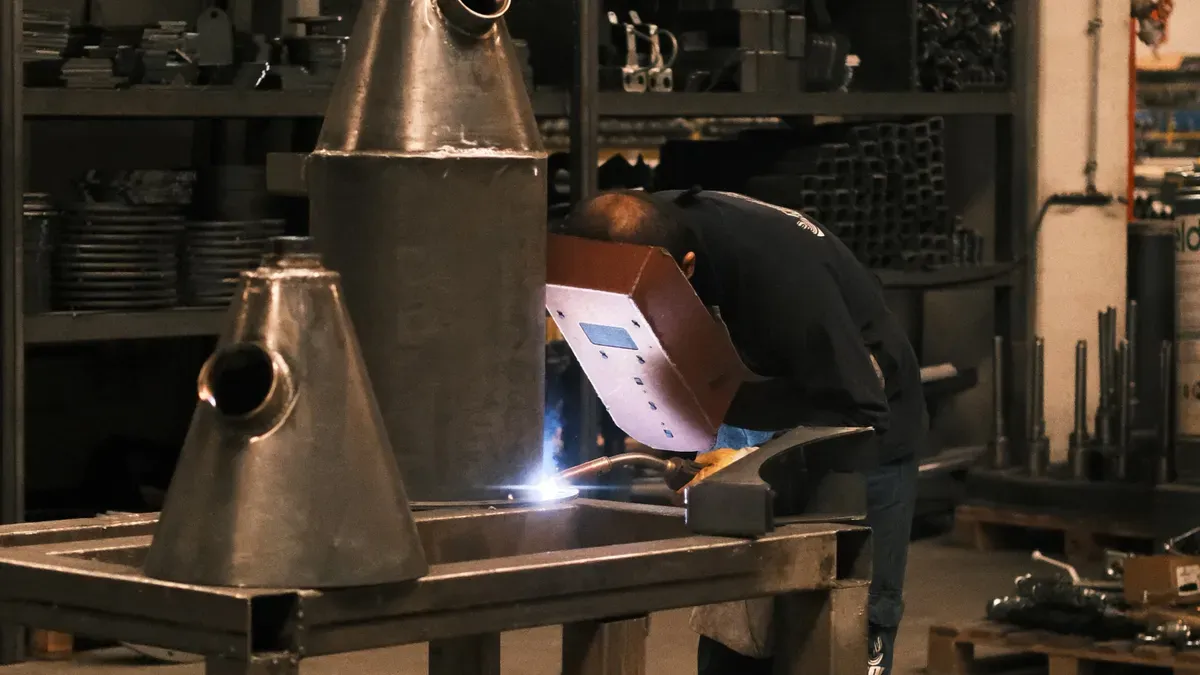
A weak weld on a load-bearing frame can crack under stress. You face rework costs, missed deadlines, and serious safety risks. These problems often come from the wrong mig welding fabrication supplier.
So what should you look for in a metal fabrication supplier for structural metal components? You need more than a shop with a welding machine. You need a partner who controls the full process.
Use this checklist to judge candidates. It covers MIG-specific skills, quality control, pre-weld metal fabrication, production scalability, and post-weld services. Each area shows whether a supplier meets your needs. The right metal fabrication supplier protects your project from start to finish. Careful review now prevents costly failures later.
Look at the supplier's MIG welding skills and gas choices to make sure the welds are strong.
Ask for welder certifications and written procedures to make sure the work is good.
Pick a supplier that does its own cutting, forming, and welding so the parts fit better.
Check production capacity and repeat order consistency for scalability.
Check for finishing and after-sales support done in-house to keep your project safe.
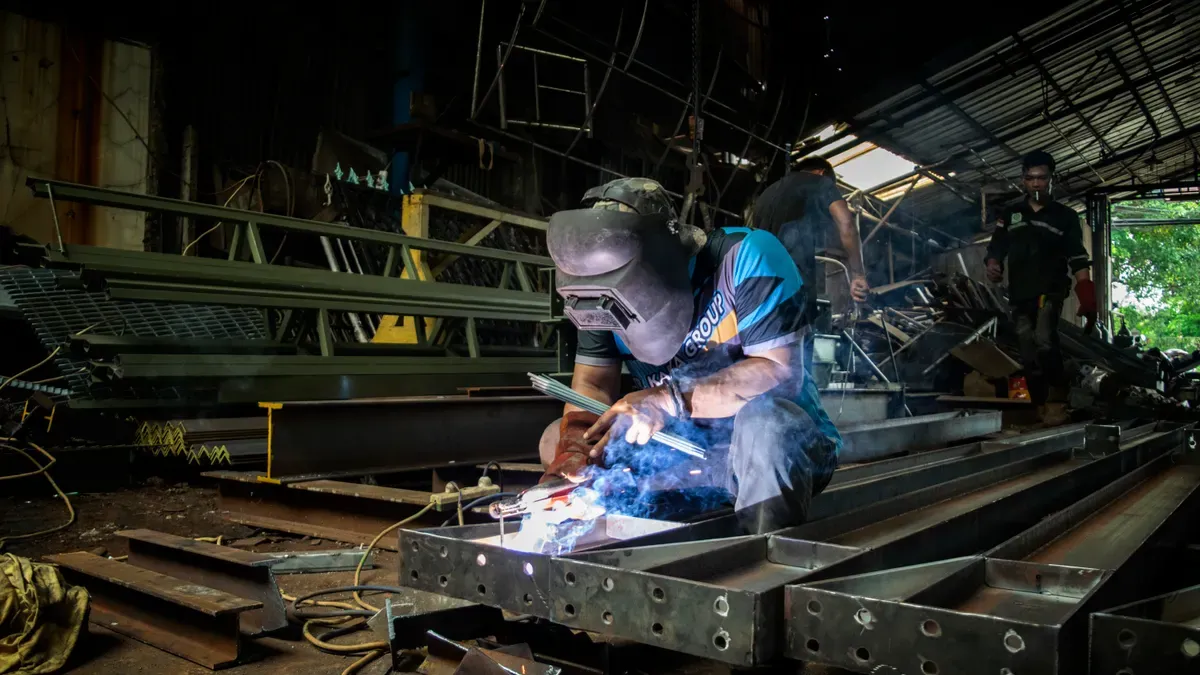
Picking the wrong mig welding fabrication supplier leads to rework and puts load-bearing structures in danger. You need a metal fabrication partner who can show control over every factor that affects weld strength.
Begin with MIG process control. A skilled supplier adjusts voltage, wire feed speed, and amperage for each joint setup. They do not use one default setting for all parts. Wire electrode selection is just as important. Structural carbon steel usually needs a 75–25% argon–CO₂ mix, aluminum needs pure argon, and stainless steel spray-arc needs a 1–2% argon-oxygen blend.
Material | Recommended Shielding Gas |
|---|---|
Mild Steel (Carbon Steel) | 75–25% argon–CO₂ mixture |
Aluminum | Pure argon |
Stainless Steel (Spray-Arc) | 1–2% argon-oxygen mixture |
That gas chart only tells part of the story. You also need to check how the supplier handles the balance between manual and robotic welding. Manual MIG welding gives flexibility, but quality changes with each person's skill and tiredness. Rework rates on manual work usually run 5–10%. Robotic welding, when set up right, keeps defect rates between 0.5–3%. Robots repeat the same steps with the same settings every cycle.
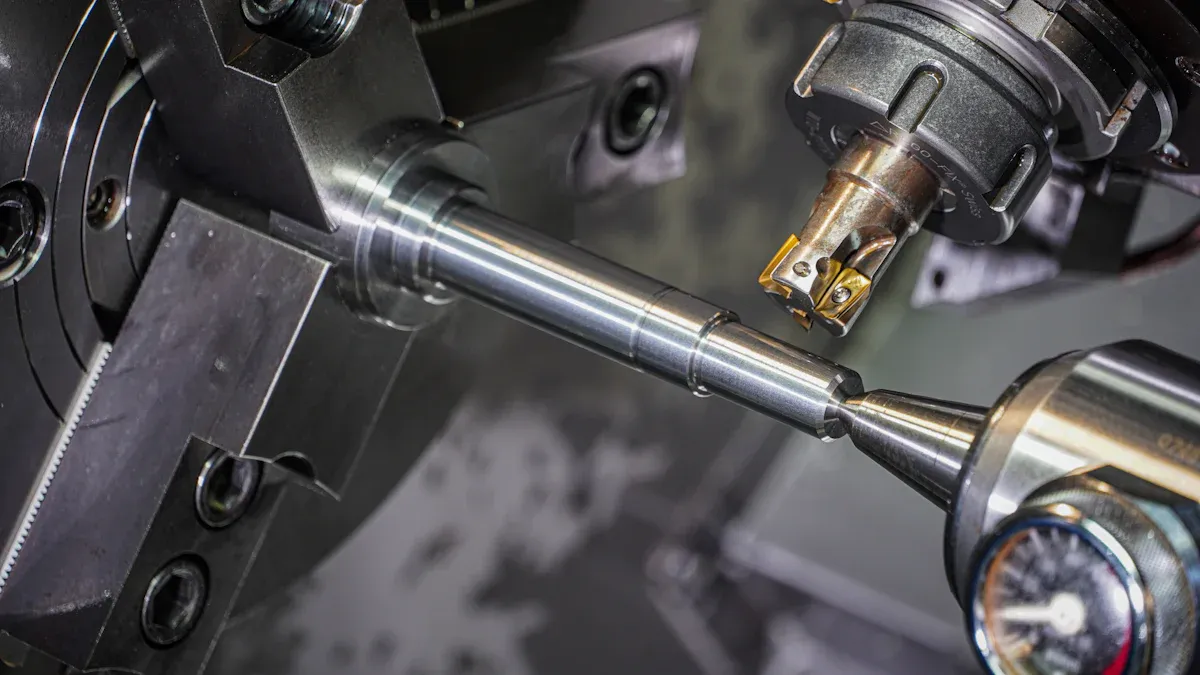
For a full-service mig welding fabrication supplier, Hehua Machinery Technology (Kunshan) Co., Ltd. uses both methods. With more than 17,800 square meters and over 160 employees, Hehua has served automotive, rail transit, aerospace, wind power, and industrial machinery since 2005. Its welding and fabrication skills include manual MIG lines, robotic automatic welding, MIG, TIG, and spot welding on carbon steel, stainless steel, aluminum, and ductile iron. This welding and machining knowledge, supported by ERP management, links every order to a clear schedule and material certificate.
Machine capability alone will not carry a structural project. Judge welding capabilities by asking for defect data and procedure records. Weld quality depends on qualified people and approved procedures. Ask every candidate for welder certifications under EN ISO 9606-1. Certified welders have passed practical and theoretical tests. These tests show they can make sound fusion welds within set parameters. Do not accept a general statement of experience; ask for individual qualification cards.
Personnel certification still does not prove the procedure itself is sound. Under EN ISO 15614-1, the supplier must keep a Welding Procedure Specification (WPS) and a Welding Procedure Qualification Record (WPQR). The WPS defines heat input, parent material, joint type, filler material, and technique so the process repeats exactly. The WPQR documents test results that prove the procedure works. This includes destructive and non-destructive examination outcomes. Range of qualification records define the allowed material thickness, diameter, and welding positions.
Supplier-level certifications matter just as much. ISO9001 gives the quality management backbone, IATF16949 covers automotive production requirements, and EN15085 governs rail welding. Hehua holds all three, with welders qualified to EN ISO 9606-1. The quality system drives incoming material checks, in-process patrol inspections, and post-weld testing. This includes air tightness checks and NDT for critical welds. Every shipment carries material test certificates and full traceability.
Traceability is not paperwork for its own sake. If a structural weld fails in service, you must find the material lot, the welding procedure, and the welder who made the joint. Without documentation, you cannot prove compliance or start a root-cause investigation. Treat documentation as a contractual requirement.
A supplier's quality control system shows if they are a safe partner or a risky one. You need proof that every weld meets your drawing's requirements. Start by comparing the certifications a supplier holds. Each one covers a different level of risk.
ISO 9001 mechanism | How it improves supplier quality performance in MIG welding fabrication for structural components |
|---|---|
Process control and consistency | Requires the fabricator to define, document, and control key processes from contract review through final inspection, reducing variability in welded structural components. |
Risk-based thinking (ISO 9001:2015) | Requires proactive identification of potential quality risks and controls to mitigate them, leading to fewer non-conformances. |
Continuous improvement | Mandates systems for tracking quality metrics, analyzing root causes, and implementing corrective actions to prevent recurrence. |
Supplier vetting | Provides independent third-party verification of a competent quality management system, reducing your auditing burden. |
Alignment with welding codes and NDT | Certified fabricators comply with standards such as AWS D1.6 and ASME Section IX, and apply NDT methods to validate weld integrity. |
ISO 9001 gives the baseline. IATF16949 adds automotive production discipline. EN15085 governs rail welding. Hehua holds all three. This matters because your metal fabrication partner must match the end-use industry's rules.
In-process patrol checks catch problems before a part leaves the station. Inspectors check wire feed speed, gas flow, and joint fit-up during the run. After welding, the supplier straightens each assembly to control distortion. Deburring removes sharp edges and spatter. Pressure parts then undergo air tightness testing.
Critical welds need non-destructive testing. ISO 17635 and AWS B1.10 list the accepted methods:
Ultrasonic testing (UT)
Radiographic inspection (RT)
Magnetic particle testing
Dye penetrant inspection
UT or RT specifically for critical structural joints
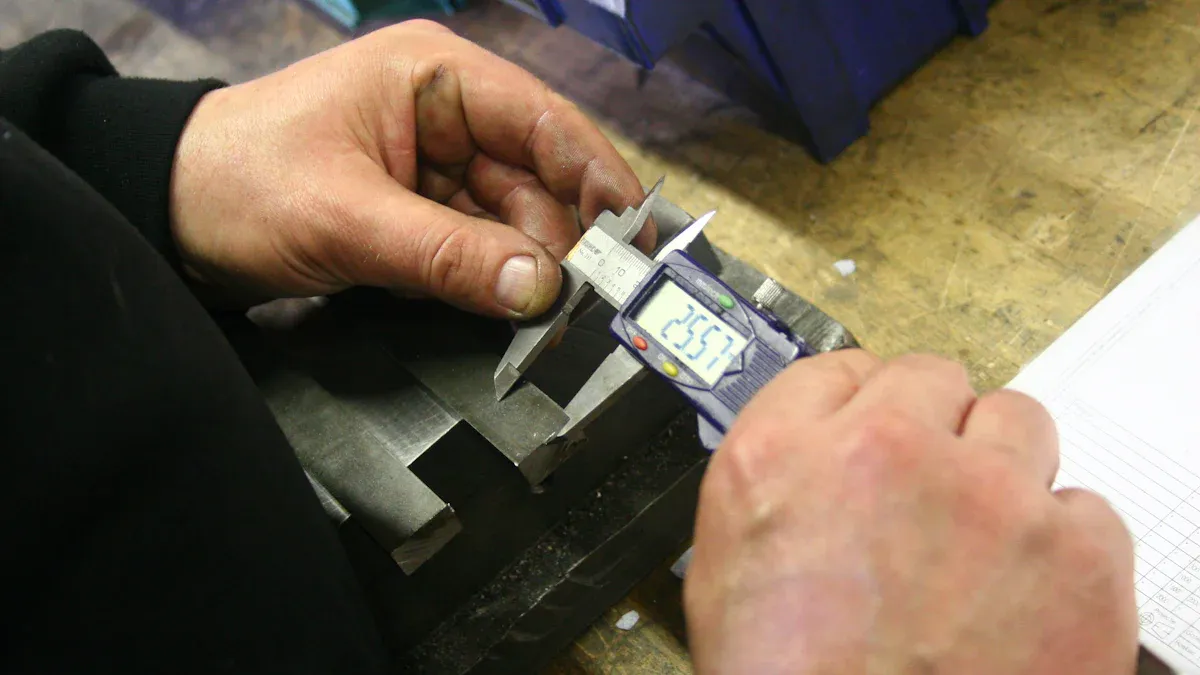
Dimensional accuracy proves the whole process works. Hehua achieves overall dimension tolerances of ±0.1~±0.3mm and flatness ≤0.03mm/100mm after straightening. Those numbers depend on the dimensions, tolerances, and complexity of your part. Tight tolerances demand more inspection time and better fixtures.
Paperwork protects you when a weld fails in service. You must trace the material lot, the welding procedure, and the welder who made the joint. Material test certificates make that possible.
EN 10204 governs the inspection documents for steel, stainless, and aluminum alike, not only carbon steel. A stainless or aluminum delivery carries its 3.1 certificate on exactly the same basis as a structural steel one.
The certificate type follows your specification and risk level. A 3.1 certificate carries actual test results for the supplied lot and is the default for most certified structural work. A 3.2 certificate adds external third-party validation for the highest-consequence applications. Order the correct certificate with the material from the start. You cannot reliably add it after delivery.
Hehua provides material test certificates and full traceability on every shipment. The quality control system covers incoming material checks, in-process patrol inspections, and post-weld testing. This documentation turns a supplier's promises into verifiable records. Without it, you cannot prove compliance or start a root-cause investigation.
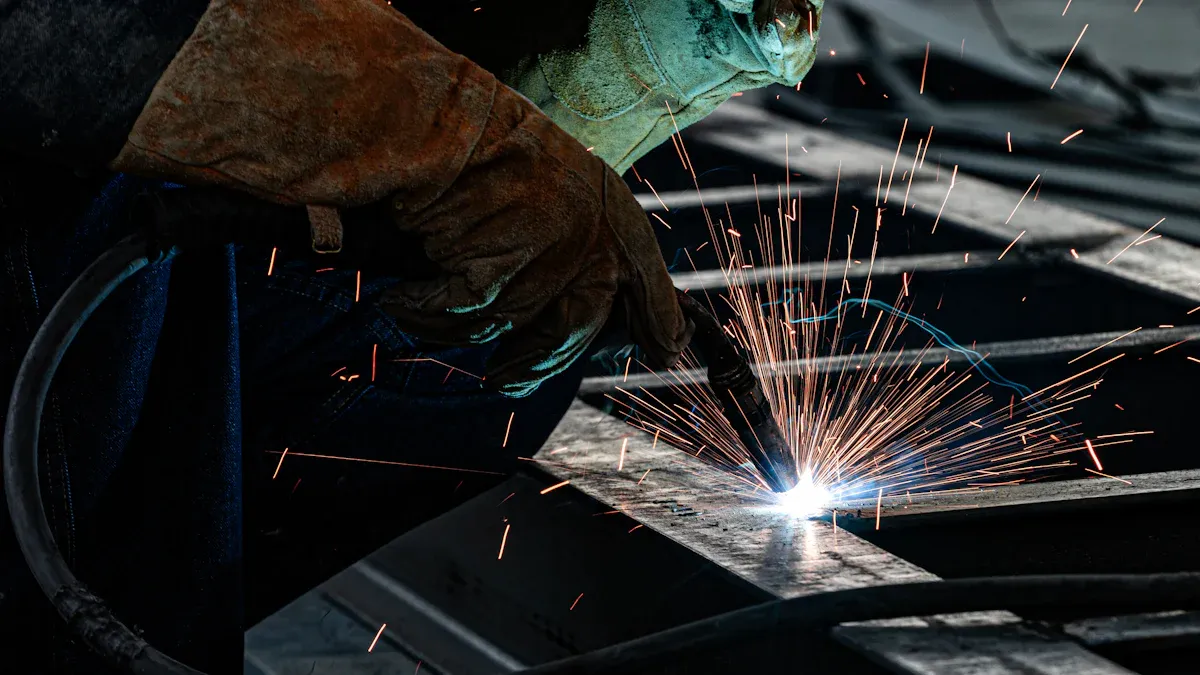
Welding cannot fix parts that were cut or shaped badly. If cut features are in the wrong spot or bends are not the same, mating parts will not fit. The welder then struggles with the joint, and dimensional variation gets worse. Think of cutting, forming, and welding as one plan, not separate steps.
Good laser cutting and exact bending help parts fit better before welding begins. This keeps joint gaps even and lowers the time spent adjusting during assembly. Shaped geometry can also get rid of welds you do not need. Swap three separate pieces for one formed part and a single welded joint. This cuts fabrication time, makes fixturing easier, and speeds up production.
Laser-cut edges that are square and even create tighter fit-up and more consistent weld gaps than plasma-cut edges. Better weld fit-up means less weld wire used, less distortion, and less time straightening after welding. MIG welding of structural components handles plasma edge quality well enough with light grinding, but plasma-cut parts need measuring and sometimes extra work to meet assembly tolerances.
Laser cutting keeps a kerf width of 0.3–0.45 mm on 6mm mild steel. Plasma cutting runs 1.5–2.5 mm, which is 4–6 times wider. On a 100mm programmed part, laser holds 99.7–100.0 mm while plasma spans 99.0–100.0 mm. Those differences decide whether your parts drop into the fixture or need rework.
A full-service metal fabrication company keeps cutting, forming, welding, and finishing in one place. This cuts down on handoffs and keeps tolerances tight. Ask any candidate about what they can do in-house before you commit.
In-house Capability | Why It Matters |
|---|---|
Cutting | Laser and plasma cutting make clean, repeatable parts that go straight into frame and weldment fabrication. |
Forming | Press-brake forming up to 230 tons handles large, heavy structural frames and weldments. |
Welding | Manual MIG stations plus FANUC robotic welding support both prototype and production volume builds. |
Finishing | In-house powder coating and wet paint let structural weldments ship coated and complete without an outside vendor. |
Quality | CMM inspection checks critical frame and weldment features to tolerances as tight as ±0.005" where drawings require it. |
MIG welding covers 18-gauge to 1/2 inch across carbon steel, stainless, and aluminum. Laser cutting handles up to 1 inch for most systems. Plasma cutting suits 1/4 inch to 2 inches for thicker mild steel. Waterjet cutting serves heat-sensitive materials and extra-thick plate. Match the cutting method to your material thickness and part specs.
Check that the supplier offers TIG welding, aluminum welding, and robotic welding as extras. Confirm quality control steps like visual inspection, dimensional checks, non-destructive testing, and certified weld inspectors. Look for integrated in-house fabrication that includes laser cutting, CNC bending, turret punching, robotic welding, and finishing. Make sure the supplier supports both prototyping and large-scale production using repeatable weld procedures, jigs, and fixtures. Verify post-weld services like powder coating, galvanizing, painting, and packaging so components ship complete.
Many metal fabrication suppliers send cutting or finishing to outside shops. That adds transit time, raises the risk of damage, and splits responsibility when a part fails to meet requirements. A single partner who controls every stage gives you one point of contact and one standard for quality.
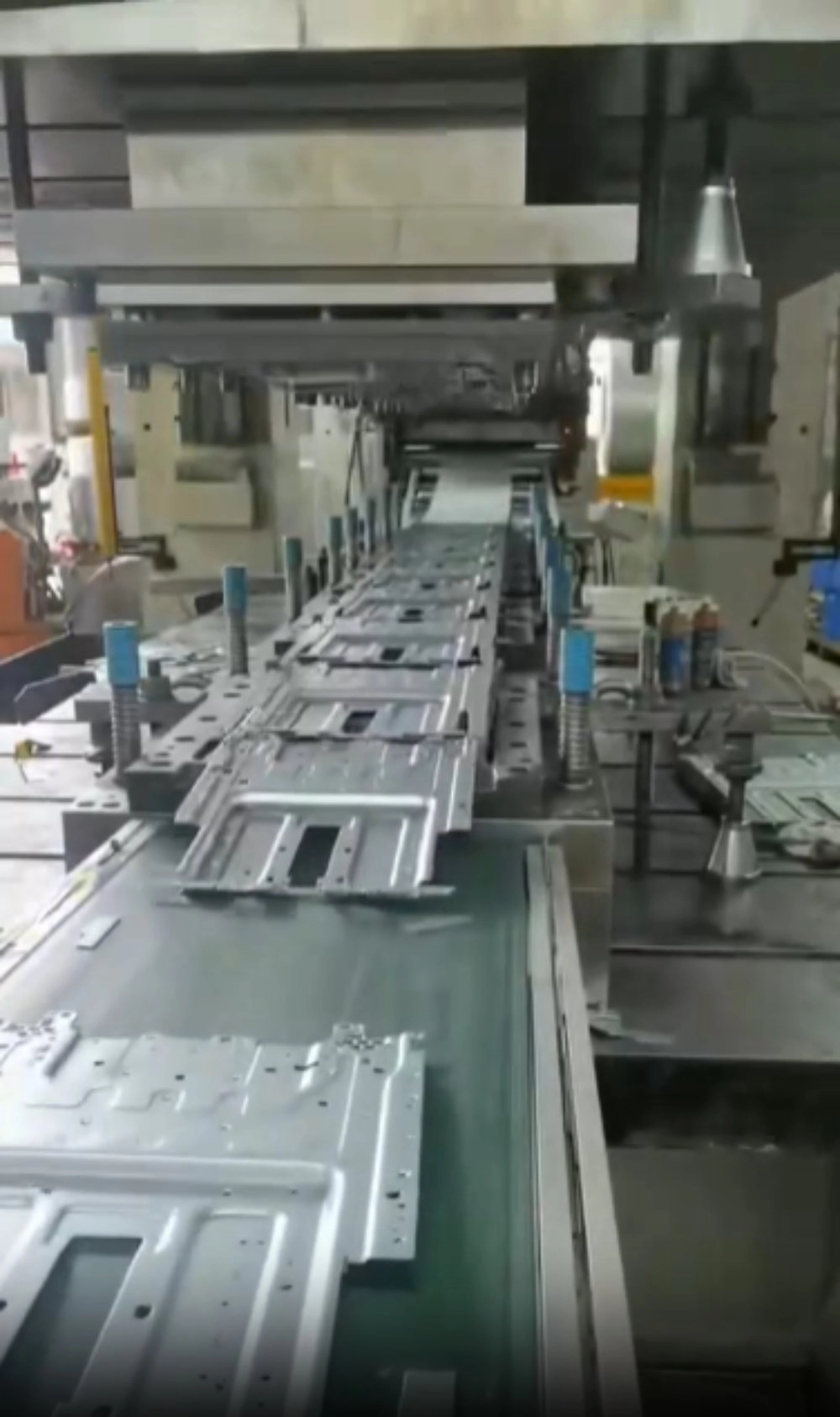
A prototype proves your design works, but making many parts is the real test. You need a metal fabrication supplier that can go from samples to mass production without losing accuracy. Check prototype support and capacity together.
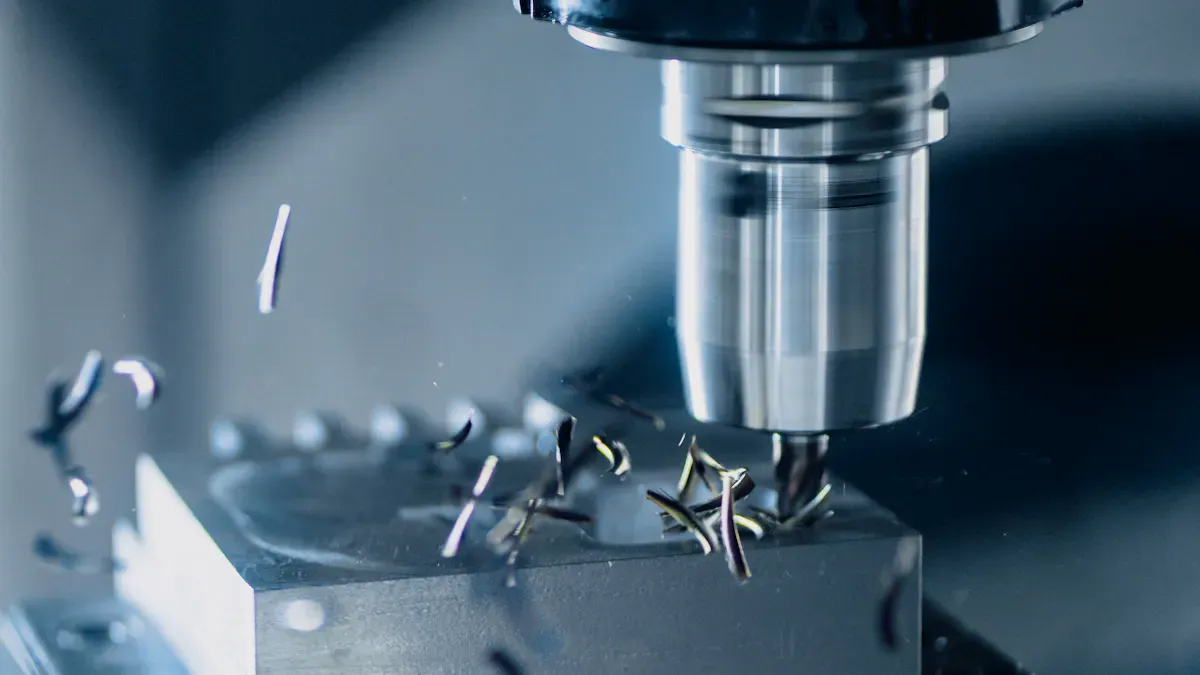
Rapid prototyping starts with laser cutting. The laser cuts clean, exact shapes from sheet metal. CNC machining creates accurate holes, detailed cutouts, and tapped features. CNC press brake bending shapes brackets, flanges, and enclosures with exact angles. Spot welding and assembly test full joints before a production run.
These methods do not need hard tooling, so design time drops from weeks to days. Real-world testing checks weight, fit, stiffness, and heat performance. A good prototype can move into production.
Ask every supplier for production capacity numbers. Monthly assembly volume and yearly tonnage show if the shop can handle your order. One fabricator processed 4,000–5,000 tons of steel per year before automation. After adding robotic cells, it doubled output to 10,000 tons. That jump matters if your production schedule has set dates.
A small-batch order is usually below a shop's standard minimum order quantity (MOQ). That could mean ten parts or fifty, depending on the job's complexity and the facility's capacity.
Match the batch size to the facility, not the other way around. Compare your project needs to their capacity.
The same metal fabrication equipment can make 5 to 5,000 parts, so you may not need new tooling. Pneumatic clamping fixtures hold parts firmly. This lets automated MIG heads place each weld bead in the same place, with the same width, length, and penetration.
Robotic MIG welding reduces human error and makes each part match the last. Automation removes tiredness and uneven human work, so every frame has the same quality. Repeat orders match the original specs.
A robotic cell creates a controlled setting. Fixtures keep parts aligned, so you get steady, high-quality parts months after the first run. Suppliers with manual and robotic lines can handle sudden jumps in volume. Hehua has a monthly capacity of up to 30,000 sets and normally delivers in 12–25 days.
Surface protection is not just an extra step after welding. Rust hits weld zones and heat-affected areas first. A protective finish makes parts last longer and keeps them reliable outdoors, offshore, or in industrial plants. Without it, a good weldment fails years before it should.
A good fabricator treats finishing as part of welding, not a separate handoff. Grinding removes weld bead and spatter. Abrasive blasting creates a uniform matte surface that helps coating stick better. Shot blasting to Sa 2.5, equal to SSPC-SP10, gets near-white metal with 95% of the surface free of visible residues. That standard matters before you apply primer, high-build coatings, or paint.
Your finish choice depends on material and environment. Powder coating resists chipping and fading, with many colors and textures. Hot-dip galvanizing dips steel into molten zinc, adding a barrier plus sacrificial protection outdoors. Anodizing suits aluminum only: it grows a hard oxide layer from the metal itself, so color cannot peel. A full-service metal fabrication company offers all three in-house. Hehua handles grinding, shot blasting, powder coating, galvanization, and anodizing on-site, so components ship complete.
Metal fabrication suppliers differ most in after-sales support. Ask about overseas logistics before you commit. A strong partner provides drawing review, export packing, installation manuals, spare parts, and site support. Hehua supports overseas clients with custom fixture design, on-site guidance, and remote technical assistance.
Clear communication prevents field failures. Assign one project manager to your account. That person coordinates material certificates, inspection schedules, and delivery updates. The supplier should negotiate directly with installers and general contractors when site conditions change.
Good support means fast answers. Confirm response times for drawing questions and defect reports. A partner who documents every decision helps you pass regulatory inspection and keeps repeat orders consistent. Choose someone who understands your project requirements before you sign.
You now know what makes a mig welding fabrication supplier reliable and what makes one risky. Steady weld quality, paperwork you can trace, full metal fabrication support, and real capacity to grow decide how your project turns out. Use the five H2 categories above as a scorecard. Rate each candidate on MIG capability, welding quality, metal fabrication integration, scalability, and post-weld services.
Score every metal fabrication supplier against these five areas before you award the contract.
The right metal fabrication supplier protects structural integrity for years, not just for one shipment. Pick a partner who grows with your production. That choice pays off on every order. Strong metal fabrication suppliers become long-term partners in your success.
These answers cover the questions buyers ask most often during supplier qualification.
Look for ISO9001 as the basic quality system. Add IATF16949 for automotive parts and EN15085 for rail components. Each welder should hold EN ISO 9606-1 qualification cards. These certificates prove the supplier runs a controlled process, not a random shop.
Hehua holds overall dimensions to ±0.1~±0.3mm and flatness to ≤0.03mm/100mm after straightening. Tight tolerances need good fixtures and more inspection time. Ask your metal fabrication supplier for tolerance limits on your own drawing before you commit.
Hehua delivers samples in 3–7 days and standard production orders in 12–25 days. Monthly capacity reaches 30,000 sets across manual and robotic lines. Ask the metal fabrication partner for a written lead-time commitment before you sign.
A full-service supplier runs MIG, TIG, spot, and robotic automatic lines. With all four, the fabricator matches the process to your material: carbon steel, stainless steel, aluminum, or ductile iron. You get the right method, not a forced fit.
Grinding, shot blasting, powder coating, galvanization, and anodizing. Hehua does all five on-site, so components ship complete with no third-party handoff. For outdoor steel, specify hot-dip galvanizing or a durable powder coat.


 AddressNo. 66 Xingpu Road, Lujia Town,Kunshan City, Factory Buildings 3 and 4
  en
en
 English
 繁体中文
繁体中文 Italian
 Spanish
 Japanese
 Portuguese
 Korean
 Russian
 French
 German
 Estonian
 Arabic
 Indonesian


 Message