Selecting a supplier for OEM metal stamping projects is rarely just a sourcing task. It is usually a decision that affects product consistency, assembly efficiency, delivery stability, and long-term program cost. A supplier may be able to produce a sample, but OEM projects require much more than sample capability. They require stable process control, clear traceability, tooling strength, and enough production depth to handle different part types over time.
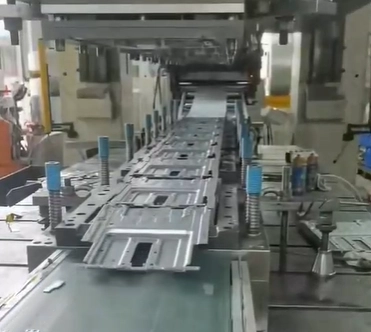
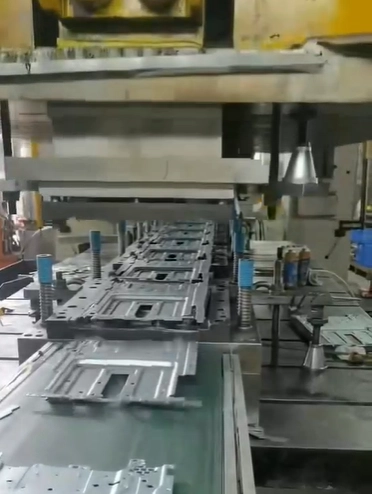
That is why buyers should evaluate a stamping supplier as a manufacturing system, not only as a workshop with presses. For companies looking for custom metal stamping and forming services, the real question is whether the supplier can support OEM requirements from tooling development to mass production. On Hehua Machinery's Progressive Die Stamping page, the company presents stamping as a solution for high-speed production, three-dimensional forming, dimensional precision, stable surface quality, and better material utilization. Those are useful starting points, but OEM buyers should go further and ask how these capabilities translate into project execution.
OEM projects are different from general fabrication orders. They usually involve repeated batches, tighter change control, higher consistency requirements, and stronger expectations for documentation. A supplier that mainly handles short-run jobs may still have good equipment, but that does not automatically mean they are suitable for OEM work.
A supplier fit for OEM projects should be able to explain how they support:
This is where stamping capability needs to be connected to project discipline. Hehua’s published process description emphasizes high-speed production, precision, and material saving, which are all relevant to OEM work, but the real value comes when those process strengths are supported by repeatable management.
Many suppliers say they offer stamping, but OEM buyers should ask what kinds of stamped parts they actually produce well.
This matters because different part categories involve different production challenges. A motor core, a car door hinge, and a shielding cover are all stamped parts, but their risk points are not the same. One depends heavily on burr control and stacking precision. Another depends on forming stability and side-hole location. Another depends on micro features and clean edges at high speed.
Hehua’s case section is useful because it shows stamping across several very different applications. The new energy motor core example uses 0.35 mm non-oriented silicon steel with 72 slots and stacked riveting, while the car door hinge example uses 4 mm high-strength steel with deep drawing and side punching. The 5G RF shielding cover example uses 0.2 mm phosphor bronze with fine louvers and convex details at high speed.
For OEM buyers, that kind of range matters. It shows whether the supplier can adapt the stamping route to very different technical requirements instead of relying on one standard production style.
For custom stamped parts, tooling determines whether the project can actually stay stable. That is why die capability should be one of the first areas reviewed.
A capable OEM supplier should be able to explain:
Hehua states that it uses self-designed progressive, transfer, and composite molds, supported by MaxProgress simulation forming. It also identifies mold materials such as SKD11, CD53, and hard alloy inserts, with a stated lifespan of at least 100 million cycles. The page further mentions in-mold tapping, riveting, and injection molding integration.
For OEM projects, this matters because in-house tooling usually improves response speed, especially when a project needs dimensional optimization, maintenance support, or process updates after initial runs.
Automation in stamping is often discussed in terms of output, but for OEM buyers, automation is just as important for consistency and defect reduction.
A supplier should be able to explain how automation supports:
Hehua’s published information mentions robot and visual feeding, automatic roll change, and online inspection that combines visual size checking, pressure curves, and leak detection. It also states material utilization of at least 85 percent and defect rate of 50 PPM or below.
From an OEM sourcing perspective, these points are important because the goal is not simply to run faster. The goal is to make output more predictable and reduce the risk of unstable parts entering assembly.
General claims about “precision stamping” are not enough for OEM sourcing. Buyers should ask for measurable standards.
Useful indicators include:
Hehua’s process page states precision progressive die accuracy of ±0.01 mm and hole position accuracy of ≤0.02 mm. Its motor core case states burr detection ≤0.02 mm and flatness ≤0.05 mm. The car door hinge case gives side-hole positional accuracy of 0.08 mm and notes that machining is not required afterward.
This type of application-based precision data is more useful than broad statements. For OEM buyers, it shows whether the supplier understands precision as a functional production target rather than a marketing phrase.
A stamped part may meet dimensions and still fail in practical use if the surface condition is poor. This is especially relevant for coated sheet, galvanized material, cold rolled sheet, thin stainless steel, and fine-feature components.
Hehua states that cold rolled sheet surface roughness can reach Ra ≤ 0.8 μm and that galvanized or coated sheet can maintain its original appearance after stamping. It also highlights burr-free louvers in the shielding cover case.
For OEM evaluation, this matters because surface quality can affect not only appearance, but also conductivity, coating performance, shielding function, and assembly safety. If a supplier understands surface control, they are usually better prepared for parts that must move directly into downstream operations.
A supplier can have certifications and still run weak production control if those certifications are not tied to actual stamping practice.
OEM buyers should look for how the quality system is used on the floor. Hehua connects its stamping process to the IATF 16949 automotive stamping system and ISO 9013 punching accuracy standard. It also describes a batch inspection flow of first-piece full-size inspection, 10 percent in-process inspection, and last-piece comparison, with data uploaded automatically to MES.
This is the kind of detail buyers should look for. It shows whether inspection is embedded into production instead of being treated as a final sorting stage.
OEM programs often run over long cycles. When a deviation appears, the supplier must be able to investigate it quickly and accurately.
A practical traceability system should link the finished part to:
Hehua says it uses QR code and visual engraving to identify mold number, roll number, and operator, with trace-back to raw material furnace number.
For OEM buyers, this is not just a quality tool. It is also a risk management tool. Faster root-cause analysis reduces disruption and improves confidence in long-term supply.
A supplier may be good at either high speed or custom flexibility, but OEM projects often require both.
Hehua’s process description highlights production speeds of 200 to 800 strokes per minute and daily output of 100,000 to 500,000 pieces in one shift, while its case studies show part diversity across automotive, energy, and electronics-related applications.
For OEM evaluation, the key is whether the supplier can maintain quality not only at high volume, but also across changes in part family, material, and production setup.
Evaluating a custom metal stamping parts supplier for OEM projects should go beyond asking whether they can stamp the part. Buyers should look at how the supplier controls tooling, automation, dimensional performance, surface condition, inspection flow, and traceability within one manufacturing system.
Based on the information published by Hehua Machinery, the company presents its stamping operation as a combination of progressive die capability, mold development, automation support, practical case experience, and structured quality control. For OEM buyers, that is the right evaluation direction: not only whether the factory has capacity, but whether the whole process can support reliable long-term production.


 AddressNo. 66 Xingpu Road, Lujia Town,Kunshan City, Factory Buildings 3 and 4
  en
en
 English
 繁体中文
繁体中文 Italian
 Spanish
 Japanese
 Portuguese
 Korean
 Russian
 French
 German
 Estonian
 Arabic
 Indonesian


 Message