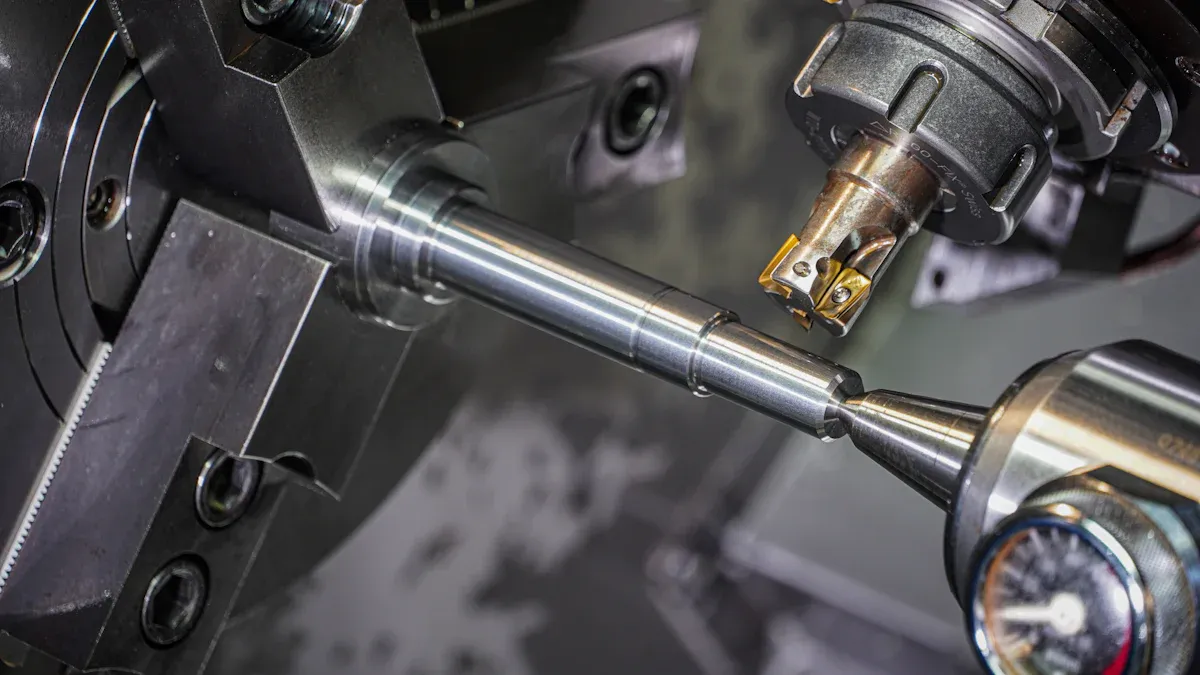
A heavy-duty CNC machining service provider in China offers large-scale, multi-axis machining and deep customization for industrial assemblies. Industrial buyers get heavy-duty capabilities, flexible customization options, strict quality standards, and strong cost and lead time benefits. Practical supplier selection tips help them pick the right partner.
Leading providers like Hehua Machinery Technology (Kunshan) Co., Ltd. show these strengths. Their CNC machining china services help new energy cars, high voltage motors, electronics, and rail transit. This partner combines precision with reliable delivery. The company's CNC expertise includes lathing, milling, and full solutions. Buyers can rely on a partner like this for complex industrial assemblies.
Suppliers use multi-axis machines to work on large parts and keep tight tolerances.
Design reviews and quick prototypes help solve problems before making begins.
ISO 9001 certification and complete inspections make sure parts are good quality.
Lower prices and smart planning save 25 to 50 percent on complex parts.
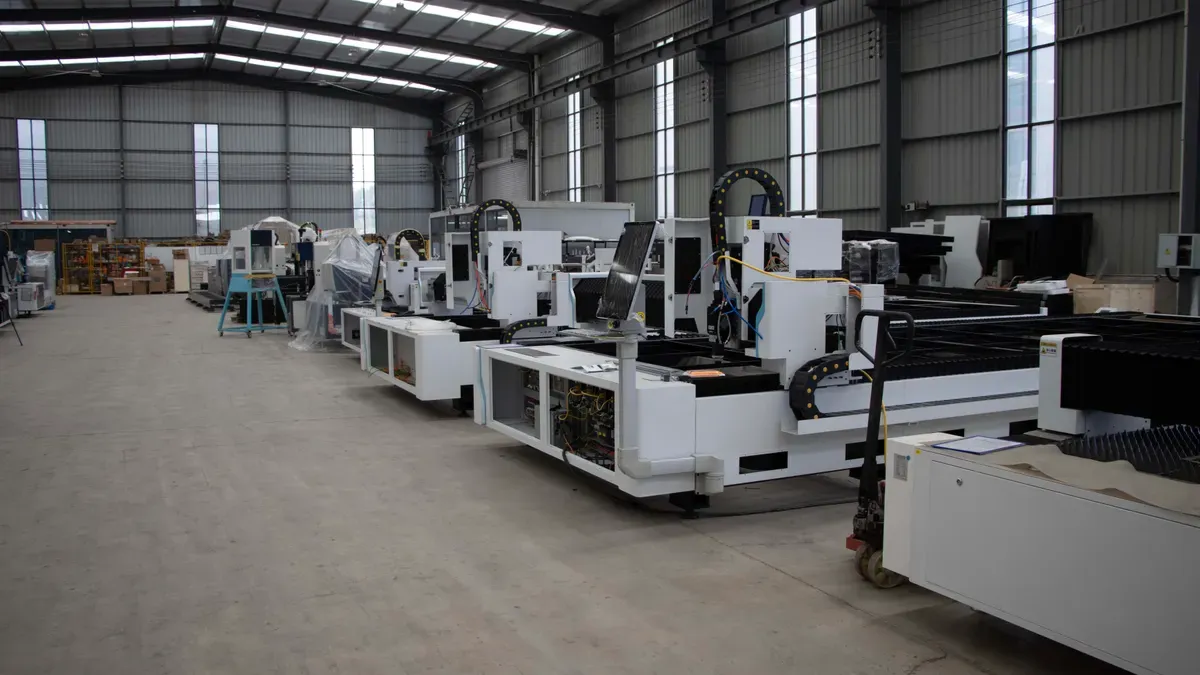
A heavy-duty CNC machining service provider in China usually has a wide range of technology. This covers 3-axis to 5-axis milling, turning, EDM, sheet metal fabrication, wire EDM, and 3D printing. With these skills, suppliers can make everything from simple shafts to complex parts. A precision CNC machining partner can deliver tight tolerances and great surface finishes for many part sizes.
Large CNC machining needs machines built for stiffness and accuracy. A heavy-duty CNC machining service provider in China often keeps a fleet of more than 60 machines. This fleet handles round parts, simple shafts, and complex shapes. Multi-axis platforms give the biggest gains. A 5-axis mill-turn center does the work of both a lathe and a mill. The workpiece mounts on a spindle that spins fast or tilts to a precise angle. Both turning and milling tools cut material in one setup. This method uses the speed of turning and the shape flexibility of milling.
Machine setup matters for large parts. A swivel or articulating head turns the tool head while the workpiece stays still. This design supports large, heavy workpieces with strong structural support and less vibration. A rotary table and pivoting spindle head 5-axis machine gives a big workspace, with a 50-inch diameter and 50-inch height. This type fits large parts in aerospace, automotive, and energy work. It works best on parts with complex angled holes, slots, or features, like turbine housings and impellers.
Moving from 3-axis to 5-axis machining brings clear improvements. Setup reduction means 70 to 80 percent fewer fixture changes and part repositioning. Best cutting angles make tools last 25 to 40 percent longer. Better quality gives plus or minus 0.0002 inch repeatability on complex shapes. Cycle time drops by 40 to 60 percent for complex parts. These gains make 5-axis CNC machining services a smart choice for industrial assemblies.
Hehua Machinery Technology (Kunshan) Co., Ltd. is a good example of these skills. The company offers CNC turning services and CNC milling services for round parts and complex components. Their CNC lathes solve tough turning jobs with high accuracy and repeatability. Their CNC milling solutions cover work from prototyping to full-scale production.
A good CNC machining service must work with many materials. Metals, plastics, and composites all have a role in industrial assemblies. The table below lists common material groups.
Material Category | Specific Materials/Grades |
|---|---|
Titanium Alloy | Grade 1, Grade 2, Grade 5 |
Nickel Alloy | Invar 36, Inconel 718 |
High-temperature Alloys | Inconel |
Plastics | PEEK, ULTEM, nylon (PA), Delrin (POM), acrylic, polycarbonate |
Advanced alloys like titanium or Inconel raise prices because of higher material costs and harder machining. A Chinese CNC service provider skilled in these materials can machine titanium alloy aircraft engine mounts using 5-axis CNC with high-pressure cooling and TiAlN coated tools. This method cuts scrap rate from 30 percent to under 5 percent.
Aluminum alloys are used in many CNC machined parts. Grade 6061 has good strength, great corrosion resistance, and is easy to machine. It fits general mechanical parts, housings, brackets, and fixtures. Grade 7075 gives much higher strength and a great strength-to-weight ratio. It serves aerospace, automotive, and load-bearing parts. Picking the right one matters: 7075 is not always better than 6061. If a part does not need very high strength, 6061 may give a better mix of performance, machinability, and cost.
Stainless steel grades serve special roles. Grade 303 adds sulfur to improve machinability, making it the easiest austenitic grade to cut. It fits high-volume turned parts like fittings, shafts, and fasteners. Grade 304 is the most widely used grade with good corrosion resistance and wide availability. Grade 316L has 2 to 3 percent molybdenum for better chloride corrosion resistance. It serves marine hardware, surgical instruments, and chemical processing. Grade 17-4 PH can be heat-treated to tensile strengths above 1,100 MPa. It works for valve parts, pump shafts, and structural uses.
Hehua Machinery Technology works with many materials including metals, plastics, and composites. Their CNC machining parts serve new energy automobiles, high voltage motors, electronics, rail transit, and mechanical equipment spare parts. The company uses state-of-the-art equipment and a skilled team to deliver reliable, efficient machining solutions. Their commitment to quality is backed by rigorous certification and a customer-centric approach.
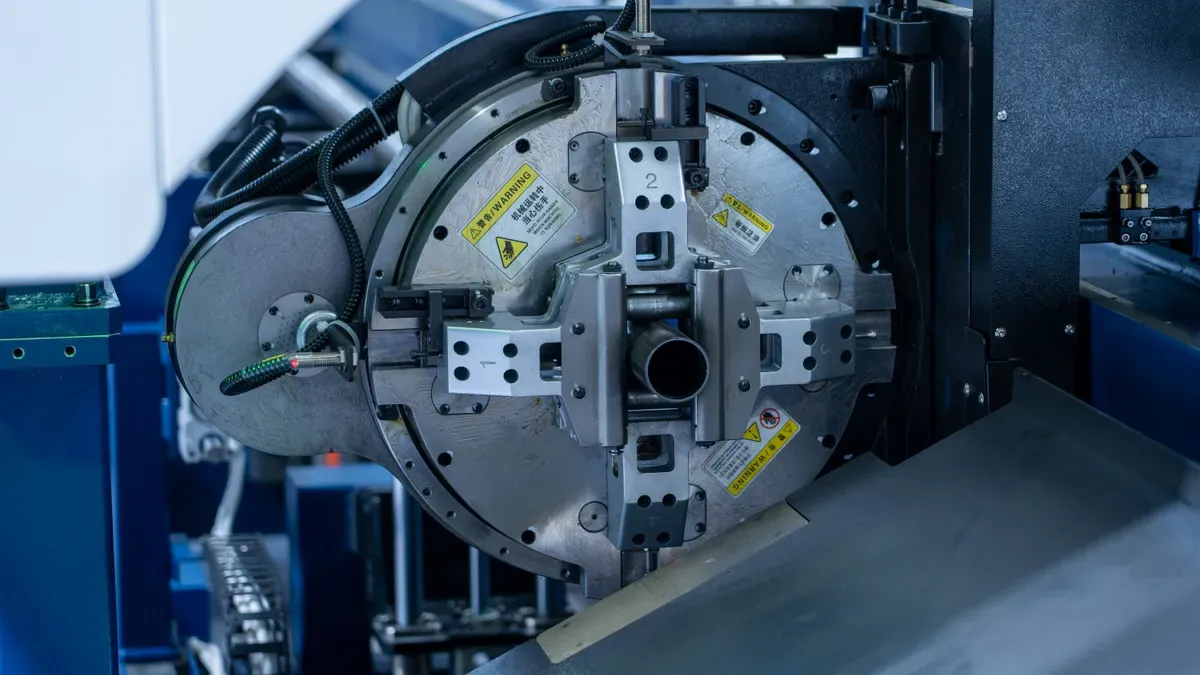
A heavy-duty cnc machining service provider in China does more than just cut metal. These suppliers work as full partners on industrial assembly projects. They help buyers from the first design sketch all the way to the final shipped part. This support includes design help, fast prototyping, and production at any volume.
Good cnc machining services in china begin with a design review. Engineers check CAD files before any cutting starts. They look for problems that could raise costs or cause defects. This step is called design for manufacturability, or DFM. A skilled cnc machining service points out issues early and suggests fixes.
Common DFM feedback covers several types of warnings. Suppliers flag tool-access problems like deep undercuts or fully closed internal shapes. They warn against blanket-tight tolerances, where a designer puts tight tolerances on all dimensions instead of only where parts mate. They point out sharp internal corners that no rotating tool can make, which need EDM or tiny cutters. They find walls and ribs that are too thin to hold shape under cutting forces. They also call out too many cosmetic or surface-finish specs that are tighter than the part's function needs.
Beyond flagging problems, engineers suggest ways to improve. They may recommend larger corner radii, standard hole and thread sizes, or avoiding undercuts. Some teams give a structured DFM report with cost-saving ideas. For example, increasing a corner radius to 3mm might cut cost by 15 percent.
Speed matters for prototypes. A custom cnc machining project can go from CAD file to physical part quickly. DFM analysis often finishes within about 12 hours. CNC machined prototypes ship in 1 to 3 business days. The full journey from CAD file to shipping can take as fast as 3 to 5 business days.
Part Complexity | Process Scope | Lead Time |
|---|---|---|
Moderate complexity, 3–4 axis, standard material | Includes DFM review and first article | 3–5 working days |
This speed helps buyers test designs and iterate fast. A precision cnc machining partner with strong prototyping skills keeps product development on schedule.
Customization does not stop at one prototype. A reliable cnc machining service scales from a single part to thousands. Many suppliers set no minimum order quantity. One provider states plainly: "NO! – No minimum quantity!" This policy lets buyers order rapid prototypes and short to medium-run production without penalty.
Custom cnc machining covers complex geometries and fine details. Each industry brings its own requirements. A new energy automobile maker needs lightweight brackets. A rail transit supplier needs durable housings. A high voltage motor company needs precise shafts. The right partner adapts to these needs.
Many providers work as one-stop machine shops. Alongside cnc manufacturing services, they offer vacuum casting and injection molding. This range means a buyer can source prototypes in one process and production parts in another. The supplier handles both without losing time or quality.
Hehua Machinery Technology (Kunshan) Co., Ltd. shows this customer-centric approach. The company provides custom machining services for lathing and milling. Their team supports projects from prototyping to full-scale production. They serve new energy automobiles, high voltage motors, electronics, rail transit, and mechanical equipment spare parts. Their customized high-precision cnc machining parts meet tight tolerances and superior surface finishes. Buyers get a partner who listens and adapts.
No minimum quantity lets buyers order rapid prototypes and short to medium-run production without penalty.
This flexibility matters for industrial assemblies. A buyer can test a design, refine it, and scale up without changing suppliers. The same team that made the prototype makes the production run. This continuity reduces errors and saves time.
Strict quality checks set good cnc machining companies in china apart from basic shops. These suppliers put money into CNC inspection tools and certification systems. Every part has to meet the specs. Top Chinese CNC machining companies build trust using written processes, testing tools, and well-known standards.
A serious cnc machining services provider keeps a full inspection lab with CNC coordinate measuring machines, optical scanners, and surface roughness testers. These tools help with first article inspection and checks during the job. Every machining quality check starts with a full FAI report that records each dimension and tolerance. Inspectors check samples at set times all through the workflow.
CNC ERP systems add one more layer of control. These digital tools track every step from raw material intake to final shipping. They give each part a serial number, save inspection results, and create traceability reports. This system cuts human error and speeds up turnaround.
Hehua Machinery Technology follows this structured method. The company uses modern equipment to deliver reliable machining solutions for high-precision parts. Every part goes through strict checks before it is released.
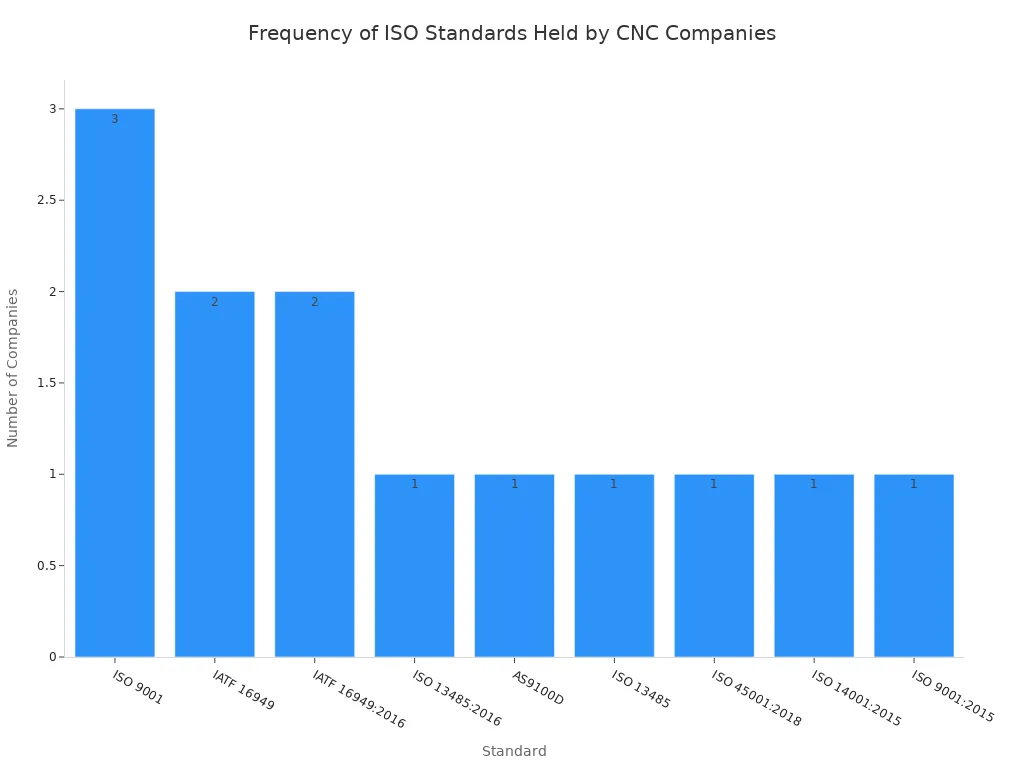
Outside certifications prove a supplier's machining quality system. ISO 9001:2015 is the base for almost every cnc machining companies in china that sells around the world. This standard requires written process control, nonconformance reporting, and customer satisfaction tracking.
Different industries need extra certifications. The table below shows how top providers match standards with their machining work.
Company | ISO / Industry Standards Held | Industry Served |
|---|---|---|
DEK (Shenzhen) | ISO 9001, ISO 13485:2016, AS9100D | Electronics, aerospace, medical, industrial |
Dongguan Kinyet Metal Products | IATF 16949, ISO 13485 | Automotive, medical, industrial |
Ningbo Dyfab Industry | IATF 16949:2016, ISO 45001:2018, ISO 14001:2015, ISO 9001:2015 | Automotive |
FRIMA (Ningbo) | ISO 9001, IATF 16949:2016 | Automotive |
Yijin Hardware (Shenzhen) | ISO 9001, IATF 16949 | Industrial / general machining |
ISO 9001 is still the most common certification in China, as the chart below shows. Many companies hold two or more standards to serve different industry machining needs. These credentials show a supplier's promise of steady quality.
Precision cnc manufacturing needs this layered quality approach. A supplier with multiple certifications shows growth in quality management. The buyer gets a partner who knows CNC quality requirements.
Hehua Machinery Technology backs its machining with strict certification. The company serves new energy automobiles, high voltage motors, electronics, and rail transit. Buyers get parts that meet both print specs and industry standards.
China gives big cost savings for industrial buyers who need precision CNC machining. Lower labor costs and efficient production processes lead to competitive prices for machining work. The table below shows a direct comparison for 5-axis CNC services.
Cost Category | China (USD) | US / Europe (USD) | Typical Savings |
|---|---|---|---|
5-axis CNC machining rate | $60 to $140/hr | $100 to $200/hr | 25 to 40% |
Complex 5-axis CNC steel part | $100 to $250 | $200 to $500+ | 30 to 50% |
A few things cause these savings for machining projects. Entry-level machines in Asia cost less per hour than machines in Eastern Europe. Top aerospace-grade machines in the USA or Germany have the highest rates for precision work. Buyers can save 25 to 50 percent on complex CNC parts.
A 5-axis CNC machine costs more per hour than a 3-axis CNC machine. The cost advantage for Chinese CNC machining comes from lower rates and better process efficiency. Hehua Machinery Technology works in Kunshan and gains from these cost structures for its machining solutions. This location gives access to skilled workers and established supply chains.
Advanced process improvements speed up turnaround times at Chinese CNC factories. Many facilities use ERP systems to manage production scheduling and cut lead times for international clients. These systems improve every step of the CNC workflow.
ERP Function | How It Manages Scheduling |
|---|---|
Real-Time Production Scheduling | Dynamically adjusts schedules based on new orders and machine maintenance |
Material Planning | Monitors inventory and prevents stock shortages that delay production |
Capacity Management | Balances workloads across machines and workforce |
Work Order Tracking | Monitors production status and catches problems before delivery |
These systems link RFQ, planning, production, quality control, and shipping into one integrated workflow. This integration cuts communication gaps and boosts operational efficiency for machining projects. Automated alerts and reminders stop missed delivery dates.
The comparison between manual and ERP management shows clear advantages for machining operations. Excel management gives limited production visibility. ERP provides real-time visibility across the machining factory. Manual scheduling needs human effort. ERP automates scheduling decisions for machining jobs. Traceability becomes integrated with ERP instead of hard to track. Data accuracy improves with automated systems and scales well as production grows.
Manufacturing hubs like Kunshan and Dongguan offer logistical advantages for international buyers. These locations sit close to major ports and transportation networks. Shipments move quickly from factory to customer. Hehua Machinery Technology combines these advantages with strong production planning to help international customers receive parts on time.
Buyers should check several technical points before picking a CNC manufacturing partner. Machine skills come first. A supplier needs 3-axis, 4-axis, 5-axis, turning centers, and mill-turn machines. Spindle power, stiffness, and axis travel limits decide what parts a shop can make. Material experience comes next. The supplier must find and work with needed alloys or plastics and give material certificates. Tolerance skills need checking in real production settings.
A look at past work shows if a shop has made parts with similar shape, material, and tolerance needs. The supplier should have many machines, including VMCs, HMCs, and lathes. This range lets them pick the best platform instead of forcing a part onto one setup. ISO 9001 certification gives a basic level for quality control. Inspection tools matter too. A CMM measures micron-level accuracy for complex shapes. Surface finish profilers check texture and flaws. SPC keeps process control for steady results.
Financial health also needs attention. Buyers should check years in business, big customers, yearly income, and growth trends. Capacity check covers current usage rates and ability to handle future volumes. Insurance, IP protection rules, and willingness to sign supplier quality agreements finish the review.
Clear communication sets top CNC machining companies in China apart from average ones. Good teamwork goes beyond translation. It needs engineering-level talk about GD&T callouts, tolerance stacks, and fixture design. Companies with bilingual engineering teams cut down misinterpretation risks and speed up time to prototype. Response time offers a simple test. A 24 to 48 hour reply is okay. Anything over 72 hours is a warning sign. Technical depth matters too. A good supplier spots DFM issues instead of just saying "OK."
After-sales support protects the buyer's investment. Standard warranty for well-known Chinese CNC manufacturers is 12 months. Some cheap suppliers offer 6 months. Top suppliers extend coverage to 18 or 24 months. More important than length is what is covered, when it starts, and how repairs work. A clear quality claim process includes fast acknowledgment, clear paperwork needs, and several fix options like rework, replacement, or credit. Root cause analysis stops problems from coming back.
Hehua Machinery Technology (Kunshan) Co., Ltd. is a good example of a trusted partner for precision CNC machining. The company serves new energy cars, high voltage motors, electronics, and rail transit. Their customer‑focused approach and strict certification back every CNC machining service they give. Buyers looking for a reliable CNC machining maker can contact Hehua to discuss their industrial assembly projects.
Industrial buyers gain five core benefits from a China-based partner. A heavy-duty cnc machining service provider delivers large-part capacity and multi-axis precision. Customization covers design support, prototyping, and full-scale production. Quality assurance rests on ISO 9001:2015 certification and rigorous inspection. Cost efficiency comes from lower labor rates and efficient scheduling. Reliable supplier selection depends on vetting capabilities, communication, and after-sales support.
A China-based customizable cnc machining supplier can serve as a strategic partner for industrial assemblies when buyers vet them properly. Evaluate suppliers against the criteria outlined above. Contact providers like Hehua Machinery Technology (Kunshan) Co., Ltd. to discuss specific projects and machining needs.
A dependable CNC machining supplier in China works with metals, plastics, and composites for CNC machining. Aluminum alloys, stainless steel, titanium, and engineering plastics are common materials. This range covers most industrial assembly needs.
Reputable CNC machining companies in China use ISO 9001:2015 certification for CNC quality. CNC processes use coordinate measuring machines and surface testers on every part. This system keeps results consistent across production runs.
A custom CNC machining service provider gives design review for manufacturability. Engineers check CAD files before CNC machining starts. This step boosts part quality and stops production problems early in the process.
Yes, many CNC machining providers scale from one prototype to thousands of parts. Flexible ordering lets buyers test production before full CNC manufacturing. This adaptability fits industrial buyers with different volume needs.
New energy automobiles, rail transit, high voltage motors, and electronics use China CNC machining for precision parts. These sectors need CNC machining with tight tolerances and complex geometries. The supplier adapts to what each industry requires.


 AddressNo. 66 Xingpu Road, Lujia Town,Kunshan City, Factory Buildings 3 and 4
  en
en
 English
 繁体中文
繁体中文 Italian
 Spanish
 Japanese
 Portuguese
 Korean
 Russian
 French
 German
 Estonian
 Arabic
 Indonesian


 Message