A welded metal component is not necessarily ready for installation once the welding operation is complete. Weld seams may contain spatter, discoloration, sharp edges, and uneven surface transitions. In addition, the heat generated during welding can affect the surrounding material and its surface condition. If these areas are not properly prepared, subsequent coatings may develop poor adhesion, uneven coverage, or premature corrosion.
For industrial equipment manufacturers, post-weld surface treatment is an important part of producing durable and visually consistent metal assemblies. Equipment frames, compressor housings, construction machinery brackets, and outdoor metal structures often operate in environments where moisture, dust, chemicals, and temperature changes can gradually damage exposed surfaces.
MIG Welding provides an efficient method for joining metal components, but the final performance of a welded assembly also depends on what happens after the welds are completed. Grinding, deburring, surface cleaning, blasting, and protective finishing must be selected according to the material, component geometry, and operating environment.
At Hehua Machinery Technology (Kunshan) Co., Ltd., post-weld processing is integrated into custom metal fabrication, allowing customers to coordinate welding, straightening, secondary machining, and surface finishing within one manufacturing workflow. Understanding the purpose of each treatment helps manufacturers select appropriate finishing methods for their applications.
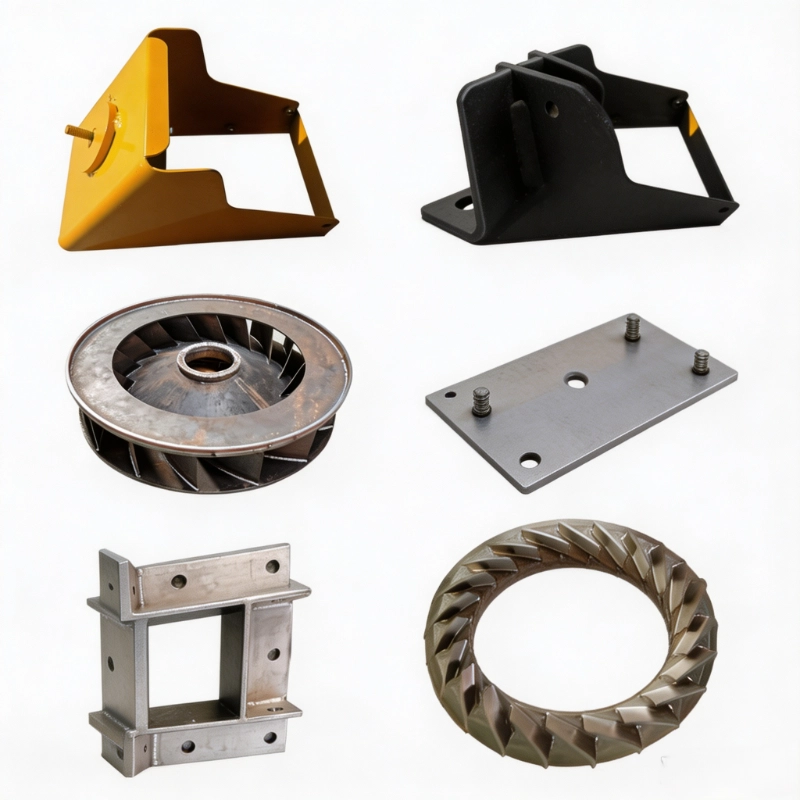
Welding changes the condition of the metal surface around the joint. Even when a weld meets its structural requirements, the surrounding area may still need additional processing before coating or final assembly.
Several conditions commonly require attention.
Weld spatter and sharp edges
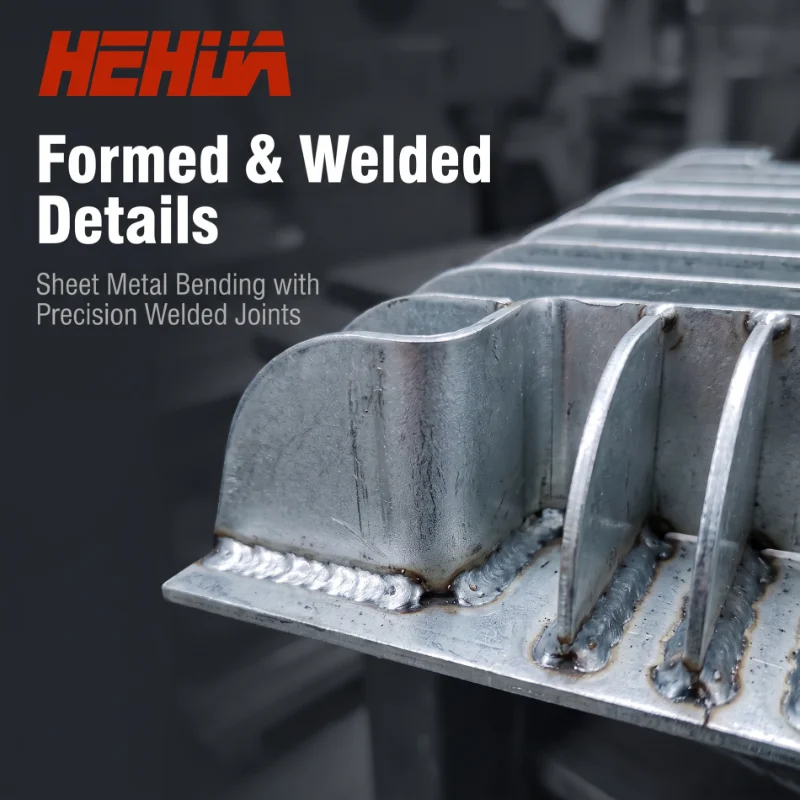
Small droplets of solidified metal can adhere to the workpiece during welding. Sharp edges and irregular weld transitions may also remain around the joint. These imperfections can interfere with coating application and create areas where contaminants accumulate.
Heat discoloration and oxidation
Stainless steel and other metals may develop discoloration or oxide layers near the heat-affected zone. Depending on the material and application, these areas may require cleaning or specialized treatment to restore the intended surface condition.
Uneven weld profiles
Some assemblies require a consistent external appearance, particularly when welds remain visible after installation. Grinding and finishing can improve the transition between weld beads and surrounding surfaces where the engineering design permits.
Corrosion exposure
Welded assemblies used outdoors or in humid industrial environments need suitable protection against moisture and corrosive substances. If surface preparation is incomplete, protective coatings may fail prematurely around weld seams, edges, or heat-affected areas.
The appropriate treatment should therefore be determined before production is completed, rather than treating surface finishing as an optional final cosmetic step.
The quality of a coating depends heavily on the condition of the surface beneath it. Applying paint or powder coating over contamination, loose oxide, oil, or welding residue can result in poor adhesion and uneven protection.
A typical post-weld preparation process involves several stages.
Grinding removes unwanted weld irregularities, excessive spatter, and sharp projections. It can also improve the transition between welded sections when a smoother appearance is required.
However, grinding should not remove more weld metal than necessary. Excessive grinding may reduce the effective weld section or damage the surrounding base material.
The process should be controlled according to the component drawing and structural requirements. Load-bearing welds should retain their specified dimensions and profiles.
Deburring is equally important for sheet metal assemblies and machined components. Removing sharp edges improves handling safety and helps ensure more consistent coating coverage around corners and openings.
Oil, grease, dust, and other contaminants should be removed before further treatment. Cleaning methods depend on the material and finishing process.
For example, a component intended for powder coating requires a clean surface to support proper coating adhesion. Stainless steel parts may need additional attention to avoid contamination from carbon steel grinding tools or handling equipment.
Abrasive blasting removes rust, scale, old coatings, and surface contamination while creating a suitable surface profile for subsequent finishing.
The blasting medium, pressure, and treatment intensity should be selected according to material thickness and component geometry.
For heavy carbon steel frames, blasting can provide an effective preparation method before applying protective coatings. For thin sheet metal parts, excessive blasting intensity may cause surface damage or distortion, so the process needs to be adjusted.
These preparation steps establish the foundation for consistent finishing across different production batches.
Different surface treatments provide different levels of corrosion protection, appearance, and functional performance. The selection should consider the base material, operating environment, expected service conditions, and customer specifications.
Powder coating is commonly used for industrial equipment frames, metal housings, brackets, and protective enclosures.
The process applies dry powder to a prepared metal surface, followed by curing under controlled temperature conditions. The resulting coating provides a relatively uniform finish and helps protect the substrate from moisture and environmental exposure.
Important factors include surface cleanliness, coating thickness, curing conditions, and the geometry of the component.
Edges, internal corners, and recessed areas require particular attention because coating coverage may vary in these locations. Proper pretreatment is essential for achieving consistent results.
Powder coating is suitable for many industrial applications where both appearance and corrosion protection are required.
Electrophoretic coating uses an electrical field to deposit coating material onto conductive components immersed in a coating bath.
One advantage is its ability to provide relatively uniform coverage across complex shapes and recessed areas, depending on component design and process conditions.
Electrophoresis is frequently considered for metal components requiring consistent protective coverage. It can also be used as part of a multi-layer finishing system when additional topcoat protection is specified.
Before selecting this process, manufacturers should consider the substrate material, electrical conductivity, bath compatibility, and the required coating system.
Galvanization provides zinc-based corrosion protection for steel components. Zinc acts as a protective barrier and can also provide sacrificial protection when the coating is locally damaged.
It is often used for outdoor equipment structures, support frames, and metal assemblies exposed to moisture.
The selected galvanizing method depends on the component size, geometry, material thickness, and application requirements. Welded assemblies must also be designed with the finishing process in mind, especially where drainage, venting, and access are necessary.
Dacromet is a zinc-aluminum-based coating system used for corrosion protection in suitable industrial applications.
It can be considered for metal parts requiring a protective coating with controlled thickness and coverage. The process is often used for hardware components, fasteners, and selected structural parts.
The required coating performance should be verified against the relevant project specifications rather than assumed from the coating name alone.
Black oxide is used to create a dark surface finish on suitable ferrous metal components. It is commonly applied where appearance, reduced light reflection, or basic surface protection is required.
Its corrosion resistance is generally limited without appropriate supplementary protection, such as oil or sealant.
Polishing, meanwhile, improves surface smoothness and appearance. It may be suitable for visible stainless steel components, decorative metal structures, and parts where surface quality is an important requirement.
These treatments should be selected based on the actual service environment rather than appearance alone.
The base material has a significant influence on which finishing processes are suitable.
Carbon steel
Carbon steel is susceptible to rust when exposed to moisture and oxygen. Welded carbon steel frames and equipment bases commonly require surface cleaning followed by painting, powder coating, galvanization, or another specified protective treatment.
Weld seams, corners, and edges should receive particular attention because incomplete coverage in these areas can become a starting point for corrosion.
Stainless steel
Stainless steel relies on a passive chromium-rich oxide layer for corrosion resistance. Welding can alter the surface condition near the joint, resulting in heat tint and localized oxidation.
Depending on the stainless steel grade and application, mechanical cleaning, suitable chemical treatment, or passivation may be required. Contamination from carbon steel tools should also be avoided.
Aluminum alloy
Aluminum naturally forms an oxide layer, but welded areas may have different surface characteristics from the surrounding base material.
Anodizing can be used for suitable aluminum components to improve surface appearance and provide additional protection. However, welding may affect the consistency of the final appearance, so the finishing sequence and acceptance requirements should be evaluated before production.
Galvanized steel
Welding galvanized steel can damage or remove the zinc coating near the joint. These areas may require appropriate cleaning and zinc-rich repair treatment or another specified protective process.
The method should be compatible with the original coating system and intended service conditions.
For MIG Welding projects, matching the finishing process to the base material helps avoid coating incompatibility and ensures that the final component performs as intended.
Surface treatment is not determined by material selection alone. The geometry of a welded assembly also affects coating coverage and long-term performance.
Sharp corners, narrow gaps, overlapping plates, and inaccessible internal surfaces can make it difficult to achieve uniform finishing.
For example, an equipment frame with closely spaced support brackets may contain recessed areas that are difficult to clean or coat. If these areas retain moisture or contaminants, corrosion may develop even when the exposed surfaces appear well protected.
Several design considerations can improve finishing results:
l Avoid unnecessary narrow gaps where moisture and dirt can accumulate.
l Provide suitable access for cleaning and coating application.
l Consider drainage and ventilation requirements for hollow or enclosed structures.
l Specify appropriate edge conditions before coating.
l Identify surfaces requiring masking or protection during finishing.
l Coordinate weld placement with the intended appearance and coating requirements.
These details are particularly important for equipment bases, outdoor support structures, and welded housings that combine multiple sheet metal and structural components.
At the design stage, welding DFM evaluation can identify potential finishing difficulties before they become production problems.
A common manufacturing challenge is coordinating the sequence of welding, dimensional correction, machining, and finishing.
Applying a coating too early may result in damage during subsequent straightening or machining. Similarly, excessive grinding after surface treatment can expose the underlying material and reduce corrosion protection.
A practical manufacturing sequence generally follows these stages:
1. Blanking and component preparation: Cut and prepare the required metal parts according to the approved drawings.
2. Fixture fabrication and welding: Position components accurately and complete the required MIG, TIG, spot, or robotic welding operations.
3. Straightening and deburring: Correct dimensional deviations and remove unwanted projections or sharp edges.
4. CNC secondary machining: Machine designated mounting surfaces, holes, and precision interfaces where required.
5. Surface preparation: Clean, grind, or blast the components according to the selected finishing system.
6. Protective finishing: Apply powder coating, electrophoresis, galvanization, Dacromet, anodizing, or other specified treatments.
7. Final inspection: Check dimensions, surface appearance, coating condition, and other project-specific acceptance requirements.
This sequence reduces the risk of damaging finished surfaces and helps maintain consistency between production operations.
For pressure-related assemblies, air or water tightness testing should also be scheduled at the appropriate manufacturing stage. Testing requirements need to be considered before surface finishing, particularly where the test setup or subsequent repair could affect the coating.
For OEM manufacturers, coordinating multiple suppliers for welding, straightening, machining, and surface finishing can introduce additional transportation, communication, and quality management challenges.
An integrated manufacturing arrangement makes it easier to coordinate process requirements and maintain traceability across production stages.
Established in 2005, Hehua has developed metal component manufacturing capabilities for automotive, rail transit, aerospace, wind power, nuclear power, industrial machinery, semiconductor equipment, and new energy equipment industries.
Hehua Machinery Technology (Kunshan) Co., Ltd., established in 2018 as a subsidiary of Shanghai Hehua Machinery Technology Co., Ltd., operates a manufacturing facility covering more than 17,800 square meters and employs over 160 people.
Its manufacturing capabilities include blanking, fixture fabrication, MIG/MAG welding, TIG welding, spot welding, robotic automatic welding, straightening, CNC secondary machining, and post-weld surface treatment.
For customized projects, Hehua supports processing based on engineering drawings, physical samples, or customer-supplied raw materials. The engineering team can review 2D CAD and 3D STEP, IGS, SolidWorks, and UG files to evaluate manufacturing feasibility and potential finishing challenges.
Available post-weld treatments include grinding, straightening, shot blasting, black oxide, electrophoresis, Dacromet, powder coating, galvanization, anodizing, and polishing.
The company is certified to ISO 9001, IATF 16949, and EN 15085 quality management requirements, with welders qualified to EN ISO 9606-1. Material traceability and inspection documentation can also be provided according to project requirements.
Prototype sampling generally takes 3–7 days, while production scheduling depends on component complexity, finishing specifications, and order volume. This supports both initial product development and repeatable batch manufacturing.
By coordinating MIG Welding with subsequent machining and surface finishing, Hehua Machinery Technology (Kunshan) Co., Ltd. helps customers manage the complete manufacturing process for industrial metal assemblies.
The right post-weld surface treatment depends on more than the desired color or appearance. Base material, weld geometry, surface preparation, operating environment, and maintenance requirements all influence the final result.
Carbon steel structures may require robust corrosion protection, while stainless steel assemblies may need appropriate cleaning and passivation to preserve their surface properties. Aluminum components may benefit from anodizing, and industrial equipment housings may require powder coating or electrophoretic finishing.
For manufacturers sourcing custom welded components, evaluating the entire process from joint preparation to final coating is essential.
With integrated MIG Welding, straightening, CNC secondary machining, and surface treatment capabilities, Hehua Machinery Technology (Kunshan) Co., Ltd. provides one-stop OEM and ODM manufacturing support for industrial equipment and structural metal assemblies. Coordinating these processes helps produce components with consistent dimensions, suitable corrosion protection, and a finished appearance that meets the requirements of their intended applications.


 AddressNo. 66 Xingpu Road, Lujia Town,Kunshan City, Factory Buildings 3 and 4
 en
 English
 繁体中文
 Italian
 Spanish
 Japanese
 Portuguese
 Korean
 Russian
 French
 German
 Estonian
 Arabic
 Indonesian


 Message