Combining different metals in a single assembly can help manufacturers balance strength, weight, corrosion resistance, and functional requirements. Stainless steel offers durability and corrosion resistance, while aluminum alloys are widely used when lower component weight and efficient heat transfer are important. Bringing these materials together, however, presents challenges that go beyond simply creating a weld between two metal surfaces.
For industrial equipment manufacturers, the difficulty lies in achieving a reliable joint without compromising the properties of either material. Differences in melting temperature, thermal conductivity, thermal expansion, and metallurgical behavior can lead to cracking, porosity, distortion, or brittle intermetallic compounds. Laser Welding offers a concentrated heat source and precise control over the joining area, but successful stainless steel-to-aluminum welding still requires careful material evaluation, joint design, process development, and inspection.
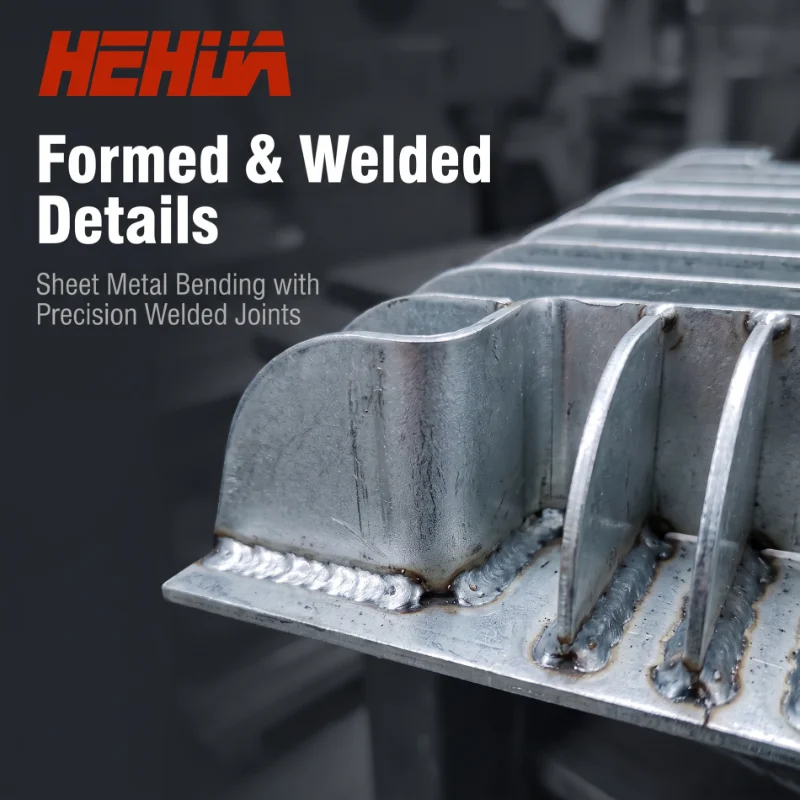
Stainless steel and aluminum have significantly different physical and metallurgical properties. Stainless steel generally has a higher melting temperature and lower thermal conductivity than aluminum. Aluminum melts at a much lower temperature and conducts heat away from the welding zone rapidly.
During joining, aluminum may begin melting while the stainless steel remains insufficiently fused. Increasing the heat input to improve fusion can cause excessive melting on the aluminum side, resulting in an irregular weld pool, burn-through, or dimensional instability.
Another important concern is the formation of iron-aluminum intermetallic compounds. When iron and aluminum react during welding, these compounds can form within the joint. Some are relatively hard and brittle, which may reduce ductility and make the connection more susceptible to cracking under mechanical or thermal stress.
Oxide layers also complicate the process. Aluminum naturally develops an oxide film with a melting temperature substantially higher than that of the underlying aluminum metal. If this layer is not adequately addressed, it can interfere with wetting and fusion. Stainless steel surfaces may also carry oil, dirt, or other contaminants that affect weld consistency.
These factors mean that joining stainless steel to aluminum requires a process designed around the specific alloy combination, component geometry, and service conditions. A method that works for one material grade or thickness should not automatically be applied to another.
A major consideration in dissimilar metal joining is controlling how much heat reaches each material. Because aluminum and stainless steel respond differently to thermal energy, the welding process must provide sufficient bonding without causing excessive melting or undesirable metallurgical reactions.
Laser Welding concentrates energy into a relatively small area, allowing the operator to control the weld location and thermal cycle. Compared with processes that distribute heat over a broader region, this concentrated energy can help limit the overall heat-affected area and reduce some forms of distortion.
However, a narrow heat source does not eliminate the underlying metallurgical challenges. Laser power, travel speed, beam position, focus, and joint configuration all influence the resulting temperature distribution and penetration profile.
For stainless steel-to-aluminum joints, the location of the beam relative to the interface can be particularly important. Depending on the joining strategy, directing energy toward the aluminum side or controlling how much stainless steel melts may influence the amount of intermetallic material formed. The appropriate approach must be established through engineering evaluation and sample trials rather than assumed to be universally effective.
The objective is not simply to maximize penetration. It is to establish sufficient bonding while controlling the reaction between the two materials and maintaining the required joint properties.
Material selection should take place before the welding process is finalized. Stainless steel grades such as 304 and 316 differ in composition and application requirements, while aluminum alloys also vary in strength, corrosion resistance, and weldability. The selected grades can significantly influence the feasibility of a dissimilar metal joint.
Engineers should first identify the exact alloy designations, material thicknesses, surface conditions, and expected operating environment. They should also establish whether the connection will carry structural loads, experience vibration, encounter temperature changes, or require corrosion resistance.
Joint configuration is another important factor. Butt joints, lap joints, and other arrangements provide different contact areas and heat-flow conditions. For thin components, joint gaps and alignment errors may be especially influential because small dimensional variations can change the effective welding conditions.
A practical design review should address several questions:
l Can the joint be accessed consistently by the welding equipment?
l Are the mating surfaces sufficiently flat and accurately positioned?
l Will the joint experience tensile, shear, bending, or cyclic loading?
l Could thermal expansion differences create additional stress during operation?
l Is the connection exposed to moisture, chemicals, or other corrosive conditions?
l What inspection method can verify the required joint performance?
For production parts, these questions should be resolved before finalizing tooling and manufacturing sequences. Early design adjustments are generally easier than correcting a joint that repeatedly fails inspection.
Surface preparation directly affects welding stability. Oil, grease, dust, oxide layers, and residues can interfere with energy absorption and bonding. Aluminum components may require particular attention to oxide removal, while stainless steel surfaces should be free of contaminants that could compromise the weld.
Cleaning methods should be selected according to the material, component geometry, and applicable production requirements. After preparation, parts should be handled in a way that limits recontamination before joining.
Fixture design is equally important. Stainless steel and aluminum components must remain in the intended position while the joint is formed and cools. Poor alignment can change the distance between the materials, create inconsistent contact, and cause the weld to deviate from its specified location.
Fixtures should provide repeatable positioning without introducing unnecessary restraint. The design must also allow the welding head to reach the joint and accommodate the production sequence.
For complex assemblies, fixture development and drawing review can identify problems before manufacturing begins. This is particularly relevant when the parts must subsequently undergo CNC machining, straightening, or surface finishing.
Hehua Machinery Technology (Kunshan) Co., Ltd. supports custom metal manufacturing projects with drawing review, fixture fabrication, welding, straightening, CNC secondary machining, and finishing services. Coordinating these operations helps manufacturers evaluate joint accessibility, dimensional requirements, and downstream processing before committing to production.
A visually acceptable weld does not necessarily indicate that a dissimilar metal joint has sufficient strength. Internal discontinuities, incomplete bonding, brittle reaction layers, and localized cracking may not be visible on the surface.
Inspection should therefore be based on the joint's function and the risks associated with failure. Visual examination can identify surface irregularities, while dimensional inspection confirms that the assembly remains within specified tolerances.
During process development, destructive testing of representative samples may be needed to examine the joint cross-section, measure the bonded region, and assess the distribution of intermetallic compounds. Tensile, shear, or other mechanical tests can help determine whether the joint meets the intended design requirements.
Nondestructive testing may also be appropriate, depending on the geometry, material combination, defect type, and available inspection procedure. Magnetic particle testing, for example, is intended for suitable ferromagnetic materials and is not a universal method for stainless steel-aluminum assemblies. Ultrasonic inspection also requires a method validated for the specific joint and geometry.
Where a component must contain fluid or gas under pressure, leak testing may be required in addition to other inspections. However, a successful leak test does not by itself establish the joint's mechanical strength or metallurgical integrity.
A complete quality plan should define acceptance criteria, sample quantities, inspection stages, and the records required for production approval. For recurring orders, approved samples and documented process conditions help maintain consistency between batches.
Dissimilar metal joining is often one part of a broader manufacturing project. Components may require cutting, forming, fixture assembly, welding, straightening, machining, deburring, and protective finishing before delivery.
The order of these operations matters. For example, machining a precision mounting surface before welding may lead to additional work if the subsequent thermal cycle changes its position. Similarly, applying a surface coating before welding can introduce contamination or damage the finished surface around the joint.
Manufacturers should establish the complete production sequence during engineering review. Critical dimensions, weld locations, machining allowances, surface treatment requirements, and inspection points should be documented in advance.
Prototype production provides an opportunity to verify whether the proposed process works under actual manufacturing conditions. Sample joints can be examined for fusion quality, dimensional stability, mechanical performance, and compatibility with downstream operations. Any necessary changes should be completed before full-scale production begins.
Hehua's manufacturing operations support customers across industrial machinery, automotive, rail transit, wind power, new energy equipment, and other high-end equipment sectors. The company operates a facility exceeding 17,800 square meters and employs more than 160 people. Its quality management systems include ISO 9001 and IATF 16949, while its welding-related certifications include EN 15085 for rail vehicles and components. These systems support structured production and quality management for demanding metal component projects.
For dissimilar metal assemblies, the specific joining procedure must still be qualified against the actual material combination and application. General manufacturing experience or a certification alone cannot establish that every stainless steel-aluminum joint will meet a particular performance requirement.
Before selecting a welding process, manufacturers should compare the required joint strength, material compatibility, component thickness, production volume, and inspection requirements. Direct fusion welding is not necessarily suitable for every stainless steel-aluminum combination. Depending on the application, alternative joining approaches such as mechanical fastening, brazing with an appropriate filler system, or the use of a transition insert may warrant consideration.
When Laser Welding is being evaluated, engineering teams should confirm that the proposed material grades and joint geometry can produce the required bond. They should then develop a suitable process window, validate sample parts, and define inspection criteria before approving production.
The most reliable approach combines material knowledge with controlled manufacturing and application-specific testing. Heat input, joint fit-up, surface preparation, fixture accuracy, and inspection all influence the final result. Addressing these factors early helps reduce unnecessary rework and provides a clearer basis for production decisions.
For OEM buyers developing custom metal assemblies, Hehua Machinery Technology (Kunshan) Co., Ltd. can support engineering communication and coordinated metal fabrication processes based on project drawings and manufacturing requirements. Whether a project involves stainless steel, aluminum alloy, or other metal combinations, the joining method should be selected according to verified material compatibility and the functional demands of the finished component.
Ultimately, successful stainless steel-aluminum joining depends on more than the welding equipment itself. A suitable material combination, carefully designed joint, validated process, and appropriate quality checks are essential to producing assemblies that perform reliably in their intended industrial environment.


 AddressNo. 66 Xingpu Road, Lujia Town,Kunshan City, Factory Buildings 3 and 4
 en
 English
 繁体中文
 Italian
 Spanish
 Japanese
 Portuguese
 Korean
 Russian
 French
 German
 Estonian
 Arabic
 Indonesian



 Message