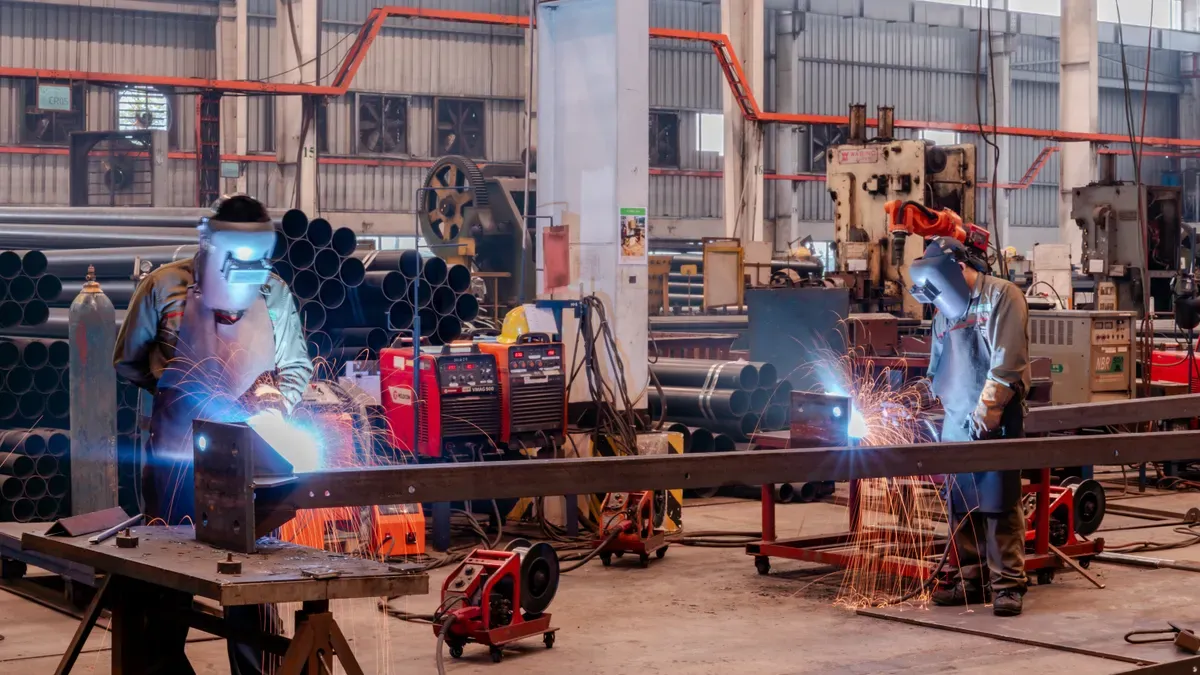
What makes a Chinese robotic welding service provider trustworthy in 2026? Six things matter. Advanced robotic welding technology is at the top of the list. Rigorous quality control and recognized certifications follow. Experienced engineering teams are important. Clear communication keeps projects moving. Fair prices reward long-term buyers. Strong after-sales support protects each purchase. A proven track record shows real capability. Every welding robot must be precise again and again. Modern welding robot systems handle complex fabrication. A trustworthy supplier pairs each welding robot with skilled operators. Each welding robot can handle custom orders with flexibility. The entire operation, from fixture design to each welding robot station, needs careful review. Leading Chinese manufacturers combine these strengths into one dependable service. That is what defines trust.
Pick a supplier that has modern welding robots and technology that is known to work.
Look for international certificates like ISO 9001 and IATF 16949.
Find engineering help and clear communication.
Compare all the costs, not just cheap prices, to save money over time.
Make sure you have good after-sales support and spare parts available.
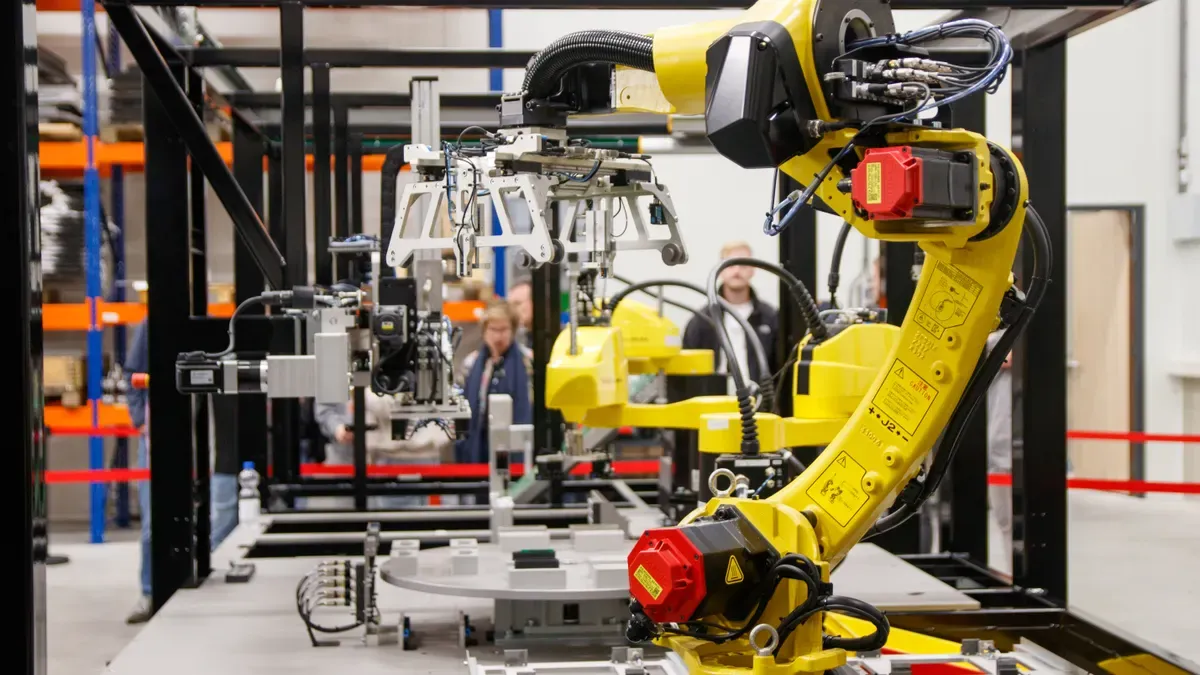
Modern welding robot technology is changing quickly. AI-assisted robotic welding is starting to appear across China. Global benchmarks like FANUC and KUKA show what precision, repeatability, and service reliability look like in real use.
Robot Model | Precision | Repeatability | Service Reliability |
|---|---|---|---|
FANUC ARC Mate 100iC | High-speed arc welding; cuts cycle times while keeping weld quality strong | Steady quality with every weld | Strong programming options; integration solutions for complex runs |
KUKA KR 10 R1420 | High accuracy for tight tolerances in complex operations | Steady weld quality | Dependable in continuous production settings |
FANUC ranks first overall for U.S. welding automation. The company gets praise for reliability, a deep service network, and long-term parts availability. KUKA ranks fourth and stands out in heavy fabrication, long reaches, and high-payload coordinated motion.
A welding robot manufacturer must show its systems can handle hard work. Hehua runs a 17,800 square meter facility with more than 160 employees. The company mixes manual welding skill with robotic automation. This blend lets each welding robot handle MIG, TIG, spot, and robotic automatic welding. Materials go from carbon steel to ductile iron.
A fully integrated robotic welding system relies on more than the arm. Robotic welding solutions must match the process to the part. MIG robots give high deposition rates for steel, stainless steel, and aluminum. TIG robots deliver the highest-quality, lowest-distortion welds for thin-gauge stainless steel and exotic alloys. Resistance spot welding robots lead in automotive body assembly. Laser welding robots serve electronics enclosures and battery packs.
Custom orders need flexibility. A robotic welding system set up for one job may fail on the next. Buyers should check several configurations.
6-axis articulated robots — the most flexibility for complex joint shapes
Collaborative robots (cobots) — lower payloads, easier to move around in high-mix settings
Gantry and rail-mounted systems — longer reach for large-format structural parts
Cobot welders with visual programming interfaces let operators switch jobs in minutes. No G-code or teach pendants are needed. One system can handle dozens of part types. Carriere Industrial Supply cut 1,000 hours of cleanup time and doubled output with cobots. DeAngelo Marine Exhaust boosted weld speed tenfold on complex TIG work.
Hehua accepts sampling, small batch, and mass production orders. The company's integrated robotic welding systems support custom fixtures and complete welding cells. Each complete welding cell goes through straightening, deburring, and air tightness testing. That approach keeps weld quality steady across every order.
Certifications mark serious robotic welding suppliers, not hopeful ones. Global buyers now ask for documents like ISO 9001, plus welders with EN ISO 9606-1 credentials. A reliable Chinese robotic welding supplier meets those global standards with checkable proof.
Certification | Scope / Industry Relevance |
|---|---|
ISO 9001 | General quality management system — baseline trustworthiness indicator |
IATF 16949 | Automotive supply chain quality management |
EN 15085 | Railway vehicle welding — required for rail applications |
EN ISO 9606-1 | Welder qualification certificates |
ISO 15614 | Weld procedure qualification / sample testing |
CE Marking | Required for selling welded products into Europe |
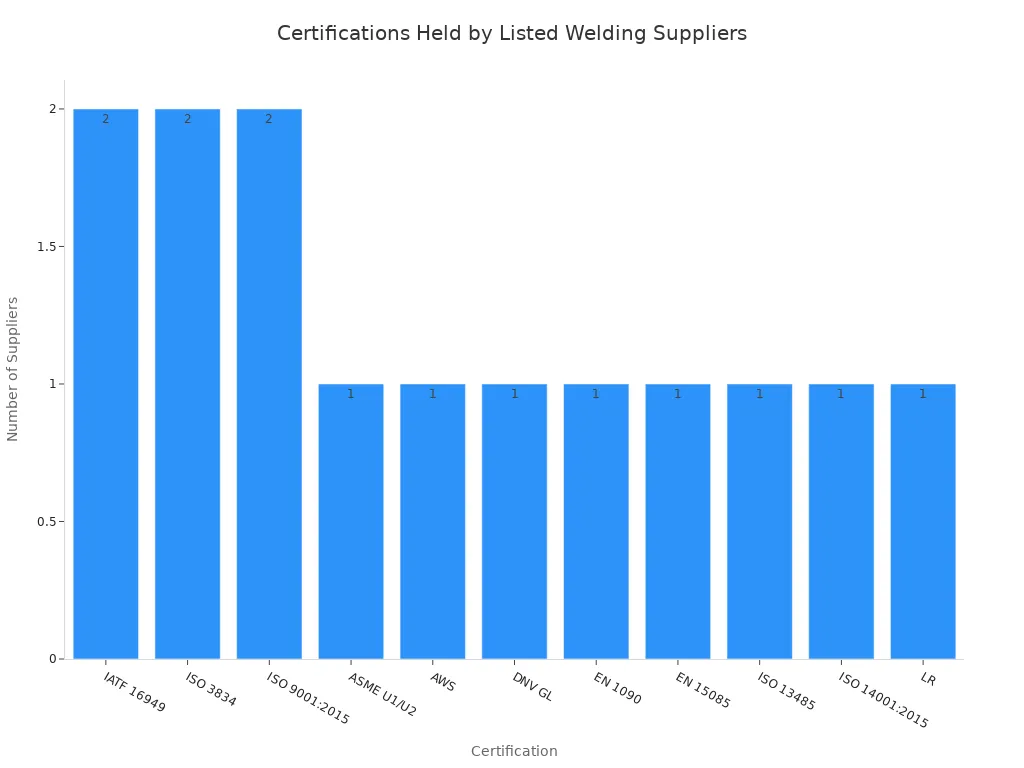
Hehua Machinery has ISO 9001, IATF 16949, and EN 15085 certifications. Its welders each hold EN ISO 9606-1 certification. These certifications show the company follows global quality rules for automotive, railway, and general manufacturing. Buyers should always ask for proof of certifications and past project records to check supplier claims.
NDT checks support every claim. After straightening, Hehua's robotic welding meets dimensional tolerances of ±0.1~±0.3mm and flatness ≤0.03mm/100mm. Pressure welds pass both airtight and watertight tests. Before shipment, visual, penetrant, and radiographic testing can find any porosity, slag inclusion, or cracks.
Choose a supplier based on facts, not on promises. Hehua's welding skill covers automotive, rail transit, aerospace, wind power, nuclear power, and semiconductor equipment. Each welding robot makes welds with no porosity, slag inclusion, or cracks.
Export programs must follow international rules. A company with several certifications has been checked many times by outside auditors. That record proves more than any single certificate can. Hehua's certifications and quality system give buyers a clear record of weld quality and process control.
A trusted service provider does more than just sell equipment. Hehua works as a complete welding automation integrator. The company provides custom fixtures for each welding robot. Engineers work on parts using drawings, samples, or raw materials. This flexibility helps with sampling, small-batch, and mass production orders.
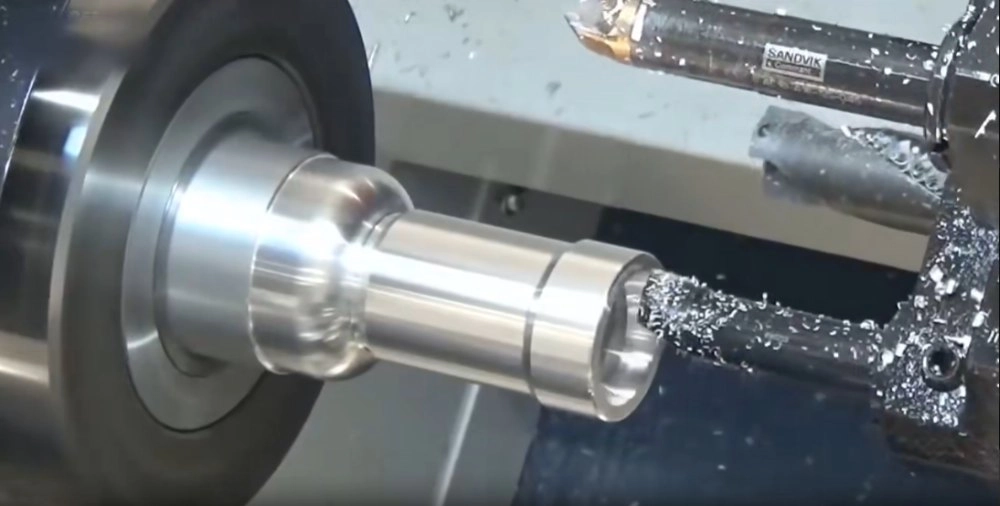
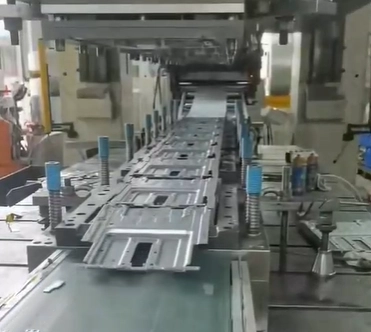
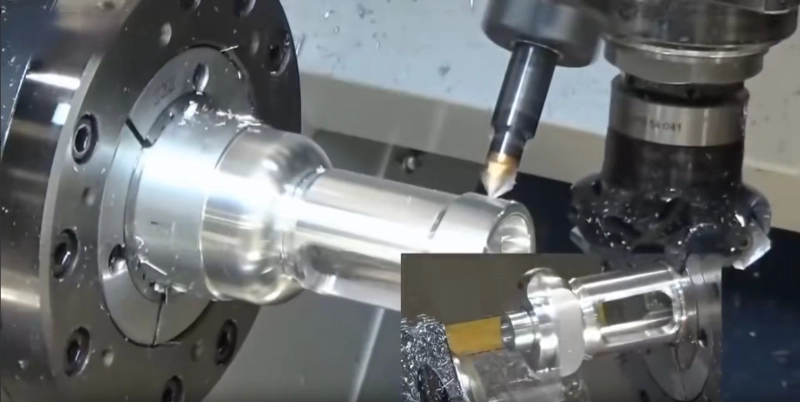
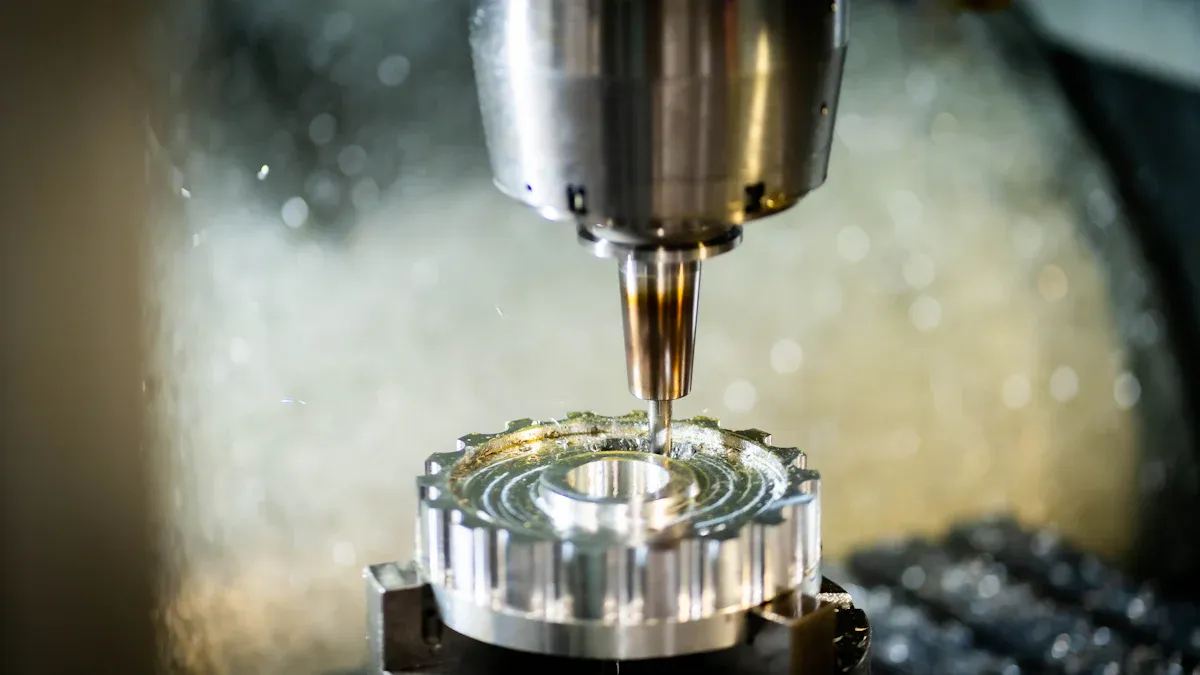
Hehua's OEM and ODM skills cover the whole production chain. Blanking, fixture making, CNC machining, and surface finishing all happen in one place. A welding robot manufacturer that only ships arms leaves buyers to fix integration problems alone. Hehua stops that gap. The team designs custom robotic welding cells that fit each part's shape and production volume.
This integration skill matters for complex projects. A welding robot must connect to positioners, safety systems, and quality checks. Hehua's engineers handle every connection point. They build turnkey robotic welding solutions that work from day one.
Clear communication separates reliable suppliers from risky ones. Hehua reports progress at each project milestone. Engineering reviews happen before production starts. Overseas clients get remote support across time zones.
The company's welding expertise covers fixture design and process validation. Buyers get regular updates on their welding robot projects. Any design change goes through a formal review. This process keeps every welding robot matched to the original specifications.
Hehua offers turnkey solutions for buyers who need complete welding cells. Each robotic welding system includes programming, testing, and operator training. The team supports custom robotic welding cells for automotive, rail, and energy clients. A welding robot manufacturer with strong communication builds lasting partnerships. Hehua's approach proves that robotic welding solutions can be both technical and transparent.
Smart buyers weigh price, production capacity, and after-sale support. A low quote can turn costly when support fails. Trusted Chinese suppliers base their prices on real data and a working service and support network.
Hehua bases prices on the order size and engineering work. Monthly capacity is 30,000 sets. Standard delivery runs 12–25 days. On-time rate is 98% or better. These figures keep turnkey systems cost-effective.
This capacity lets one welding robot handle both prototypes and mass production. Custom fixtures, CNC machining, and surface finishing stay in one place. Buyers get stable weld quality without surprise costs. Low-cost robotic welding still needs repeatable processes. Robotic welding turns repeatability into real savings.
By 2026, China became a net exporter of industrial robots. Leading Chinese brands offer their robotic welding systems with CE, TUV, and IATF16949 certifications. Buyers should compare total cost of ownership. A cheap welding robot gets expensive when spare parts are slow or programming needs heavy rework.
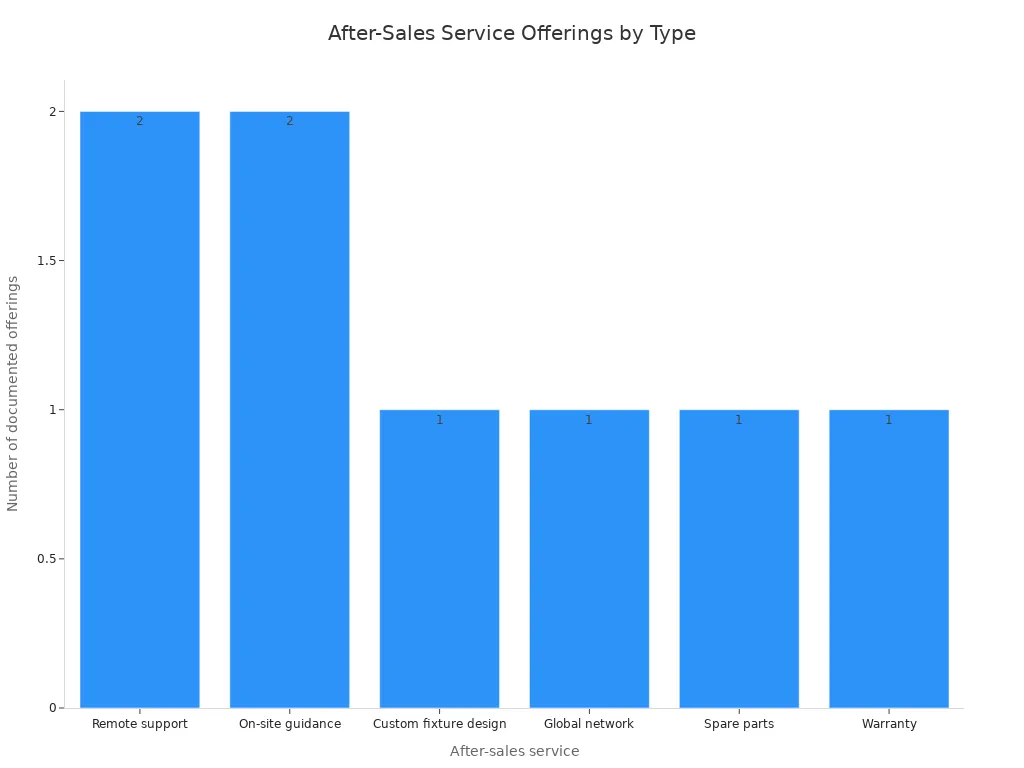
After the installation, buyers need help. As part of turnkey delivery, Hehua offers custom fixture design. On-site guidance and remote support come with each system. After-sales support and the integrator network separate top suppliers from low-tier manufacturers.
A welding robot works only as well as its fixture and programming. Each welding robot in a turnkey cell comes calibrated with its positioner, power source, and safety system. This supports international compliance. In Europe, Asia, and the Middle East, Hehua works with local integrators. That network cuts response times worldwide.
Buyers should check support, spare parts, and response times before buying.
A watched welding test beats any rating.
Many vendors can ship a welding robot. Few can back it with same-day diagnostics and trained engineers. Buyers should request a trial with the exact welding robot model being tested. Hehua builds custom fixtures for each welding robot workpiece. A capable welding robot cuts downtime.
Four pillars define a trusted partner. Advanced welding robot technology leads. Verifiable quality and certifications follow. Strong engineering and communication matter. Dependable pricing and after-sales support complete the picture. Trust in 2026 comes from proof, not promises. Certifications, real project data, and clear support commitments separate reliable chinese manufacturers from risky ones.
For supplier selection, buyers should verify key areas before signing.
Verification Area | Checklist Question |
|---|---|
Identity | Which entity signs the contract and holds the drawings? |
Certifications | What is the certification scope and inspection plan? |
Project Data | Which assumptions does the price include? |
Support | What service-level commitment applies? |
Acceptance | Which results get tested at factory or site? |
Each welding robot purchase deserves this scrutiny. A welding robot works best with a partner who documents every commitment. Robotic welding rewards careful buyers. Robotic welding fails careless ones.
Buyers checking Chinese suppliers ask the same useful questions. Good answers come from clear records, not from promises. Every welding robot must prove its precision during real production runs. The responses reflect Hehua's certified work and published production data.
Hehua programs welding robots to hold dimensional tolerances at ±0.1~±0.3mm. Flatness stays ≤0.03mm/100mm after straightening. Robotic welding stations repeat the same motions without fatigue. Each batch gets checked after it finishes. Non-destructive testing finds porosity, slag inclusion, or cracks before shipment.
Hehua has ISO 9001, IATF 16949, and EN 15085 certifications. Each welder holds EN ISO 9606-1 qualification. Buyers should request current certificates and their scope. Audited documents show current status. Welding meets the standards for automotive and railway work. Outside auditors confirm these records regularly.
A certificate alone does not ensure performance. A welding robot performs only as well as its calibration and fixture design. Hehua pairs each unit with custom tooling and recorded process parameters.
Yes. Hehua takes sampling, small-batch, and mass production orders. One welding robot can handle different parts when fixtures change fast. Programmers save many sequences for quick switching. The same robotic welding cell runs prototypes and can then make 30,000 sets monthly without losing accuracy.
Robotic welding buyers with varied product lines need this extra flexibility. One integrated system serves both new product tests and steady volume. Hehua records every program change for traceability. Buyers comparing welding robot options should request cycle-time records from similar parts.
Hehua gives custom fixture design with every robotic welding system. On-site guidance and remote support handle installation and training. International buyers get engineering reviews at every milestone. This welding robot support model cuts downtime and extends equipment life across global facilities.
Buyers should request production records. Hehua sends standard orders in 12–25 days with a ≥98% on-time rate. Monthly capacity reaches 30,000 sets. A trusted robotic welding supplier shares real project data. Buyers should check the welding robot's spare parts availability before signing.
Buyers feel confident when a supplier records every commitment. Verified records build long-term partnerships.


 AddressNo. 66 Xingpu Road, Lujia Town,Kunshan City, Factory Buildings 3 and 4
  en
en
 English
 繁体中文
繁体中文 Italian
 Spanish
 Japanese
 Portuguese
 Korean
 Russian
 French
 German
 Estonian
 Arabic
 Indonesian


 Message