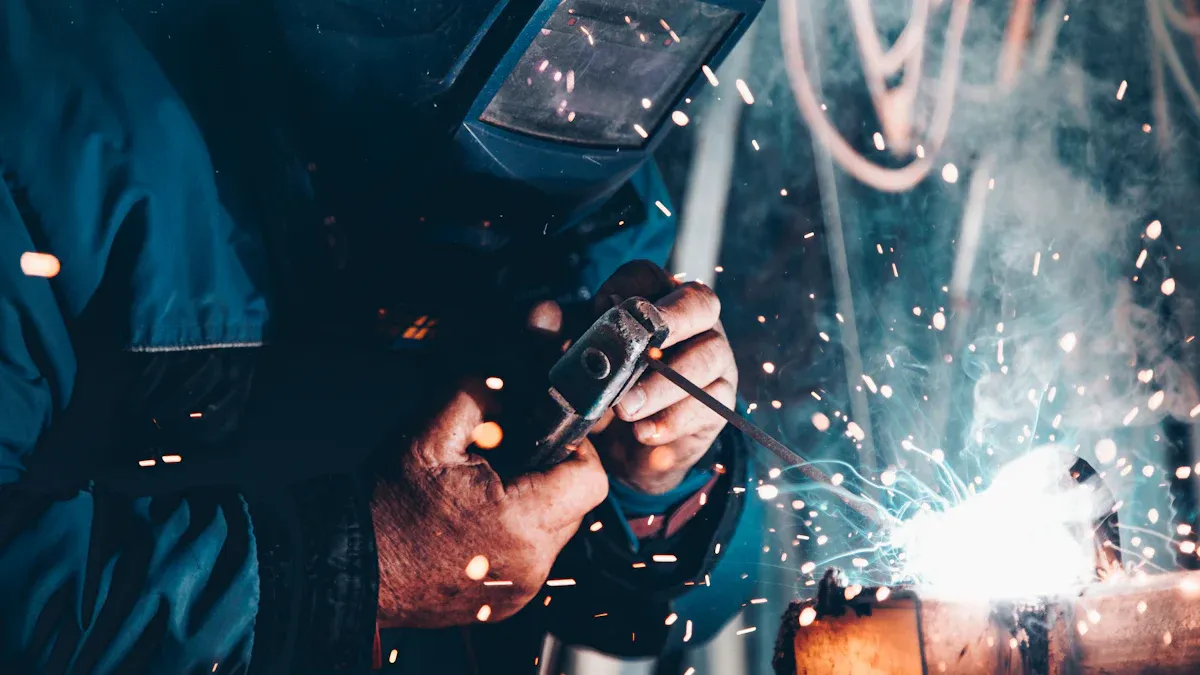
Buyers who work with a TIG welding stainless steel parts manufacturer in China can expect high-quality welds, fair prices, strong quality checks, clear communication, and dependable shipping.
This buying guide helps engineers, purchasing staff, and business owners judge Chinese suppliers based on practical expectations. It does not cover broad industry background. Instead, judging each possible partner requires looking at process skills, certifications, material handling, and weld integrity testing. Clear specifications let suppliers quote accurately and meet delivery promises. Using this approach, buyers can verify a supplier's true quality before placing production orders. Also, each section offers useful criteria for comparing one manufacturer to another.
Pick a Chinese TIG welding supplier that has ISO 9001, IATF 16949, and EN 15085 certifications to make sure the quality is good.
Ask for material test certificates and weld samples before you order. This helps you check material traceability and weld integrity.
Ask for a design for manufacturability review to lower warping and rejection rates.
Reliable suppliers usually need 12–25 days to make your order. They also deliver on time 98% of the time.
Get the warranty details and after-sales help in writing. This should cover any problems from making the parts and any needed fixes.
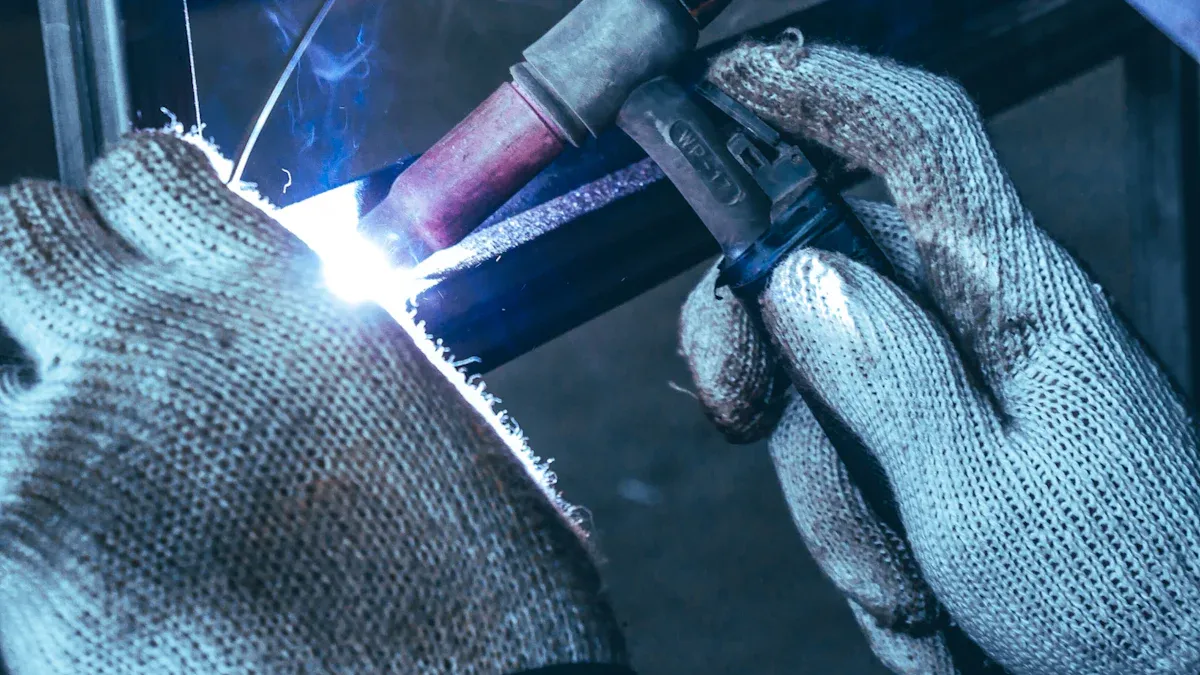
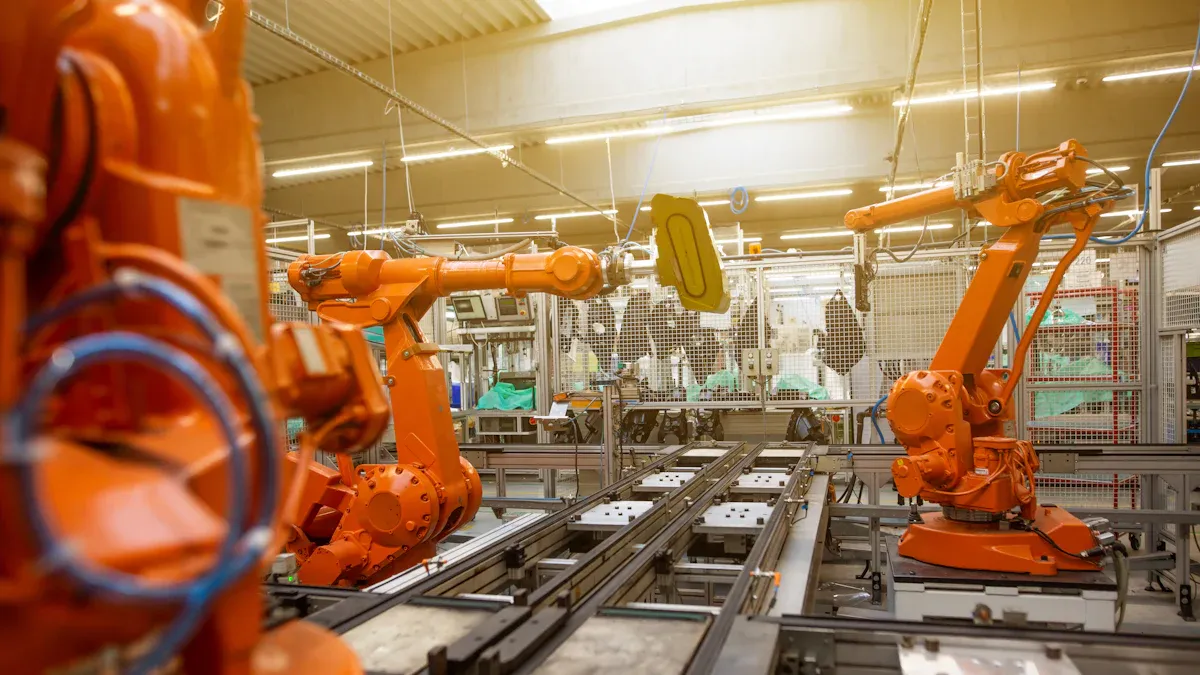
A good tig welding stainless steel parts manufacturer in China gives you clean welds, low distortion, steady fusion, and full material traceability. TIG welding stainless steel works well for thin sheet metal parts, pressure-tight assemblies, and parts where looks and strength matter most. Hehua started in 2005 and opened a Kunshan branch in 2018. It runs over 17,800 square meters of shop space with more than 160 workers. The company offers full in-house OEM/ODM services for custom fabrications.
TIG welding stainless steel needs controlled heat input, the right filler material, and the correct tungsten electrode. Gas tungsten arc welding lets operators control the arc closely, which creates defect-free joints in stainless steel work. For tig welding 304 stainless steel at 16 gauge (0.0625 in), welders set amperage between 55 and 70 with ER308L filler and 100% argon shielding gas. At 1/8 inch, amperage goes up to 110–130. For tig welding 316 stainless steel at the same thickness, operators use ER316L filler with the same amperage ranges. A 308L filler rod or 316L filler rod stops carbide precipitation when matched to the base grade.
Grade / Thickness | Amperage (A) | Filler | Shielding Gas |
|---|---|---|---|
304 / 304L – 16 ga | 55–70 | ER308L | 100% Argon |
304 / 304L – 1/8 in | 110–130 | ER308L | 100% Argon |
316 / 316L – 16 ga | 55–70 | ER316L | 100% Argon |
316 / 316L – 1/8 in | 110–130 | ER316L | 100% Argon |
Shielding gas flow of 15–20 CFH through a gas lens is normal. Welders should stay away from argon-CO2 mixtures because CO2 adds carbon and causes sensitization. The rule of 33 means setting all pulse settings to 33. A pulse rate of 33 pps stirs the puddle and lets you travel at lower overall amperage. This method helps fill gaps and keep steady penetration. Good ventilation is a must during stainless steel welding.
The best tungsten for stainless steel tig welding depends on thickness and amperage. For material under 2 mm, a 1/16 inch tungsten with ER308L filler at 60–80 amps and 15–20 CFH works well. A 2% thoriated or lanthanated tungsten fits DC welding. Operators sharpen the tungsten to a fine point for a stable arc. For thin sheetmetal, 2% ceriated tungsten in 3/32 inch diameter handles most jobs. Smaller diameters down to 0.040 inch cut down arc wandering at low amperage. A 1.5% lanthanated tungsten works as a flexible choice for any metal on both AC and DC.
Grinding direction matters for weld quality. Grinding axially, lengthwise to the electrode, gives a focused arc and deeper penetration. A grinding angle of about 30° gives the best results. The tip should be about twice the electrode diameter in length. Flattening the tip after sharpening to about 10% of the electrode diameter cuts down particle breakout and makes the electrode last longer. These practices support precision tig welding and reliable results across stainless steel pipe welding projects.
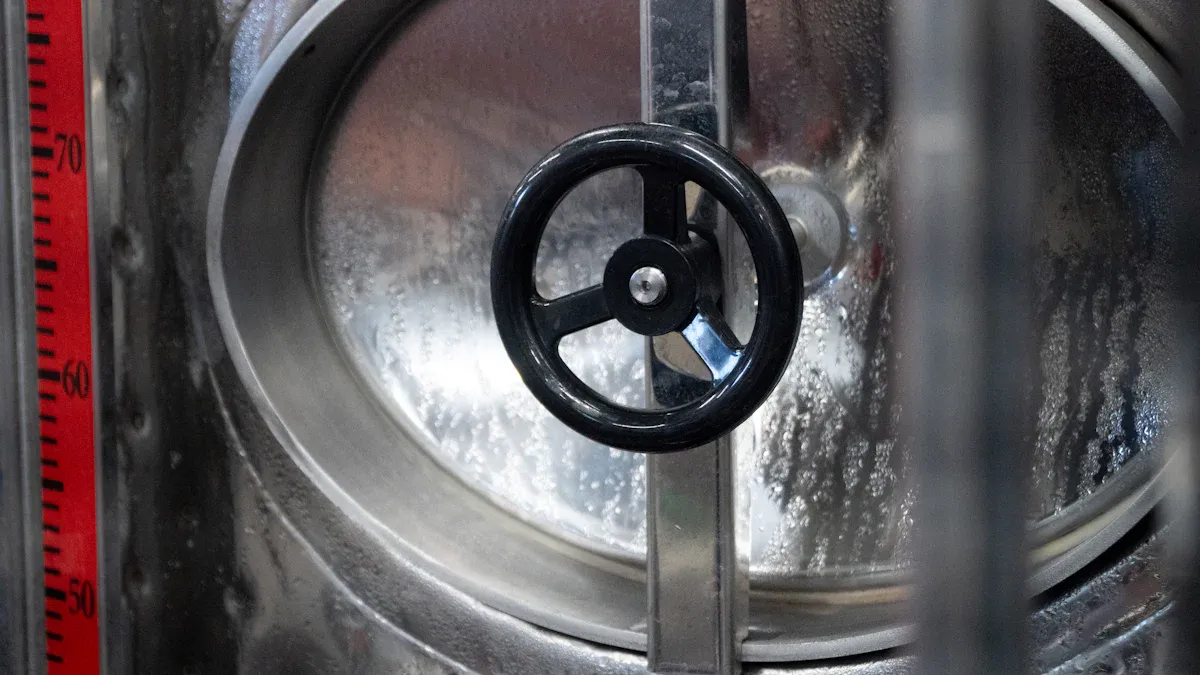
A good TIG welding stainless steel parts manufacturer has certificates that show they follow strict processes. Buyers should ask for ISO 9001, IATF 16949, and EN 15085. Hehua has all three and uses them to make strong welds for structural and pressure parts.
Material control begins before the torch starts for tig welding 316 stainless steel. Buyers should ask for an EN 10204 3.1 material test certificate with every shipment. The heat number on that certificate must match the mark on each sheet or pipe. Inspectors check the grade and chemical makeup against the purchase order. Positive material identification testing gives more confidence for important batches.
Storage and handling stop contamination. Carbon steel bits stuck in a stainless surface cause rust spots and weaken corrosion resistance. Shops need separate stainless steel grinding wheels, wire brushes with stainless bristles, and cutting tools. Workers clean surface oxides before welding. Back purging with argon stops oxidation. Interpass temperature control matters because long time in the 800–1500°F range causes intergranular corrosion. Pitting resistance depends on clean surfaces. These steps protect both 316 stainless steel and 304 stainless steel workpieces.
Similar care applies to tig welding 304 stainless steel. Filler choice keeps weld chemistry matched: ER308L for 304 stainless steel, ER316L for 316 stainless steel.
Precision tig welding keeps dimensions consistent. Overall tolerances reach ±0.1 to ±0.3 mm after welding and straightening. Flatness stays at or below 0.03 mm per 100 mm.
TIG weld integrity checks use several methods. Pressure welds in tig welding 316 stainless steel need air and water tightness testing. Helium leak testing finds defects you cannot see. Ultrasonic testing finds internal discontinuities. Liquid penetrant testing shows surface-breaking cracks. Magnetic particle testing fails on 316 stainless steel because the alloy is non-magnetic. These checks serve stainless steel pipe welding and tig welding stainless steel pipe projects that demand strict codes and standards.
A good tig welding stainless steel parts manufacturer answers your technical questions with real engineering know-how, not just a price. You can see this skill right away in how they handle the pre-production steps.
After a supplier gets your drawing, a skilled one studies the weld joints and sends back DFM feedback before giving any quote. Hehua offers this design review for free. Table 1 shows the rules that cut down warping and reject rates.
DFM Rule | How It Reduces Deformation / Rejection |
|---|---|
Lower heat input | Cuts thermal expansion and warping |
Stitch welding | Limits heat buildup between segments |
Balanced weld sequencing | Spreads heat evenly |
Proper fixturing | Holds the part steady during welding |
Joint design (tight fit-up) | Needs less filler and less heat |
Surface preparation | Stops porosity and an unstable arc |
A clear quote for tig welding stainless steel breaks down each cost driver. Material grade (304 stainless steel or 316 stainless steel), sheet thickness, and surface finish set the base price. A good quote also lists:
Welding and assembly cost based on joint design, since each weld bead adds labor
Shielding gas, back-purge argon, and post-weld grinding
Rework figured at the expected failure rate
Surface finishing as its own line item, often 25–40% of cost on small parts
Fixturing, first-pass inspection, overhead, and quantity amortization
Before you place a purchase order, ask for a design for manufacturability review to settle joint fit-up and clamping questions.
When specs are clear, production schedules follow steady patterns. Table 2 shows typical lead times for welded assemblies.
Process | Typical MOQ | Prototype Lead Time | Production Lead Time | Tooling Cost |
|---|---|---|---|---|
Welded Assembly | 10–100 pcs | 15–30 days | 30–60 days | Fixturing quoted separately |
Sheet Metal – Prototypes | 1–10 pcs | 5–10 days | N/A | N/A |
Sheet Metal – Low-volume | 50–100 pcs | N/A | 15–25 days | N/A |
Sheet Metal – Medium-volume | 100–500 pcs | N/A | 20–35 days | N/A |
Sheet Metal – High-volume | 1,000+ pcs | N/A | 35–60 days | N/A |
Peak-season orders take 20–40% longer, and material shortages for certain alloys add 4–8 weeks. A dependable supplier tracks every step from raw material inspection through welding, straightening, machining, finishing, inspection, and shipping. Hehua keeps standard orders at 12–25 days and offers faster options. With a monthly capacity of 30,000 sets and a 98% on-time delivery rate, buyers can trust precision tig welding. Quality checks stay visible the whole time.
How a supplier ships and supports its parts decides whether they show up ready to install or cause weeks of extra work. Before sending a purchase order, buyers should check packaging specs, shipping terms, and warranty coverage.
Export packaging for tig welding stainless steel parts must stop rust and damage during transit. Suppliers use strong steel frames or export-grade wooden crates to hold parts in place. Moisture-proof barriers stop condensation from forming. Shockproof padding guards the welded joints. Pickling and passivation boost corrosion resistance before packaging. Every assembly gets a unique mark with serial number, material spec, and traceability code.
Protective Measure | Purpose |
|---|---|
Reinforced steel frames or wooden crates | Structural containment during transit |
Moisture-proof protection | Prevents condensation and corrosion |
Anti-corrosion protection | Preserves surface condition |
Shockproof protection | Mitigates impact damage |
Pickling and passivation | Enhances surface cleanliness |
Small-diameter tubes (OD ≤ 25 mm) go into wooden crates with separators. Shipping marks list heat number, specification, and bundle weight. Buyers should confirm export packaging specifications and marking rules before ordering.
Common Incoterms include EXW, FOB Shanghai, CIF, DAP, and DDP. Most European and North American customers pick DDP for easy delivery. Express couriers handle small shipments in 3–7 business days. Ocean freight takes 18–35 days for large orders. Air freight delivers in 5–10 days. Rail freight serves Europe. Post-weld treatments like polishing, powder coating, or anodizing are available for 304 stainless steel and 316 stainless steel components.
Hehua gives full after-sales support for tig welding stainless steel pipe assemblies and other welded parts. The company offers a warranty period that covers manufacturing defects. Free rework applies to non-artificial defects found within that period. Remote technical help lets overseas clients fix fit-up, distortion, or finish issues without shipping parts back.
Buyers should ask for warranty terms in writing before production starts. A clear policy states what counts as a defect, who pays return freight, and how long rework takes. Hehua's 98% on-time delivery rate and 30,000-set monthly capacity support reliable order fulfillment. These logistics and support practices protect quality and keep projects on schedule.
A professional TIG welding stainless steel parts manufacturer in China delivers strong process expertise, certified quality control, clear communication, fair pricing, realistic lead times, and dependable logistics.
Buyers should request weld samples, audit certifications against a checklist covering material traceability, welding controls, and NDE scope, ask about tungsten selection and testing, review DFM feedback, and start with a paid pilot. A factory acceptance test on their own joint designs reveals real consistency.
Include imperfect parts in pilot testing, because factory conditions rarely stay ideal. Perfect demo samples can hide real production variability.
Clear specifications and careful supplier selection turn Chinese suppliers into dependable partners for welded stainless components.
Most Chinese suppliers take small-batch prototypes of 1–10 pieces. For welded assemblies, production usually starts at 10–100 sets. Hehua handles prototypes and large orders with a monthly capacity of 30,000 sets. Buyers should confirm MOQ for each part number before asking for a quote.
Standard orders ship in 12–25 days after drawing approval. Prototype welded assemblies often need 15–30 days. Busy-season demand can add 20–40% to the schedule. Hehua keeps a 98% on-time delivery rate and offers fast options for urgent jobs.
A 2% thoriated or lanthanated tungsten suits DC welding on stainless steel. For thin sheet under 2 mm, use a 1/16 inch electrode at 60–80 amps. Grinding lengthwise at about 30° gives a more focused arc and deeper penetration.
Buyers should ask for material test certificates, weld samples, and inspection reports. Hehua has ISO 9001, IATF 16949, and EN 15085 certificates. Pressure welds get air and water tightness tests. Optional magnetic particle and ultrasonic testing cover critical parts. Overall tolerances hold at ±0.1 to ±0.3 mm; flatness at or below 0.03 mm per 100 mm.
Hehua gives a warranty covering manufacturing defects. Free rework covers defects found within that period, not caused by the customer. Remote support lets overseas clients fix fit-up, distortion, or finish issues without returning parts. Buyers should get written warranty terms before production.


 AddressNo. 66 Xingpu Road, Lujia Town,Kunshan City, Factory Buildings 3 and 4
  en
en
 English
 繁体中文
繁体中文 Italian
 Spanish
 Japanese
 Portuguese
 Korean
 Russian
 French
 German
 Estonian
 Arabic
 Indonesian


 Message