For industrial equipment manufacturers, welding quality affects much more than the appearance of a finished part. Weld deformation can change mounting dimensions, affect assembly accuracy, and create additional machining or straightening work. For pressure-related components, poor weld quality can also lead to leakage and repeated inspection.
This is where TIG Welding becomes a useful process for applications that require controlled weld quality, clean welds, and accurate finished dimensions. TIG, or Gas Tungsten Arc Welding (GTAW), uses an argon shielding environment and provides precise control over the welding process, making it suitable for selected stainless steel, aluminum, carbon steel, and other metal assemblies.
For OEM manufacturers, however, welding precision does not depend on the welding process alone. Material selection, joint design, fixture preparation, welding parameters, post-weld straightening, machining, and inspection all influence the final result.
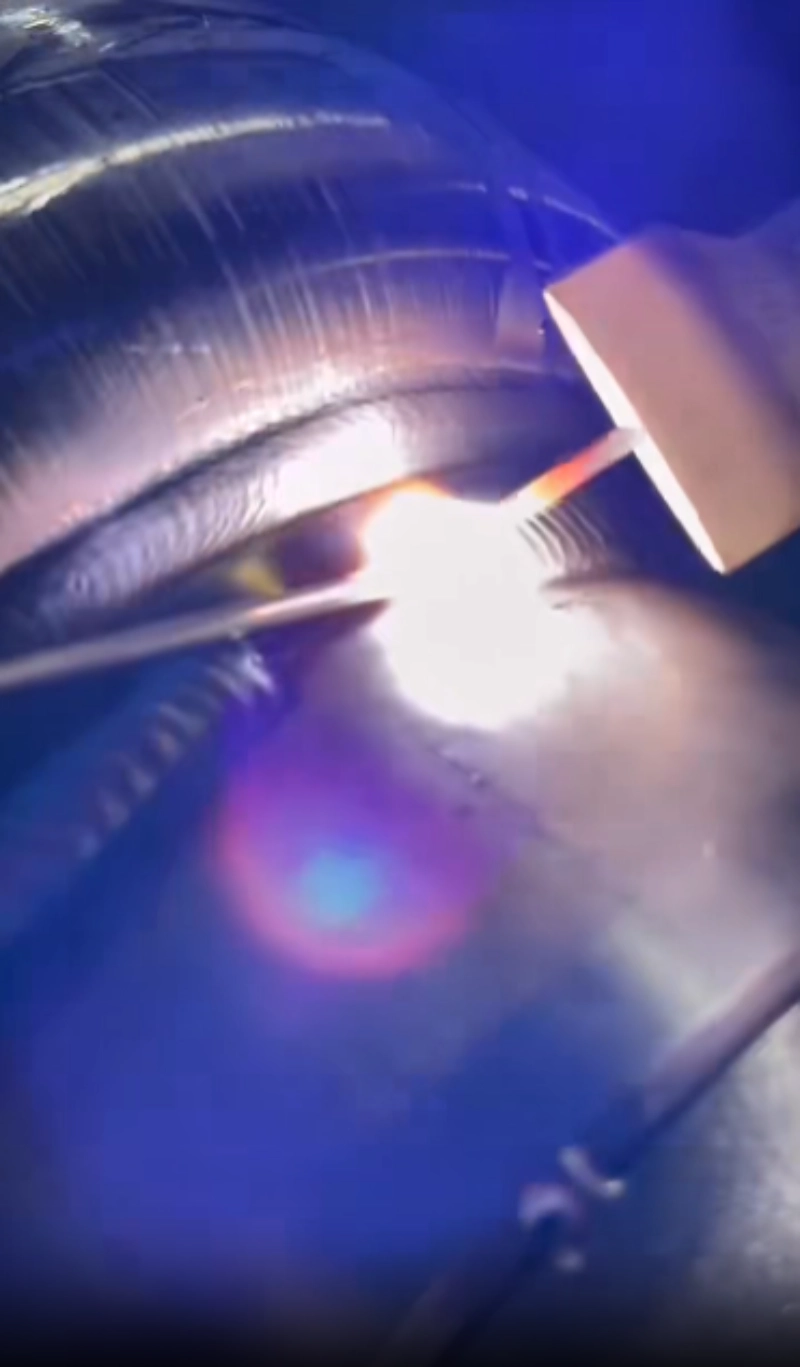
TIG welding is often selected when weld appearance, heat control, and dimensional stability are important. Compared with processes designed primarily for high deposition rates, TIG allows the welding operator to control the arc and filler material more carefully.
This makes it particularly suitable for components where excessive weld buildup or uncontrolled heat input could create problems.
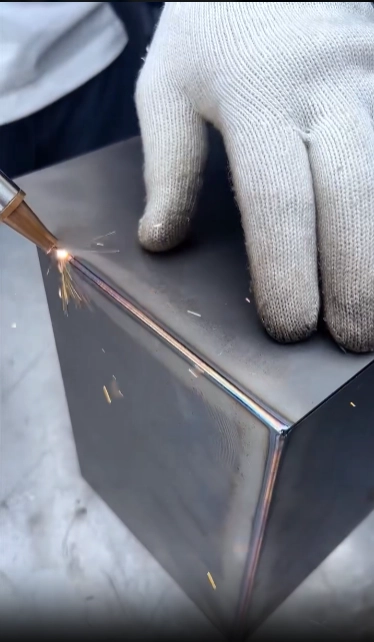
Typical applications include precision brackets, stainless steel housings, equipment frames, aluminum components, and assemblies where the welded area remains visible after fabrication.
For OEM projects, the objective is not simply to create a strong weld. The finished assembly must also meet the dimensional requirements specified on the drawing and remain suitable for subsequent machining, coating, installation, or testing.
Different metals respond differently to welding heat. A welding process that works well for one material may require significantly different parameters for another.
TIG Welding can be applied to a broad range of materials, including carbon steel, galvanized steel, 304 and 316 stainless steel, aluminum alloys, cast iron, ductile iron, and copper alloys.
For example, stainless steel equipment housings may require controlled heat input to reduce distortion and maintain an acceptable surface appearance. Aluminum components require different process considerations because of the material's thermal characteristics.
For industrial OEM production, material traceability is also important. Hehua's welding service can provide material test certificates and maintain material traceability for applicable projects. This is particularly useful for components that require documented quality control or are ultimately supplied to regulated industries.
One of the most practical challenges in welded assemblies is deformation.
When a metal part is heated and then cooled during welding, localized thermal expansion and contraction can change the shape of the component. The risk becomes more significant when working with thin sheet metal, long welds, asymmetrical structures, or assemblies with strict mounting requirements.
A reliable welding process therefore starts before the first weld is made.
Hehua supports welding DFM optimization during the engineering stage. The technical team can review customer drawings, identify potential deformation and cracking risks, and recommend adjustments to the welding structure or process.
Fixture fabrication is also included in the company's OEM and ODM welding capability. Proper positioning and restraint during welding can help maintain the relationship between critical features and reduce correction work after welding.
Welding should not be treated as an isolated manufacturing operation when producing precision assemblies.
After welding, components may require straightening, deburring, CNC secondary machining, or surface treatment. These processes help bring the finished assembly to the required dimensional and functional condition.
Hehua's overall welding workflow can include blanking, fixture fabrication, welding, straightening, CNC secondary machining, and surface finishing.
The company specifies overall dimensional tolerances of approximately ±0.1–±0.3 mm for applicable components, while flatness can reach ≤0.03 mm/100 mm after straightening, depending on the part design and production requirements.
This integrated approach is useful for OEM customers because it avoids unnecessary transfers between different suppliers. A welded equipment base, mounting bracket, or housing can move through multiple required processes under one coordinated production workflow.
TIG is not automatically the best choice for every welded assembly.
For thick structural parts or high-volume production, MIG/MAG welding or robotic welding may provide better productivity. Spot welding can be appropriate for certain sheet metal structures, while submerged arc welding can be used for specific heavy fabrication applications.
The practical approach is to select the process according to the material, thickness, joint design, structural load, production quantity, and appearance requirements.
Hehua provides MIG/MAG, TIG, spot welding, fillet welding, submerged arc welding, brazing, and robotic automatic welding. This allows the welding process to be selected according to the actual component instead of forcing every project into the same production method.
For a precision stainless steel housing, for example, TIG may be appropriate where controlled welding and appearance are important. For a large carbon steel frame requiring high production efficiency, MIG or robotic welding may be more suitable.
Many industrial equipment components combine structural requirements with tight installation dimensions.
Equipment bases need to remain stable and flat. Mounting brackets need accurately positioned holes and interfaces. Sheet metal housings may need clean welds because they remain visible after finishing. Pressure-related assemblies must additionally pass leakage tests.
These requirements make process control particularly important.
TIG Welding can be used for suitable precision assemblies such as stainless steel enclosures, equipment components, mounting structures, and selected pressure-related parts.
After welding, Hehua can provide straightening, grinding, CNC secondary machining, and surface finishing. For pressure parts, air and water tightness testing is available, while critical welds can also undergo magnetic particle testing, ultrasonic testing, or hydrostatic testing.
A visually acceptable weld does not necessarily mean the entire assembly meets its drawing requirements.
For OEM manufacturing, quality inspection needs to cover both weld integrity and final dimensions.
Hehua's quality control process includes incoming material inspection, in-process inspection, post-weld straightening checks, and final dimensional inspection. First articles can receive full dimensional inspection, while periodic inspections are applied during batch production.
For pressure-related products, 100% air tightness testing is available, with NDT and inspection reports provided where required.
Welds are controlled for common defects such as porosity, slag inclusion, and cracking. These inspection steps are especially important for components that will be integrated into larger industrial machines, where a welding problem can affect the performance of the complete system.
Precision also depends on how well the original design translates into manufacturing.
Hehua works with 2D CAD drawings and 3D formats including STEP, IGS, SolidWorks, and UG. The company also supports reverse engineering from physical samples and reproduction of legacy welded assemblies.
For custom projects, drawing review can be completed within 24 hours. During this stage, potential welding deformation and cracking risks can be assessed before production begins.
This is particularly useful for OEM customers developing prototypes or replacing an imported welded component. Instead of reproducing the original structure without modification, the manufacturing team can review whether the design can be improved for welding, machining, and final assembly.
For many industrial components, welding is only one stage of the manufacturing process.
After welding and dimensional correction, customers may require shot blasting, black oxide, electrophoresis, Dacromet, powder coating, galvanization, anodizing, or polishing.
Hehua provides these post-weld treatment options as part of its one-stop manufacturing capability. This is useful for outdoor equipment frames and assemblies that require corrosion protection, as well as exposed components where surface appearance is important.
By coordinating welding and finishing within the same supply chain, OEM customers can reduce the risk of inconsistent processing between different subcontractors.
Hehua Machinery Technology (Kunshan) Co., Ltd. is part of the Hehua group, which has been engaged in high-end equipment manufacturing since 2005.
The company provides metal parts and assemblies for automotive, rail transit, aerospace, wind power, nuclear power, industrial machinery, semiconductor equipment, and new energy equipment applications.
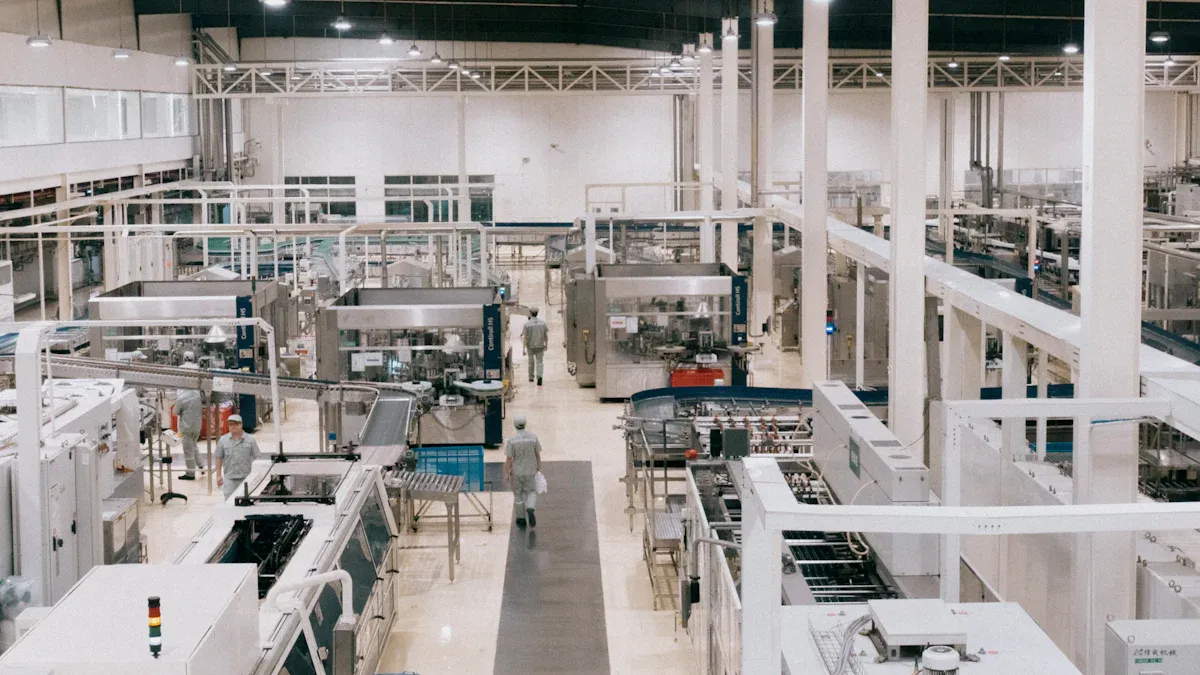
Its Kunshan facility covers more than 17,800 square meters and employs more than 160 people. The company has established professional project and technical teams covering design development, manufacturing, quality management, and delivery.
Hehua has obtained ISO 9001, IATF 16949, and EN 15085 certifications, while its welders hold EN ISO 9606-1 qualification certification. These qualifications are particularly relevant when welded components are supplied to industries with formal welding and quality requirements.
A good welding supplier needs to handle more than repeat production.
OEM projects may begin with a drawing or physical sample, followed by prototype fabrication, dimensional verification, process adjustment, and eventual batch production.
Hehua supports small-batch samples as well as mass orders. Fast sampling can be completed within 3–7 days for applicable projects, with dedicated engineers involved in technical communication and welding DFM optimization.
For regular production, manual welding stations and robotic welding cells are available, with monthly capacity of up to 30,000 sets. Standard orders are generally delivered within 12–25 days, depending on project requirements.
This combination of engineering support, welding capability, inspection, machining, and finishing allows the manufacturing process to scale without changing the entire supplier structure.
Precision welding is not determined by the welding arc alone. Material selection, fixture design, welding parameters, deformation control, straightening, machining, inspection, and surface treatment all contribute to the final performance of a custom metal assembly.
For suitable stainless steel, aluminum, carbon steel, and other metal components, TIG Welding provides controlled welding capability where dimensional accuracy, weld appearance, and process stability are important.
With integrated welding, CNC machining, straightening, inspection, and finishing capabilities, Hehua Machinery Technology (Kunshan) Co., Ltd. can support OEM customers from drawing review and prototype production through batch manufacturing and final delivery.
For manufacturers developing precision brackets, equipment housings, pressure assemblies, machine components, or other custom welded structures, selecting the right welding process and controlling the complete post-weld workflow can make a measurable difference in dimensional consistency and production reliability.


 AddressNo. 66 Xingpu Road, Lujia Town,Kunshan City, Factory Buildings 3 and 4
  en
en
 English
 繁体中文
繁体中文 Italian
 Spanish
 Japanese
 Portuguese
 Korean
 Russian
 French
 German
 Estonian
 Arabic
 Indonesian


 Message