Thin sheet metal is widely used in equipment housings, brackets, frames, enclosures, covers, and precision structural components. However, welding thin metal sheets can be challenging. Excessive heat input may cause warping, distortion, burn-through, dimensional deviation, or visible surface defects. For manufacturers working with tight tolerances, controlling weld deformation is therefore just as important as achieving sufficient weld strength.
Laser Welding provides an effective solution for many thin sheet metal applications because it concentrates energy into a small welding area and can reduce unnecessary heat exposure. When combined with proper joint design, fixture control, welding parameters, straightening, inspection, and surface finishing, laser welding can help manufacturers produce more stable and consistent sheet metal assemblies.
For Shanghai Hehua Machinery Technology Co., Ltd., welding is part of an integrated metal manufacturing process covering cutting, fixture fabrication, welding, straightening, CNC secondary machining, inspection, and surface treatment. This approach allows welding deformation to be considered from the beginning of the manufacturing process rather than corrected only after welding.
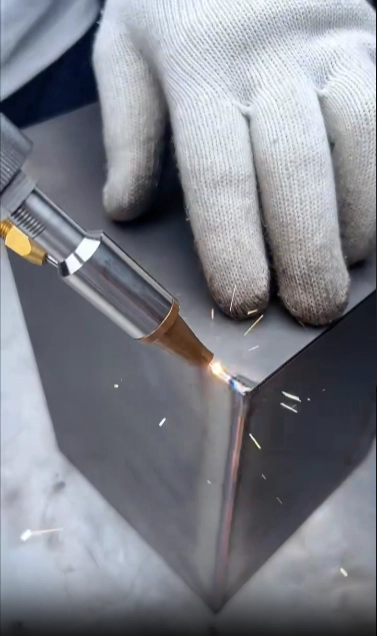
Why Does Thin Sheet Metal Deform During Welding?
Weld deformation is mainly caused by uneven heating and cooling. When a welding arc or laser beam heats a localized area, the metal expands. As the welded area cools and contracts, internal stresses develop between the heated zone and surrounding material. If these stresses are not properly controlled, the sheet may bend, twist, buckle, or pull away from its intended dimensions.
Thin sheet metal is especially sensitive because it has less material thickness to resist thermal stress. A component that appears flat before welding may become visibly distorted after several welds.
Common factors affecting deformation include:
· Sheet thickness and material type
· Welding heat input
· Welding speed
· Joint configuration
· Weld length and sequence
· Clamping and fixture design
· Part geometry
· Number and location of welds
· Post-weld straightening requirements
For this reason, simply selecting a low-heat welding process is not enough. The entire welding process needs to be engineered around the final dimensional requirements of the component.
One of the main advantages of Laser Welding is its concentrated heat source. Compared with conventional welding processes, a laser can deliver energy to a relatively small area, helping limit the size of the heat-affected zone and reduce unnecessary thermal exposure.
For thin sheet metal, this can be particularly useful when the component requires a clean appearance and controlled dimensional accuracy.
However, laser welding does not automatically eliminate deformation. Incorrect power, travel speed, focal position, joint preparation, or welding sequence can still result in thermal distortion. The key is to match the welding process with the material thickness, joint structure, load requirements, and appearance requirements of the finished part.
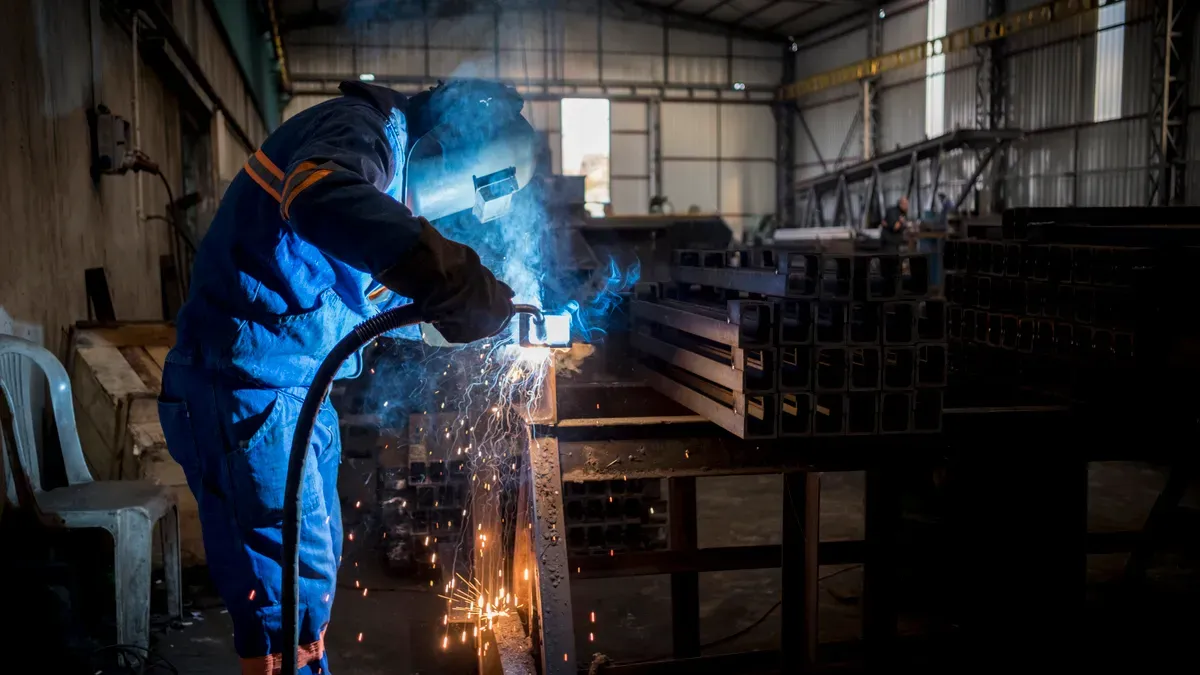
At Shanghai Hehua Machinery Technology Co., Ltd., the welding process is selected according to the actual requirements of each project. In addition to laser welding, the company provides MIG/MAG, TIG/GTAW, spot welding, fillet welding, submerged arc welding, brazing, and robotic automatic welding. This allows the welding method to be matched to different sheet thicknesses and structural requirements instead of forcing every project into the same process.
One of the most effective ways to control deformation is to address the problem before the first part is welded.
A suitable welding design should consider joint location, weld size, weld length, component stiffness, access for the welding torch or laser head, and the expected direction of thermal contraction.
Hehua Machinery supports drawing review and welding DFM optimization before production. The company works with 2D CAD drawings as well as 3D STEP, IGS, SolidWorks, and UG files. Reverse engineering from physical samples is also available for customers who need to reproduce existing welded components.
During technical review, potential welding deformation and cracking risks can be evaluated in advance. This helps reduce the need for extensive rework after production begins.
Fixtures play an important role in maintaining the position of thin sheet metal during welding. Without sufficient support, a sheet can move or deform as heat is introduced.
A good fixture should hold the component securely while still allowing the welding process to proceed efficiently. Excessive clamping, however, may also create unwanted residual stresses. Therefore, fixture design should be based on the geometry and welding sequence of the specific assembly.
For custom OEM and ODM projects, Shanghai Hehua Machinery Technology Co., Ltd. can provide fixture fabrication as part of its integrated manufacturing service. This is particularly useful for repeated production where fixture consistency directly affects weld repeatability.
Heat input is one of the most important variables in deformation control. Excessive energy can enlarge the heat-affected zone and increase thermal contraction after cooling.
For thin sheet metal, the welding parameters should be carefully matched to material type and thickness. Carbon steel, galvanized steel, 304/316 stainless steel, aluminum alloy, cast iron, ductile iron, and copper alloys have different thermal and welding characteristics.
The correct balance between welding energy and travel speed is essential. The objective is not simply to use the lowest possible heat input, but to achieve adequate penetration and weld strength while minimizing unnecessary thermal loading.
For high-volume production, robotic welding can further improve consistency by maintaining repeatable travel speed, torch position, and welding sequence.
Welding sequence can have a major influence on the final shape of a thin sheet metal assembly.
If long welds are performed continuously in one direction, the resulting contraction may pull the component toward one side. Alternating the welding direction, using intermittent welds where permitted by the design, or distributing welds across different areas can help balance thermal stress.
The best sequence depends on the part geometry and structural requirements. For precision components, it is often better to determine the welding sequence during the engineering stage rather than adjusting it after distortion has already occurred.
Even with optimized welding parameters, some components may require post-weld straightening. This is particularly relevant for welded frames, equipment bases, brackets, housings, and other assemblies with strict dimensional requirements.
Hehua Machinery includes post-weld straightening within its manufacturing capabilities. After welding, assemblies can be checked and corrected before moving to CNC secondary machining or surface finishing.
The company specifies overall dimensional tolerances of approximately ±0.1 to ±0.3 mm for applicable components, with flatness controlled to ≤0.03 mm/100 mm after straightening, depending on the project requirements.
This combination of welding and controlled straightening provides a more practical route to achieving final dimensional requirements than relying solely on welding parameter adjustments.
Reducing deformation is only one part of welding quality. A welded component must also meet requirements for weld integrity, dimensional accuracy, and application-specific performance.
At Shanghai Hehua Machinery Technology Co., Ltd., welded assemblies undergo incoming material inspection, in-process inspection, post-weld straightening checks, and final quality control. Welds are checked for issues such as porosity, slag inclusion, and cracking.
For pressure-related components, air-tightness and water-tightness testing can be performed. Magnetic particle testing (MT), ultrasonic testing (UT), and hydrostatic testing are also available for critical pressure welds.
These inspection procedures are particularly important for components used in industrial machinery, compressor equipment, construction machinery, and other applications where welding performance directly affects operational reliability.
Thin sheet metal assemblies often require more than welding. Grinding, polishing, blasting, powder coating, galvanizing, anodizing, electrophoresis, black oxide, and other surface treatments may be required depending on the application.
Post-weld surface treatment can improve corrosion resistance and appearance, but it should also be considered during the initial manufacturing plan. Weld spatter, sharp edges, excessive weld reinforcement, and local deformation may affect the final finish.
Hehua Machinery provides integrated post-weld treatment, allowing customers to combine welding, straightening, machining, and surface finishing within one manufacturing workflow.
Controlled welding deformation is especially important for components that need to fit with other machined or assembled parts.
Typical applications include:
· Welded sheet metal housings
· Compressor frames and pressure housings
· Equipment bases
· Construction machinery brackets
· Precision mounting brackets
· Industrial machinery frames
· Lightweight aluminum structures
· Stainless steel enclosures
· Pressure pipe welded assemblies
· Semiconductor equipment components
· New energy equipment structures
With experience serving automotive, rail transit, aerospace, wind power, nuclear power, industrial machinery, semiconductor equipment, and new energy equipment sectors, Shanghai Hehua Machinery Technology Co., Ltd. is equipped to handle both prototype development and larger production programs.
For thin sheet metal, weld deformation should be treated as a process-control issue rather than a problem that can simply be fixed at the end.
A practical workflow starts with design review and DFM optimization, followed by appropriate material selection, fixture design, welding process selection, heat-input control, welding sequence planning, and post-weld straightening. Dimensional inspection and weld quality testing then confirm whether the finished assembly meets the required specifications.
This integrated approach is particularly valuable for OEM and ODM projects where customers need repeatable dimensions, stable weld quality, and reliable delivery across multiple production batches.
Shanghai Hehua Machinery Technology Co., Ltd.operates a 17,800+ square meter plant with more than 160 employees and provides end-to-end manufacturing and export services. Its quality and welding capabilities are supported by ISO 9001, IATF 16949, EN 15085, and EN ISO 9606-1 qualifications.
For manufacturers looking for a welding partner for thin sheet metal components, the right solution is not simply choosing a welding machine. It is choosing a complete process capable of controlling heat, deformation, dimensions, weld quality, and post-weld requirements.
To discuss a custom thin sheet metal project, Laser Welding can be evaluated alongside MIG, TIG, spot, and robotic welding according to the material, thickness, joint design, production volume, and required tolerances. With integrated welding and secondary manufacturing capabilities, Shanghai Hehua Machinery Technology Co., Ltd. can support projects from drawing review and prototype sampling through production, inspection, surface treatment, and export.


 AddressNo. 66 Xingpu Road, Lujia Town,Kunshan City, Factory Buildings 3 and 4
  en
en
 English
 繁体中文
繁体中文 Italian
 Spanish
 Japanese
 Portuguese
 Korean
 Russian
 French
 German
 Estonian
 Arabic
 Indonesian


 Message