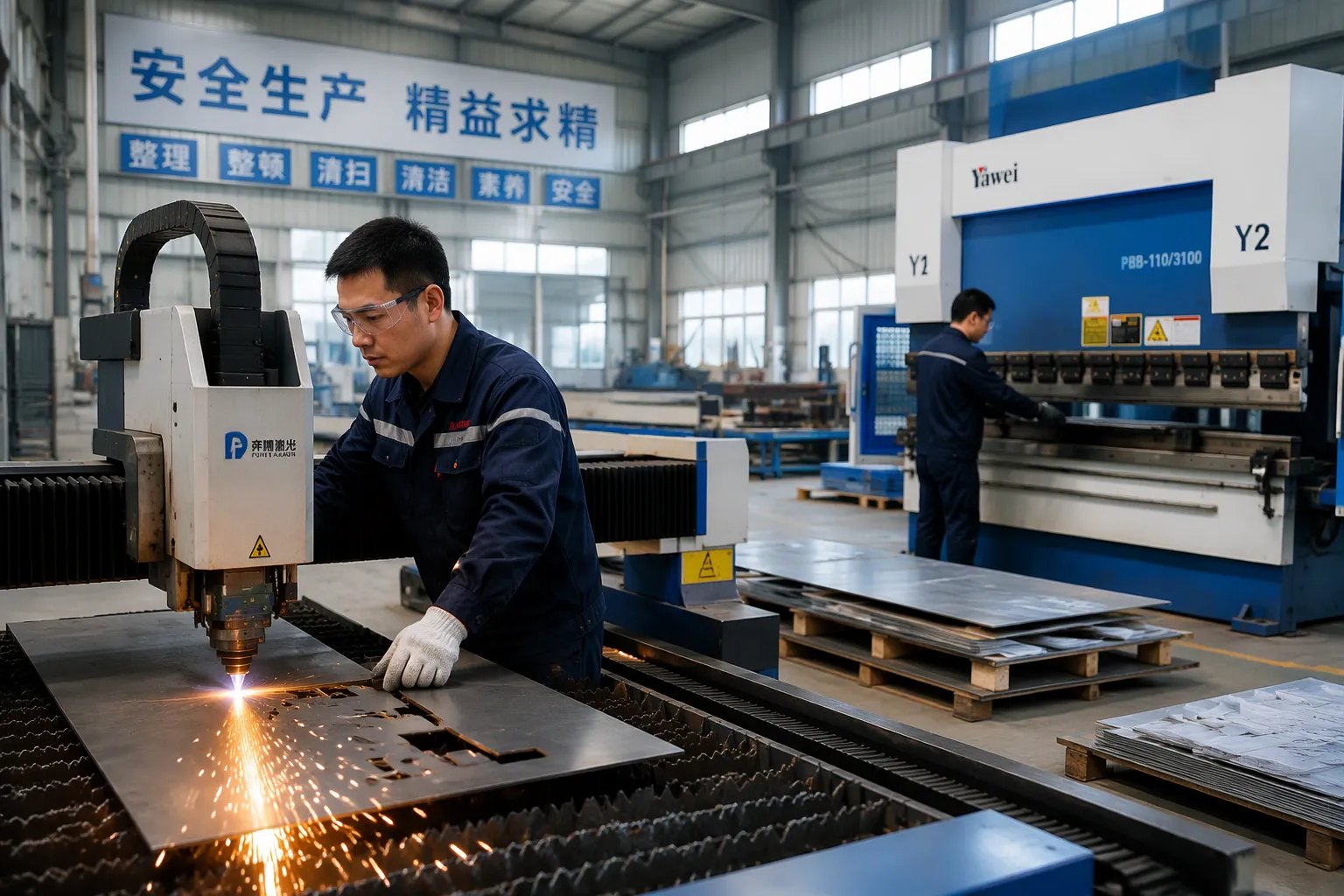
Chinese shops now do laser cutting and bending with real precision. Fiber laser cutting stays within about ±0.1 mm, and bending stays within roughly ±0.2 to ±0.5 mm, based on BravoFabs tolerance data. You also get large-scale capacity, strong certification coverage, and export-ready service from suppliers who ship worldwide.
Your real question is fit, not location. Judge a partner by your drawing, your volume, and your compliance needs. Certification depth sets serious shops apart: ISO 9001 is the baseline, and automotive work needs IATF 16949, according to Haizol. Established manufacturers also hold rail and aerospace approvals. Match those credentials to your project before you ask for a quote.
Chinese shops can meet tight tolerances. Fiber laser cutting stays within about ±0.1 mm, and bending stays within about ±0.2 to ±0.5 mm.
Pick certifications that fit your project: ISO 9001 is the basic one, automotive work needs IATF 16949, and rail work needs EN 15085.
Make a complete RFQ with 2D drawings, 3D CAD files, material specs, tolerances, finish, and volume. This helps you get accurate quotes.
Keep costs down by picking the right material, skipping tight tolerances you don't need, and ordering more so setup fees are spread out.
Follow a step-by-step sourcing process: sample order, pilot batch, factory audit, then mass production after first article approval.
Every sheet metal part begins as a flat blank. A CNC fiber laser cuts the flat pattern from stock sheet. It follows cut paths programmed directly from your CAD file. Zakfab notes that this cutting step usually holds accuracy of about ±0.1 mm. The blank then moves to a press brake. There, a punch and V-die form each bend at the specified angle and location. Zakfab reports angular accuracy within ±0.5° for this stage.
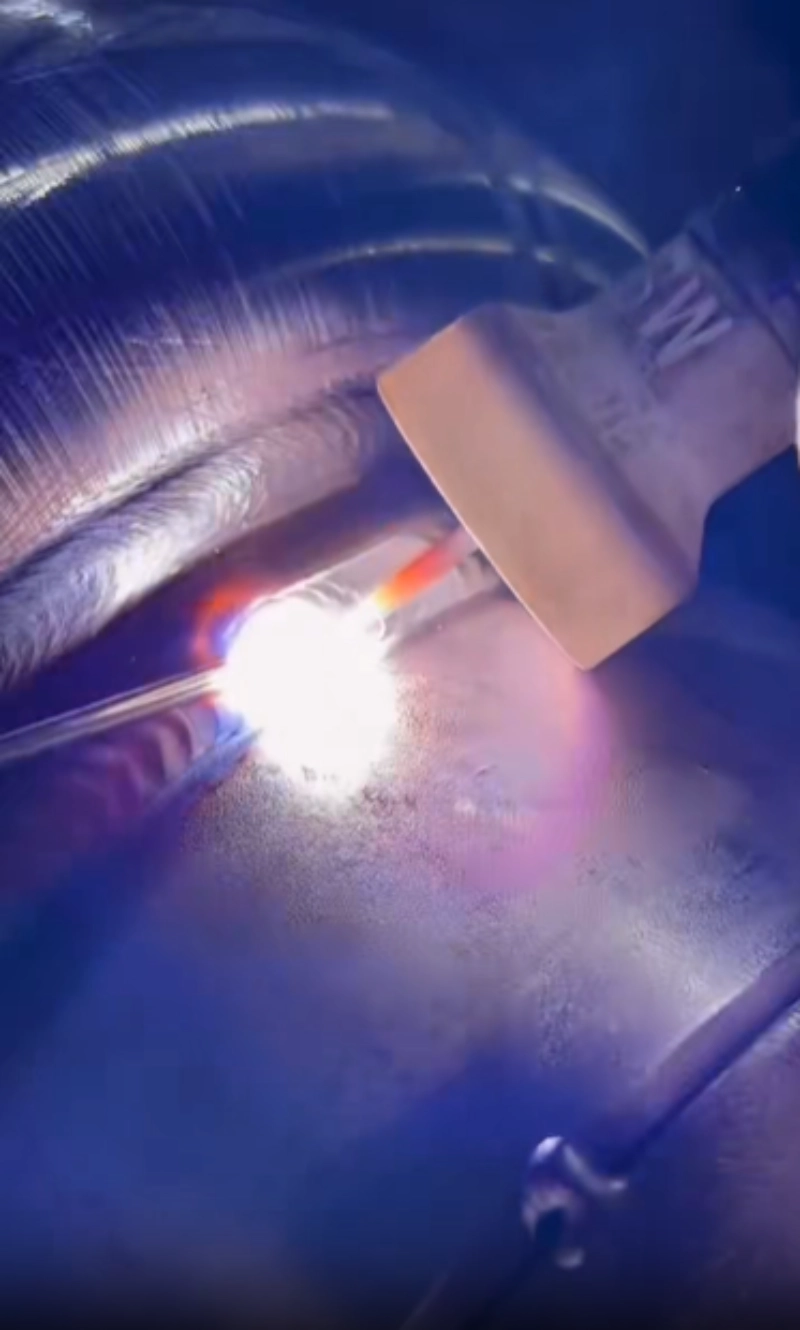
Forming is only the middle of the chain. Joining comes next, and your joint choice shapes the result. Welding fuses pieces at the molecular level. It gives the strongest, most permanent joint for structural assemblies, according to JLCCNC. Riveting avoids heat, which suits dissimilar metals and thin parts that would warp. Screws and threaded inserts keep an assembly serviceable for maintenance or field upgrades. Grinding, deburring, and surface treatment close out the workflow before inspection and packing.
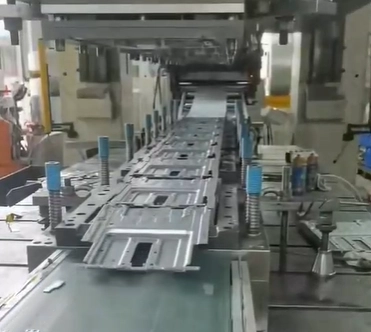
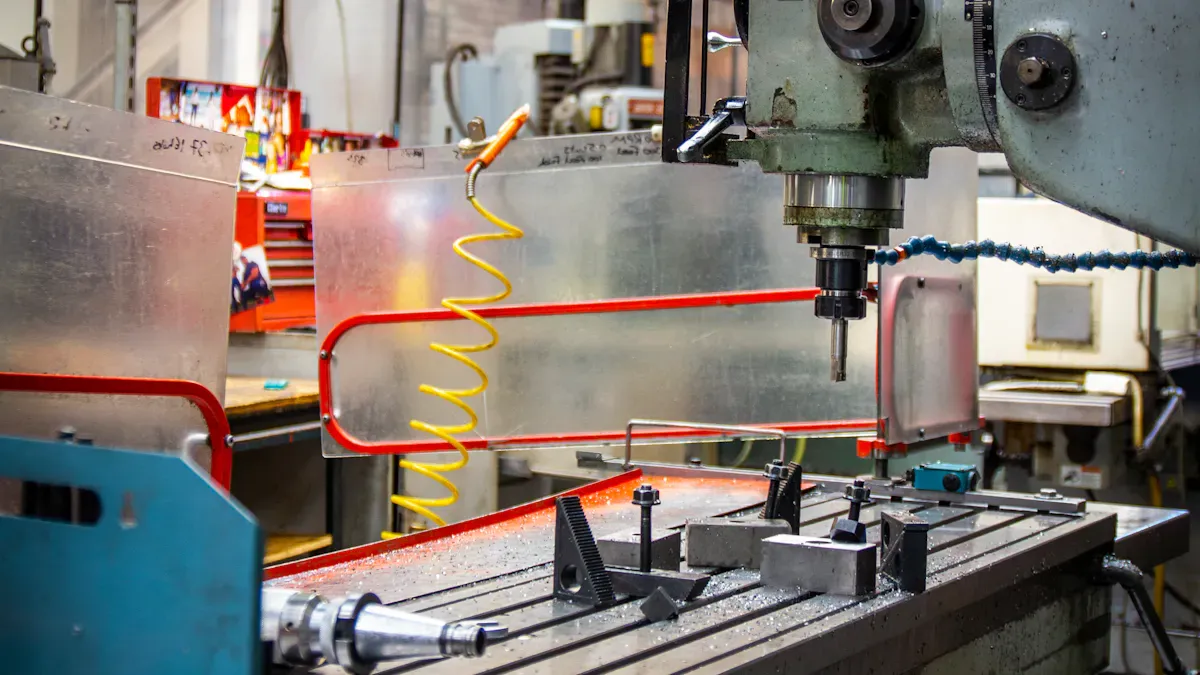
Chinese fabricators commonly run the whole chain under one roof. Prolean's survey of top fabricators lists laser and plasma cutting, bending, punching, welding, rolling, stamping, and finishing processes such as powder coating, plating, anodizing, painting, and deburring. You send one drawing set and receive a finished part, with no coordination between separate vendors.
Hehua's integrated model shows how this works in practice. The company runs full-process OEM/ODM fabrication, from DFM optimization through prototype to mass production. Its scope covers laser cutting and bending, stamping, welding, grinding, and surface treatment, with sheet metal and machined parts delivered together.
Fiber laser cutting is the top choice in Chinese sheet metal shops. The beam cuts quickly, stays very accurate, and works well with reflective metals. CNC turret punching works alongside it for large runs of simple holes and louvers. For those jobs, a punch tool is faster than a traced cut path.
Tolerance depends on the alloy and the gauge. A published tolerance reference chart shows the range:
Material Alloy | Typical Thickness Range | Standard Cutting Tolerance |
|---|---|---|
Carbon / Mild Steel (A36, 1018, A1011) | 24 ga to 1.000 in. | ±0.005 in. – ±0.010 in. |
Stainless Steel (304, 304L, 316, 316L) | 24 ga to 0.750 in. | ±0.004 in. – ±0.008 in. |
Aluminum (5052-H32, 6061-T6) | 0.020 in. to 0.500 in. | ±0.005 in. – ±0.010 in. |
Brass & Copper (C260, C110) | 0.020 in. to 0.250 in. | ±0.004 in. – ±0.008 in. |
Specialty Alloys (Inconel, Hastelloy, Titanium) | 0.020 in. to 0.375 in. | ±0.005 in. – ±0.010 in. |
Precision shops can hold positional tolerances as tight as ±0.003 in. to ±0.009 in., again depending on alloy and gauge. Thin, flat material with simple shapes holds tolerances of a few hundredths of a millimeter under the best conditions. Thicker material opens up the window, because beam spread, kerf taper, and heat input all get bigger.
Chinese suppliers cut stainless steel, aluminum alloys, carbon steel, brass, and copper as standard work. Many also process acrylic, POM, nylon, and engineering plastics. Laser power sets the limit on clean cut thickness and speed. A 3000W fiber laser is a common workhorse, according to OEMach.
Edge quality stays strong across complex shapes, with very little material waste. Expect kerf width of about 0.004 in. to 0.012 in., which CAM nesting software compensates for. Edge angularity holds within 1° to 2° on light and medium gauges. Repeatability runs ±0.001 in. to ±0.002 in. across batch runs. Tube laser cutting is a common extra capability for frame and bracket work. Many suppliers accept 3D drawing uploads for instant quotes and DFM feedback, which shortens the loop between your design and a manufacturable part. For a deeper look at laser cutting and bending capabilities, see this laser cutting tolerance reference.
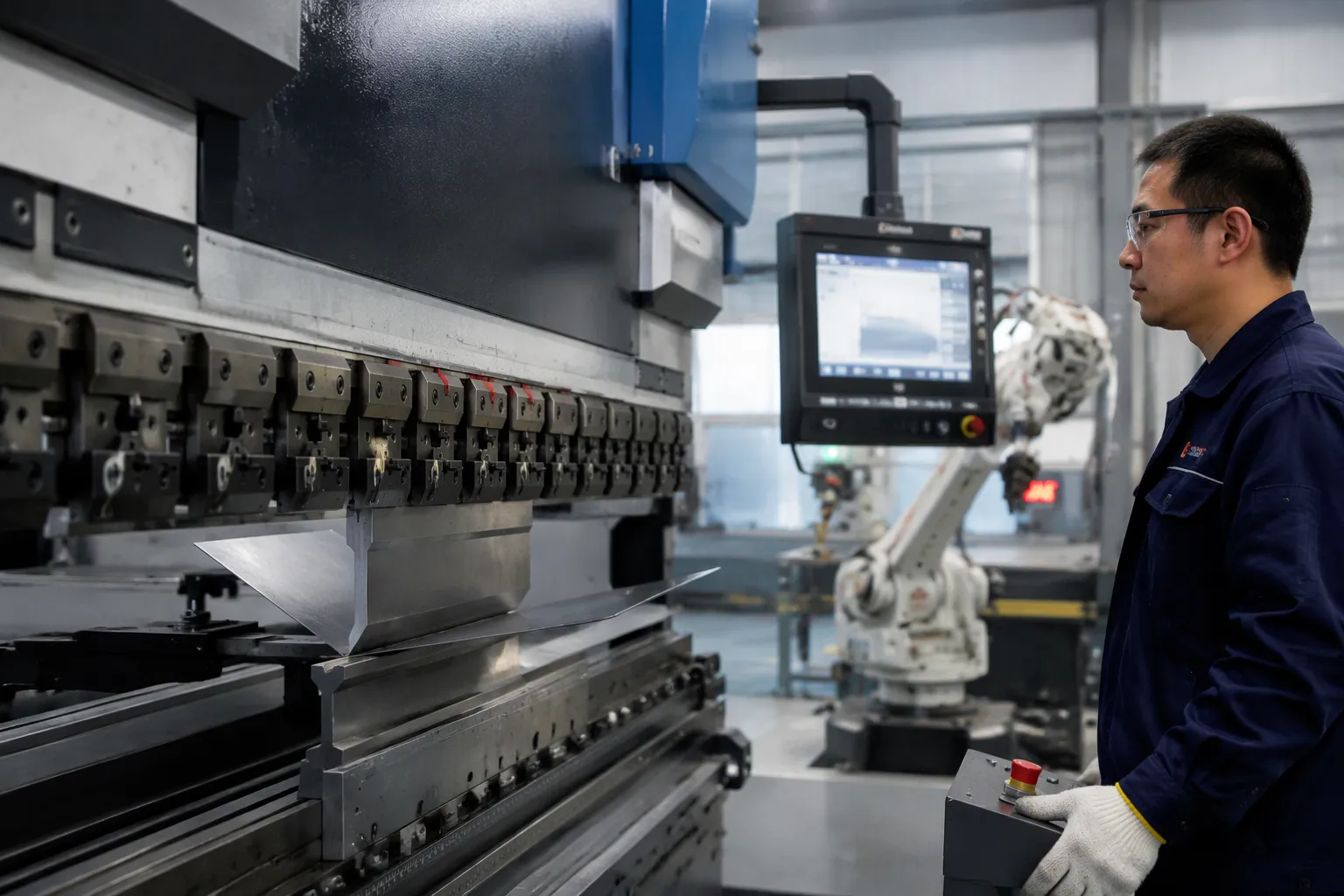
A press brake turns your flat blank into a three-dimensional part. Chinese factories use two main setups. CNC press bending machines use computer controls, multi-axis movement, and real-time monitoring. This gives precise, repeatable bends with little operator input, according to Phillips Corp. Traditional brakes use hydraulic, mechanical, or pneumatic force. They need manual adjustment and more operator skill. Advanced plants now add automatic bending robots. These cells measure the angle during the process and correct each stroke. This keeps accuracy steady across long runs.
The bending method you choose shapes the result. Accur uses these common approaches:
Method | Key characteristics |
|---|---|
Air bending | The punch goes down and the metal rests on the die; one V-die opening gives different angles; less force needed |
Bottoming | The sheet is pressed to the bottom of the die; high force; very accurate bends with consistent thickness |
Coining | High force makes the metal copy the punch and die; less springback; heavy load on machines |
Three-point bending | Three contact points hold a steady bend; consistent radius even when thickness varies |
Rotary bending | Rotating tools reduce surface marks and raise speed on complex bends |
Folding | The metal bends back onto itself; back gauge and CNC controller set the precision |
Hehua's CNC bending service holds dimensional tolerances of ±0.05 to ±0.1 mm, bend angle tolerances of ±0.5°, and flatness of ≤0.02 mm per 100 mm. The shop processes sheets from 0.5 mm to 12 mm in SPCC, SGCC, stainless steel, and aluminum. Inside Metal Fab reports that standard CNC brakes with back gauge control reach ±0.5° to 1° bend angle repeatability. Automated cells with in-process angle measurement reach roughly ±0.3° to 0.5°. General, non-critical dimensions usually follow ISO 2768-mK. Tighter explicit tolerances are saved for critical-to-quality interfaces on the drawing.
Good drawings bend cleanly. Geomiq advises a bend relief wherever a bend runs close to an edge, because the material may tear without one. Make the relief depth greater than the bend radius and the width at least the material thickness. Bend height should reach at least twice the thickness plus the radius, written as H = 2t + r. A short flange deforms and bends poorly.
Keep the inside bend radius at least equal to the material thickness, Geomiq adds. A radius that is too small overstretches the outer fibers and cracks the part. An oversized radius increases springback and dimensional drift, according to PCBWay. PCBWay also recommends reliefs at corner intersections, where stress builds up and causes tearing or warping. Rectangular reliefs are easiest to manufacture; round reliefs spread stress better for cosmetic and precision work. Fabworks sets flange length at four times the material thickness as a rule of thumb. Apply one radius across all bends where possible. Review these rules before you release a drawing for laser cutting and bending, and use a bending DFM checklist to catch violations early.
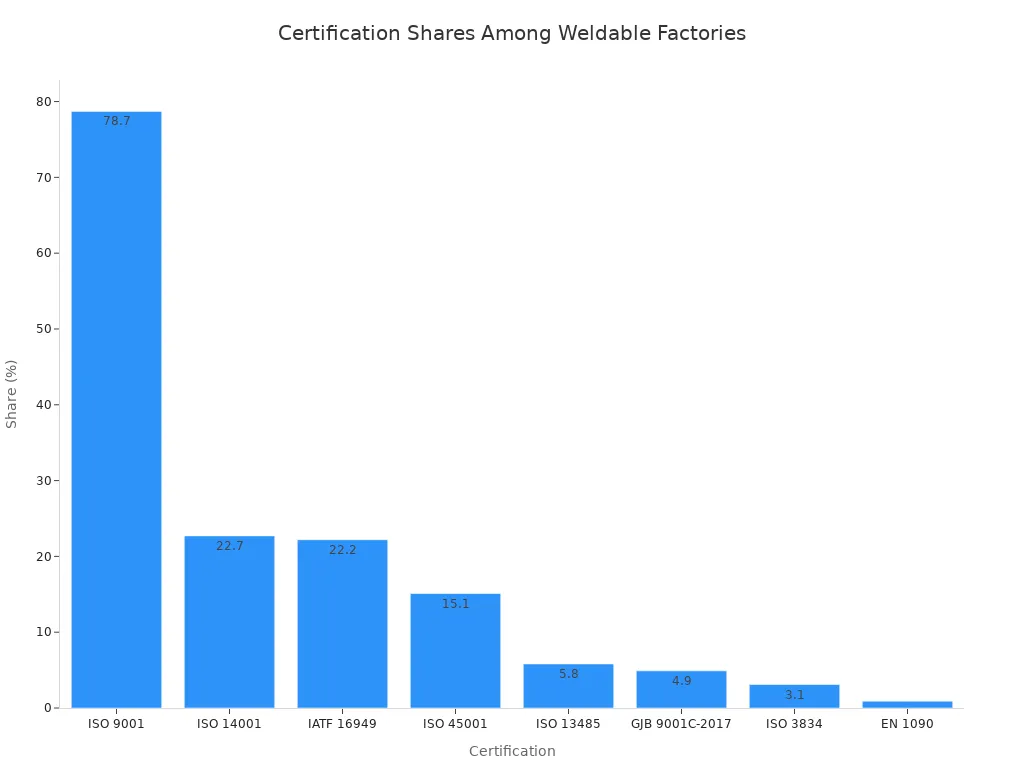
Begin with ISO 9001. It is the basic quality management certificate, and Haizol's survey of China factory profiles that can weld finds it on 78.7% of listings. That number tells you something useful: ISO 9001 filters out almost no one. Treat it as a minimum, not a shortlist.
Match the certificate to your application. Automotive work needs IATF 16949, which shows up on 22.2% of those profiles. Rail work needs EN 15085, and TZR Metal notes it as one of the most important quality standards in railway manufacturing. Ask which level the certificate names, because EN 15085 runs from CL1 to CL4 and CL4 covers organizations that do not weld at all. Where welding is in scope, confirm welder qualification under EN ISO 9606-1. Haizol also warns that VDA 6.1 stops being certifiable after 31 December 2028, so request IATF 16949 for automotive weldments instead.
Supplier context | Quality certificates to expect |
|---|---|
Precision sheet metal fabrication | ISO 9001, EN 15085 (railway), DIN 6701 (bonding) |
Aerospace-focused fabrication | AS9100, ISO 9001, ISO 14001, ISO 45001 |
General platform supplier | ISO 9001 |
Traceability separates serious shops from casual ones. A working system answers three questions fast: what the part is, how it was made, and how it was verified. De wintech lists the records that matter — mill certificates with heat numbers, first article inspection reports, in-process bend and hole checks, final inspection results, and non-conformance reports. Each batch gets a unique lot number stamped on the packing label and carried into every digital report.
ERP-based systems automate this link. Hehua runs the Zhibang International ERP system, which ties lot numbers to inspection records and supports full documentation through its ISO 9001-certified quality system. Haizol's certification data shows how rare deeper credentials are among Chinese suppliers:
Ask for a sample traceability package with your pilot order. You will learn more from one lot's paperwork than from any certificate scan.
The price of making a part depends on its shape and the materials you pick. Sincere Machining lists the main cost drivers in a clear way. Material type comes first: 304 stainless steel can cost about 2.5 to 3 times as much per kilogram as mild steel, and copper or brass costs even more. Thickness makes this worse, because heavier sheet uses more material and slows down every cut and bend. Cut length and how complex the profile is directly change the cutting time. Each bend adds machine time plus a one-time program fee for every unique bend sequence, so four different angles cost more to set up than four identical 90° bends.
Tolerance and finish also add real cost. Sincere Machining notes that tighter bend angle tolerances alone can add 30 to 60 percent to bending cost, and finishing often reaches 25 to 40 percent of part cost on small enclosures. Quantity spreads the fixed setup across more units, so the cost per unit drops sharply as volume goes up. Think of these factors as stacking: a thick gauge, many bends, and tight tolerances together push a part well above a simple blank with loose tolerances.
Chinese suppliers often accept low minimum order quantities. Anebon reports that many shops take 1 to 10 pieces for prototypes with no formal MOQ, 20 to 200 pieces for pilot runs, and 200 to 500 pieces for early market batches. That flexibility works well for prototypes and low-volume runs without a big commitment.
Compare the two options on fit, not on which is better. Importivity's comparison shows China giving low unit pricing through savings on labor and tooling, but you pay with weeks of lead time and longer transit. Domestic sourcing saves days or weeks and allows tight on-site teamwork, which suits urgent work and close design iteration. Pick China for cost-sensitive, scale-driven projects and domestic shops for speed and hands-on partnership.
A few industries get the most out of laser cutting and bending in China. Congruence Market Insights says China makes about 35% of the world's sheet metal. Cars lead the demand at about 41% of all sheet metal used, for body frames, chassis systems, and structural supports. Aerospace is the fastest-growing use, with about 16% more work on light, precise parts. Energy is the fastest-growing end user, growing about 17% from renewable power, battery making, and grid updates.
Sector | What drives the fit |
|---|---|
Automotive | High volume, cost per part, quality system compliance |
Aerospace and defense | Precision fabrication, traceability, certified processes |
Industrial equipment | Varied shapes and materials, robustness, service life |
Energy and utilities | Durable components, welding and coatings for extreme environments |
Rail, nuclear, semiconductor, new energy | Certified welding, tight tolerances, complex assemblies |
Hehua built its business around these exact industries. The company serves automotive, rail transit, aerospace, wind power, nuclear power, industrial machinery, semiconductor equipment, and new energy equipment. That focus shows in its certificates and the range of processes it runs. You can see the full list on this industry application page.
Local shops win on speed for some jobs. Incodema finishes small, complex sheet metal parts in 5 to 7 business days and sends quotes back in about 4 hours. A local facility that does everything in-house keeps prototyping, production, and post-processing under one roof, so nothing waits on an outside vendor.
Shipping time is the other factor. Factorem notes that ocean freight can add 4 to 6 weeks to delivery, even when the part itself takes only 5 days to make. A local machine shop might deliver a rush job overnight. Talking also goes faster within one time zone, with no all-day wait for email replies.
A split plan often works best. Use a local supplier for first prototypes, same-day design reviews, and small urgent repairs. Send larger batches to an overseas partner when a few extra shipping days do not hurt the schedule. Very large parts also favor local sourcing, because air freight costs too much at that size.
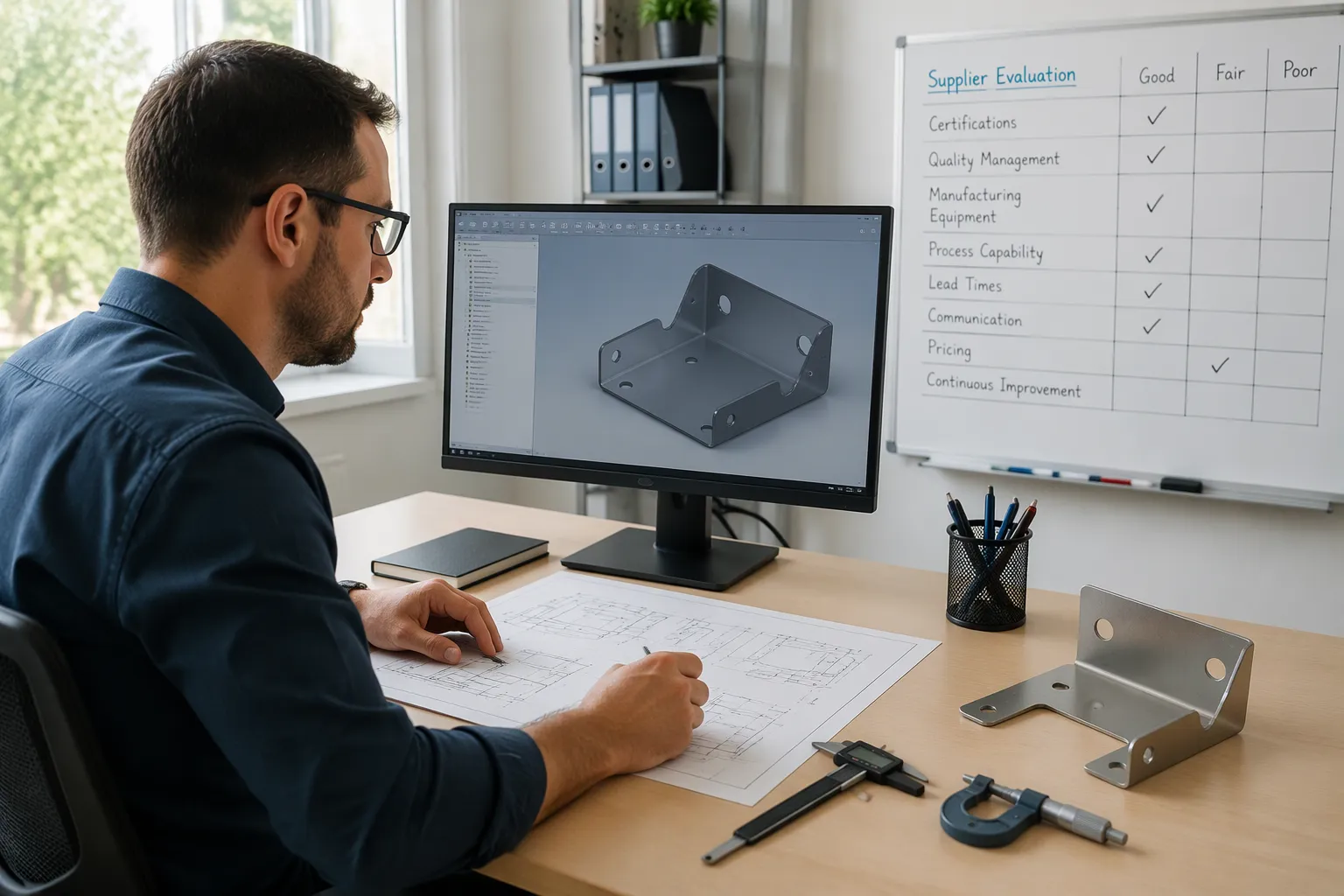
A clear RFQ decides how fast and how well suppliers quote. Evsmetal suggests you give 2D drawings with every dimension, 3D CAD files in STEP, IGES, DXF, or DWG, the material grade and thickness in millimeters, tolerance callouts, finish and coating specs, order volume, and your target arrival date. AMS Metal adds one money-saving rule: don't tighten tolerances on the whole drawing. Keep tight callouts only on features that control fit and function, because loose general tolerances keep cost and lead time down. Say where fabrication ends and assembly begins, and list hardware part numbers and insertion points.
Shortlist suppliers using four filters. De Wintech puts certification fit first, then the equipment list, then inspection gear. A shop that claims ±0.1 mm work without a CMM is a red flag. Confirm export rights and ask how fast the team answers technical questions. How quickly they respond predicts how the whole project will run.
Check suppliers in stages, and never jump straight to mass production:
Place a sample order using your tightest drawing.
Run a small pilot batch and check repeatability.
Audit the factory in person or by video.
Start mass production only after first article approval.
Use lead times as a benchmark. Prototypes usually take 3–5 days, and mass production runs 7–30 days. Baosheng Industry reports standard projects at 15–25 days from drawing approval to ex-factory, with 6–8 weeks door-to-door by ocean freight. Zakfab notes that quoting within 6 hours and answering inquiries within 24 hours mark a responsive supplier, and it warns that self-published on-time figures need checking through client references.
Hehua Machinery Technology (Kunshan) Co., Ltd. shows what a strong candidate looks like at each stage. The company holds ISO 9001, IATF 16949, EN 15085, and EN ISO 9606-1 welder qualification, runs the Zhibang International ERP system for traceability, and reports a 98% on-time delivery rate with 24-hour online service. Its full-process OEM/ODM model covers laser cutting and bending through surface treatment, so one audit covers the entire chain. Ask for a sample traceability package with your pilot order, and work through this supplier audit checklist before you sign.
Four things decide your choice: technical skill, how deep the certifications go, the cost structure, and how disciplined the sourcing process is. Sheetmetalmfg.com frames the same test well. Ask how a factory controls incoming material, first articles, and final inspection. Compare line-item scope before you compare price. ISO 9001 is a baseline, not proof of part-specific control.
Chinese laser cutting and bending suits buyers who prepare clear RFQs and check suppliers against project standards. Request a sample quote or schedule a factory audit as your next step. For guidance on your project, consult a qualified manufacturer such as Hehua Machinery Technology (Kunshan) Co., Ltd.
Many Chinese shops take small orders. Prototype orders often start at about 10 pieces, and pilot batches run from 20 to 200 pieces. This works well for design testing and low-volume production. Before you send drawings, check the MOQ for your exact material and finish.
Fiber laser cutting usually holds about ±0.1 mm on the flat blank. CNC bending holds dimensional tolerances of ±0.05 to ±0.1 mm, bend angles of ±0.5°, and flatness of ≤0.02 mm per 100 mm. Only tighten callouts on features that control fit and function.
Prototypes usually ship in 3–5 days. Mass production runs 7–30 days after drawing approval. Ocean freight adds several weeks to door-to-door delivery. Build that transit time into your schedule, and ask for a confirmed ship date with your quote.
Start with ISO 9001 as the baseline. Automotive work needs IATF 16949, and rail work needs EN 15085. Where welding is in scope, confirm welder qualification under EN ISO 9606-1. Ask for a sample traceability package with your pilot order.
Send 2D drawings with full dimensions and 3D CAD files in STEP, IGES, DXF, or DWG. Include material grade, thickness in millimeters, tolerance callouts, finish, volume, and target delivery date. Many suppliers accept 3D uploads for instant quotes and DFM feedback. A complete package shortens the quote cycle.


 AddressNo. 66 Xingpu Road, Lujia Town,Kunshan City, Factory Buildings 3 and 4
 en
 English
 繁体中文
 Italian
 Spanish
 Japanese
 Portuguese
 Korean
 Russian
 French
 German
 Estonian
 Arabic
 Indonesian



 Message