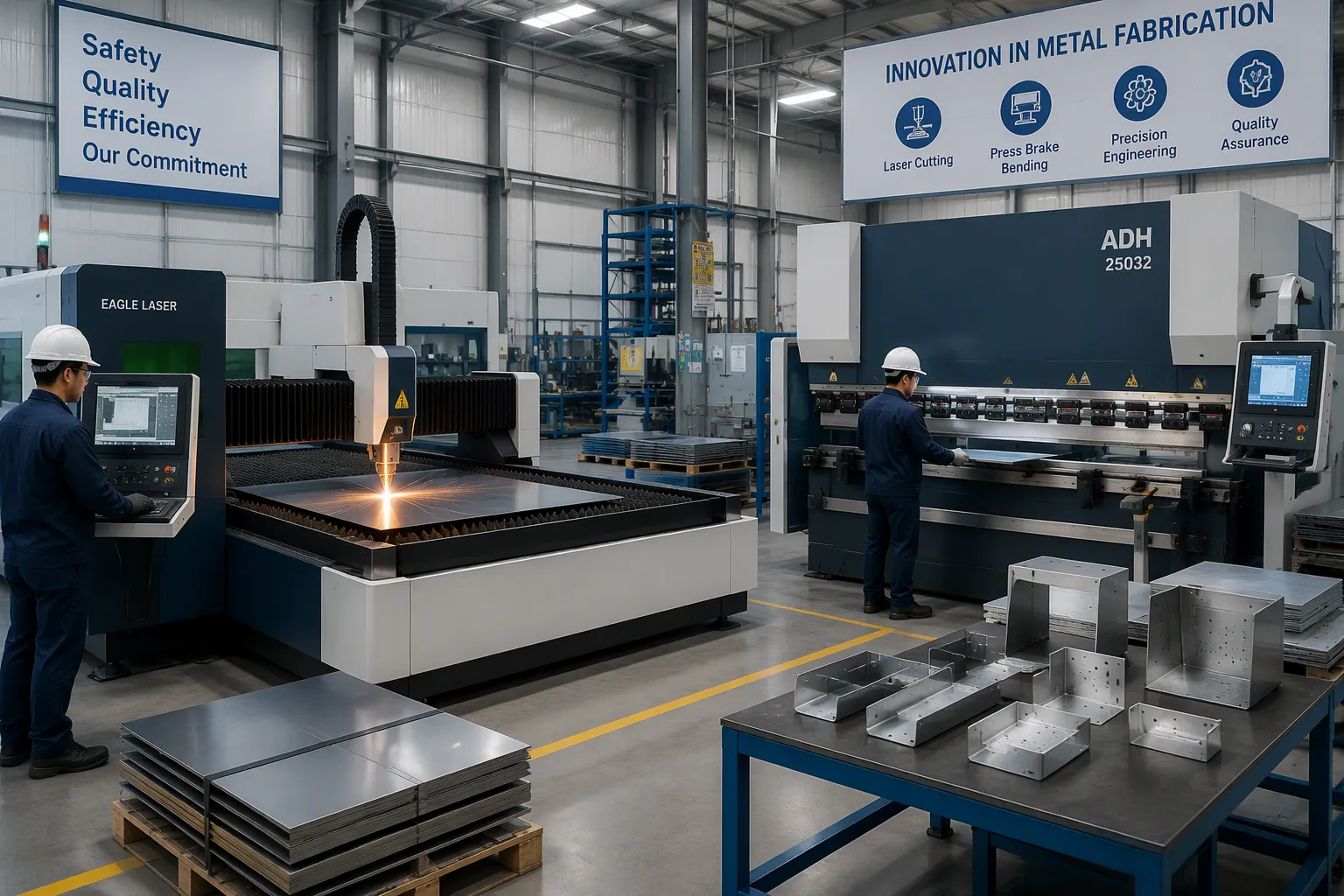
The best price for laser cutting and bending in China does not come from the lowest quote. It comes from balancing machine capability, production efficiency, and total cost. A low bid often hides setup fees, rework, or freight that show up later; the lxslaser blog makes the same point about installed cost.
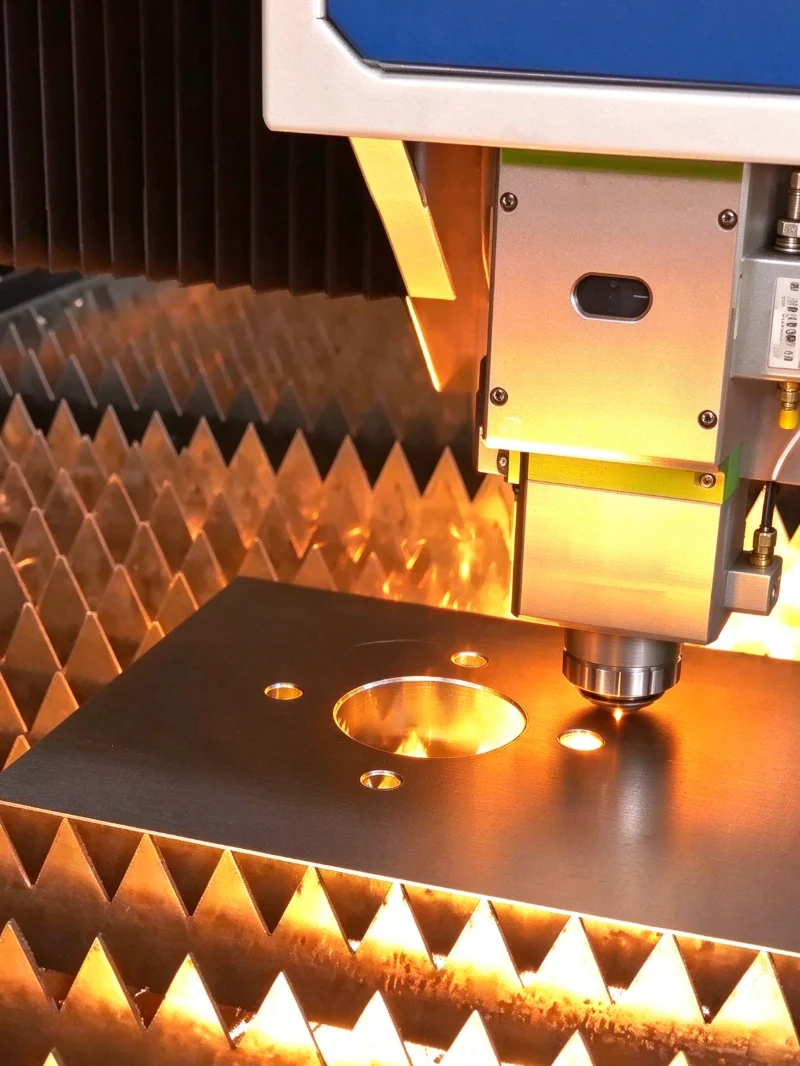
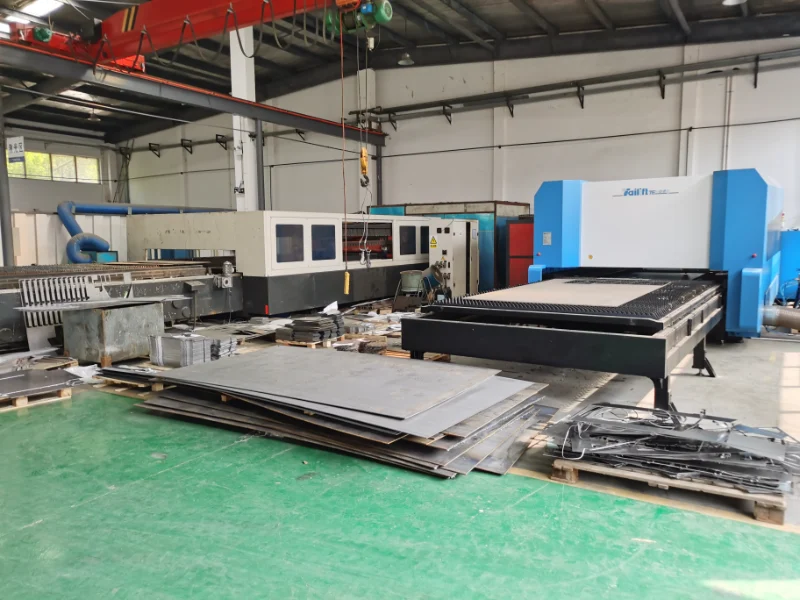
One laser cutting and bending factory handles both processes under one roof. That cuts handling, shortens lead time, and removes the margin each vendor adds to its own step. You keep one contact, one schedule, and one quality record.
This guide breaks down the real cost drivers, shows how to check suppliers, and compares leading factories.
Think about the total cost, not just the lowest price, so you can avoid hidden fees.
Pick a factory that does both cutting and bending. This saves you time and money.
Make sure the factory's machines and certificates fit what your project needs.
Send a complete RFQ package to get accurate quotes and compare them fairly.
Before you order, ask about any hidden costs and setup fees.
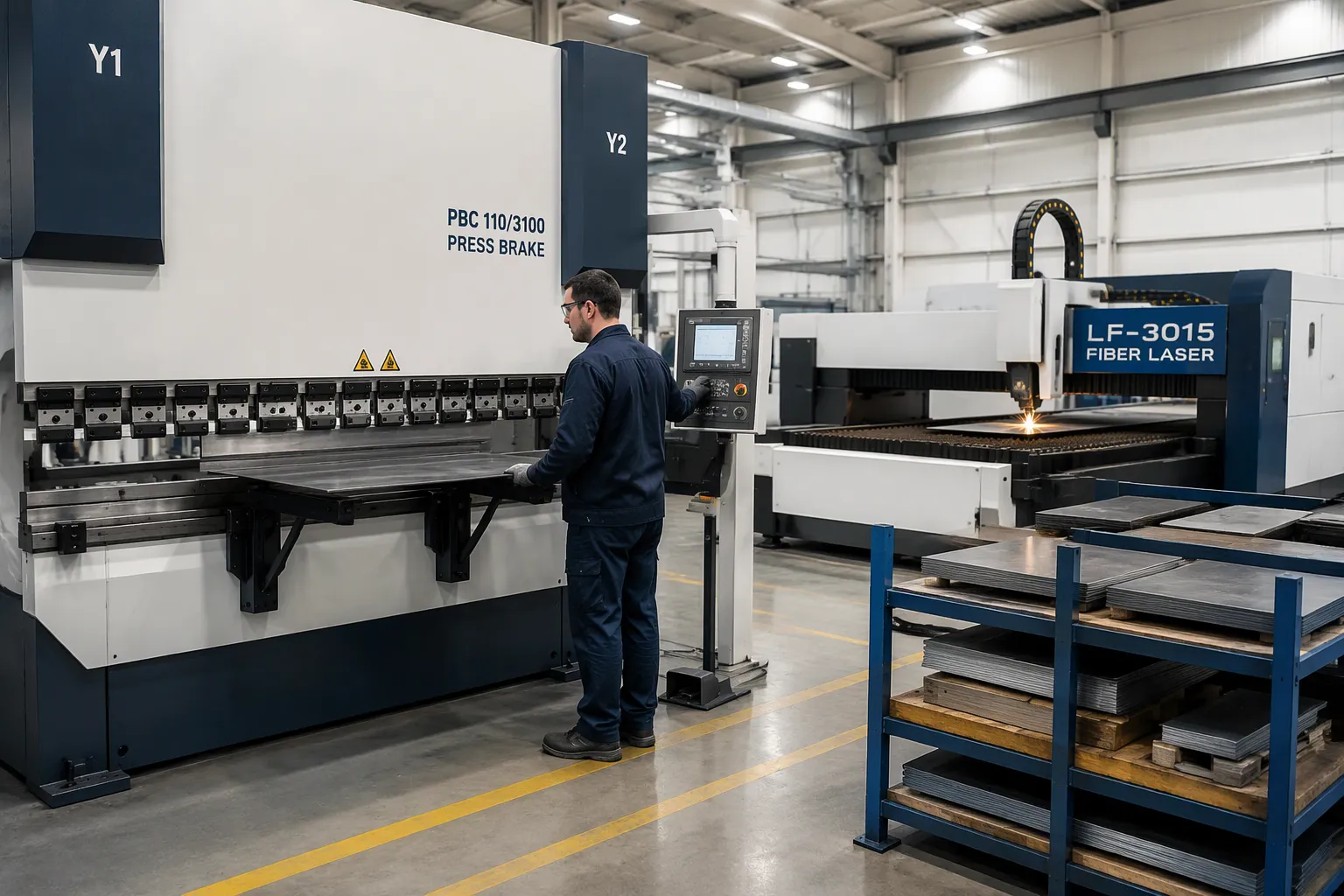
The type of machine sets the lowest price you can get per part. A fiber laser with more power cuts thicker metal in one pass, so you skip extra steps and handling time. For bending, press brake tonnage is the main cost driver, because more bending force needs bigger hydraulic systems and heavier frames. Rucheng Machinery matches tonnage to the job: 40T–80T works for thin sheet up to about 2mm, 100T–160T covers everyday bending of mild steel up to 4–6mm, and 200T–300T handles thick plate and structural parts. A 400T+ machine is used for shipbuilding and heavy equipment work.
Tonnage Range | Common Applications |
|---|---|
40T – 63T | Thin sheet metal, HVAC, enclosures |
80T – 125T | General fabrication, brackets |
160T – 220T | Medium plate, structural work |
250T – 400T | Heavy plate, industrial parts |
500T – 600T+ | Thick plate, heavy equipment |
The level of automation changes the number too. Rucheng Machinery points out that the same tonnage can differ by 20–40% based on the controller, backgauge and crowning. A factory with robotic loading and automated nesting spreads setup time over more parts, and that savings shows up in your quote.
The grade of material changes cutting speed and bending force. Each metal has its own bending coefficient, which sets the force needed to shape it without cracking or too much springback. Cold rolled carbon steel is about 0.3–0.4, and aluminum 5052 is about 0.25–0.3, according to FST Metals. Stainless steel 304 springs back a lot and needs over-bending, while galvanized SGCC can peel its zinc layer and needs polished dies, as Xaontech explains. Harder or more abrasive grades also wear out tooling faster, and Enclosure Metal notes that material choice affects forming risk, springback, tooling cost and final inspection.
Thickness makes both effects worse. A 0.5–12mm range covers thin enclosures and heavy plate, and each step up in thickness slows the cut and raises bending force. Tighter tolerances add cost through slower cycles and more inspection. Size control at ±0.05~±0.1mm and angle control at ±0.5° require careful machine setup, first-article checks and ongoing measurement. Think of tolerance as a spec you pay for, not a default you can assume.
How many parts you order decides how much of the fixed cost each part carries. Setup work — programming, tooling, first-article checks — costs the same whether you order one piece or one thousand. Sincere Machining says it clearly: one part can carry the full setup cost, the tenth piece may cost only about 40–50% of that per unit, and runs of 50–100 pieces drop to roughly 20–30%. Unit cost equals total cost divided by quantity, so small batches always look pricey per piece.
Nesting efficiency is the second lever. Sincere Machining reports a scrap factor of 15–35% from nesting waste, and raw material can reach about 86% of total cost in high-volume runs. Long rectangular parts nest tightly; odd shapes leave more offcuts. Metal Stamp Factory notes that laser cutting relies on CAD nesting and sheet arrangement, so you gain flexibility across changing quantities while waste depends on how well the layout uses the sheet. Bending adds its own setup fee for each unique bend program, so four identical 90° bends cost less to set up than four different angles.
Riveting, welding, assembly, and finishing done under one roof change the math. Each outside vendor adds its own setup, freight, and margin to your part. Keeping those steps in-house removes the double handling and the queue time between shops.
Ask for a quote that covers the finished assembly, not just cut and bent blanks. You then compare one landed cost against a stack of separate invoices, and you hold one supplier accountable for fit at final assembly.
Begin with the list of machines. Ask about laser power levels, press brake tonnage, and the control systems on each bender. A factory that shares its equipment openly shows it trusts its own capacity. Check that list against your part: thick plate needs high laser power, and tight bends need a brake with a precise backgauge and crowning.
Certifications show you which industries the plant already serves. Look for these marks, as listed by suppliers such as Evergreen Metalworks:
ISO 9001 for general quality management
IATF 16949 for automotive work
EN 15085 for rail welding
ISO 3834 for welding quality
ISO 45001 and ISO 14001 for safety and environmental control
Then ask for the on-time delivery rate and monthly capacity in writing. A plant that is running near its limit will fall behind on your schedule.
English support decides how fast problems get fixed. Anebon, a sourcing resource for sheet metal buyers, reports that good suppliers send back RFQs within 24 to 72 hours. They also point out unclear drawings during engineering follow-up. Test this before you commit: send a drawing with one unclear feature. Then see whether the reply asks a smart question or just quotes a number.
DFM feedback protects your budget. Early review catches thin walls, deep pockets, tight internal radii, and finish conflicts before any metal is cut, according to DFocus. Ask whether the laser cutting and bending factory tracks your order in an ERP system. Also ask whether it runs a first-article inspection on the first batch. A supplier that documents both gives you a paper trail from quote to shipment.
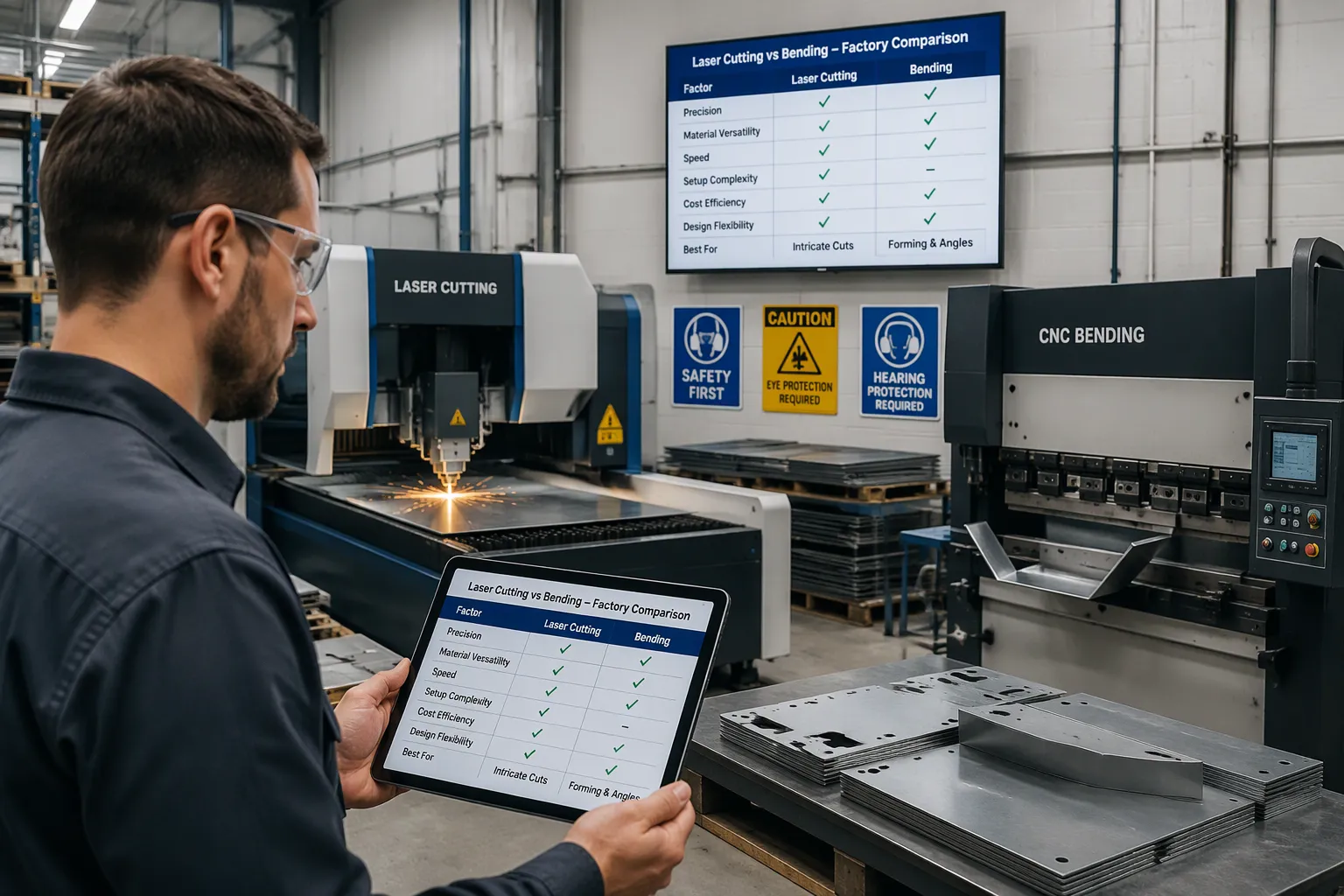
No single plant is the best at every job. The right laser cutting and bending factory depends on your material, your tolerance range, and the certifications your industry requires. The table below matches seven options to those needs.
Company | Specialty | Materials / Processes | Certifications | Best-Fit Applications | Cost Advantage |
|---|---|---|---|---|---|
Hehua | One-stop cutting, CNC bending, riveting, assembly | 0.5–12mm SPCC, SGCC, stainless, aluminum; ±0.05~±0.1mm, ±0.5° | ISO 9001, IATF 16949, EN 15085 | Enclosures, cabinets, protective housings for automotive, rail, semiconductor equipment | In-house secondary operations cut handling and vendor margin |
Komacut | Instant online quotes, 3D drawing upload | Laser cutting and bending | N/A | Fast-turnaround prototypes and simple parts | DFM feedback before order placement |
SENFENG | Broad process range | Cutting, bending, welding, cleaning, cladding, CNC milling | N/A | Multi-process parts from one supplier | Fewer handoffs between shops |
Han's Laser | Vertical integration, in-house laser sources and cutting heads | Ultra-high-power 20kW–40kW lasers | N/A | Thick plate cutting | Cheaper spare parts and faster local service, per ADH Machine Tool |
Yijin Solution | In-house cutting, bending, welding, finishing in Shenzhen | Mild steel, stainless, aluminum, galvanized; ±0.1mm bending | ISO 9001, ISO 14001, ISO 13485, IATF 16949 | Custom bent parts needing several processes in one build | One quality system across every step |
JUSHUN | Full-process OEM fabrication since 2005 | Laser cutting, CNC bending, welding, finishing, turnkey assembly | N/A | Telecom cabinet panels, medical device enclosures, precision brackets | Turnkey assembly removes separate sourcing |
Chinalasercuttingservice | Custom cutting service | Stainless, aluminum, mild steel, acrylic, wood | N/A | Mixed-material cutting jobs | Wide material coverage from one vendor |
Han's Laser ranks No. 1 by revenue among China laser cutting manufacturers in 2026, followed by Bodor, HGTECH, Penta, and HSG, according to ADH Machine Tool. Size matters here: Han's makes laser sources and cutting heads in-house, so replacement parts cost less than international brands and service response is faster. That vertical integration also supports cost-effective thick plate work at 20kW–40kW.
Check the table against your own drawing. A rail bracket with an EN 15085 requirement points toward Hehua. A prototype needing three-day samples fits Yijin Solution, which quotes sample laser cut parts in as little as one to three days. A cabinet program that combines bending with stamping belongs with a plant running both lines. Match the specialty first, then compare quotes on the same RFQ package.
Hehua began in 2005 and opened its Kunshan branch in 2018. The company runs a plant larger than 17,800 square meters with over 160 workers and yearly sales above 130 million RMB, according to Hehua. It holds its own import/export rights and handles sales, projects, production, inventory, and finance with the Zhibang International ERP system. A 24-hour online service line answers urgent questions.
The quality system holds ISO 9001, IATF 16949, and EN 15085 certification, and its welders carry EN ISO 9606-1 qualification. Those marks matter for automotive and rail buyers who need documented process control.
Item | Hehua Capability |
|---|---|
Materials | SPCC, SGCC, stainless steel, aluminum |
Thickness | 0.5–12 mm |
Dimensional tolerance | ±0.05~±0.1 mm |
Angle tolerance | ±0.5° |
Flatness | ≤0.02 mm/100 mm |
Monthly capacity | 50,000+ pieces |
On-time delivery | 98% |
Hehua checks first articles on a CMM and inspects 100% of key bending dimensions. The team also gives free springback and forming advice, which cuts defect rates in long runs. You can see the full process at Hehua Manufacturing.
Komacut, a Canadian-owned company with production in Shenzhen, focuses on precision laser cutting and holds AS9100 as well as ISO 9001. Pick it for tight-tolerance profiles that need strong reliability records. SENFENG handles cutting, bending, welding, cleaning, cladding, and CNC milling in one shop. Yijin Solution, also in Shenzhen, quotes sample parts in as little as one to three days and holds ISO 9001 and ISO 14001. JUSHUN in Guangzhou runs turnkey OEM fabrication from DFM review to final assembly. Chinalasercuttingservice.com cuts stainless, aluminum, mild steel, acrylic, and wood for one-off parts or large orders.
Match each laser cutting and bending factory to your drawing before you compare quotes.
A complete request package gives every supplier the same assumptions. Start with a 3D model in STEP format plus a 2D drawing, and confirm the revision is current. State the exact material grade and condition, not just "steel." Cortalia notes that material accounts for 30% to 50% of total part cost on standard cutting jobs, so a grade swap changes the number you compare.
Add thickness, critical tolerances, surface finish, quantity, packaging, and delivery terms. Mark only the dimensions that matter and leave the rest on general tolerances such as ISO 2768-m, which Zeroalu cites at ±0.5 mm. Ask for quantity breaks at two or three volumes. Cortalia reports that doubling the quantity cuts per-part cost by 20% to 30% until sheet size or nesting limits the run. Quotation Factory advises you to ask what the standard lead time price covers and whether setup costs appear as a separate line.
Ask each laser cutting and bending factory what the quote excludes. Zeroalu lists the usual suspects: tooling charges for custom punch forms or bending dies, rework after a failed first article, expedite fees for a rush slot, freight and duties on EXW terms, and minimum order surcharges below the supplier's MOQ.
Then probe the process details. TZR Metal notes that each distinct bend angle needs about 5 to 15 minutes of setup, and every unique bend radius adds 15 to 30 minutes of tool change. Ask whether deburring, hardware insertion, masking, and inspection reports sit inside the price or outside it. Request a documented control plan with first-article inspection, and confirm payment terms and shipment consolidation. A quote that separates cutting, forming, finishing, and freight lets you compare suppliers on equal ground.
First, match what your part needs to what each factory does best. Check material, thickness, tolerance, volume, and industry certifications against each supplier's specialty. Then compare the total landed cost, not just the unit price. Dewin Tech advises you to include tooling, finishing, packaging, freight, duties, and inventory carrying cost in that comparison.
Pick two or three factories and send each one the same RFQ package. Test their capability with a sample trial on your own material, and agree on acceptance limits before you commit. Hehua fits high-end equipment parts that need automotive, rail, aerospace, or semiconductor-grade quality. Contact Hehua for a quote from a proven laser cutting and bending factory.
Hehua keeps size tolerances at ±0.05~±0.1mm and angle tolerances at ±0.5°, with flatness at ≤0.02mm/100mm. Tighter limits cost more because cycles run slower and more inspection is needed. Check the tolerance on your drawing before you ask for a quote.
Ask for monthly capacity and on-time delivery numbers in writing. Hehua makes 50,000+ pieces per month and delivers 98% on time. Compare that number with your forecast, and check whether the plant is already close to its limit.
Match the certificate to your industry. ISO 9001 covers general quality management, IATF 16949 covers automotive work, and EN 15085 covers rail welding. Hehua holds all three, and its welders carry EN ISO 9606-1 qualification. Ask for copies before you place a first order.
Yes, and that mix lowers your total landed cost. Hehua does laser cutting, CNC bending, riveting, and assembly under one roof. You keep one contact, one schedule, and one quality record instead of coordinating several vendors. See the process at Hehua Manufacturing.
Send a STEP model, a 2D drawing, material grade, thickness, tolerance, quantity, and delivery terms. A complete package speeds up the reply. Hehua tracks each order in its Zhibang ERP system and answers urgent questions through a 24-hour online service line.


 AddressNo. 66 Xingpu Road, Lujia Town,Kunshan City, Factory Buildings 3 and 4
 en
 English
 繁体中文
 Italian
 Spanish
 Japanese
 Portuguese
 Korean
 Russian
 French
 German
 Estonian
 Arabic
 Indonesian



 Message