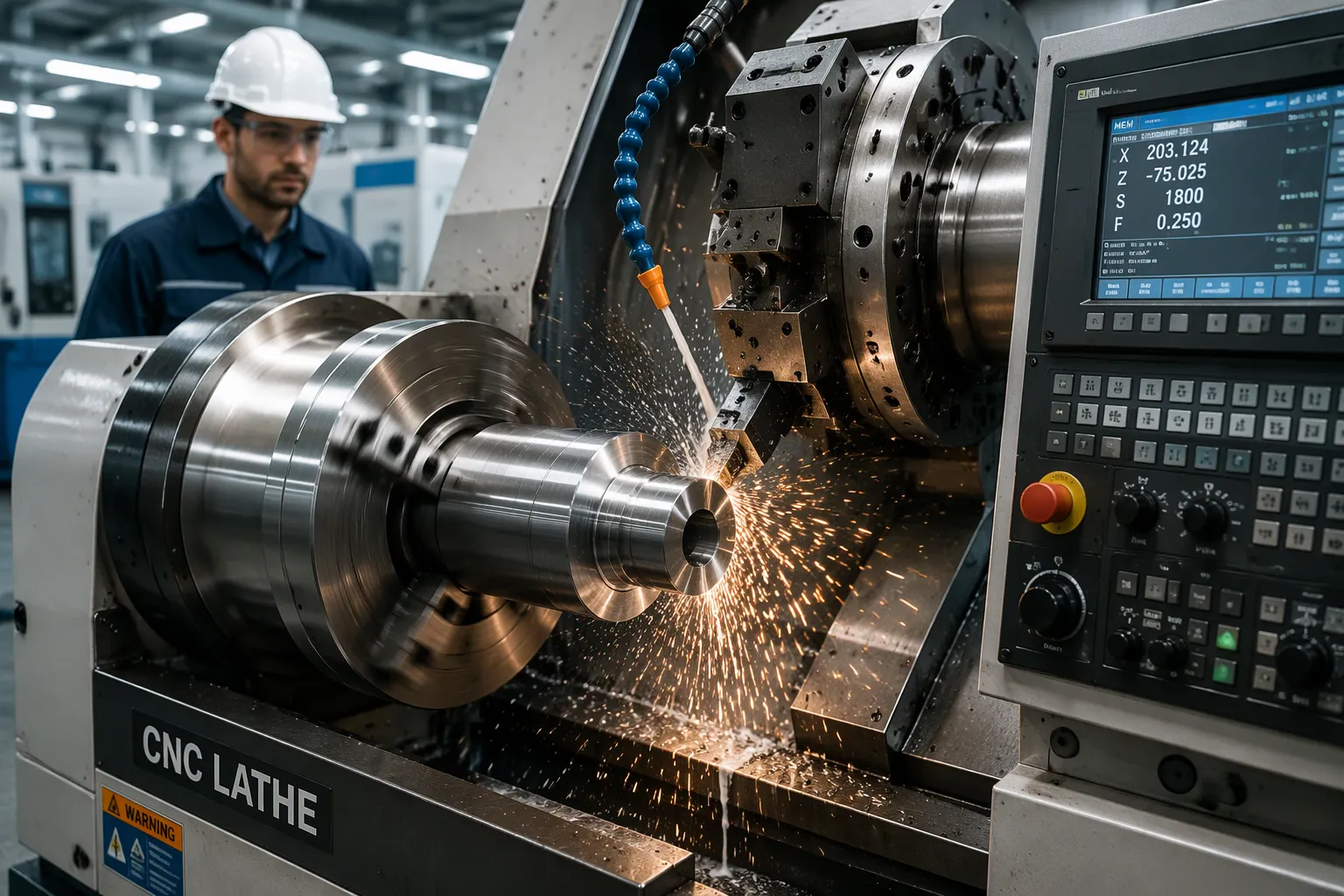
China's heavy-duty turning and milling services now meet the toughest engineering needs. Modern shops run five-axis centers and automated lines all day and night. A large pool of engineers, programmers, and machinists turns complex CAD files into finished parts with skill and speed.
Hehua shows this ability well. The company brings over 18 years of experience to its facility in Kunshan, China. That record reflects a wider national strength in advanced CNC infrastructure and global export volume.
Choosing a partner still takes care. You should check technical audits, certifications, and cost analysis before you commit. This guide shows you how to judge each one.
Make sure the supplier has current ISO 9001 and IATF 16949 certificates for machining.
Ask for a free DFM review early so you can find design problems before production.
Compare the total costs, not just the unit price. This includes downtime and failure costs.
Ask for CMM inspection data and process capability records to make sure quality stays consistent.
Check the production lead times and how fast sampling is to match your project schedule.
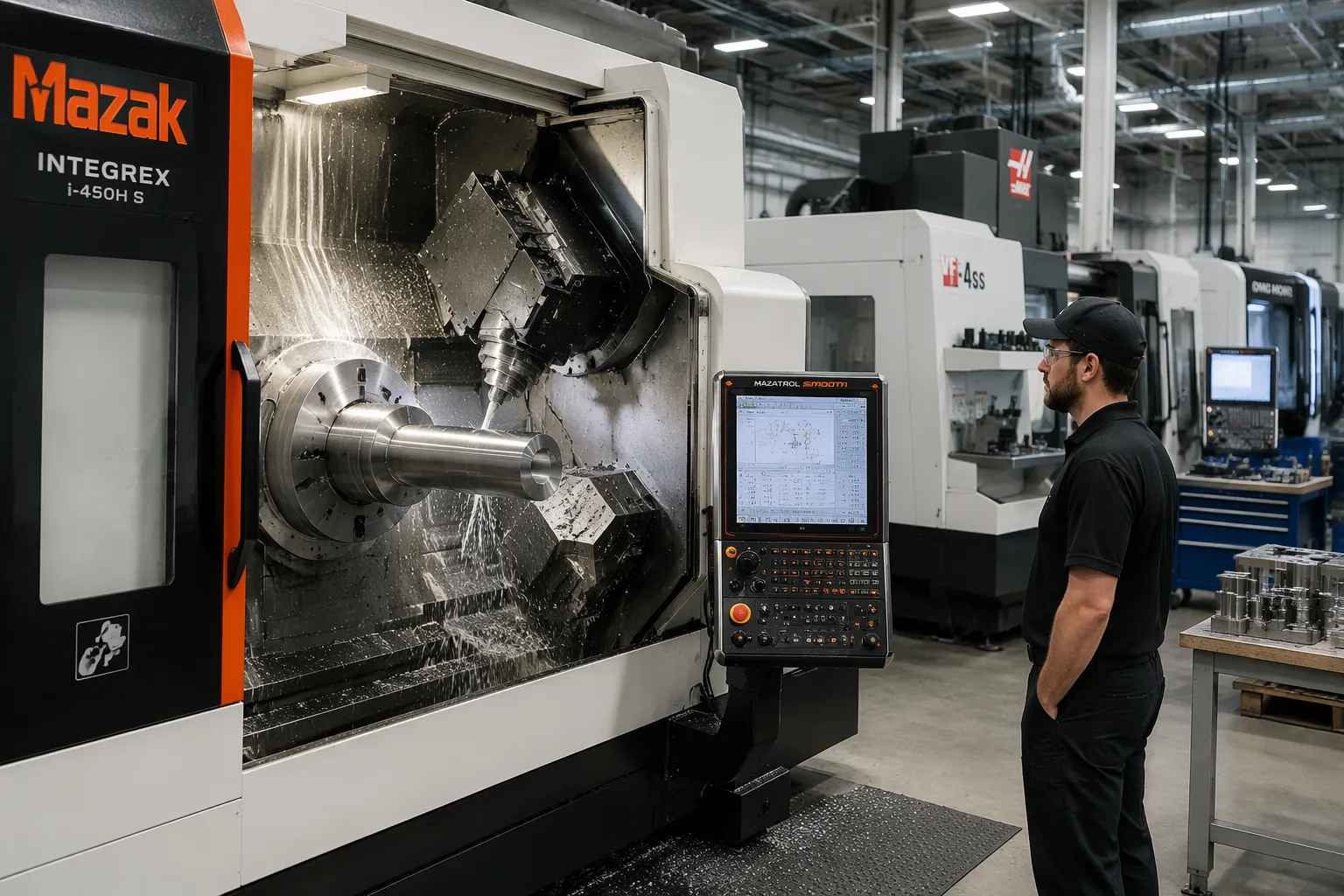
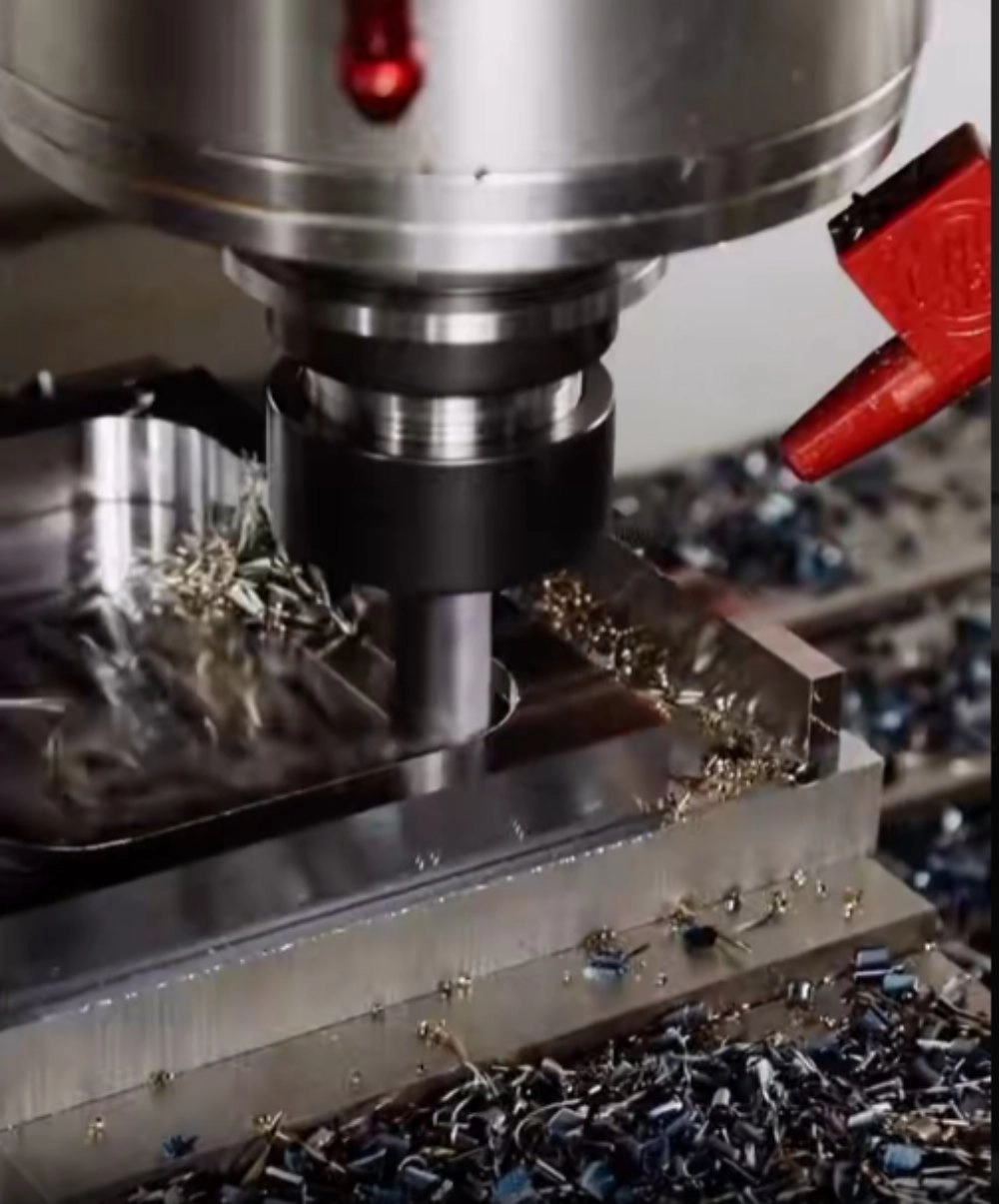
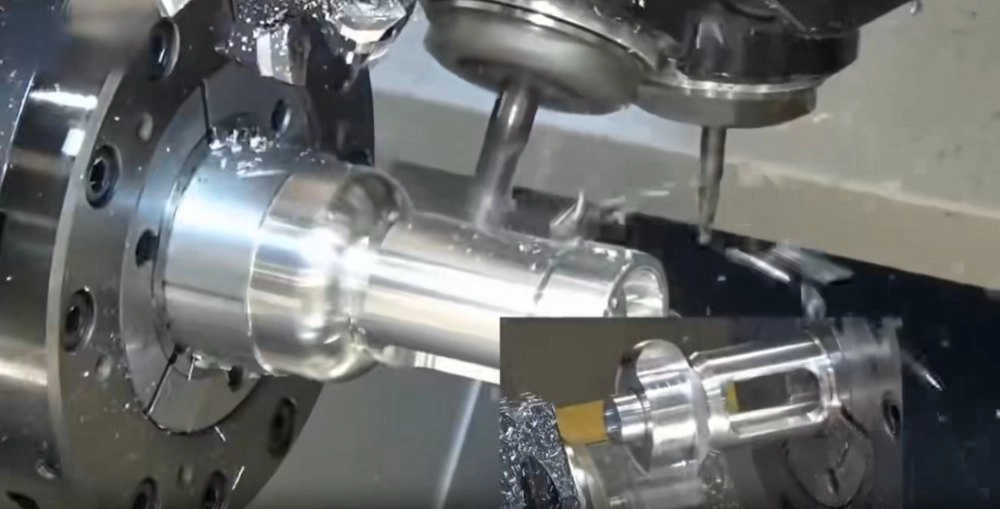
The machine list shows what a shop can really cut. Heavy-duty turning and milling services depend on three machine families. Vertical machining centers handle plate work and tall fixtures. Horizontal machining centers are great at boxy parts with many faces. Turn-mill composite machines mix turning and milling in one spindle, so you skip a second setup.
Size range matters as much as machine type. Mazak publishes the working envelope of its INTEGREX line. The table below shows what each series covers.
Series name | Standard chuck size | Max. machining diameter | Max. machining length |
|---|---|---|---|
Simultaneous 5-axis Control INTEGREX i-500 | 10″ | Φ27.56" | 61.97" to 121.02" |
Simultaneous 5-axis Control For long and large diameter workpieces INTEGREX e-H | 15" to 32" | Φ32.38" to Φ51.18" | 59.53" to 323.58" |
Vertical Simultaneous 5-axis Control For large workpieces INTEGREX i-V | CAT No.40 / CAT No.50 | Φ28.74" to Φ66.93" | 39.37" to 65.55" |
Double Column Simultaneous 5-axis Control For large workpiece INTEGREX e-V | CAT No.50 | Φ57.09" to Φ137.8" | 62.99" to 70.87" |
Double Column Simultaneous 5-axis Control Ram spindle Inside diameter deep hole processing INTEGREX e-RAMTEC | CAT No.50 / CAPT C6 | Φ49.21" to Φ92.52" | 49.21" to 70.87" |
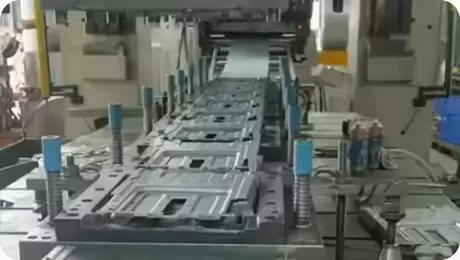
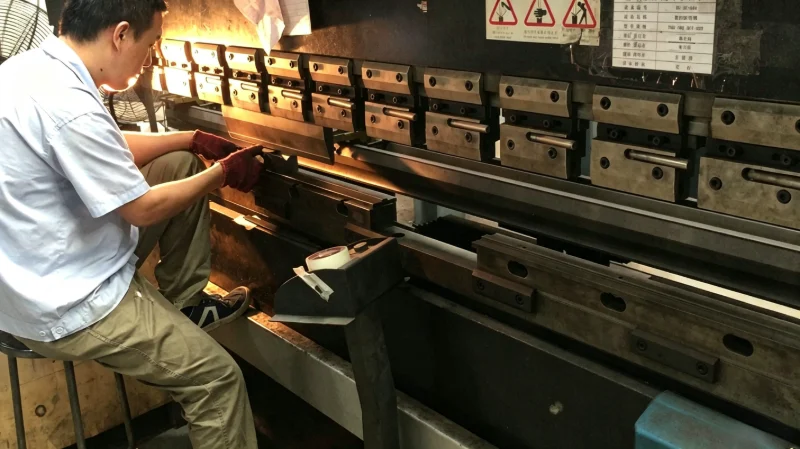
Hehua gives you a real example to compare against. The Kunshan facility runs more than 10 CNC machining centers plus a full set of supporting equipment. That fleet covers vertical and horizontal work and turn-mill composite operations.
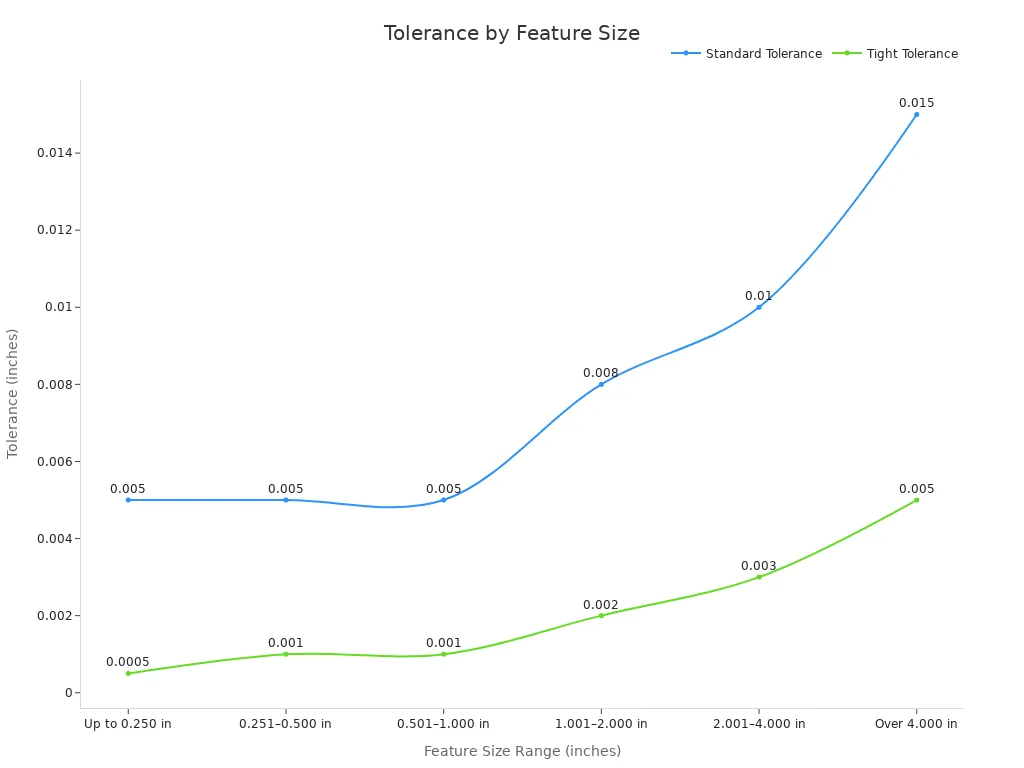
Tolerance depends on feature size. Amerascrew explains that everyday parts such as brackets and housings sit comfortably near ±0.005 inch for milled features, with turned parts holding a bit tighter. Large features allow more drift. The table below shows how standard and tight tolerances shift with size.
Feature Size | Standard Tolerance | Tight Tolerance | Process Best Suited | Material Notes |
|---|---|---|---|---|
Up to 0.250 in | ±0.005 in | ±0.0005 in | Turning | Aluminum holds tighter more easily |
0.251–0.500 in | ±0.005 in | ±0.001 in | Turning or milling | Steel needs more finishing passes |
0.501–1.000 in | ±0.005 in | ±0.001 in | Turning | Stainless is harder to hold tight |
1.001–2.000 in | ±0.008 in | ±0.002 in | Milling | Larger features have more allowable drift |
2.001–4.000 in | ±0.010 in | ±0.003 in | Milling | Thermal expansion becomes a factor |
Over 4.000 in | ±0.015 in | ±0.005 in | Milling | Fixturing rigidity matters most |
Amerascrew also charts the gap between standard and tight tolerances across these size bands.
Hehua works to ±0.008 to ±0.03 mm and reaches surface finishes down to Ra0.8. The material you pick shapes the result. The shop machines ductile iron, cast iron, steel, stainless steel, aluminum, brass, and engineering plastics. Doug Machine notes that stainless steel resists tight holding, while heat-sensitive plastics such as PEEK need careful heat control to avoid deformation. Greno Industries reports turning lathes that swing diameters up to 90 inches for oversized shafts, rings, and cylinders.
Aerospace work pushes heavy-duty turning and milling services to their limits. Wing spars, fuselage frames, and landing gear parts often begin as one huge block of titanium or aluminum alloy, PTSMake says. You must keep tight tolerances on parts that are several meters long. Small holes, long narrow cuts, and curved surfaces raise the risk of vibration, warping, and size drift. Titanium and super alloys cause more tool wear, heat buildup, and slow feed rates. Deep hole drilling with a high depth-to-diameter ratio needs steady chip removal and coolant flow, or the tool breaks and the part is scrapped.
Rail transit and new energy sectors share these demands. Gearbox housings, axle parts, and hydraulic cylinders need pressure-resistant bodies and fits that repeat. Hehua specializes in high-precision, pressure-resistant mechanical parts for exactly these industries. The Kunshan shop also serves automotive and aerospace clients with the same strict approach.
Turn-mill composite machines and five-axis operations change the math on complex shapes. PTSMake reports that a part needing five faces machined once took five separate setups on a three-axis mill. A five-axis machine brings all five faces to the tool in one setup. Angled holes no longer need angle plates. Undercuts no longer need special tooling and extra fixturing.
Every re-clamp adds a small alignment error, and those errors add up. PTSMake calls this tolerance stack-up, and it can push a finished part out of spec. Single-setup machining keeps volumetric accuracy relative to the starting datum. PTSMake's internal studies show time savings of 30-50% or more on complex parts. Setup time drops from 3-4 hours to under 1 hour, and defect rates fall from 6-8% to below 2%. You get faster throughput and far fewer inspection failures.
Certificates show you which quality system a shop really uses. ISO 9001 works for any industry and focuses on customer satisfaction and continual improvement, according to 9001simplified. IATF 16949 builds on ISO 9001 and adds automotive rules for defect prevention, traceability, and supplier monitoring. The table below shows where the two standards differ.
Area | ISO 9001 | IATF 16949:2016 |
|---|---|---|
Industry scope | Any organization, any industry | Automotive OEMs and suppliers only |
Primary focus | Customer satisfaction, continual improvement | Defect prevention, zero-defect goals |
Traceability | Not specifically required | Mandatory for automotive parts |
Customer-specific requirements | Not applicable | Must meet each OEM's rules |
Hehua holds both ISO 9001 and IATF 16949 certification. That pairing matters if you source automotive or rail components. Inspection backs up the paperwork. A CMM gives high accuracy, CAD comparison, and traceable reports for tight tolerances and GD&T work, customparts-mfg notes. Manual gauges work well for quick go/no-go checks. Reputable Chinese suppliers pair these tools with 100% key dimension verification, so every critical feature gets measured, not sampled.
A DFM review catches problems while they are still cheap to fix. Imacengineering reports that late engineering changes cost 10 to 100 times more than fixes made during design. Over-specified tolerances are a common and costly mistake. Every tightened tolerance can raise machining time and scrap rates. A DFM pass also checks part geometry, material choice, and surface finish before a single chip is cut.
Hehua offers free DFM reviews and rapid sampling in 3-7 days. You validate the design on real parts before mass production begins. Ask for this review early. You will avoid rework, control cost, and confirm the shop can hit your tolerances repeatably.
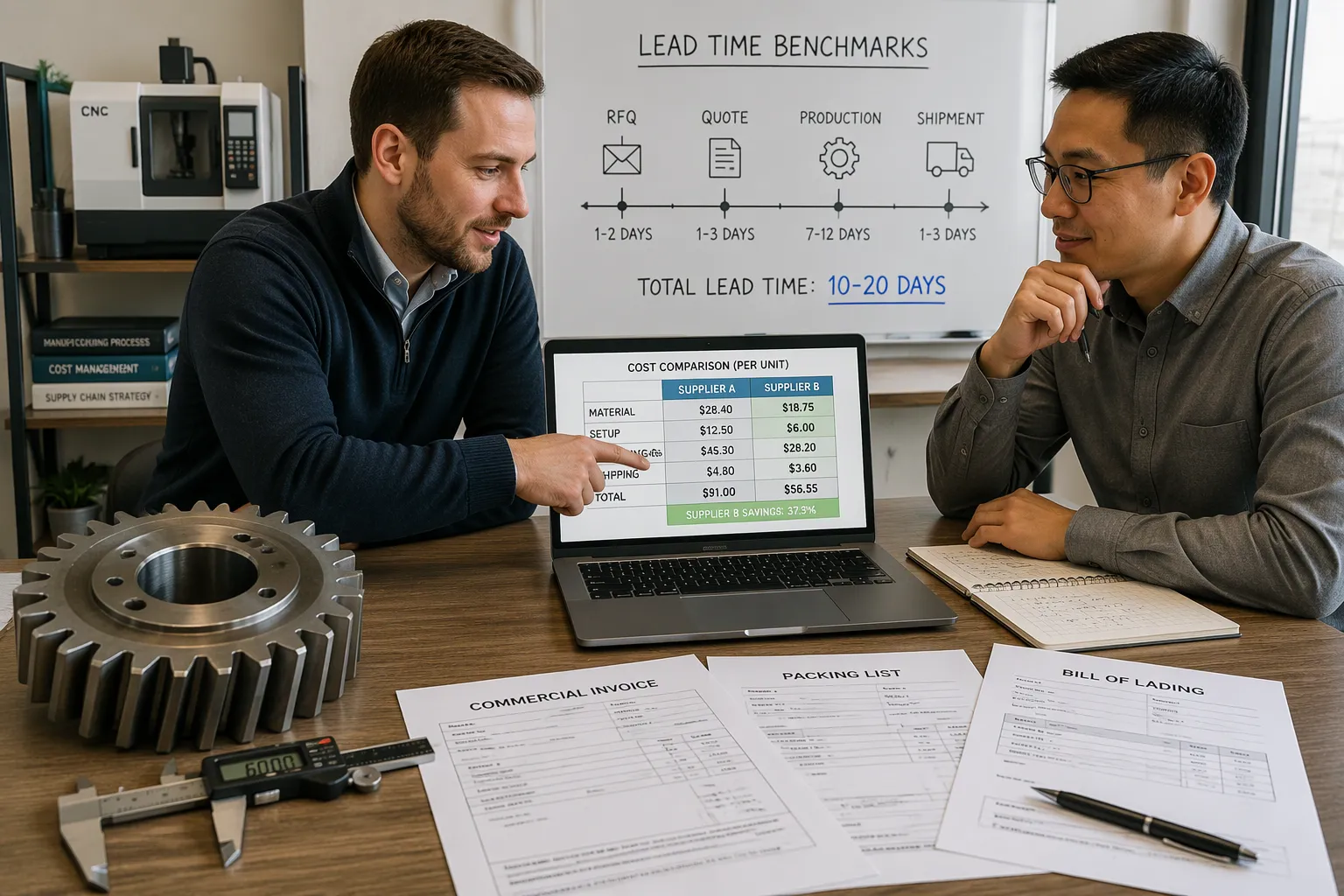
Start with how costs are built. Four buckets drive your quote: material, setup and tooling, machining time, and shipping. Material costs follow global metal indexes, so they move with the market. Setup fees cover programming, fixtures, and first-article checks. Shipping depends on the Incoterm you choose. BD Longway explains the options clearly. Under EXW, you carry every cost and risk from the factory door. FOB makes the seller responsible up to loading at the named port. CIF adds freight and marine insurance to the destination port. DDP puts the most obligation on the seller, including duties and taxes. Pick the term that fits your logistics team's capacity, and budget for customs paperwork such as the commercial invoice, packing list, bill of lading, and certificate of origin. BD Longway warns that customs delays can add weeks and storage fees.
China's advantage shows up in machining hours and setup labor, not in the raw metal. Western shops often charge more per spindle hour, so the gap grows on complex work with many setups. Hehua's production lead times of 10-20 days give you a working benchmark for heavy-duty turning and milling services. Compare that against your current supplier's quoted window before you assume overseas sourcing adds delay.
A low unit price means little if the part fails early. BD Longway splits total cost of ownership into five parts:
Acquisition cost: unit price, tooling, shipping, duties, and taxes
Operating cost: a part that lasts twice as long cuts your cost per hour
Maintenance and repair cost: cheap parts wear out neighbors faster
Downtime cost: often the largest and most overlooked line
Cost of failure: damage to surrounding machinery or a safety incident
BD Longway's worked example makes the point. A gear set at $20,000 with an 8,000-hour life and $50,000 change-out cost runs $8.75 per hour. A $28,000 set lasting 15,000 hours runs $5.20 per hour. Over 30,000 hours, the cheaper-looking option costs $262,500 against $156,000. The higher price saves over $100,000.
Consistency decides which supplier you actually get. Ein Presswire calls the "Sample Trap" a common mistake: a good prototype does not promise good mass production. Ask for process capability records. Critical dimensions should hold a Cpk of at least 1.33, the industry standard for stable mass production. Check for IATF 16949:2016, which requires PFMEA and a control plan, and request FAI reports per AS9102 plus CMM data covering GD&T. Hehua's ISO 9001 and IATF 16949 certification, CMM inspection, and 100% key dimension verification back up this kind of review.
China's heavy-duty turning and milling services offer advanced capabilities, strict quality control, and real cost savings. Your success depends entirely on choosing the right partner.
Use this practical checklist:
Verify certifications. Ask for current ISO 9001 and IATF 16949 certificates. Make sure the scope covers machining, not just assembly.
Request a DFM review. Hehua offers free design-for-manufacturability analysis and rapid sampling in 3-7 days.
Audit the facility. Visit the floor or ask for a live video walkthrough. Tek Precision advises checking inspection independence and traceability of a completed job.
Establish clear communication. Set response times, emergency protocols, and documentation standards upfront.
With proper due diligence, Chinese suppliers like Hehua become strategic, long-term partners for global manufacturers.
Hehua holds ±0.008 to ±0.03 mm on milled and turned features. Surface finishes reach Ra0.8. Tight numbers depend on feature size and material. Stainless steel and heat-sensitive plastics are harder to hold tight than aluminum. Ask your supplier for CMM data on a similar part before you commit.
Hehua cuts ductile iron, cast iron, steel, stainless steel, aluminum, brass, and engineering plastics. Each material acts differently on the shop floor. Titanium and super alloys wear tools faster and slow feed rates. Plastics such as PEEK need careful heat control so they do not deform. Match the material to the shop's proven experience.
Hehua offers rapid sampling in 3–7 days. Mass production runs 10–20 days. You get a quote within 6–12 hours. Compare these windows against your current supplier before you assume overseas sourcing adds delay. Ask for a written schedule with each milestone named.
Ask for current ISO 9001 and IATF 16949 certificates. Check that the scope covers machining, not just assembly. IATF 16949 adds automotive rules for defect prevention and traceability. Hehua holds both. Pair the paperwork with CMM inspection and 100% key dimension verification on critical features.
Yes. Hehua offers free DFM reviews. A DFM pass checks geometry, material choice, and surface finish before any chip is cut. Late engineering changes cost far more than fixes made during design. Over-specified tolerances are a common and costly mistake. Request the review early.


 AddressNo. 66 Xingpu Road, Lujia Town,Kunshan City, Factory Buildings 3 and 4
 en
 English
 繁体中文
 Italian
 Spanish
 Japanese
 Portuguese
 Korean
 Russian
 French
 German
 Estonian
 Arabic
 Indonesian



 Message