In today's manufacturing environment, custom machined parts are essential for industries that require precision, durability, and reliable performance. From automotive assemblies and aerospace structures to semiconductor equipment and industrial machinery, custom components are often designed to meet unique functional requirements that standard parts cannot fulfill.
Producing these components requires more than advanced CNC equipment—it requires the right machining partner. A reliable machining supplier understands not only how to manufacture a part but also how to optimize the production process, recommend suitable materials, and maintain consistent quality throughout every stage of manufacturing.
Professional Milling services play a critical role in achieving these goals. By combining precision machining with engineering expertise, experienced manufacturers help customers transform complex designs into high-quality components that meet demanding industrial standards.
This guide explores the key factors to consider when selecting milling services for custom machined parts and explains how the right manufacturing partner can contribute to long-term project success.
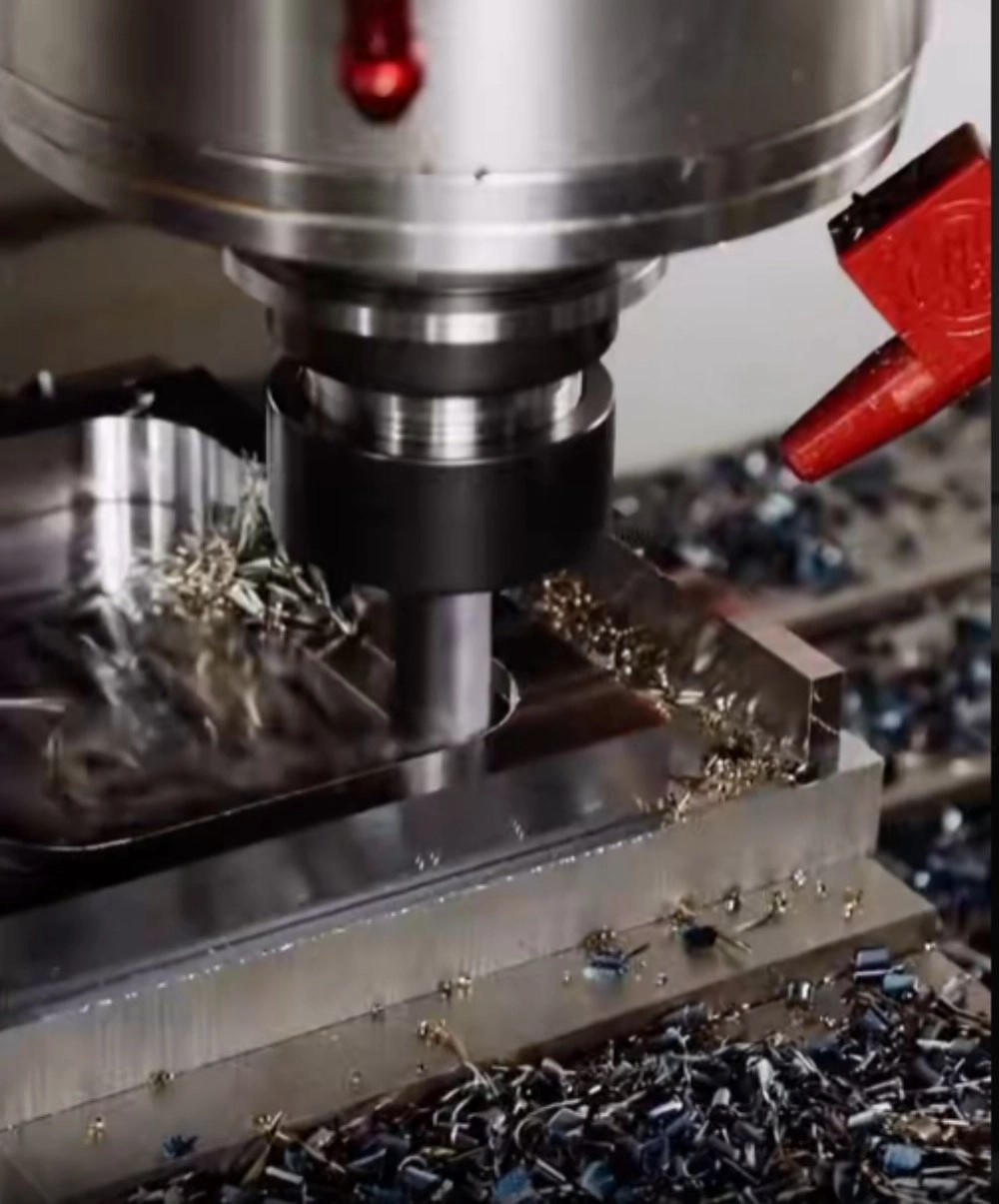
Unlike standard components, custom machined parts are manufactured according to specific drawings, CAD models, or technical requirements. Every feature—including dimensions, tolerances, material selection, and surface finish—is designed for a particular application.
Because these parts are often integrated into complex equipment or critical systems, machining quality directly affects product performance, assembly efficiency, and service life.
Professional milling services provide several important advantages:
High dimensional accuracy
Excellent repeatability across production batches
Flexibility for complex geometries
Compatibility with a wide range of materials
Efficient production for both prototypes and volume manufacturing
Whether producing a single prototype or thousands of finished components, precision milling ensures that every part meets its intended function.
Custom machined parts are manufactured specifically to satisfy unique engineering requirements. They are commonly used when commercially available components cannot provide the necessary dimensions, strength, or functionality.
Examples include:
Structural brackets
Machine frames
Equipment housings
Mounting plates
Precision fixtures
Mechanical connectors
Automation components
Semiconductor equipment parts
Many of these components require multiple machining operations, including milling, drilling, tapping, pocket machining, and contour machining. CNC milling enables these operations to be completed with high accuracy while minimizing setup changes and production errors.
One of the first considerations when selecting a milling supplier is whether its machining capabilities match your project requirements.
Modern manufacturing projects often involve increasingly complex component designs. Choosing a supplier with advanced machining equipment provides greater flexibility and production efficiency.
While conventional 3-axis machining is suitable for many parts, more complex components may require 4-axis or 5-axis machining.
Multi-axis machining offers several advantages:
Reduced number of setups
Improved dimensional accuracy
Better surface consistency
Faster machining cycles
Greater capability for complex geometries
For customers developing intricate mechanical components, multi-axis capability can significantly improve manufacturing efficiency.
A reliable supplier should be able to support projects from initial development through mass production.
This includes:
Prototype machining
Engineering validation samples
Small production runs
High-volume manufacturing
Working with one supplier throughout the product lifecycle helps maintain consistency while simplifying project management.
Different applications require different materials, each presenting unique machining challenges.
An experienced milling manufacturer understands how cutting parameters, tooling selection, and machining strategies vary depending on the material being processed.
Common materials include:
Lightweight, corrosion-resistant, and easy to machine, aluminum is widely used in aerospace, robotics, automation systems, and electronic equipment.
Stainless steel provides excellent strength and corrosion resistance but requires optimized machining techniques to achieve stable dimensional accuracy and high-quality surface finishes.
These materials are commonly selected for heavy-duty industrial equipment because of their high strength and wear resistance.
Titanium offers an outstanding strength-to-weight ratio and excellent corrosion resistance, making it suitable for aerospace and high-performance industrial applications. However, machining titanium requires specialized expertise due to its machining characteristics.
Materials such as PEEK, POM, PTFE, Nylon, and ABS are frequently used for lightweight precision components in semiconductor equipment, automation systems, and medical devices.
A supplier familiar with a broad range of materials is better equipped to recommend practical manufacturing solutions for different applications.
Precision is one of the primary reasons manufacturers choose CNC milling.
When evaluating a milling service provider, it is important to understand not only the machining accuracy they can achieve but also how consistently they can maintain that accuracy across every production batch.
Reliable manufacturers focus on:
Tight dimensional tolerances
Stable machining processes
Consistent surface finishes
Repeatable production quality
Comprehensive inspection procedures
Maintaining consistency becomes increasingly important for components used in automated assembly lines, precision equipment, and safety-critical industries where even small deviations may affect final product performance.
The best machining suppliers contribute more than manufacturing capacity—they provide technical expertise that helps improve the entire production process.
Before production begins, experienced engineers review customer drawings to identify potential manufacturing challenges.
Early engineering reviews can reduce unnecessary machining complexity while improving production efficiency.
Many manufacturers offer DFM support to optimize component designs without affecting functionality.
Typical recommendations may include:
Simplifying complex features
Optimizing corner radii
Improving tool accessibility
Selecting more suitable materials
Adjusting tolerances where appropriate
These improvements often shorten machining time while maintaining the required product performance.
Open communication between engineering teams allows design questions to be resolved quickly, reducing project delays and supporting faster product development.
Manufacturers that actively collaborate with customers throughout the engineering process are generally better positioned to deliver reliable machining solutions that balance quality, efficiency, and long-term manufacturability.
Selecting the right milling service provider involves more than evaluating machining accuracy. The manufacturer's production capacity and quality management system are equally important, especially for projects that require consistent delivery over an extended period.
A supplier with stable production resources can better support changing customer demands, whether for prototype development, low-volume production, or large-scale manufacturing.
When assessing a potential supplier, consider factors such as:
Workshop size and production environment
Number and type of CNC machining centers
Skilled operators and engineering personnel
Ability to handle multiple projects simultaneously
Flexibility to scale production as demand grows
Adequate production capacity helps minimize bottlenecks and ensures reliable lead times without compromising product quality.
Quality should be monitored throughout the manufacturing process rather than only after machining is complete.
A reliable milling manufacturer typically performs:
Incoming raw material inspection
First article inspection (FAI)
In-process dimensional checks
Final inspection before shipment
Documentation and traceability
These procedures help ensure that every custom machined part conforms to customer drawings and technical specifications.
Different industries have different manufacturing requirements, making industry experience an important factor when choosing a machining partner.
For example:
Automotive components require stable batch production and strict quality management.
Aerospace parts often involve lightweight materials, complex geometries, and demanding dimensional tolerances.
Rail transit applications emphasize structural reliability and long-term durability.
Semiconductor equipment requires precision-machined frames, racks, fixtures, and components with excellent dimensional consistency and surface quality.
Wind power, nuclear power, and industrial machinery demand robust components capable of operating in challenging environments.
A manufacturer that serves multiple high-end industries is generally more familiar with complex machining requirements and can adapt to diverse customer needs.
For manufacturers seeking a dependable machining partner, experience, engineering expertise, and quality management all play critical roles.
Established in 2005, Shanghai Hehua Machinery Technology Co., Ltd., together with its subsidiary Hehua Machinery Technology (Kunshan) Co., Ltd., has built extensive experience in manufacturing precision metal components for a wide range of high-end equipment industries.
Today, the company provides machining solutions for customers in:
Automotive
Rail transit
Aerospace
Wind power
Nuclear power
Industrial machinery
Semiconductor packaging and testing equipment
New energy equipment
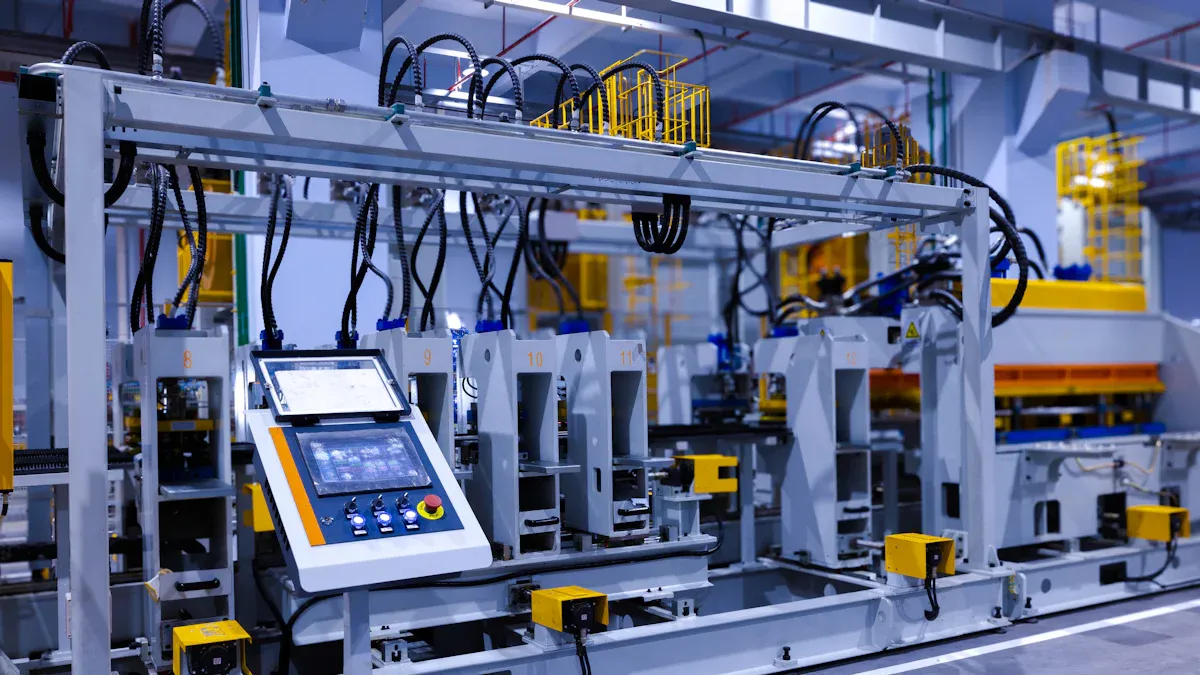
Operating from a manufacturing facility of more than 17,800 square meters, Hehua employs over 160 experienced professionals and supports customers with integrated services covering project development, machining, manufacturing, and export logistics.
The company's commitment to quality is demonstrated through internationally recognized certifications, including:
ISO 9001 Quality Management System
IATF 16949 Automotive Quality Management System
EN 15085 Rail Vehicle and Components Welding Certification
EN ISO 9606-1 Welder Qualification Certification
In addition to its manufacturing capabilities, Hehua has established a professional project engineering team capable of supporting customers from design optimization through final production. By utilizing the Zhibang International ERP intelligent management system, the company integrates project management, production planning, procurement, inventory, quality control, finance, and customer service into a unified workflow, ensuring efficient communication and consistent product quality.
Manufacturers looking for reliable Milling services can benefit from Hehua's combination of engineering knowledge, advanced manufacturing resources, and customer-focused project management.
Choosing the right milling service provider is a strategic decision that affects product quality, production efficiency, and long-term manufacturing success. Beyond machining capabilities, manufacturers should evaluate engineering support, material expertise, quality management, production capacity, and industry experience before selecting a partner.
An experienced CNC milling supplier does more than produce parts according to drawings. It works collaboratively with customers to improve manufacturability, optimize production processes, maintain consistent quality, and support projects from prototype development to full-scale production.
As industries continue to demand higher precision and greater manufacturing flexibility, partnering with a trusted machining company can help reduce production risks, improve supply chain stability, and accelerate product development. By carefully evaluating potential suppliers and establishing long-term cooperation, manufacturers can ensure their custom machined parts meet both current requirements and future business goals.


 AddressNo. 66 Xingpu Road, Lujia Town,Kunshan City, Factory Buildings 3 and 4
  en
en
 English
 繁体中文
繁体中文 Italian
 Spanish
 Japanese
 Portuguese
 Korean
 Russian
 French
 German
 Estonian
 Arabic
 Indonesian


 Message