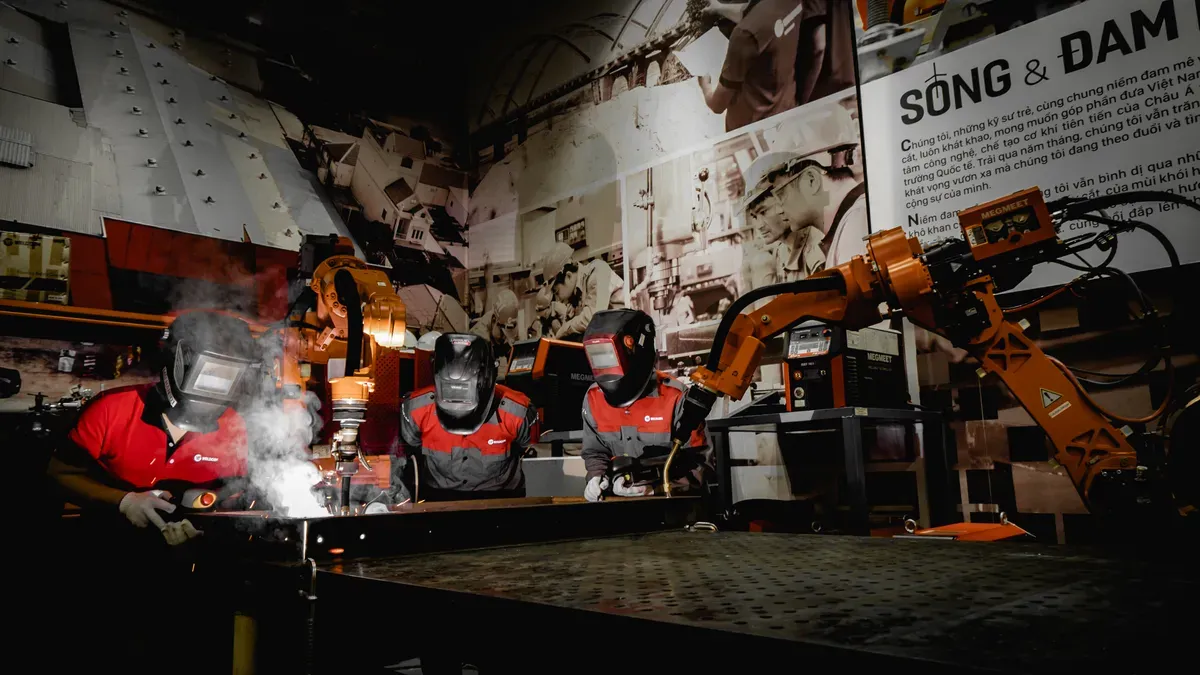
You want to find a good robotic welding partner in China for structural components. China has quickly grown in robotic welding technology. It is now a world leader in automation. Advanced solutions like Hehua’s Robot Welding give high accuracy and speed. You can get steady quality and save money by using a clear process. Careful planning helps you feel sure about picking the right partner for your needs.
Make sure you know what your project needs. List the parts you want and the welding standards for safety and quality.
Look for suppliers carefully. Search online and go to trade shows to find good partners. Check if they have good reviews and the right certificates.
Check what machines the supplier uses. See if their equipment and automation can do your project well and fast.
Make sure they have strong quality checks. Ask about how they inspect things and ask for sample welds before you order a lot.
Talk clearly and work together. Use digital tools to get updates and make sure everyone knows the project goals.
First, you need to know what parts your project needs. Many companies use robotic welding to make strong and exact parts. Here is a table that shows common structural components in different industries:
Industry | Description |
|---|---|
Aerospace Manufacturing | Precision welding for aircraft components, handling complex welds on aluminum and titanium. |
Construction & Heavy Machinery | Welding large and thick materials for building machinery and structural components. |
Shipbuilding | Welding large metal sheets and complex structures, improving efficiency and accuracy. |
Automotive Industry | Ensures precise and strong welds for vehicle safety, including car frames and exhaust systems. |
Energy Infrastructure | Production of power plant components and renewable energy structures, requiring precise welds. |
Hehua makes important metal parts for cars, trains, planes, wind power, nuclear power, and machines. You can count on Hehua to work with tough and advanced equipment.
You need to set clear welding standards for your project. These standards help keep things safe and working well. Find partners who follow strict quality rules. Hehua has ISO 9001, IATF 16949, and EN 15085 certifications. These show Hehua meets world rules for welding in cars, trains, and factories. Hehua’s certified welders use advanced robots to give steady results.
Tip: Always ask for proof of certifications and welding skills. This helps you make sure the supplier is trustworthy.
You should decide what your project needs before talking to suppliers. Pick the number of parts, the types of materials, and how many you want in each batch. Hehua’s robotic welding can work with many materials like carbon steel, stainless steel, aluminum, copper, and titanium alloys. The factory can make from 1 to 1,000 pieces and works all day and night. You can ask for special solutions for different welds and sizes. A clear project plan helps you share your needs and makes teamwork easier.
You can look for robotic welding partners on the internet. Websites like Alibaba, Made-in-China, and Global Sources have many suppliers. These sites let you see company profiles, products, and reviews from customers. You can sort suppliers by what they make, their certifications, and how much they can produce. Some companies, like Hehua, show their certificates and pictures of their factories online. This helps you know if they fit your needs before you talk to them. Always pick suppliers with clear details and good reviews from other buyers.
Tip: Use the website’s chat tools to ask about machines, batch sizes, and export experience.
Trade shows in China let you meet suppliers in person. Big events like the China International Industry Fair and the Canton Fair have many robotic welding companies. You can watch live demos and talk to their technical teams. This helps you see how skilled they are and how they help customers. Friends or business partners can also tell you about good suppliers. Companies like Hehua often go to these events and are well known in the industry.
Write down the names of suppliers you meet at trade shows.
Ask for names of old customers you can talk to.
Get brochures or technical papers to look over.
You should learn about new things in robotic welding. Many Chinese factories now use smart sensors to keep welds strong and lower mistakes. Some places use cobots that work with people to get more done. Artificial intelligence helps robots get better at welding by learning from past jobs. Remote controls and IoT tools let you watch welding robots as they work, which makes projects easier to manage.
Precision and automation make welds more even.
Cobots help make production more flexible.
AI and machine learning make welding smarter.
Remote management gives you more control.
Knowing these trends helps you pick a supplier who uses the best technology for your project.
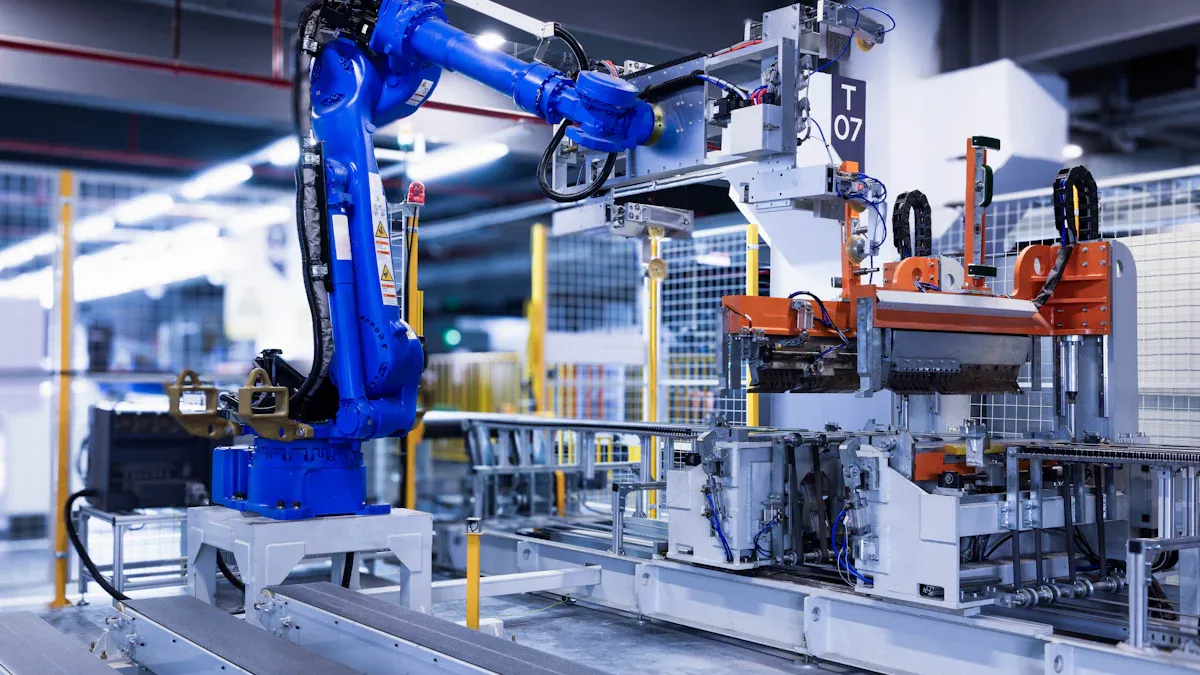
You should check what each robotic welding partner can do. Make sure their systems fit your project. Hehua’s Robot Welding is very accurate and fast. The robots can be precise to ±0.05 mm. They work at speeds up to 1.2 meters per minute. This gives you steady welds and quick results. Hehua’s robots can do many welding processes. These include MIG, MAG, TIG, plasma arc, and laser composite. You can use them for carbon steel, stainless steel, aluminum, copper, titanium alloy, and chrome molybdenum steel.
Hehua Machinery started in 2005. The company has a big plant, about 20,000 square meters. More than 200 people work there. Every year, sales reach 200 million RMB. Hehua has 20 million RMB in registered capital. They can import and export on their own. You get help from design to delivery. The technical team uses the Zhibang International ERP system. This helps manage projects and keep quality high.
Here is a table that shows what to check for technical abilities:
Factor | Description |
|---|---|
Welding Process | Pick the right welding process for your parts. |
Part Complexity and Size | Make sure the robots can handle the shape and size of your components. |
Volume and Repeatability | Choose a partner who can produce large batches with steady quality. |
Robot Payload and Reach | Check if the robots can lift and reach your parts. |
Software Programming and Control | Make sure the robots work well with your software and automation systems. |
Sensors and Feedback Systems | Look for real-time monitoring to keep welds consistent. |
Safety and Maintenance | Ask about safety features and easy maintenance. |
Note: Hehua’s robots can weld parts up to 3500 × 1500 × 800 mm. They can handle thicknesses from 0.8 mm to 60 mm. You can ask for special solutions for different shapes and welds.
You need to see what equipment your welding partner uses. Hehua’s Robot Welding uses top brands like Fanuc, KUKA, ABB, and Yaskawa. These robots work with advanced welding power sources. They use pulsed MIG and real-time arc monitoring. This gives you good welds and less downtime.
Most top suppliers use these automation tools:
Welding power sources with special welding programs.
Workpiece positioners, like turntables and multi-axis manipulators, to hold parts.
Welding fixtures that clamp parts and stop heat distortion.
Safety systems like fencing, light curtains, and fume extraction.
Torch cleaning stations to keep gas flow and wire feeding steady.
Offline programming software to make robot paths from CAD models.
Hehua’s robots use six-axis linkage and extra axes for hard welds. You can weld in flat, horizontal, vertical, and overhead positions. The robots can switch between welding modes. These include pulse, dual pulse, and cold metal transition. This helps reduce sheet deformation.
Here is a table comparing Hehua’s Robot Welding and other solutions:
Metric | Hehua's Robot Welding | Other Solutions |
|---|---|---|
First-pass rate | 99% | Varies |
Seam quality on thin materials | Yes (0.3mm) | Limited |
Thermal deformation | None | Possible |
Leak detection sensitivity | High | Varies |
Surface finish quality | Ra 1.6 | Varies |
Tip: Ask your partner about their equipment and automation tools. This helps you know if they can do your project.
You should check the certifications and experience of your welding partner. Hehua Machinery has ISO 9001, IATF 16949, EN 15085, and EN ISO 9606-1 certifications. These show the company follows strict quality rules for cars, trains, and factories. You can trust Hehua to give safe and strong welds.
Look for these certifications:
IATF16949 for car supply chains.
ISO 9001 for general quality management.
ISO 15614 for weld sample testing and checking strength.
CE marking for selling in Europe.
Hehua’s technical team has many years of experience. They work with structural parts and big orders. The company started in 2005 and now has over 200 workers. You get help from design to delivery. Hehua’s ERP system keeps projects on track and quality high.
Here is a table showing experience levels of top suppliers:
Company Name | Founded | Experience (Years) | Headquarters | Employees |
|---|---|---|---|---|
Hehua Machinery | 2005 | 19+ | Suzhou, China | 200+ |
Wuxi Zhouxiang Complete Set of Welding Equipment Co., Ltd. | 1991 | 30+ | Wuxi, China | 500+ |
Callout: Always ask for proof of certifications and past projects. This helps you choose a welding partner with the right skills and experience.
You need strong quality control when picking a robotic welding partner. Quality control checks every weld to meet your standards. In China, top suppliers use automated systems to keep quality high. These systems find mistakes fast and fix them right away. This is important for structural components because safety and strength matter most.
Hehua uses advanced robots with seam-tracking and arc monitoring. They also use adaptive parameter control. These features help lower welding defects and keep quality steady. The Zhibang International ERP system manages each step, from sales to production. This system tracks every order and keeps records for every weld. You can trust that every part meets your needs.
Tip: Ask your supplier how they control quality. Request details about their automated systems and how they fix errors.
Here are some common quality control steps you should look for:
Automated inspection systems check for surface flaws and size errors.
Real-time feedback lets robots fix problems during welding.
Digital welding technology keeps welds precise and repeatable.
You should check the inspection standards your supplier follows. Good suppliers use strict standards to make sure every weld is strong and safe. Hehua has ISO 9001, IATF 16949, and EN 15085 certifications. These show Hehua meets global rules for cars, trains, and factories. Their welders also have EN ISO 9606-1 certificates.
Suppliers keep detailed records for each weld. These records help you trace every part back to its source. You can see data like travel speed, wire feed rate, and voltage. This helps you check if the welds meet your needs.
Parameter | Description |
|---|---|
Robot Weld Logs | Traceability records for structural quality documentation |
Compliance Standards | Meets DNV-GL and other global welding documentation requirements |
Quality Records | Includes weld data such as speed, wire feed, and voltage |
Note: Always ask for sample records and certificates. This helps you see if the supplier follows the right standards.
You should always ask for sample welds before starting a big order. Sample evaluation lets you see the supplier’s work up close. You can check the weld’s look, strength, and size. Hehua can give you sample welds for review. Their robots can weld many materials, like carbon steel, stainless steel, and aluminum. You can ask for samples in different weld types and positions.
Robotic welding gives you steady quality and fewer defects. Industry data shows robotic welding lowers defect rates from 5–8% with manual welding to less than 1% with robots. This means you get stronger parts and less waste.
Robotic welding stations use real-time monitoring to keep welds even.
Vision technology helps spot surface flaws and size errors fast.
Immediate feedback lets robots fix problems right away.
Callout: Sample evaluation is your best tool for checking a supplier’s skills. Always review sample welds and ask for test reports.
When you follow these steps, you can feel confident in your choice of a robotic welding partner. You get high-quality parts, steady results, and strong support for your project.
It is important to know about language and culture when you work with a Chinese robotic welding partner. Most suppliers use English for business, but some words can be hard to understand. You can ask for papers in both Chinese and English or use a translation app. Hehua Machinery gives help in both languages. Their team explains each step, from design to making the parts.
In China, people care about respect and clear talking. You should greet your partners nicely and write down all details. Trust makes your project go well. If you visit the factory, bring a small gift to show respect.
Tip: Always make sure everyone understands the technical needs and project goals. This stops confusion and keeps your project going right.
Good project management helps your teamwork succeed. Hehua uses the Zhibang International ERP system to watch every step. You get news about sales, making parts, inventory, and delivery. The team follows ISO 9001 rules for quality. They check materials before using them, look at quality during work, and check finished parts. You get clear papers and records for each part.
Here are important project management steps:
Use ISO 9001 quality systems.
Check materials before starting.
Watch quality at every step.
Look at final parts for size and looks.
Keep records for each weld.
Get DFM help to make your designs better.
Hehua’s team helps you from design to making the parts. You can ask for tips to make your parts stronger and easier to build.
Digital tools help teams work together. Hehua’s ERP system links you to every group. You can see your order and get updates right away. IoT tools help watch machines and find problems fast. This makes talking easier and keeps your project moving.
Collaborative robots like HC10 and HC20 help welders do new jobs quickly. You get steady results and faster work. Digital twins can cut welding time by more than half. You can see how your project is going and fix problems before they stop production.
Note: Using digital teamwork tools helps you work with Chinese partners. You get better quality, faster shipping, and clear talking.
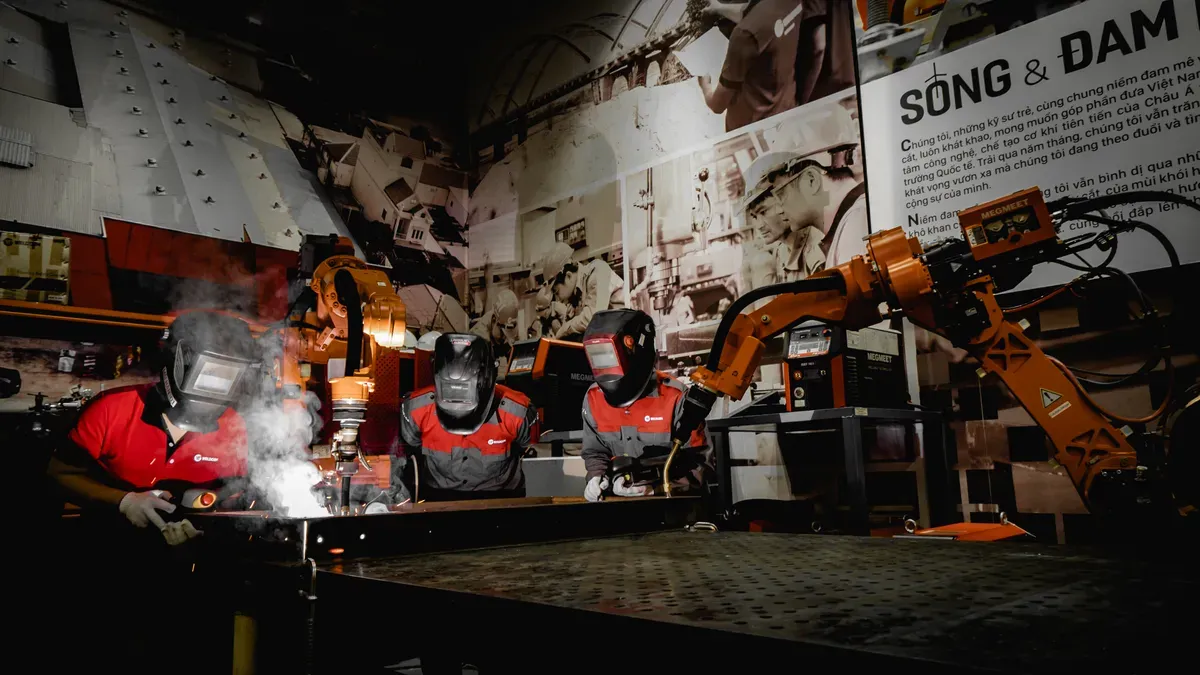
When you choose a robotic welding partner in China, you should check their factory and systems. Site visits and audits help you see how the supplier works. You can do this in person or from your office.
You can start with a remote audit. Many suppliers, like Hehua, offer video tours and live demonstrations. You can ask to see the workshop, robots, and quality checks. Hehua uses the Zhibang International ERP system. This system lets you track your order from start to finish. You can review documents, certifications, and welding records online. Remote audits save time and help you decide if you want to visit in person.
Tip: Ask for a live video of the welding process. You can see the robots in action and check the quality of the welds.
You should also request digital copies of ISO 9001, IATF 16949, and EN 15085 certificates. These show that the supplier meets global standards. Hehua’s team can answer your questions in English or Chinese. This makes communication easy.
An on-site inspection gives you a close look at the factory. You can walk through the plant and see each step. Hehua’s factory in Kunshan covers over 13,300 square meters. You can meet the technical team and watch the robots weld parts for cars, trains, or wind power equipment.
Here is a sample checklist for a typical on-site inspection:
Day | Activity Description |
|---|---|
1-2 | Check mechanical assembly and safety circuits |
2-3 | Watch robot calibration, torch alignment, and weld-program upload |
3-5 | Observe live weld trials and see parameter tuning for your QA standards |
5-7 | Join operator training on cell operation and alarm response |
8-14 | Review extra steps for complex programs and get final documentation |
You should look for clean work areas, organized tools, and clear safety signs. Ask to see how the team handles quality checks and records. Hehua’s ERP system tracks every part, so you can follow the process from design to shipping.
Note: A good site visit helps you trust your supplier. You see the real work and know your project is in safe hands.
You need a good contract when working with a robotic welding partner in China. A contract keeps your project and business safe. Check if your supplier follows local laws and world standards. Hehua Machinery has ISO 9001, IATF 16949, and EN 15085 certifications. These show Hehua follows strict rules for quality and safety.
Here are key things to put in your contract:
Follow labor laws and care for the environment.
Use quality checks for steady product results.
Protect your designs and ideas from being copied.
Write down who owns the rights to your project.
Add steps for solving problems if they happen.
Set rules for ending the contract if needed.
Tip: Ask your supplier to explain the contract. Make sure you know every part before you sign.
You should learn how prices work for robotic welding. Basic robotic systems cost about $80,000. Big production lines can cost over $350,000. Most companies get their money back in 12–24 months. One robot can do the work of three or four welders. This can make production go up by 40–65%. Robotic welding costs about $262 per ton. Manual welding costs $630 per ton. This price includes equipment and power.
Hehua gives clear prices and payment choices. You can order from 1 to 1,000 pieces. The company gives you a full quote for your project. You can pay by bank transfer or other safe ways.
Welding Method | Cost per Ton | Payback Period | Throughput Increase |
|---|---|---|---|
Manual Welding | $630 | N/A | N/A |
Robotic Welding | $262 | 12–24 months | 40–65% |
Note: Ask for a full price list. This helps you plan your money and compare suppliers.
You need to know how long your project will take. Lead time means the time from order to delivery. Hehua’s factory works all day and night. The company uses the Zhibang International ERP system to track orders. You get updates at every step. Hehua’s team helps you from design to shipping. You can ask for special solutions and fast delivery.
Ask your supplier for a timeline for each step.
Request updates on your order often.
Make sure you get help after delivery.
Callout: Good support and clear lead times help your project go well. You get strong parts and steady results.
You must pick the best robotic welding partners. Start by sending a full RFQ package. Include 3D CAD models in STEP or IGES format. Add 2D PDF drawings with important tolerances and GD&T symbols. Tell your material specifications, like Al 6061-T6. Give clear surface finish needs and masking instructions. Share your yearly contract value to help get better prices.
Test engineering feedback and DFM skills.
Order a small batch of key parts before big production.
Check if the supplier has good quality control labs.
Look for ISO 9001:2015 and IATF 16949 certifications.
Ask for third-party audits and live video tours of the factory.
Review CNC machines and metrology labs in action.
Make sure communication is clear and IP protection is strong.
Real suppliers welcome live video tours and third-party audits. They show their factory and testing labs. Factories that say no may hide outsourced work.
Hehua stands out with ISO 9001, IATF 16949, and EN 15085 certifications. The company has a 13,300 square meter plant in Kunshan. You get service from design to export. Hehua’s ERP system manages every step for high-quality results.
After you pick your partner, you start onboarding. You share your project files and needs. The supplier checks your CAD models and drawings. You agree on batch sizes and delivery times. Hehua’s technical team helps you from design to making parts. You get updates through their ERP system.
Step | Description |
|---|---|
Project Kickoff | Share files and set goals |
Sample Production | Review small-batch samples for quality |
Quality Review | Check welds and inspection reports |
Contract Signing | Finalize terms and protect your IP |
Production Launch | Begin mass production and track progress |
You get regular updates and clear records. Hehua’s team answers questions in English or Chinese. You can ask for live video tours or visit the factory. The onboarding process builds trust and keeps your project running well.
Tip: Keep talking and check each step. This helps you get strong parts and steady results.
You can get a good robotic welding partner in China if you follow clear steps. First, decide what your project needs. Next, look for suppliers and check their skills. Hehua’s Robot Welding gives you accurate and quick results for structural components. You keep quality high by cleaning robots, checking connections, and using nozzle cleaning stations. Trust grows when you get updates often and work together well. A clear process helps you reach success for a long time.
Keep working with your supplier to make sure quality and efficiency stay strong.
Hehua works in many fields. These include automotive, rail transit, aerospace, wind power, nuclear power, industrial machinery, and semiconductor equipment. The company makes important metal parts for high-end machines.
Hehua’s factory is at No. 66, Xingpu Road, Lujia Town, Kunshan City, Jiangsu Province. The building is over 13,300 square meters. More than 140 people work there.
Hehua has ISO 9001, IATF 16949, and EN 15085 certifications. Welders have EN ISO 9606-1 qualifications. These show strong quality management and welding standards.
Hehua uses the Zhibang International ERP system for every step. Robots check welds as they happen. You get steady quality and detailed records for each part.
Hehua can handle export orders. Both Hehua companies have their own import and export rights. You get full service from making parts to shipping them.


 AddressNo. 66 Xingpu Road, Lujia Town,Kunshan City, Factory Buildings 3 and 4
  en
en
 English
 繁体中文
繁体中文 Italian
 Spanish
 Japanese
 Portuguese
 Korean
 Russian
 French
 German
 Estonian
 Arabic
 Indonesian


 Message