The shortlist for the best China-based metal stamping company for custom projects includes Hehua, Protolabs, Orienson, CSMFG, Komaspec, TenRal, RICKOTEK, TUOFA Precision, and JINGXIN. Each company earns a place for different reasons. Buyers should weigh four criteria: technical performance (tolerances, materials, tooling), application fit, regulatory compliance (ISO 9001, IATF 16949, RoHS, REACH), and cost-effectiveness.
Custom metal stamping projects rarely fail on unit price alone. They fail on tolerance gaps, tooling lead time, or missing compliance paperwork. These problems show up after production starts, when fixes cost the most.
This post lets you compare all nine suppliers in a fair, like-for-like way. It also gives a five-step selection process that buyers can run for their own stamping project in China.
Judge suppliers by four things: technical performance, application fit, regulatory compliance, and cost-effectiveness.
Pick a supplier that fits your project's industry, order size, material, and tolerance needs.
Use a five-step process, from RFQ to first article approval, to lower risks.
Check the certifications they have now, like ISO 9001 and IATF 16949. Also ask for RoHS and REACH declarations.
Compare the total landed cost, not just the unit price, to make a wise decision.
Technical performance comes first. Buyers should look at tolerances, material grades, and tooling design. A deep-drawn steel part may need side-wall tolerances of ±0.0005" to fit a press-fit bushing. It may also need flatness of 0.005" after seven drawing steps. This example shows why you must judge tolerance needs by the finished part and its use, not by a catalog spec sheet.
Application fit comes next. A supplier that serves automotive programs has different process controls than one focused on electronics enclosures. Regulatory compliance is the third criterion. Buyers should confirm ISO 9001 certification and check whether IATF 16949 applies to their sector. They should also request RoHS and REACH declarations. Cost-effectiveness closes the list, and it means total landed cost, not unit price alone.
Standard | What to Verify |
|---|---|
ISO 9001:2015 | Certificate number, scope, and expiry date |
IATF 16949 | Certificate held, or QMS operated to its requirements |
RoHS & REACH | Declaration of Conformity and test reports |
Catalog orders follow fixed drawings and known process windows. Custom metal stamping starts with a blank page. Springback, die clearance, burr direction, grain direction, and flatness all change the finished part. Precision metal stamping is therefore a process question as much as a drawing question.
Tight tolerances raise cost when they force extra die stations or closer clearances. They also raise cost when they require secondary operations or dedicated gauges. Buyers who save the tightest callouts for functionally critical features get better quotes. This logic separates a custom stamping project from a catalog purchase. It also explains why the best china-based metal stamping company for one project may not suit the next.
Every company below is judged on the same four points: technical performance, application fit, regulatory compliance, and cost. The goal is fit, not a ranking. A shop that works well for a high-voltage motor housing may be the wrong choice for a prototype bracket.
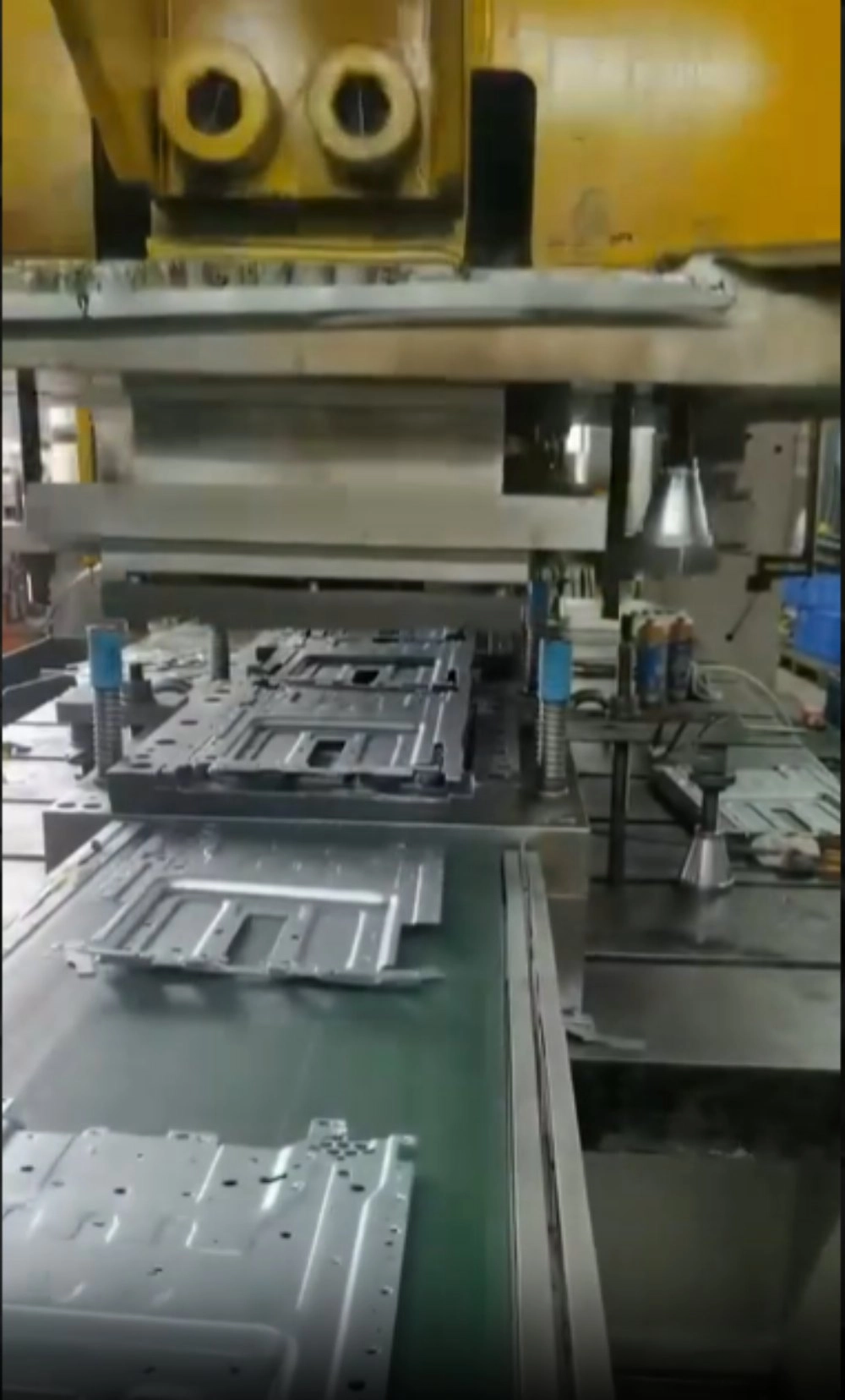
Hehua Machinery Technology (Kunshan) Co., Ltd. is a good fit for projects that need progressive die stamping and follow-up operations all in one place. The company started in 2018 as a subsidiary of Shanghai Hehua Machinery Technology Co., Ltd., which was founded in 2005. It serves new energy automobiles, high voltage motors, electronics, rail transit, aerospace, wind power, nuclear power, semiconductor test equipment racks, and mechanical equipment spare parts.
Item | Detail |
|---|---|
Facility | No. 66, Xingpu Road, Lujia Town, Kunshan City, Jiangsu Province |
Plant area | Over 17,800 square meters |
Employees | More than 160 |
Annual sales | Above 130 million CNY |
Registered capital | 10 million CNY |
Trade status | Independent import and export rights |
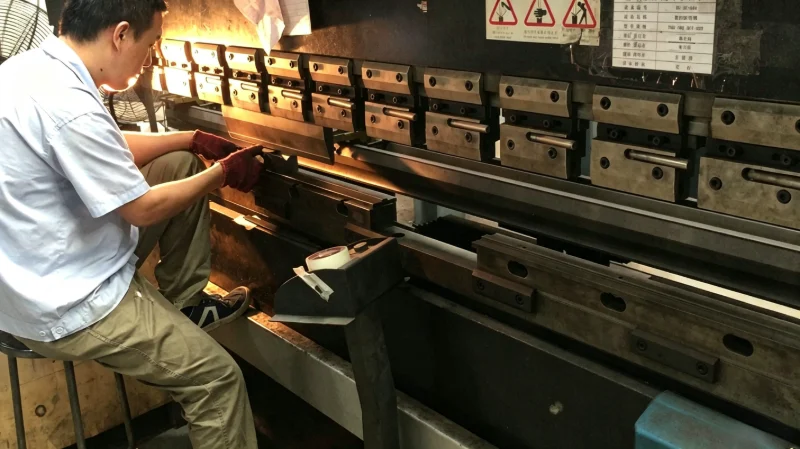
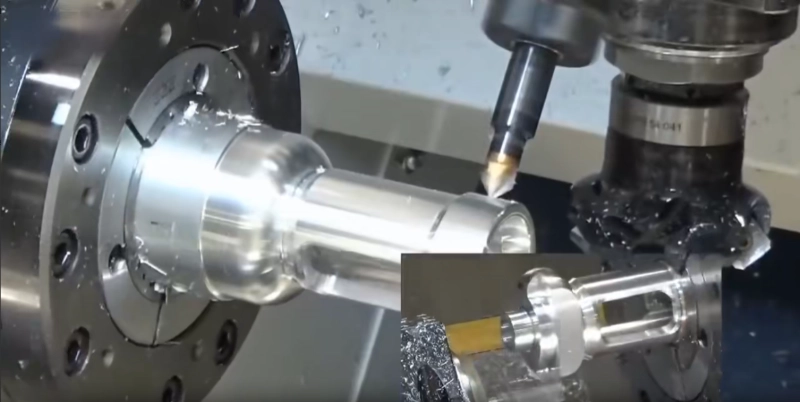
On technical performance, Hehua treats progressive stamping as a core strength and supports it with CNC machining, sheet metal fabrication, welding, and mold and fixture manufacturing. That mix matters for a complex progressive die that needs secondary machining or a welded subassembly. On compliance, the company holds ISO 9001, IATF 16949, and EN 15085, and its welders carry EN ISO 9606-1 qualification. An ERP system from Zhibang International covers sales, projects, production, inventory, procurement, finance, and office operations, which supports traceability from quote to shipment. Multilingual support serves global buyers. The stated mission is to supply key metal parts for high-end equipment; the service commitment is an integrated path from design to production. Learn more at Hehua's official site and its certification page.
Protolabs is a good fit for buyers who need a first article quickly and cannot justify a long die build. The company holds ISO 9001 and runs presses from 30T to 500T. Its fast tooling delivery model targets small projects and low-volume custom runs, where speed of iteration outweighs the per-part economics of a high-volume die. For a design still under revision, that trade-off often wins. See Protolabs for program details.
Orienson, CSMFG, and Komaspec are good choices for buyers who need a contract partner for ongoing OEM programs, not just a one-time run. These metal stamping companies in china handle repeat orders, scheduled releases, and multi-part assemblies. Orienson (orienson.com) works with buyers who hand off complete stamping programs. CSMFG (csmfg.com) supports custom sheet metal fabrication along with stamping. Komaspec (komaspec.com) built its name on electrical enclosures and later added CNC machining and injection molding around its core stamping work.
OEM work needs paperwork as much as press capacity. Automotive buyers expect IATF 16949, which is required for OEM and Tier 1 programs and brings PPAP, control plans, and PFMEA. Medical programs point to ISO 13485, and aerospace work adds AS9100 with first article inspection under AS9102. Buyers should ask for current certificates, not just website mentions, and confirm material traceability through mill certs. These three suppliers fit programs where volume is steady and the drawing set is stable.
TenRal, RICKOTEK, TUOFA, and JINGXIN fit projects that depend on tight tolerances or drawn shapes. TenRal (tenral.com) has run in Guangdong since 2005 and combines progressive die stamping, deep drawing, and compound die work for automotive, electronics, and industrial equipment clients. RICKOTEK (rickotek.com), TUOFA Precision (tuofa-cncmachining.com), and JINGXIN (jingxin-stamping.com) serve similar niches, where precision metal stamping means controlled springback, burr direction, and flatness across multiple drawing steps.
These precision metal stamping manufacturers in china earn their place when a part needs complex progressive dies or secondary machining. Buyers should name the governing tolerance standard on the drawing. ISO 2768 covers dimensions not individually called out, while GB/T 15055-2021 sets permissible stamping variations and is not interchangeable with ISO 2768 classes. A clear drawing note prevents disputes at first article.
Knowing the industry helps you narrow the list quickly. A stamper that works with aviation must know FAA rules, and a medical project needs precision that fits implants and instruments. Certifications show the same thing: ISO 9001 for general quality, ISO 13485 for medical devices, and IATF 16949 for automotive work. Buyers should also check production numbers. Top suppliers report fewer than 5 PPM in external defects and on-time delivery of 98% or better. A vendor that states its limits clearly, including what it cannot do, gives buyers a cleaner hiring decision than one that promises everything.
Part features decide the rest. A bracket with many pierced features puts stress on positional accuracy, a clip depends on forming consistency, and shields or mating parts carry flatness, edge, or burr requirements that affect assembly. Parts headed for plating or coating need coordination between stamping and secondary processing, so raise those needs before tooling and pricing are fixed. Secondary services such as deburring, heat treating, and powder coating often decide whether a supplier can deliver a finished, durable part or only a blank.
Volume drives process choice. Stamping becomes economical in the tens of thousands of parts and above; below that, custom sheet metal fabrication or machining usually wins. Buyers should request tooling amortization projections at several volume levels before committing to a die.
Factor | What to Confirm |
|---|---|
Volume | Press capacity and die type match annual demand and launch schedule |
Material | Supplier knows the grade, temper, thickness, and coating |
Tolerance | Capability suits the tightest functional callout |
Material behavior belongs in the same conversation. HSLA steels need higher forming loads and show more springback than mild steel, so press capacity and tooling design become part of supplier fit. Aluminum brings springback and galling concerns, and galvanized strip can wear dies faster. Tolerance capability for precision metal stamping parts depends on material, thickness, feature type, and die condition, with tighter features often finished by secondary CNC machining. Suppliers capable of tight tolerance work will say so with evidence, not adjectives.
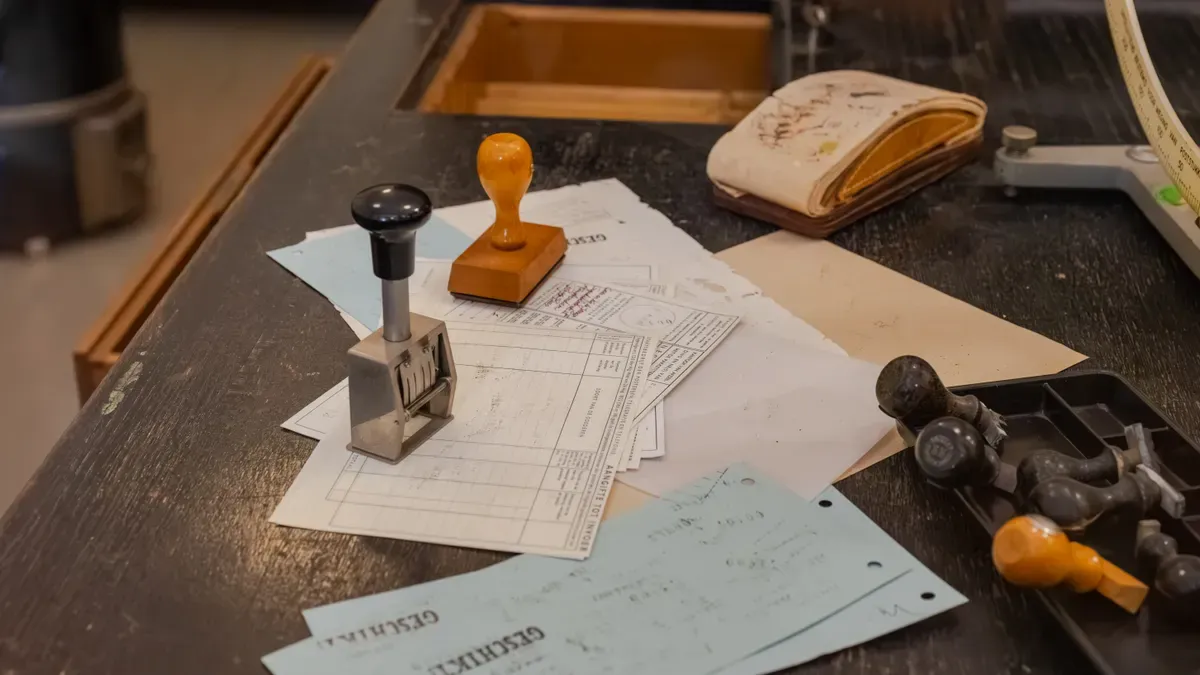
A strong RFQ package includes the drawing, material and thickness, yearly volume, key tolerances, finish needs, and quality expectations. Buyers should attach the quality requirements to the same package and list the first-article deliverables up front. A complete package makes quoting faster and prevents disputes later.
The workflow then follows a fixed order:
Send the RFQ and ask for DFM feedback before the purchase order.
Review the tooling design and confirm in-house die capability.
Approve the tooling design, then release material and capacity.
Hold design reviews at 50% and 90% of the build.
Inspect the T1 sample and complete the first article report.
Collect PPAP or equivalent documents, then release production.
Timelines depend on die complexity, material availability, and approval requirements. A standard program can take 15–17 weeks from quote to shipping. Early DFM review and parallel material buying can cut that to 8–10 weeks. Complex progressive dies often need several adjustment rounds before stable production.
Documentation closes the loop. Buyers should expect a PPAP submission for automotive work, mill test reports for material traceability, a certificate of conformance, and dimensional first-article reports. IMDS declarations cover material breakdown where the program requires them.
Buyers should ask four practical questions. What press tonnage handles this part? Is the tooling built in-house? How does the supplier trace material lots? What inspection reports ship with each batch? Clear answers on all four show a supplier that controls its own process.
Vague tolerance promises deserve a follow-up, not a pass. The same goes for a quote that arrives without a single technical question, or a supplier who cannot explain die maintenance. A supplier who agrees to every tolerance and every date is a warning sign, not a comfort. Good partners push back and point out risks.
One concern does not disqualify a supplier. It should lead to sharper questions before anyone commits to tooling.
Buyers comparing metal stamping suppliers in china should also confirm current ISO 9001 and IATF 16949 certificates, and check that stated capacity matches real equipment and shift schedules. These checks protect the precision metal stamping program long after the first metal stamping parts ship.
The best China-based metal stamping company depends on the project. Hehua fits progressive die stamping and integrated forming. Protolabs fits fast tooling and small runs. Orienson, CSMFG, and Komaspec fit OEM and contract programs. TenRal, RICKOTEK, TUOFA, and JINGXIN fit precision metal stamping and deep drawing.
Before sending any RFQ, buyers can do a quick self-check. Does the supplier meet the tolerance, material, and tooling needs? Does its experience match the application? Are ISO 9001, IATF 16949, RoHS, and REACH documents up to date? Does total landed cost still make sense? A supplier that passes all four earns the metal stamping order.
Readers can send their drawing, material, tolerance, and volume to get a quote or a supplier-fit assessment.
A standard program takes about 15–17 weeks from quote to shipping. Early DFM review and buying material in parallel can shorten that window to 8–10 weeks. Complex progressive dies often need several adjustment rounds before stable production begins. Buyers should build review checkpoints into the schedule instead of assuming one sample pass will do.
Stamping becomes economical in the tens of thousands of parts and above. Below that threshold, custom sheet metal fabrication or machining usually wins on total cost. Buyers should ask for tooling amortization projections at several volume levels before committing to a die. This step shows where the crossover point sits for a specific part.
The answer depends on the sector. General work needs ISO 9001. Automotive programs expect IATF 16949, which brings PPAP, control plans, and PFMEA. Buyers should also request RoHS and REACH declarations and confirm material traceability through mill certificates.
| Sector | Certificate to Verify | |||
General industrial | ISO 9001 |
|---|---|
Automotive / Tier 1 | IATF 16949 |
Medical devices | ISO 13485 |
Aerospace | AS9100 |
Unit price alone can fool you. Buyers should compare total landed cost, tooling ownership, included inspection reports, and stated tolerance capability. A quote that arrives without a single technical question deserves a closer look. The best china-based metal stamping company for a given project will push back on risky callouts and explain die maintenance up front.
A complete package covers the drawing, material and thickness, yearly volume, key tolerances, finish needs, and quality expectations. Buyers should list first-article deliverables in the same package. Clear drawing notes on the governing tolerance standard prevent disputes later. Suppliers then quote precision metal stamping work against a fixed scope instead of guesses.
Good metal stamping parts start with a clear scope. A supplier that controls its own tooling, traces material lots, and documents inspection results protects the stamping program long after the first batch ships.


 AddressNo. 66 Xingpu Road, Lujia Town,Kunshan City, Factory Buildings 3 and 4
 en
 English
 繁体中文
 Italian
 Spanish
 Japanese
 Portuguese
 Korean
 Russian
 French
 German
 Estonian
 Arabic
 Indonesian


 Message