Material selection is one of the first decisions that affects the performance, machinability, and service life of an industrial component. For parts used in hydraulic equipment, compressors, construction machinery, and industrial systems, cast iron is often considered because of its casting characteristics, wear resistance, and suitability for producing complex shapes. However, not all cast iron materials behave in the same way during machining or under working conditions.
Gray cast iron and ductile iron are two commonly used material groups in industrial component manufacturing. Both contain graphite within an iron-based matrix, but their graphite structures give them different mechanical properties and machining characteristics. Choosing between them requires more than comparing strength values. Component geometry, operating loads, vibration, pressure requirements, dimensional tolerances, and production methods all need to be considered.
For manufacturers developing custom metal parts, Lathing services are also an important part of this decision. The selected material must not only meet the component's performance requirements but also allow the required turning, boring, milling, and finishing operations to be completed consistently.
The main difference between gray cast iron and ductile iron is the shape of the graphite within their microstructures.
In gray cast iron, graphite generally appears as flakes distributed throughout the metal matrix. These flakes contribute to its good vibration-damping characteristics and machinability. However, their shape also creates stress concentration points, which means gray cast iron is generally less resistant to tensile loading and impact than ductile iron.
Ductile iron, also known as nodular cast iron or spheroidal graphite iron, contains graphite in a rounded nodular form. This structure reduces the stress concentration associated with graphite flakes and gives the material higher tensile strength, ductility, and impact resistance.
The practical differences can be summarized as follows:
Comparison factor | Gray cast iron | Ductile iron |
Graphite structure | Flake-shaped | Spheroidal or nodular |
Tensile strength | Generally lower | Generally higher |
Ductility | Limited | Higher |
Vibration damping | Generally very good | Good, depending on grade |
Machinability | Often good | Depends on grade and matrix |
Typical applications | Machine bases, housings, cylinder blocks | Pressure-related housings, structural parts, load-bearing components |
These are general characteristics rather than universal rules. Actual performance depends on the material grade, matrix structure, casting quality, heat treatment, and manufacturing conditions.
Gray cast iron is widely used for industrial components that require good castability, dimensional stability, and vibration damping.
HT250 and HT300 are two grades available for CNC machining applications.
HT250 is commonly selected for machine structures, housings, and other components that require a combination of casting performance and mechanical strength. Its graphite structure helps absorb vibration, making it useful in equipment where stable operation is important.
HT300 offers higher strength than HT250 and may be considered for more demanding structural applications. The final selection should depend on the component's load conditions, wall thickness, design requirements, and applicable material standards.
Typical applications of gray cast iron include:
l Machine tool bases and supporting structures
l Industrial equipment housings
l Cylinder blocks and mechanical casings
l Pump and compressor housings
l Components requiring vibration damping
One practical advantage of gray cast iron is its relatively favorable machining behavior in many applications. The material can often be turned, milled, drilled, and bored efficiently with appropriate tooling and cutting parameters.
However, graphite flakes and the surrounding matrix influence tool wear and surface quality. Machining parameters should therefore be established according to the specific grade and casting condition rather than using one standard setting for every gray cast iron component.
Ductile iron is often selected when a component needs higher strength and greater resistance to deformation or impact.
QT450-10 and QT700-2 are two ductile iron grades that can be considered for different industrial requirements.
QT450-10 offers a balance of strength and ductility. It is suitable for selected housings, mechanical supports, pressure-resistant accessories, and structural components where a combination of strength and deformation capacity is required.
QT700-2 provides higher tensile strength but lower elongation than QT450-10. It may be appropriate for components that require greater strength and load-bearing capability, provided that the design and operating conditions are compatible with its mechanical properties.
Typical ductile iron applications include:
l Pressure-resistant mechanical housings
l Hydraulic equipment components
l Bearing seats and support structures
l Construction machinery parts
l Industrial valve bodies and related accessories
l Wear-resistant bushings and mechanical fittings
For pressure-related applications, the material grade alone does not establish whether a component is suitable for service. Wall thickness, casting integrity, machining allowance, operating pressure, and inspection requirements must also be evaluated.
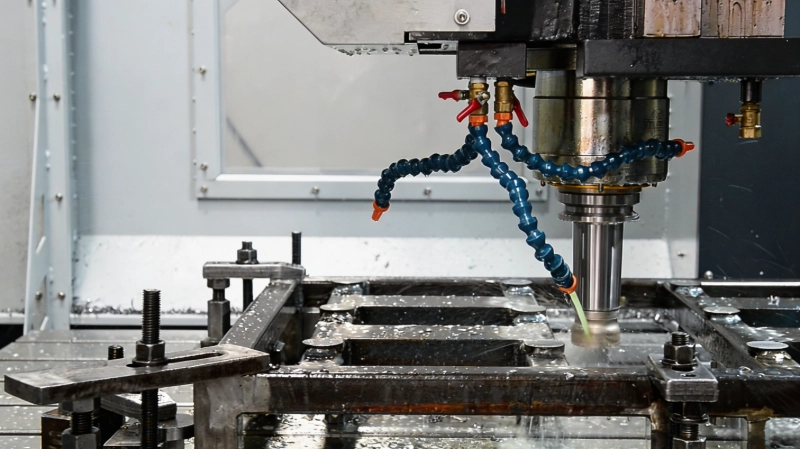
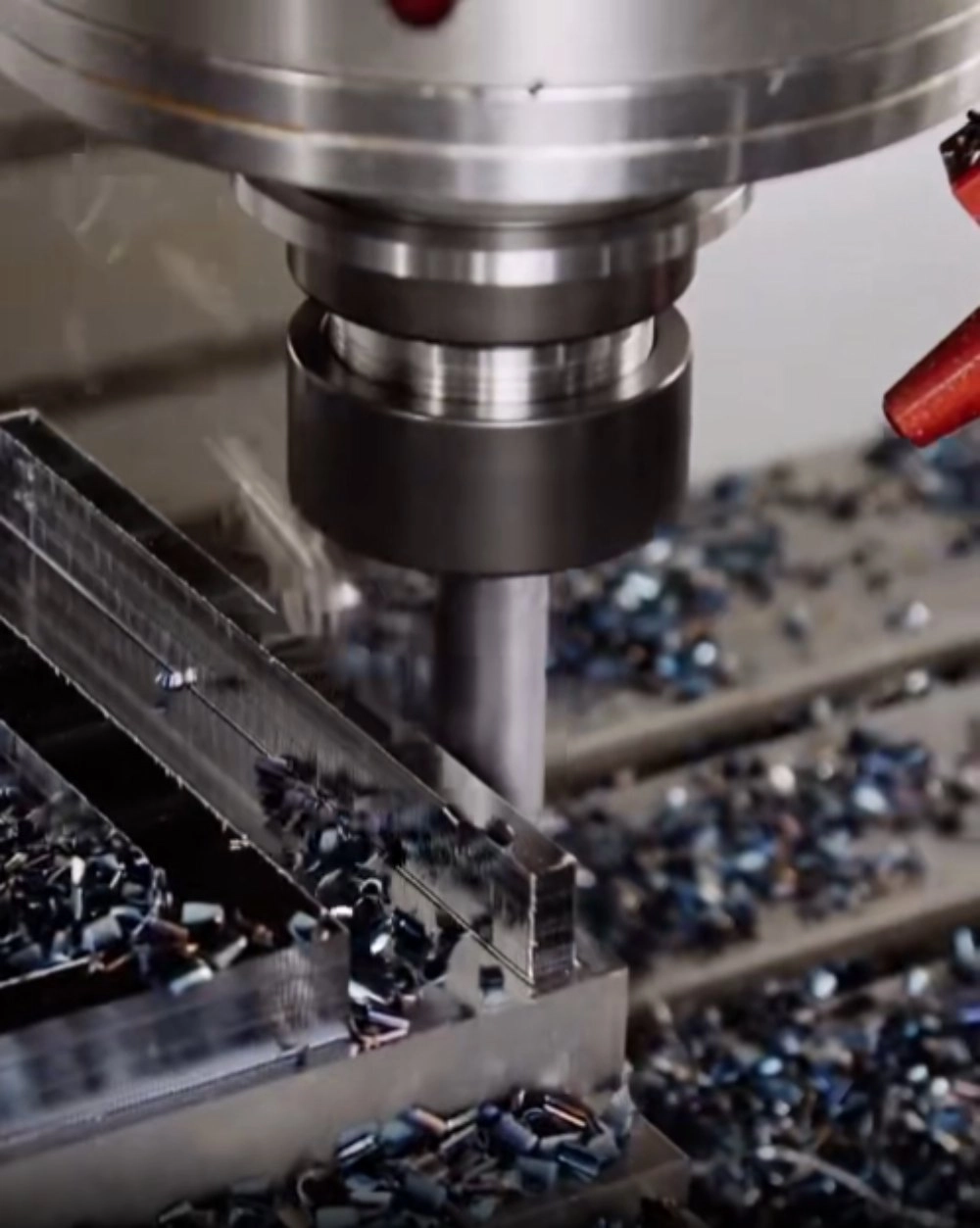
Although gray cast iron and ductile iron can both be processed using CNC equipment, their different structures influence tool selection, cutting conditions, and final surface quality.
Gray cast iron is often easier to machine in applications where the material has a suitable matrix structure and stable casting quality. Its graphite flakes can contribute to chip formation and provide a degree of lubrication during cutting. However, the material may generate abrasive wear depending on its microstructure and inclusions.
Ductile iron generally requires more attention to cutting tool selection and machining parameters. Its stronger matrix can increase cutting forces and tool wear, particularly in higher-strength grades such as QT700-2.
Several factors should be considered during CNC machining:
Tool selection: Cutting tools and insert grades should match the material hardness, strength, and expected cutting conditions. Tool life should be monitored during batch production.
Cutting speed and feed rate: The appropriate settings depend on the material grade, tool geometry, workpiece rigidity, and required surface finish. Higher-strength ductile iron may require different parameters from gray cast iron.
Workpiece clamping: Cast components may have irregular surfaces and varying wall thicknesses. Stable positioning is essential to prevent vibration and dimensional variation during machining.
Machining allowance: The casting process should provide sufficient allowance for subsequent turning, milling, and boring operations. An inconsistent allowance can increase machining time and affect the final geometry.
Dimensional stability: Thin-walled or asymmetrical components may be more sensitive to clamping forces and material stress. A suitable machining sequence can help control deformation.
For rotational components, Lathing services can be used to machine external diameters, internal steps, grooves, shoulders, and other cylindrical features. When a component also contains mounting surfaces or complex hole patterns, turning can be combined with milling and boring to complete the required geometry.
The most suitable material depends on what the component needs to do during operation.
For machine bases and equipment housings where vibration damping and structural stability are important, gray cast iron may be a practical choice. HT250 and HT300 can be evaluated according to the required strength and component design.
For parts subjected to higher mechanical loads, impact, or repeated stress, ductile iron may offer advantages. QT450-10 can be considered where a balance of strength and ductility is required, while QT700-2 may be suitable for applications requiring higher tensile strength.
For hydraulic valve blocks, compressor accessories, and pressure-resistant housings, the selection process should include more than a simple comparison of tensile strength. Engineers should review the pressure conditions, wall thickness, connection geometry, sealing surfaces, and applicable material specifications.
The same principle applies to bearing seats and mounting brackets. If the component must maintain alignment under load, stiffness, deformation behavior, machining accuracy, and assembly conditions all need to be considered.
A material that is mechanically suitable but difficult to machine within the required tolerance may increase production complexity. Conversely, selecting a material mainly because it is easier to machine can create problems if it does not meet the actual service requirements.
Cast iron components often require several machining operations before they are ready for assembly.
Depending on the design, the manufacturing process may include CNC turning, milling, boring, drilling, reaming, tapping, and chamfering. Some components also require surface treatment to improve corrosion resistance or meet specific appearance requirements.
Hehua's CNC machining capabilities cover gray cast iron, ductile iron, carbon steel, alloy steel, stainless steel, aluminum alloys, brass, copper, and engineering plastics such as POM, nylon, and acrylic.
The available machining accuracy includes:
Machining operation | Reference tolerance |
CNC turning | ±0.005–±0.02 mm |
CNC milling | ±0.008–±0.03 mm |
CNC boring | ±0.005 mm |
Drilling and tapping | ±0.02 mm |
Surface roughness | Ra0.8–Ra3.2, customizable |
Flatness | ≤0.02 mm/100 mm |
These are capability references. Achievable tolerances for a specific cast component depend on its geometry, material condition, dimensions, and machining setup.
Inspection is equally important. Material verification helps confirm that the supplied casting matches the specified grade. First article inspection checks the initial machined part against the drawing, while in-process inspection helps identify dimensional changes during production.
Hehua uses CMM equipment for first article full inspection and regular in-process checks, with 100% inspection of designated critical dimensions. Material spectrum analysis reports and mechanical property test reports can be provided for each batch to support traceability. UT or MT non-destructive testing can also be arranged for key pressure-bearing components when required.
For customized industrial components, material selection and machining process planning should ideally be reviewed together.
A manufacturer should understand the component's working environment, load requirements, drawing tolerances, and production quantity before recommending a manufacturing route. This is especially important when a customer is developing a new component or replacing an imported part.
Hehua Machinery Technology (Kunshan) Co., Ltd. provides customized metal component manufacturing for automotive, rail transit, aerospace, wind power, nuclear power, industrial machinery, semiconductor equipment, and new energy equipment industries.
The Kunshan subsidiary was established in 2018, following the establishment of its parent company, Shanghai Hehua Machinery Technology Co., Ltd., in 2005. The company operates a manufacturing facility of more than 17,800 square meters and has over 160 employees.
Its manufacturing services cover design optimization, casting and forging support, CNC precision machining, and finished product assembly. Customers can submit 2D CAD drawings or 3D files in STEP, IGES, SolidWorks, and UG formats. Engineers review drawings within 24 hours and can provide DFM recommendations to identify potential manufacturing issues.
Prototype sampling generally takes 3–7 days, while conventional production orders typically require 15–30 days, depending on component complexity and order requirements. With more than 10 CNC machining centers and a monthly production capacity of over 50,000 pieces, the company supports both customized sampling and repeat production.
The company has obtained ISO 9001 and IATF 16949 certifications, as well as EN 15085 certification for railway vehicle and component welding. These systems support its quality management and manufacturing processes.
Gray cast iron and ductile iron each have advantages in industrial component manufacturing. Gray cast iron is often suitable for machine structures and housings where vibration damping and good machinability are important. Ductile iron is generally preferred when higher tensile strength, ductility, or impact resistance is required.
The final decision should be based on the actual operating conditions, material grade, component geometry, casting quality, and machining requirements. Once the material is selected, a suitable CNC process and inspection plan are necessary to ensure that the finished part meets its engineering specifications.
From cylindrical features and bearing seats to customized housings and pressure-resistant accessories, Lathing services form an important part of precision manufacturing. By combining turning with milling, boring, material verification, and CMM inspection, Hehua Machinery Technology (Kunshan) Co., Ltd. supports customers in producing customized cast iron and ductile iron components from prototype development to batch manufacturing.


 AddressNo. 66 Xingpu Road, Lujia Town,Kunshan City, Factory Buildings 3 and 4
 en
 English
 繁体中文
 Italian
 Spanish
 Japanese
 Portuguese
 Korean
 Russian
 French
 German
 Estonian
 Arabic
 Indonesian


 Message