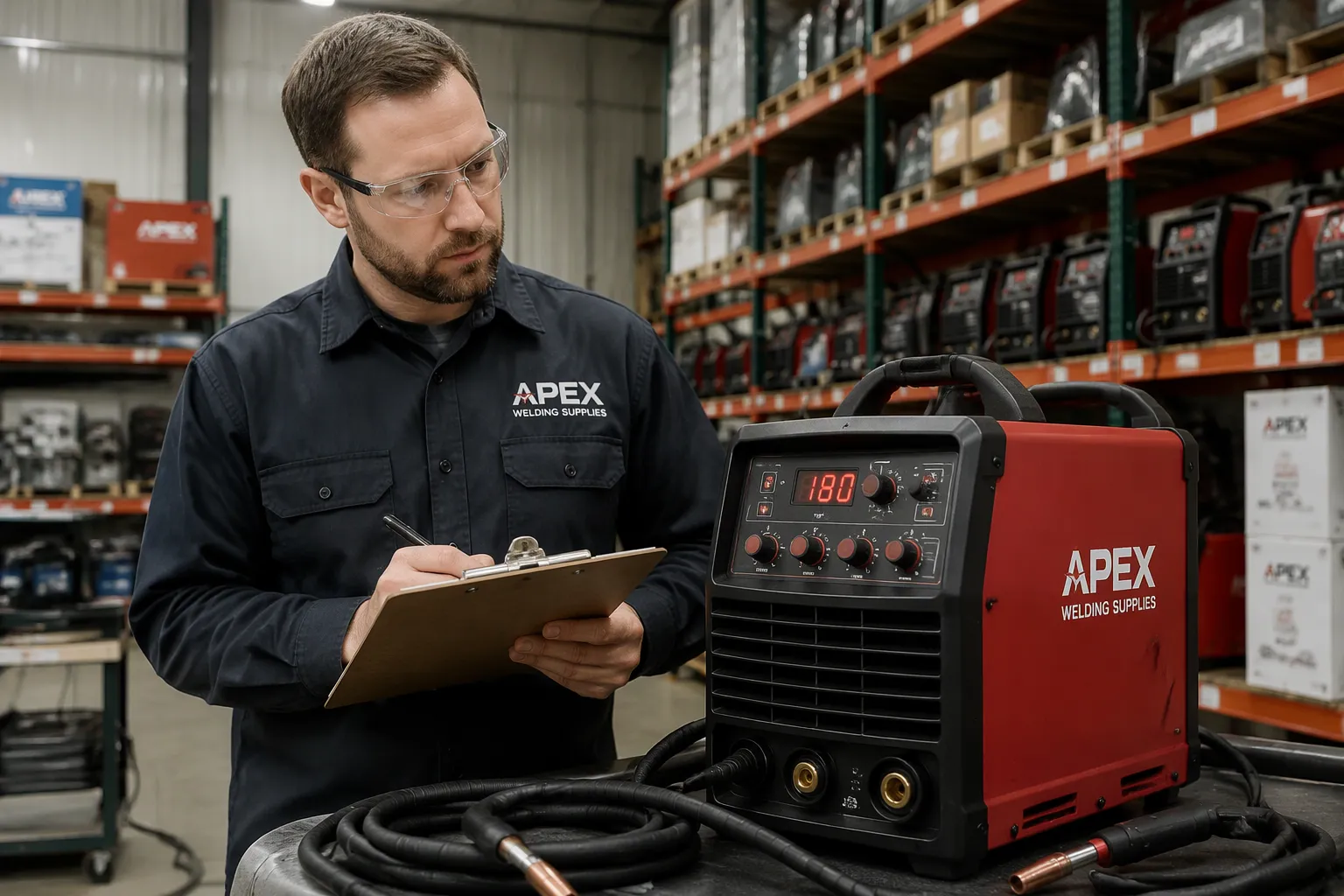
You can find a reliable welding supplier in China through online B2B platforms, industry trade shows, and trusted referrals. But finding candidates is only half the job. Your real concerns are reliability, steady quality, and cost-effectiveness. This guide shows you where to search, how to check each candidate, and how to avoid common sourcing scams.
Pick a manufacturer when you need custom work. Pick a trading company for small orders or orders with mixed items.
Search on Alibaba, Global Sources, and Made-in-China. Use specific search terms to narrow the results.
Go to trade shows to meet suppliers, and ask other buyers to recommend trustworthy ones.
Check each supplier by looking at their licenses, certifications, and factory audits. Also test samples to confirm their quality.
Ask clear questions from the start. Avoid scams by paying only to company accounts, and keep everything in writing.
Your first choice affects everything after it: should you buy from a factory or a trading company? Both work well for buyers, and each one fits a different situation.
A manufacturer runs the production line itself. You talk directly with engineers, have tighter control over specs, and can customize tooling or fixtures. Custom parts, tight tolerances, and high-volume runs usually mean a factory is best. You also see more clearly how your order moves through each production stage.
A trading company manages a network of factories. You get one contact, combined shipping, and flexible mixing of orders across several product lines. Small orders, mixed catalogs, and buyers new to Chinese sourcing often do well with this setup. A good trading company also handles paperwork and quality follow-up for you.
Neither option is better by nature. The right choice depends on your order profile and how much direct factory contact you need.
Define three things before you search: welding process, specifications, and order volume. Your process choice — laser, MIG, robot, or TIG — narrows the field quickly. Specifications cover material, thickness, joint design, and finish. Order volume tells you whether a factory will quote seriously or send you to a trading partner.
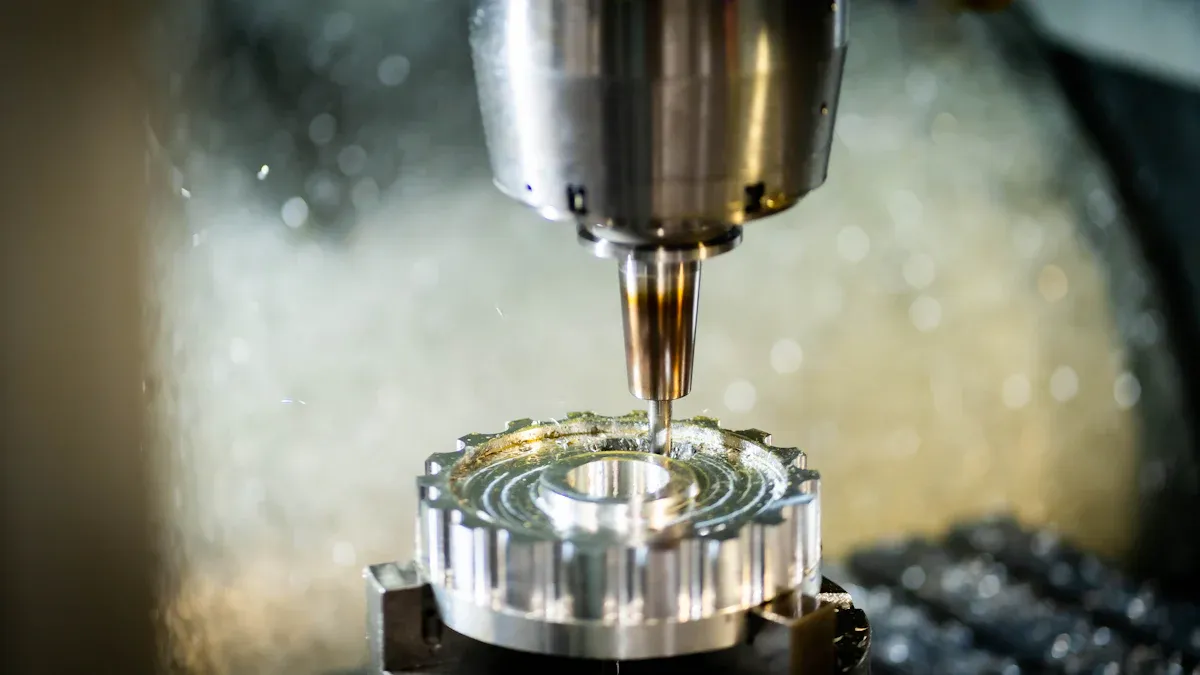
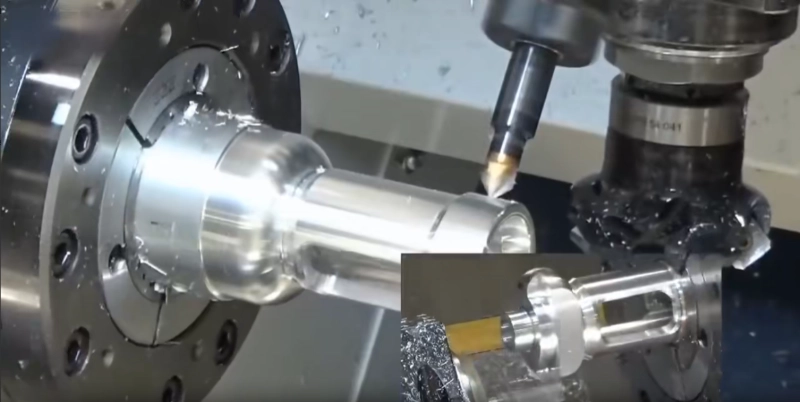
Specialized categories deserve attention too. Welding positioners, for example, come from suppliers with focused expertise. Integrated providers cover a broader range. Hehua Machinery Technology (Kunshan) Co., Ltd. offers laser, MIG, robot, and TIG welding alongside CNC machining and sheet metal fabrication. That mix suits buyers who need welded parts plus secondary machining from one source.
Write your requirements down before you contact anyone. A clear one-page brief saves weeks of back-and-forth later.
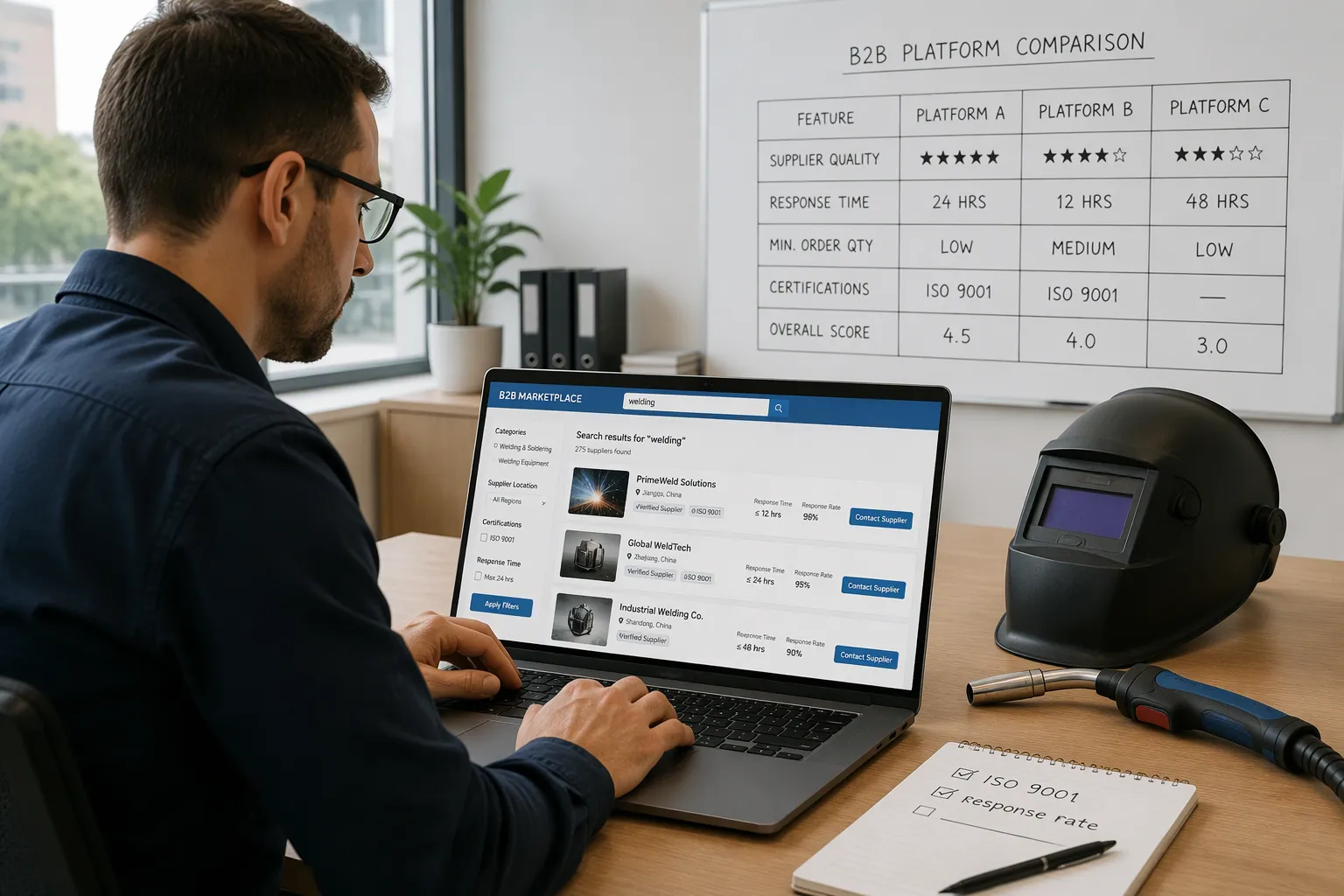
When you search for welding suppliers in China, three marketplaces show up first: Alibaba, Global Sources, and Made-in-China. Each one works, and each one fits a different way of searching.
Alibaba has the largest group of suppliers. You can find everything from small job shops to big welding equipment brands. That wide range helps you compare fast. It also means you have to filter carefully, because listing quality varies a lot.
Global Sources favors exporters who already work with overseas buyers. Many suppliers there know about international paperwork and shipping terms. If you plan to import on a regular basis, this platform often makes learning easier.
Made-in-China falls between the two. It sorts suppliers by industry category, which suits buyers who want to browse a focused set of welding vendors instead of a general catalog.
Platform | Best for | Watch for |
|---|---|---|
Alibaba | Broad comparison, fast quotes | Uneven listing quality |
Global Sources | Export-ready suppliers | Smaller total supplier pool |
Made-in-China | Category-focused browsing | Fewer verified premium vendors |
Filtering turns a useful shortlist into a pile of tabs. Start with the welding process: laser, MIG, robot, or TIG. Most marketplaces let you search these terms directly, and the results narrow fast. Next, check certifications. Look for ISO 9001 and any process-specific credentials the supplier lists, then confirm them later during verification. Finally, sort by response rate and transaction history. A supplier who answers within a day during the inquiry stage usually keeps that pace after you place an order.
Marketplaces are not the only way in. Industry directories, chamber of commerce listings, and regional manufacturing associations publish supplier rosters you can cross-check against marketplace profiles. A supplier that appears in several independent places is easier to trust than one that exists on a single platform.
Search tactics matter too. Try process plus material plus city, for example "laser welding stainless steel Kunshan." Add terms like "factory" or "manufacturer" to push trading companies out of the top results. Search the supplier's company name alongside words like "review" or "complaint" to surface buyer feedback the platform hides.
Save every promising profile as a PDF or screenshot on the day you find it. Listings change, and you want a record of what the supplier claimed when you first shortlisted them. Build a simple comparison sheet with columns for process, certifications, response time, and years in business. Ten rows of clean data beat fifty bookmarks every time.
Trade shows let you meet suppliers face to face. You can watch a welding demo, look at sample welds, and see how a team answers technical questions. That in-person impression tells you more than any listing page.
Get ready before you arrive. List the welding processes you need, such as laser, MIG, robot, or TIG. Bring your one-page requirements brief and a few drawings. Book meetings with target exhibitors ahead of time, then leave room in your schedule for walk-ups. Collect business cards and write a short note on each one the same day. Memory fades fast after a long show floor.
Ask other buyers in your industry who they use. A referral from someone who already runs production with a supplier carries real weight. Ask specific questions: how the supplier handled a quality issue, how fast they responded, and whether they hit delivery dates. Vague praise tells you little. Concrete stories tell you a lot.
Professional purchasing agents add another layer. Look for agents with manufacturing sales experience. They know how factories quote, where costs hide, and which claims to test. A good agent visits the factory, checks the line, and reports back with photos and notes. That gives you a clearer picture of a reliable welding supplier before you commit to an order.
Treat every referral as a lead, not a verdict. Verify the supplier yourself through licenses, audits, and samples. A strong recommendation shortens your search. It does not replace your own checks.
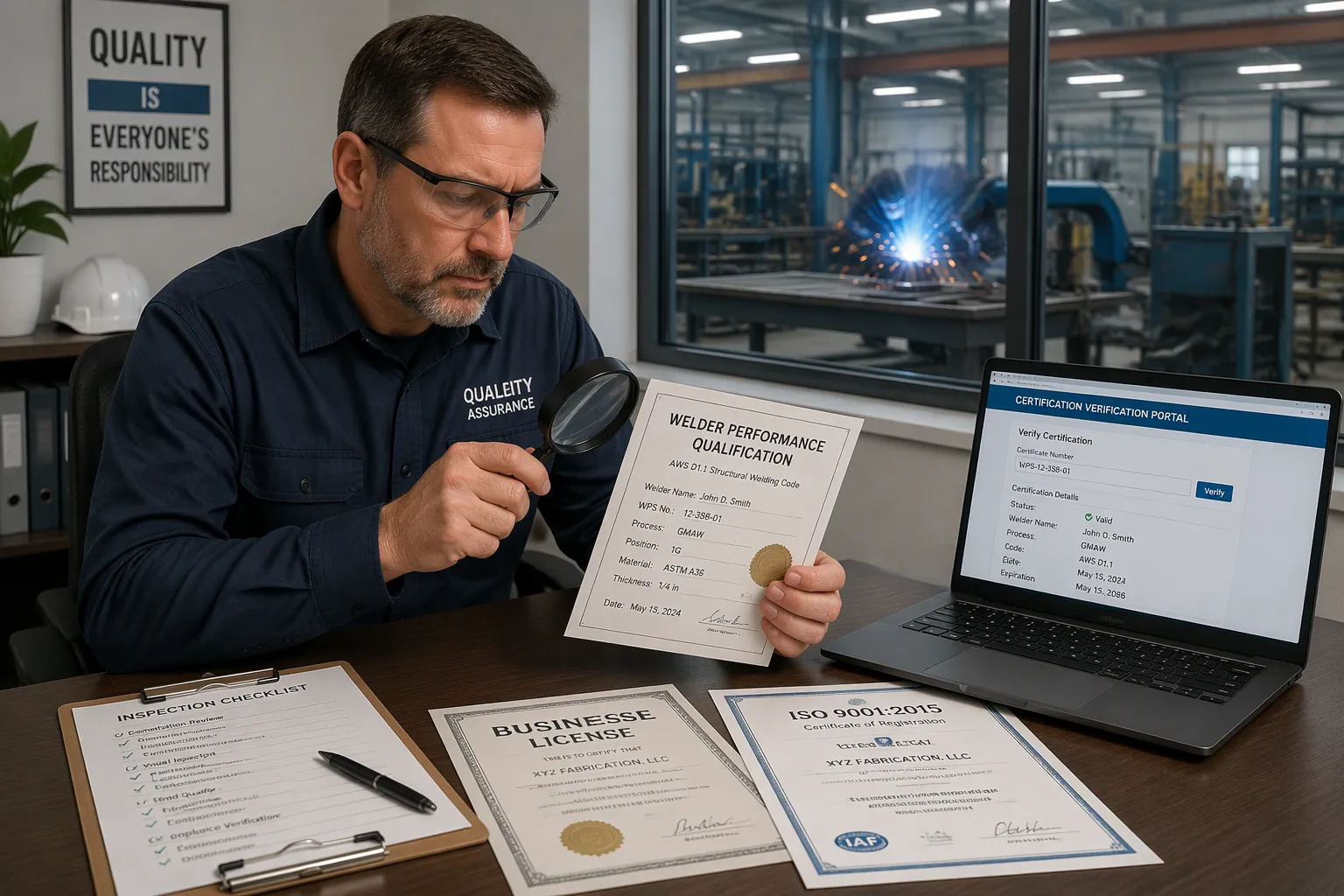
Start with the business license. Ask the supplier for a scanned copy, then check the registered company name, unified social credit code, registered capital, and business scope. China's National Enterprise Credit Information Publicity System lets you confirm these details for free. The business scope should list welding services or metal fabrication. If it lists only "trading" or "consulting," the company resells rather than produces.
Next, verify certifications. ISO 9001 is the basic quality management standard. Process-specific credentials matter too, such as ISO 3834 for welding quality requirements or CE marking for equipment sold into Europe. Do not accept a certificate image at face value. Note the certificate number, the issuing body, and the expiry date, then check the number on the issuing body's own registry. Certification bodies such as TÜV, SGS, and Bureau Veritas publish verification portals for this purpose.
Cross-check the brand behind the certificate. Global buyers often compare well-known welding suppliers such as UWELD, HUGONG, JASIC, RILAND, Megmeet Welding, Aotai Electric, and Decapower. Use these names as reference points for pricing, documentation quality, and certification depth. A smaller supplier that matches their paperwork standards deserves a closer look.
A factory audit shows you how production actually runs. You have two options. You can visit yourself, or you can hire a third-party inspection firm to visit for you. Either way, prepare a checklist: machine list, calibration records, welding procedure specifications, welder qualification records, incoming material inspection, and final inspection logs. Walk the floor and watch a live weld. Ask the operator to explain the parameters. A confident, specific answer beats a polished brochure.
Samples come next. Send your drawings, material grade, thickness, joint type, and finish requirements. State the inspection criteria up front: visual inspection, dimensional check, and any destructive or non-destructive testing you need. Request the sample from the same line that will run your production order, not from a separate sample shop. Compare the sample against your drawing and keep it as the reference standard for future shipments.
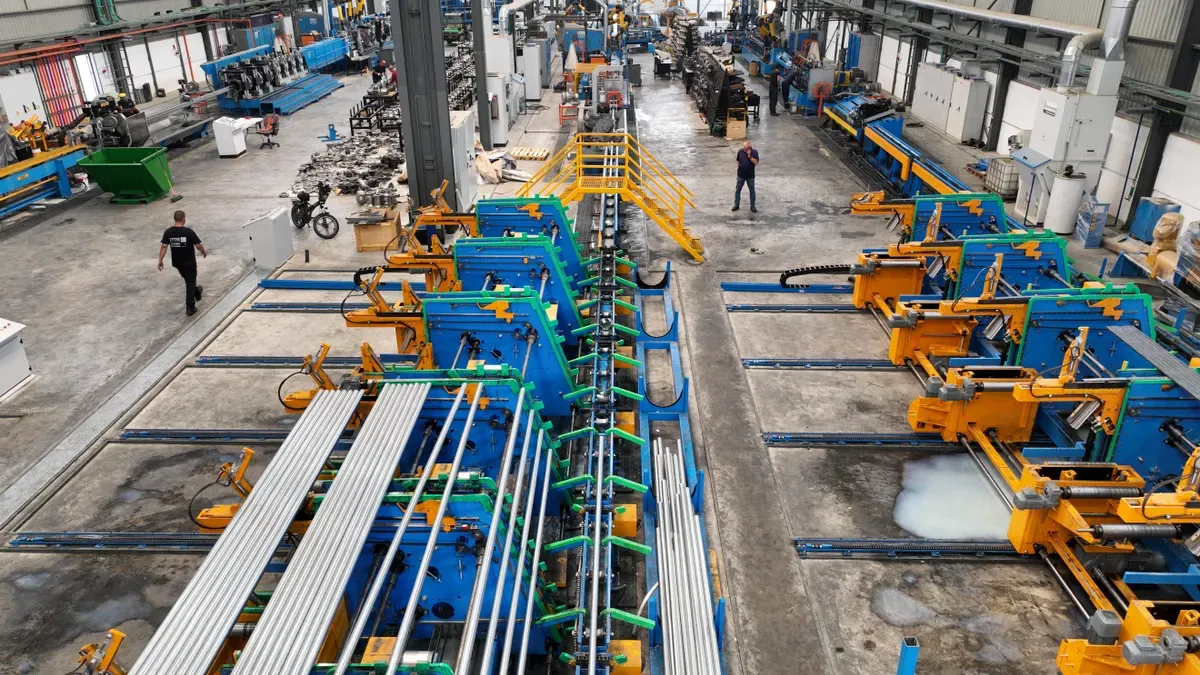
Treat every audit and sample as evidence, not ceremony. A supplier that welcomes your visit, shares records openly, and ships a sample that matches the drawing is a strong candidate. Hehua Machinery Technology (Kunshan) Co., Ltd. illustrates this profile: an integrated provider combining laser, MIG, robot, and TIG welding with CNC machining and sheet metal fabrication, serving industries such as new energy automobiles, high voltage motors, electronics, and rail transit. That combination of processes and certifications gives you more checkpoints to verify. Run the same checks on any candidate, and you will separate a reliable welding supplier from a convincing one.
Asking clear questions early saves you trouble later. Ask each candidate which welding processes they do in-house and which ones they outsource. Request the machine list, the welder qualification records, and a sample welding procedure specification. A supplier who gives you specific answers is easier to trust than one who sends a generic brochure.
Next, cover capacity and quality. Ask how many production lines handle your order type and what their typical lead time is. Also ask how they handle a rush order. Then ask about inspection: who checks the first article, how they record defects, and what happens when a weld fails a test. Request the name of the person who owns quality on your account. A direct contact makes every future conversation shorter.
Scams follow patterns, and you can spot most of them before money moves. Watch for a supplier who pushes you to pay a personal account instead of a company account. Legitimate factories invoice through the registered business entity you verified earlier. Treat any request to pay an individual as a stop signal.
Never wire a deposit before you confirm the bank account name matches the registered company name on the business license.
Bait-and-switch is another common tactic. A supplier quotes an attractive sample, then ships production parts from a different line or a subcontractor. Guard against this by naming the production line in your purchase order. Also require the sample to come from that same line. Ask for photos of your order during production, not only at the end.
Finally, keep every commitment in writing. Put specifications, inspection criteria, delivery dates, and penalty terms into the contract. A reliable welding supplier welcomes a detailed agreement, because it protects both sides. A supplier who resists written terms is telling you something useful.
First, pick the right type of supplier. Next, search through trusted channels. Then check every candidate before you commit. That path works for any welding process and any order size.
Reliability comes from a verification process you can repeat, not from one platform. A strong listing proves little by itself. Licenses, audits, and samples prove much more. Run the same checks on every candidate, and you will find a reliable welding supplier with confidence.
Start small. Build a shortlist of three to five suppliers and place a sample order. Compare the results against your drawings. If you want help, reach out for sourcing assistance.
MOQs change a lot depending on the supplier type and process. Factories usually set higher minimums for custom work. Trading companies often take smaller mixed orders. Ask for the MOQ in writing during your first inquiry. Then compare it with your real demand before you shortlist anyone.
Timelines depend on the welding process, the material, and how busy the line is. Ask each candidate for a sample lead time and a production lead time in writing. Treat any verbal promise as just a starting point. Build a buffer into your own schedule before you commit to customer delivery dates.
Ask for a company account, never a personal one. A common structure splits payment between deposit and balance after inspection. Negotiate the balance release against your own inspection results. Keep every term in the contract, and confirm the account name matches the business license you checked earlier.
Send every candidate the same drawings, specifications, and inspection criteria. Ask each one to break the quote into material, welding, machining, and finishing. A single total price hides differences. Compare line by line, and flag any quote that leaves out a process you specified.
Document the failure with photos, measurements, and the test method you used. Send the report to your quality contact and ask for a root-cause explanation. Reference your agreed inspection criteria and penalty terms. A reliable supplier responds with a corrective plan, not excuses.


 AddressNo. 66 Xingpu Road, Lujia Town,Kunshan City, Factory Buildings 3 and 4
 en
 English
 繁体中文
 Italian
 Spanish
 Japanese
 Portuguese
 Korean
 Russian
 French
 German
 Estonian
 Arabic
 Indonesian



 Message