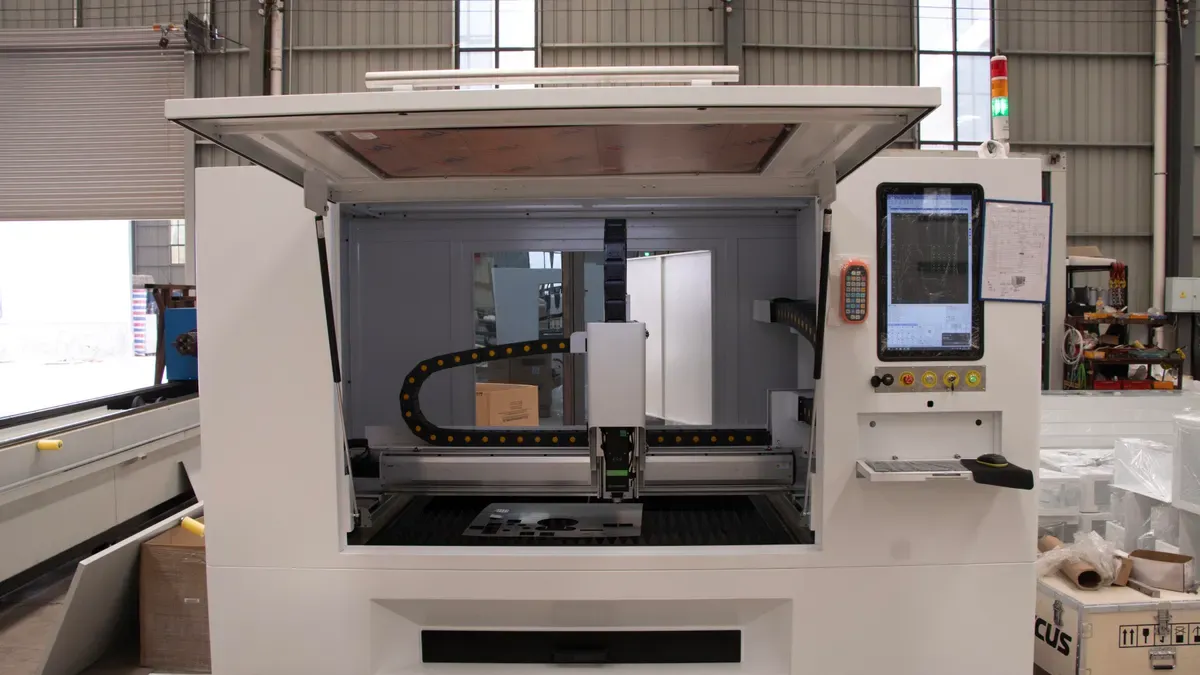
An export-quality CNC machining manufacturer from China meets international standards for precision, documentation, and compliance. You gain cost and scalability advantages, but only through careful due diligence.
The stakes are real for supply chain managers. An export-grade supplier delivers steady quality, dependable lead times, and audit-ready paperwork. A commodity machine shop delivers surprises instead.
Supplier selection rewards evidence over promises. You need to verify quality, judge technical fit, calculate true cost, and manage risk before you commit volume. This guide gives you that framework, with practical checks you can apply to any candidate, including established partners such as Hehua Machinery Technology (Kunshan) Co., Ltd.
Look for valid certifications like ISO 9001. Make sure they cover CNC machining at the factory.
Ask for sample parts and inspection reports. Use them to check precision and quality before you commit.
Look at the total cost of everything delivered, not just the price of one unit, so you don't get surprised by hidden fees.
Keep your designs safe with NDAs, and have a backup supplier ready just in case.
Pick a supplier based on proof, and build a long-term partnership for results you can rely on.
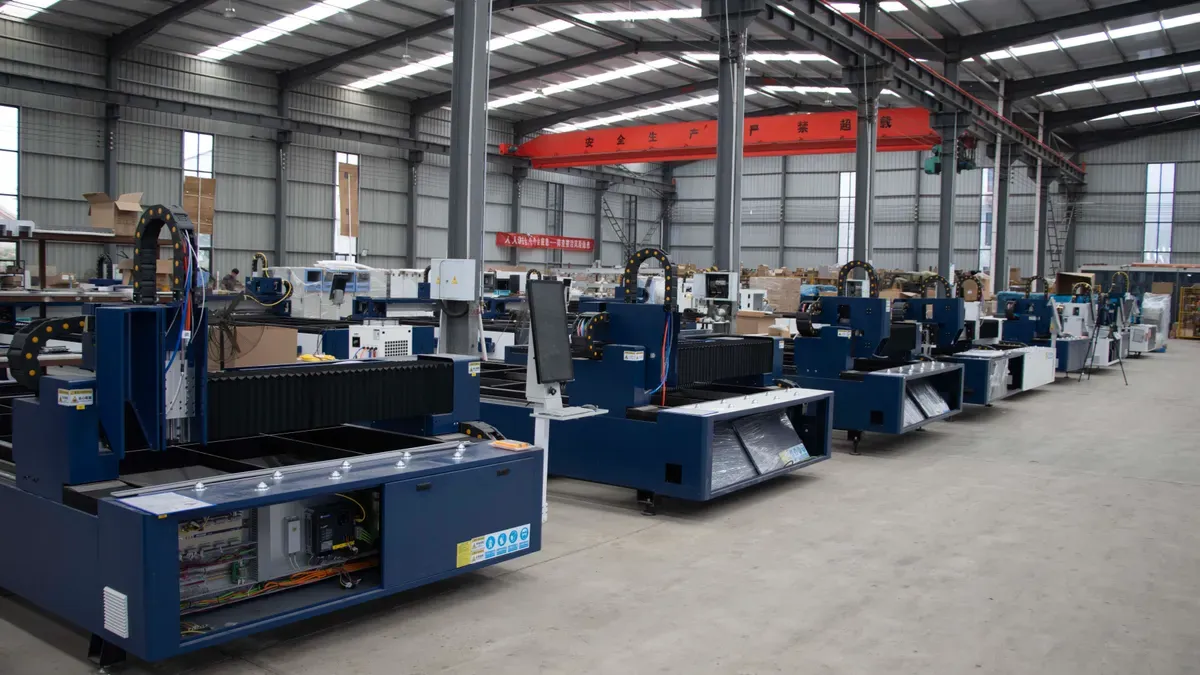
Export quality is a standard you can check, not a slogan you accept. It stands on four pillars: the certifications a factory holds, the tolerances it can hold in routine production, the traceability of its raw material, and the inspection paperwork that ships with each order. Each pillar leaves a paper trail. You can audit that trail before you place a purchase order.
Start with certifications. ISO 9001:2015 is the baseline for nearly all serious export-facing factories. Automotive work usually demands IATF 16949, aerospace buyers look for AS9100, and medical device programs often require ISO 13485. Read the certificate scope, not the logo. Confirm the number, the expiry date, and that the scope covers CNC machining at the actual production site.
Next, tolerances. Leading export-quality factories in China routinely hold ±0.01 mm on standard precision parts and ±0.005 mm on critical features. Grinding and EDM can reach ±0.002 mm or tighter under controlled conditions. General commercial parts such as housings and brackets typically run from ±0.05 mm to ±0.01 mm. Ask for a capability study, not a brochure claim.
Then, material traceability. Mill certificates tied to heat and lot numbers form the backbone. Stronger suppliers add AS9102 First Article Inspection packages and a traceability chain that links material records to process parameters, calibration status, and inspection results.
Finally, inspection documentation. Expect a Certificate of Conformance with every order, a CMM inspection report, and material certificates. FAI to AS9102 and PPAP Level 3 usually come on request and are quoted per program.
The difference shows up in daily execution. A commodity shop quotes a low unit price and leaves you to discover the gaps. An export partner builds consistency into the process: stable machining parameters, calibrated metrology, export-standard packing, and a full set of shipping documents.
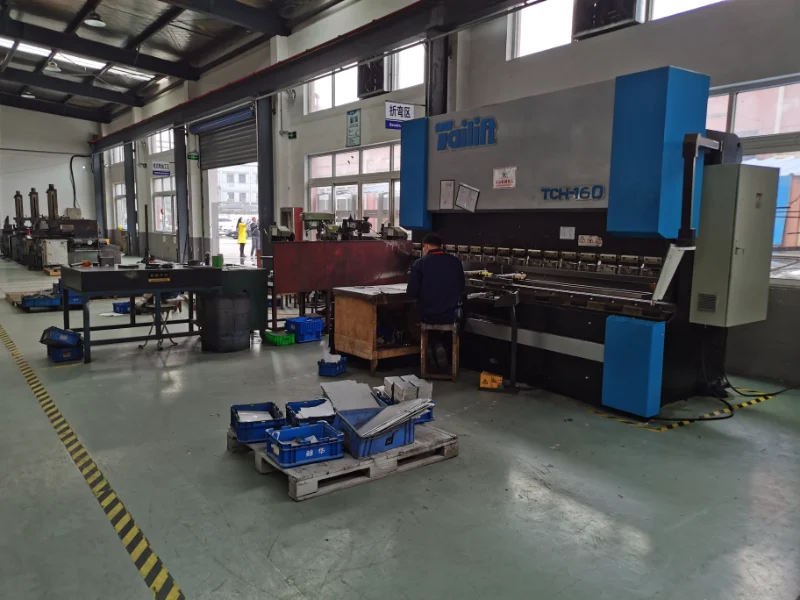
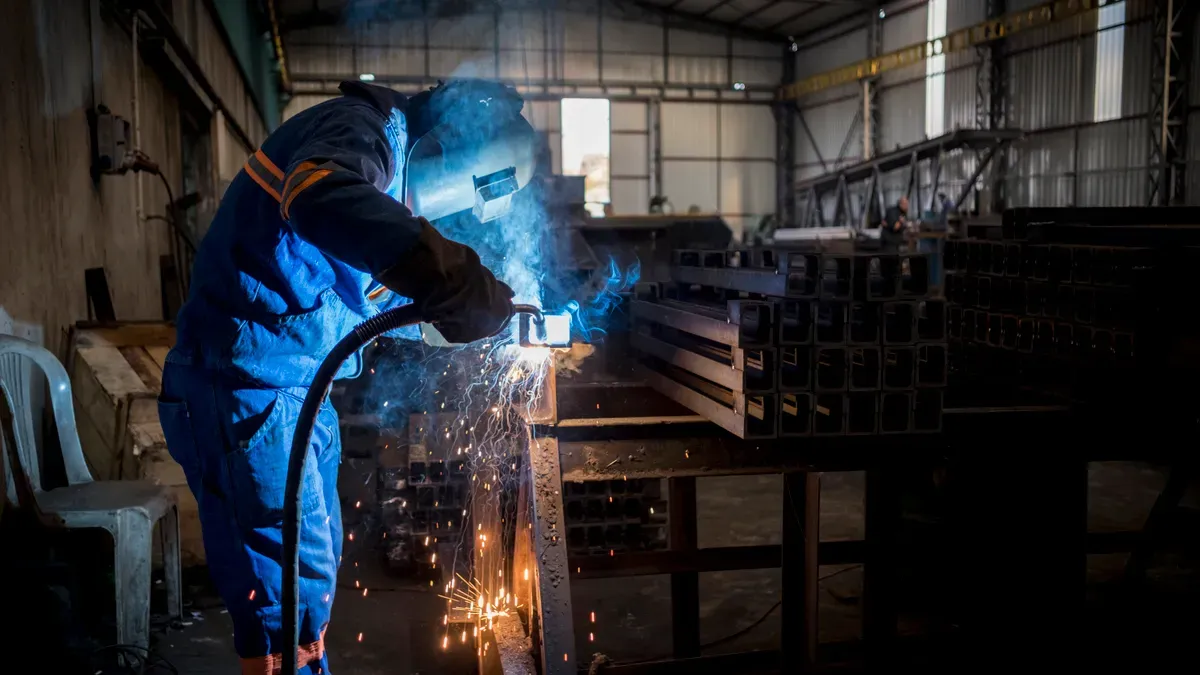
Consider Hehua Machinery Technology (Kunshan) Co., Ltd. as a reference point. The company pairs precision CNC lathing and milling with metal stamping, sheet metal fabrication, welding, and mold and fixture manufacturing. Its parts serve new energy automobiles, high-voltage motors, electronics, rail transit, and mechanical equipment spare parts. That breadth matters. A supplier with several process families under one roof reduces handoffs, and handoffs are where quality drifts.
Modern CNC machining companies also invest in metrology. Ask how measuring equipment is calibrated. A good answer names the calibration lab, the interval, and the recall procedure for out-of-calibration instruments. Then follow one lot number end to end. A working system traces a finished part back to its mill certificate in minutes.
Manufacturing capability is easy to claim and harder to prove. Buy a sample, require the paperwork with it, and check that reported dimensions match the drawing. This single step separates capable CNC machining providers from optimistic ones. Precision you can verify is the only precision worth paying for.
Cost is the main reason most buyers look at China, and the savings are real. Market reports say total cost is 30–50% lower than Western suppliers for medium-to-high volume orders, even after freight and duties. Prototypes and very small batches save less, because setup costs are spread over fewer parts.
Cost Factor | Western Supplier | China Supplier |
|---|---|---|
Raw material (aluminum 6061) | $8–12/kg | $4–7/kg |
$80–150/hr | $25–50/hr | |
Tooling and setup | $2,000–5,000 | $800–2,000 |
Surface treatment (anodizing) | $3–8/part | $1–3/part |
Scale makes the advantage even bigger. Some Chinese factories make up to 5 million parts a year, which fits a program moving from testing into full production. Treat these numbers as market context, not a promise. Your quote depends on geometry, material, and volume.
Lead time varies a lot. Simple prototypes ship in 3–10 working days, small batches in 7–20, and large orders in 15–40 or more. Sea freight adds about 25 days to the US. The differences come from equipment gaps, manual setups, subcontracting, and capacity limits. A supplier with in-house secondary operations and dedicated project management removes handoffs, and handoffs cause delay.
Time zones create friction. A two-hour daily overlap for live decisions prevents days of drift. Ask for a named account manager, scheduled overlap hours, and an emergency contact protocol.
Protect your designs with a jurisdiction-specific NDA, work-for-hire assignment, and audit rights. Split sensitive designs across suppliers where practical.
China cnc machining export trends show steady growth since 2023, and 2025 supply chain diversification pushes buyers toward long-term reliability over spot pricing. Weigh supply chain reliability, precision, and reliability of documentation together. Global supply chains reward partners who prove stable across cycles, and critical mineral supply chains reward buyers who verify material traceability early.
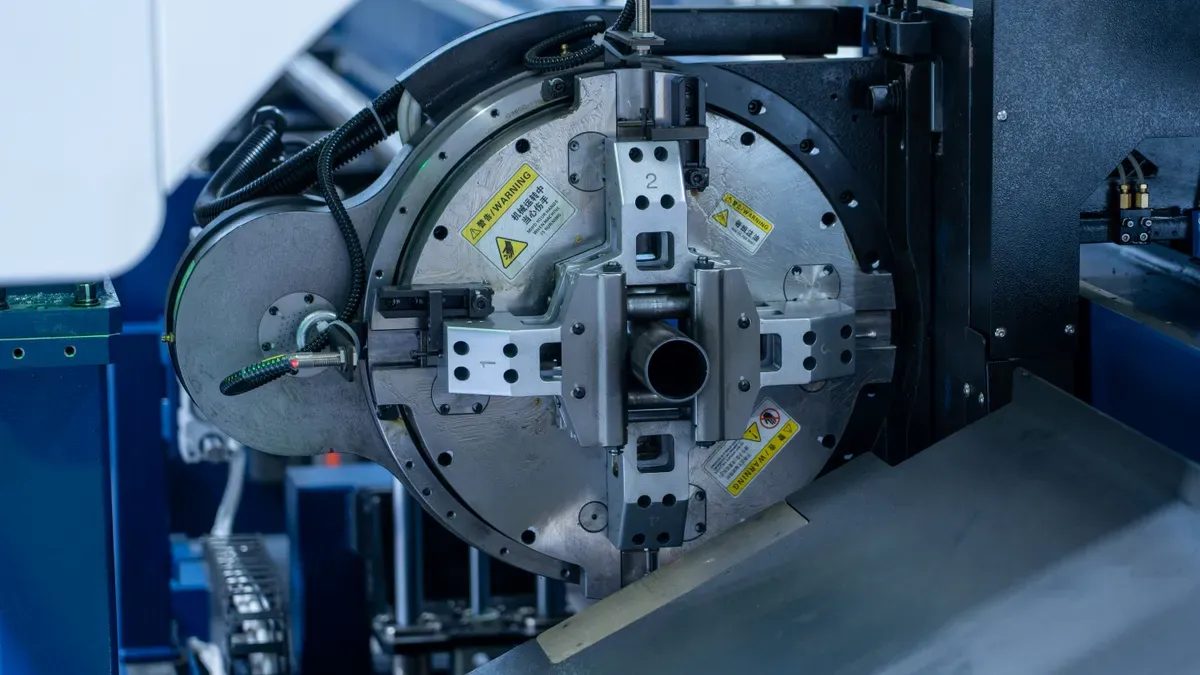
Supplier selection comes down to proof. An export-quality cnc machining manufacturer shows four things before you commit volume: strict tolerance inspection, export-standard packing, a full set of shipping documents, and steady processes across repeat runs. Ask every candidate for that proof in writing. Process transparency separates a real partner from a broker with a website.
Run the audit in stages. First, complete a desk review. Confirm the ISO 9001:2015 certificate is valid and its scope clearly covers CNC machining at the production site. Then schedule a shop-floor walk. Check 5S discipline, red and green status labels on material and work in progress, a quarantine area for nonconforming parts, and calibration stickers on measuring equipment. Trace one live job traveler from raw stock to final inspection.
Next, dig into three CNC-specific areas: machine capability, quality records, and special processes such as anodizing or plating. Score each question 0, 1, or 2, then compare suppliers on equal footing. Close out with named owners and due dates for every corrective action. A supplier's response to findings is itself a qualification signal.
Sample testing turns claims into data. For lots over 50 pieces, apply AQL sampling; quick-turn production often justifies 100% inspection.
Lot Size | Sample Size |
|---|---|
1–50 | 1 |
51–90 | 2 |
91–150 | 3 |
151–280 | 5 |
281–500 | 8 |
501–1,200 | 13 |
1,201–3,200 | 20 |
3,201–10,000 | 32 |
Basic inspection covers X, Y, and Z dimensions, thread functionality, visual checks, and up to 4 place-to-plane measurements. Request a First Article Inspection report that verifies 100% of drawing dimensions, including GD&T, against the AS9102C template. Add CMM data for complex geometry and material spectrometry to confirm alloy composition. Then call two or three references and ask about batch consistency, not just the first article.
Chinese precision CNC technology is competitive, and some high-precision parts still rely on imported German or Japanese machine tools. Treat that as a fit question, not a verdict. Standard machining holds ±0.05 mm to ±0.10 mm, which suits most components. Precision work runs ±0.01 mm to ±0.02 mm, and you should confirm repeatability at that level under production conditions, not only on a prototype.
Match the process list to your geometry. Complex features, deep cavities, and multi-sided work may need 5-axis machining, EDM, Swiss turning, or precision grinding. A cnc machining factory with a broad portfolio keeps more operations in-house and reduces handoffs. For long, slender parts, confirm Swiss capability. For titanium, 316L, or Inconel, ask for alloy-specific tooling and coolant strategies.
Demand DFM review before production. A capable partner flags wall thickness, hole depth, sharp internal corners, and surface finish requirements early. This capability-driven selection approach protects your schedule. Many cnc machining companies now offer precision cnc machining solutions that support both prototypes and mass production, so verify tighter tolerances through inspection reports and production data. That is how you secure high-precision parts and reliable precision cnc machining projects in china.
Compliance begins with the certificate that fits your market. ISO 9001 covers quality management across industries and gives international buyers a starting point. AS9100 adds aerospace risk management and product integrity controls. ISO 13485 sets the rules for medical-device manufacturing. NADCAP approves special processes such as heat treating and nondestructive testing. Make sure each certificate's scope covers the actual production site, then check product-level rules like RoHS for electronics and CE marking where your destination requires it. Every shipment should arrive with a Certificate of Conformance, a CMM inspection report, material certificates, and a packing list that matches the commercial invoice.
Compare quotes on total delivered cost, not unit price. Add freight, duties, inspection, inventory carrying cost, and a contingency reserve. Hidden costs often push actual project cost 10%–40% above the original quotation. Watch for engineering revisions after approval, tight tolerances that slow machining, separately quoted finishing, material waste, and documentation fees. A quote roughly 8% cheaper can become the most expensive option through rework, delays, and rejects.
Evaluate every quote on total delivered cost, never on unit price alone.
China fits cost-sensitive, scalable, precision production with stable drawings and repeat volume. Domestic suppliers fit urgent orders, shifting designs, and work needing direct control over quality and delivery. Neither option is wrong; the fit depends on your program.
Build a quality control plan with defined inspection points. Sign an NDA with work-for-hire assignment. Keep a second approved source as contingency. Strong sourcing strategies treat supply chain risk as a design input, and that discipline protects reliability across cycles.
Export quality can be checked, not just assumed. Certifications, tolerances the factory can actually hold, inspection records, and reference calls give you the proof that matters. Treat every claim as a question until the paperwork answers it.
Weigh unit price against lead time, paperwork load, and risk reduction. A quote judged on its own hides costs that show up later.
Build a checklist for checking suppliers. Ask for sample parts and audit reports. Work out the total cost of ownership. Set a backup plan before you commit volume. Pick an export-quality cnc machining manufacturer based on proof, keep the precision standard on every lot, and treat that supplier as a long-term partner, not a one-time vendor.
Normal commercial work usually holds ±0.05 mm to ±0.10 mm. Precision parts reach ±0.01 mm, and key features can reach ±0.005 mm under controlled conditions. Always confirm repeatability with a capability study and a CMM report from production runs, not just a prototype.
Check the certificate number on the issuing body's registry. Confirm the expiry date. Most importantly, verify the scope names CNC machining at the site that will actually make your parts. A valid ISO 9001:2015 certificate for a trading office tells you nothing about the factory floor.
Your Industry | Certification to Require |
|---|---|
General industrial | ISO 9001:2015 |
Automotive | IATF 16949 |
Aerospace | AS9100 |
Medical devices | ISO 13485 |
Match the certificate scope to your production site, then confirm product-level rules such as RoHS for electronics and CE marking for your destination market.
Expect a Certificate of Conformance, a CMM inspection report, material certificates tied to heat and lot numbers, and a packing list that matches the commercial invoice. For new programs, request a First Article Inspection to AS9102 and PPAP Level 3 where your industry requires it.
Build the contingency into the contract, not into hope.
Ask for a named account manager and scheduled overlap hours across time zones. Sign a jurisdiction-specific NDA with work-for-hire assignment and audit rights. Keep a second approved source ready, and split sensitive designs across suppliers where practical.


 AddressNo. 66 Xingpu Road, Lujia Town,Kunshan City, Factory Buildings 3 and 4
 en
 English
 繁体中文
 Italian
 Spanish
 Japanese
 Portuguese
 Korean
 Russian
 French
 German
 Estonian
 Arabic
 Indonesian




 Message