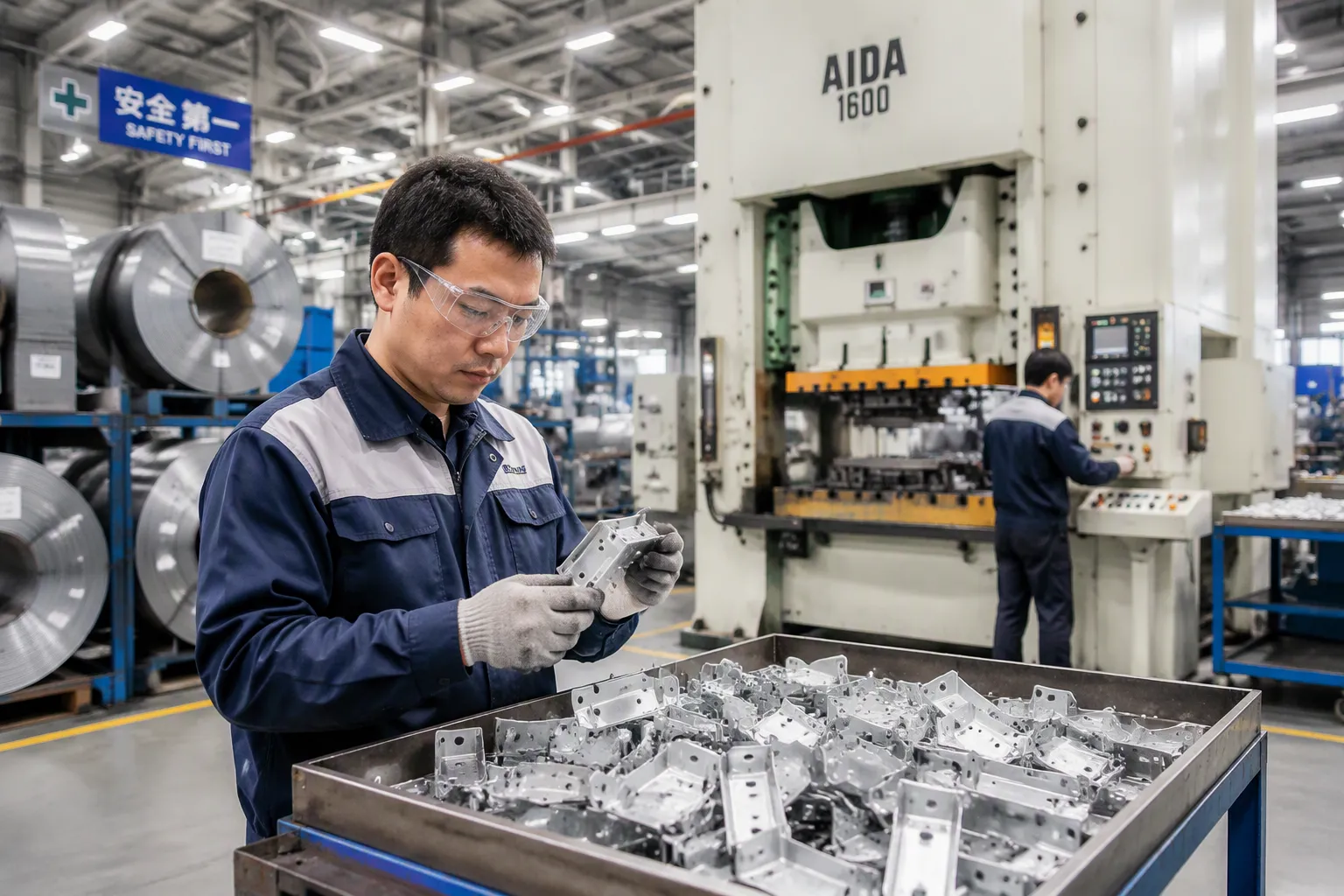
A cost-effective metal stamping manufacturer meets your technical needs, gives you the best total cost of ownership, runs a strong quality system, and meets compliance needs without hidden risks. These four factors—technical fit, total cost, quality systems, and compliance—make up the framework for every sourcing decision you make.
You can use this framework at each stage of supplier selection. This post gives you practical checkpoints and the exact questions to ask, from the first capability screening through quote comparison and final award. Use them to tell apart suppliers who only quote low from partners who deliver reliable parts at a predictable cost.
Make sure the manufacturer's technical skills fit your part's precision needs and how much you plan to produce.
Look at the total cost of ownership, not just the unit price, to find hidden expenses.
Check quality certifications and traceability practices to make sure part quality stays consistent.
Follow a step-by-step process to choose: define your needs, make a shortlist, audit, sample, and compare quotes.
The lowest price is rarely the lowest cost; a careful review protects you from hidden risks.
Your first screening test is whether the supplier can keep precision steady at large volumes. A supplier may hit tolerance on a sample and still drift once production runs for months. Ask how the metal stamping manufacturer holds clearances across millions of cycles, and request data from long runs rather than one-off trials.
Progressive die stamping excels in producing parts with tight tolerances and high repeatability. Each cycle of the stamping process guarantees that every piece is identical, ensuring uniform quality across large batches — a key advantage for sectors such as automotive, electronics, medical devices, and aerospace that depend on consistency.
Match the process to your part geometry. Custom stamping fits complex, precise parts that need multiple operations in one die. Other processes fit other needs, so confirm the supplier can explain why their recommended method suits your design.
Progressive die stamping is usually most cost-effective at large production runs. At that level, the tooling investment is paid back by a low per-part cost. Treat this as a general guideline, not a hard rule. For smaller volumes, ask the supplier to model the economics for your actual volume.
Tooling strategy drives both quality and cost. A supplier with an in-house tooling design and development team keeps die design, build, tryout, and repair under one roof. That control shortens design changes, tightens die maintenance, and gives one team clear accountability when parts drift out of tolerance.
Stamping Method | Initial Tooling Cost | Per-Piece Cost | Suitable Production Volume |
|---|---|---|---|
Progressive Die Stamping | Higher initial cost | Lower cost per piece | Large production runs |
Stage Tooling (Traditional) | Lower setup cost | Highest price per piece | Small, low-volume runs |
Use this checkpoint question: who designs and builds the die, and who repairs it when a punch wears? An in-house answer signals stronger process control.

The quoted unit price is a starting point, not the answer. Total cost of ownership adds tooling, freight, inventory, quality escapes, and administrative load to that number. A metal stamping manufacturer with a higher piece price can still win on total cost when you count every layer.
Custom stamping carries a large upfront setup cost, and that cost depends on design size and complexity. You should spread it across expected volume before you compare suppliers. Use the units-based method: tooling cost per part = total tooling investment ÷ expected lifetime volume. An $80,000 die spread over 400,000 parts adds $0.20 per part. Spread the same die over 250,000 parts and the charge rises to $0.32. The volume assumption is your main source of cost risk, so write your estimated annual usage into the contract.
You have several ways to structure recovery:
Structure | How it works | Best for |
|---|---|---|
Full upfront payment | You pay the entire tooling cost before production | Buyers with strong cash position who want ownership |
Full amortization | Tooling cost embedded into the per-part price | Cash-constrained buyers with reliable volume |
Hybrid (deposit + surcharge) | 30–50% upfront, balance recovered per part | Most balanced; most commonly used |
Time-based schedule | Fixed monthly recovery over program life | Defined program life with uncertain monthly demand |
A mid-size die revision and a design freeze before the purchase order is often the most cost-effective decision in a stamping program. Fixing the design early avoids rework, retooling, and launch scrap.
Domestic and overseas sourcing each fit different priorities. Domestic suppliers support risk reduction and part quality through visitable plants and short lead times. Overseas sourcing offers other trade-offs, and it suits programs with stable demand and tolerance for longer pipelines.
Ask every candidate how they calculate landed cost. Companies often miscalculate offshoring costs by 20% to 30% because they overlook hidden factors, according to the Reshoring Initiative TCO estimator. Quality failures can cost manufacturers up to 15% to 20% of total sales revenue.
The quoted unit price represents only about 60–70% of the true cost of overseas procurement once hidden variables are counted. Inventory carrying cost, freight volatility, lead times of 90–180 days versus 2–6 weeks domestically, tariff exposure, and quality escapes all shift the math.
Probe these areas in writing: freight coordination and customs clearance, tariff exposure, minimum order quantities that force you to hold stock, and who pays for sorting and rework when defects arrive. Ask for cumulative shipped quantities against any amortization schedule, and reconcile quarterly. Confirm that tooling title passes to you once paid, and secure relocation rights so you can move the die without duplicate charges. Track the outstanding tooling balance at all times, because a fully embedded charge hides a liability that surfaces if you switch suppliers mid-program.
Quality systems and compliance are your third screening filter. A supplier can pass the capability checks and still fail here. Ask for current certificates, not copies of expired ones. Check each certificate against the issuing body's register before you shortlist.
Match the certification to your industry. A general quality management system covers many buyers. Automotive programs usually expect the automotive quality management system standard. Aerospace work calls for the aerospace standard. Environmental and occupational health and safety standards show how the plant manages its wider operations.
Certification | Relevance |
|---|---|
IATF 16949 | Automotive quality management system standard |
AS 9100 D | Aerospace quality management standard |
ISO 45001:2018 | Occupational health and safety management |
ISO 14001:2015 | Environmental management system |
ISO 9001:2015 | General quality management system |
Certificates alone prove little. Ask how the metal stamping manufacturer controls its processes day to day. Request in-process inspection records, a corrective action example, and the method for containing suspect product. Confirm how the supplier sets inspection frequency and who signs off on a production run.
Traceability separates a controlled shop from an uncontrolled one. Raw material must be identifiable on arrival, with a documented method for verifying and tracking it through production. Mill test reports should be kept by heat number, and that heat number should appear on the traveler. The traveler must be reproducible for a run shipped years later.
Ask for a first article inspection record. The AS9102 Rev C format uses three forms: Form 1 for part and configuration identification, Form 2 for raw material and special process certifications, and Form 3 for dimensional results keyed to a balloon-numbered drawing. A new first article is triggered by a new part, an engineering change, a process or location change, and a lapse in production. Automotive-derived programs may require PPAP instead, a broader package that uses first article results as one element.
Treat missing lot traceability and expired certificates as red flags. Both signal a system you cannot audit with confidence.
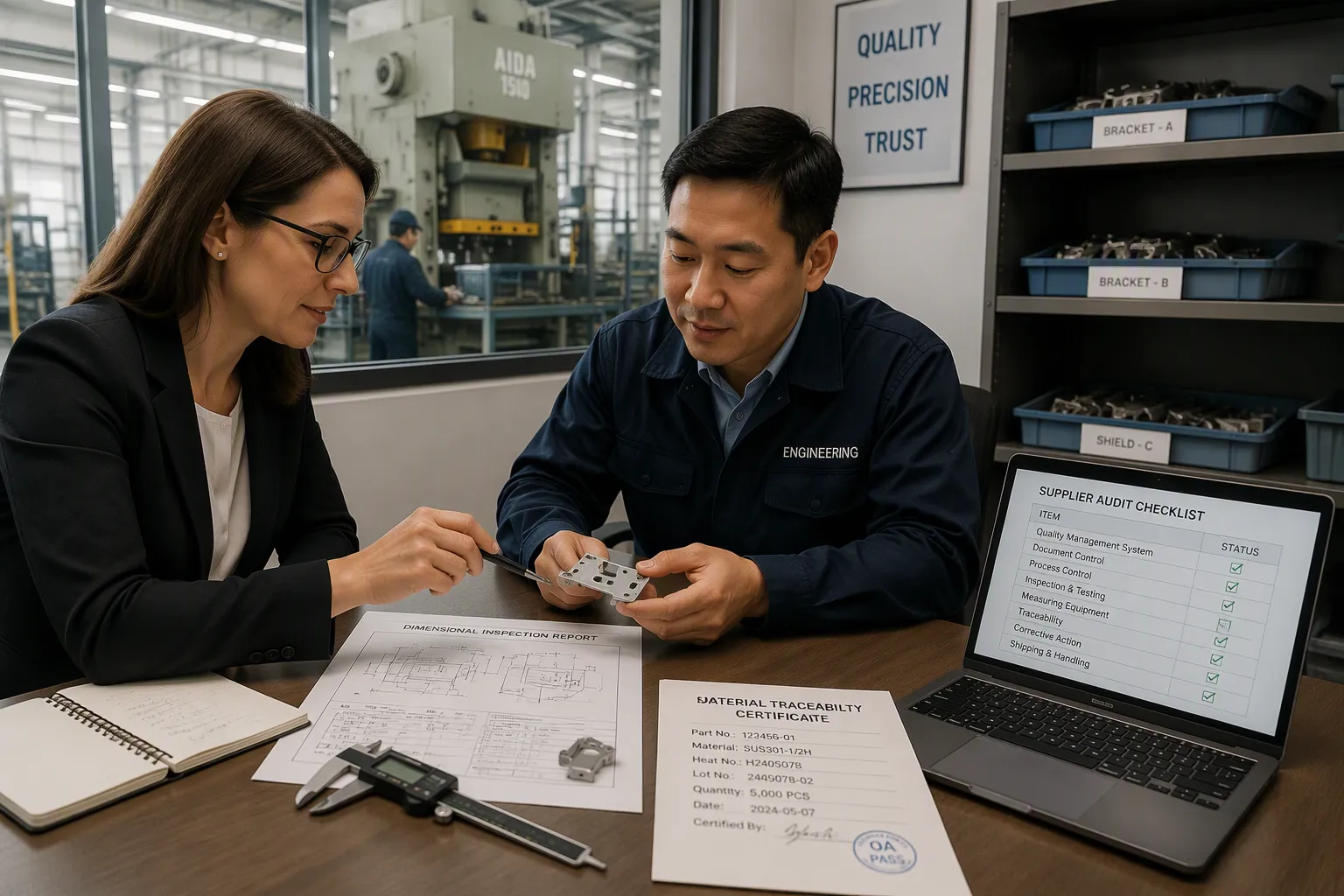
A low number on a quote tells you little about delivery. OEM purchasing teams should judge whether the metal stamping manufacturer can reliably ship conforming parts month after month. A structured process replaces guesswork with evidence at every stage.
Work through six stages in order: define requirements, shortlist, audit, request samples, compare quotes on identical terms, then award. Skipping a stage shifts risk onto your program later.
Start with a complete data package. Send the current drawing revision, material specification, thickness, forecast, initial release quantity, ship-to address, packaging instructions, and the name of the person authorized to approve samples. Add 3D models, GD&T, and surface treatment requirements. Incomplete specifications make quotes incomparable and invite rework.
Shortlist against clear criteria. Look for relevant industry experience, applicable certifications, dedicated DFM review, in-house die design and fabrication, proactive communication, and reasonable payment terms. Treat "just send us the drawing" as a warning sign. Ask for DFM feedback as part of the RFQ, not after award.
Then audit in person. Watch the technology run, meet the engineering team, and check tooling maintenance and change control. Confirm material traceability records, sampling and PPAP practice, and inspection equipment. Verify which secondary operations stay in-house, because split vendor networks multiply handoff risk.
Request samples and treat first-article sampling as a stability test at volume, not paperwork. Review the dimensional report, material records, and finish records before you release production.
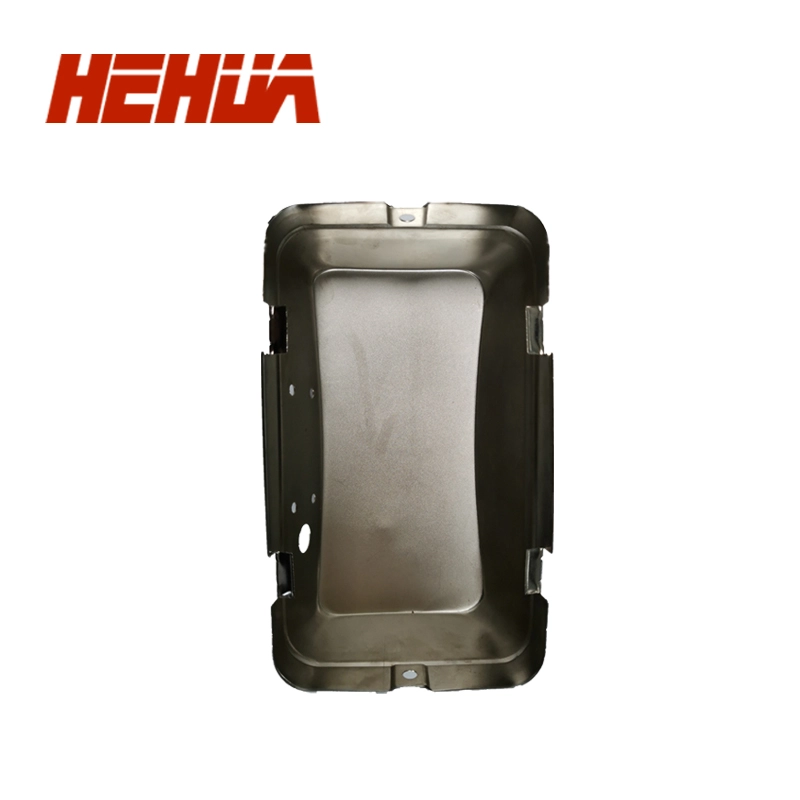
As one example of a progressive die stamping partner, Hehua Machinery Technology (Kunshan) Co., Ltd. serves new energy automobiles, high voltage motors, electronics, rail transit, and mechanical equipment spare parts.
Normalize every quote before you rank it. Require a full cost breakout covering material, tooling, press time, secondary operations, and packaging. Reject single-number quotes, because you cannot compare them.
Required quote element | Why it matters |
|---|---|
Material grade and cost basis | Exposes grade substitutions |
Scrap allowance | Strip layout changes material cost |
Tooling cost and amortization terms | Separates upfront from amortized structures |
Press tonnage and cycle assumptions | Reveals different equipment assumptions |
Secondary operations | Often the largest hidden variance |
Annual volume with release pattern | Volume drives piece price |
Lead time and validity period | Prevents comparing stale pricing |
Lock the material index date and validity window in writing. Convert each quote to total program cost at a realistic annual volume. Confirm which press tonnage and material width the part is planned for, and verify that press sits in the supplier's own facility.
Finally, settle tooling terms before award. Ask who holds title to the die at the end of the program, who pays for routine maintenance versus catastrophic damage, and what happens to any unamortized balance if the program ends early. A capable metal stamping manufacturer answers all three directly.
Four factors anchor a cost-effective decision: technical fit, total cost of ownership, quality systems, and compliance. Technical fit confirms the supplier holds precision at your volume. Total cost of ownership counts tooling, scrap, changeovers, and rework risk alongside the unit price. Quality systems and compliance prove the supplier can repeat conforming parts and document them.
The lowest quote is rarely the lowest cost. A structured evaluation protects you from hidden risks that surface after award, when tooling, freight, and quality escapes land on your program.
Build a checklist from the questions in this post. Apply it to your next supplier shortlist, and compare every candidate on the same terms before you commit.
Progressive die stamping usually pays off at large production runs. At that volume, the low per-part cost makes up for the tooling investment. Treat this as a guideline, not a rule. Ask your supplier to model the economics at your actual yearly usage before you commit.
Yes. The quoted unit price is only about 60–70% of true cost once you count freight, inventory, tariffs, and quality escapes. Convert every quote to total program cost at a realistic yearly volume. A higher piece price often wins once you add those layers.
Confirm who holds die title once you pay, who covers routine maintenance versus catastrophic damage, and what happens to any unamortized balance if the program ends early. Reconcile cumulative shipped quantities against the schedule every quarter. A capable supplier answers all three directly.
Match the certificate to your sector. Automotive programs usually expect IATF 16949, and aerospace work calls for AS 9100 D. General buyers can work with ISO 9001:2015. Check each certificate on the issuing body's register before you shortlist.
The AS9102 Rev C format uses three forms: Form 1 for part identification, Form 2 for raw material and special process certifications, and Form 3 for dimensional results keyed to a balloon-numbered drawing. Automotive-derived programs may require PPAP instead.


 AddressNo. 66 Xingpu Road, Lujia Town,Kunshan City, Factory Buildings 3 and 4
 en
 English
 繁体中文
 Italian
 Spanish
 Japanese
 Portuguese
 Korean
 Russian
 French
 German
 Estonian
 Arabic
 Indonesian




 Message