No single factory is the best Chinese laser cutting factory. The right partner for your custom brackets depends on your material, thickness, tolerance needs, volume, and budget.
This post gives you clear rules for choosing. You will see which factory types are great at bracket work. You will also get a step-by-step process to check them.
A laser cutter that works for a one-off prototype may fail at mass production. A low quote may hide rework costs. You will finish this post knowing how to compare quotes and pick a factory with confidence.
The best factory fits your bracket needs in material, thickness, tolerance, and volume, not just a famous name.
Before you place an order, ask for sample cuts in your material to check precision and edge quality.
A low price can hide the cost of fixing mistakes. Look at the total cost, not just the price for one part, to save money over time.
Check factories by asking technical questions, checking ISO 9001 certification, and testing with a small trial order.
The best factory is not about a famous name. It is the one whose skills match what your bracket needs. A shop that is great at thin aluminum covers may have trouble with thick steel gusset plates. So you must list your needs first, then find the factory that fits them.
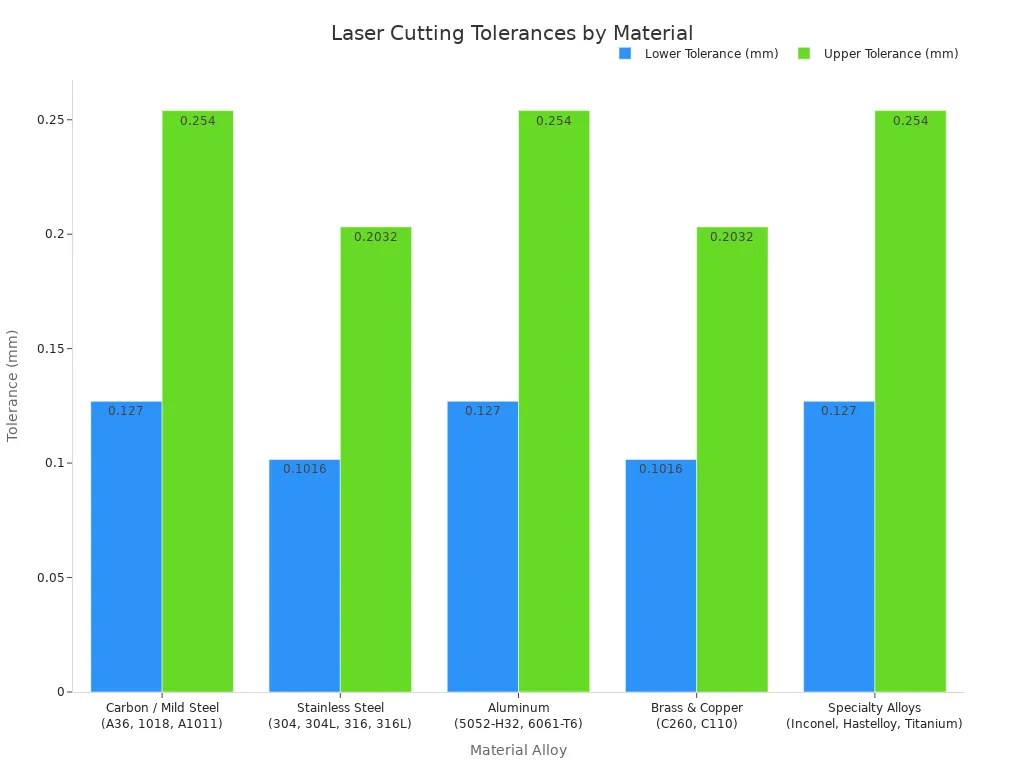
Tolerance is the first test. General metal laser cutting holds ±0.005" to ±0.010" (about ±0.127 mm to ±0.254 mm). Stainless steel gets tighter at ±0.004"–±0.008". A skilled chinese fiber laser manufacturer can do much better. Hehua, for example, holds ±0.03~±0.05 mm on its fiber laser machine. That precision matters for brackets that must line up with mating parts.
Edge quality also tells good factories apart from average ones. A clean, dross-free cut cuts down deburring time and helps coating stick better. Ask for sample cuts in your material before you commit.
Your bracket material decides which factory you pick. Carbon steel, stainless steel, aluminum, brass, and specialty alloys each cut in different ways. The table below shows standard tolerances by alloy.
Material Alloy | Standard Cutting Tolerance |
|---|---|
Carbon / Mild Steel | ±0.005" – ±0.010" |
Stainless Steel (304, 316) | ±0.004" – ±0.008" |
Aluminum (5052, 6061) | ±0.005" – ±0.010" |
Brass & Copper | ±0.004" – ±0.008" |
Specialty Alloys | ±0.005" – ±0.010" |
Hehua works with 0.5 mm to 12 mm sheets in SPCC, SGCC, stainless steel, and aluminum. That range covers most custom brackets. For quality assurance, check iso certifications. Haizol's B2B sourcing data shows 77.7% of fabrication-capable factories in China hold ISO 9001. This certification is your baseline signal for consistent sheet metal fabrication.
The Chinese laser cutting market has grown up over the last ten years. Top factories now match European and American quality at lower prices. This change means you can find a best chinese laser cutting factory without paying brand markups. The key is knowing where to look and what to compare.
Large-scale factories bring capacity and consistency. Hehua, for example, runs 17,800 m² of manufacturing space with over 160 employees. Its monthly output is more than 50,000 pieces. That scale supports steady mass production for sheet metal fabrication projects. A large factory also puts money into multiple laser cutting machine factory lines and automated systems. These resources cut down bottlenecks when you scale from prototype to full production.
Specialized workshops offer agility. They respond faster to design changes and small batches. However, their capacity limits them when your bracket order grows. They may also lack in-house finishing options like powder coating or anodizing. For complex brackets that need bending, riveting, and assembly, a large factory usually wins.
The table below sums up the trade-offs.
Factor | Large-Scale Factory | Specialized Workshop |
|---|---|---|
Monthly capacity | 50,000+ pieces | Limited |
In-house finishing | Yes | Often outsourced |
Design change speed | Moderate | Fast |
Unit price at volume | Lower | Higher |
Quality consistency | High | Variable |
The real difference is not size alone. It is responsive, direct-from-factory after-sales support. Many chinese manufacturers spend heavily on advertising. That spending raises your price without improving your bracket. Look for a partner that answers technical questions quickly and stands behind its work.
China's laser industry clusters in several regions. Each hub has strengths. The Pearl River Delta, including Shenzhen and Dongguan, leads in electronics enclosures and precision parts. The Yangtze River Delta, covering Suzhou and Ningbo, excels in automotive and industrial equipment. The Bohai Rim, with Tianjin and Qingdao, serves heavy machinery and construction.
Hehua operates from a major manufacturing base and serves automotive, rail transit, aerospace, and new energy industries. Its fiber laser cutting machines hold tolerances of ±0.03~0.05 mm. That precision suits custom brackets for industrial equipment cabinets and compressor enclosures.
When you evaluate a chinese fiber laser manufacturer, check its regional ecosystem. A hub with strong sheet metal fabrication supply chains shortens lead times. You get faster access to raw materials and finishing services. A chinese fiber laser manufacturer in a mature hub also finds skilled workers more easily. That labor pool supports consistent quality across your production runs.
Many affordable chinese fiber laser manufacturers now compete on service, not just price. They provide sheet metal unfolding drawings and quotations within 24 hours. They also offer fast prototype making in 3-5 days. These capabilities matter more than a famous brand name.
The top 5 chinese fiber laser manufacturers all share one trait. They treat communication as a core service. They assign engineers to your account. They answer questions about tolerances, materials, and finishing without delay. That direct line to the factory floor solves problems before they reach your assembly line.
A laser cutting machine factory that hides behind distributors will slow you down. You need direct access to the people who run the machine. Ask for a technical contact before you place any order. Test their response time with a real question about your bracket design.
The best chinese laser cutting factory for your brackets combines scale, precision, and open communication. It does not rely on advertising claims. It proves its value through samples, data, and fast replies.
A low price can seem like a good deal. But it often is not. The cheapest quote often hides costs in rework, delays, or bad tolerances. You pay twice when a bracket does not fit. Smart buyers look past the sticker price and study what the quote really covers.
A complete quote lists six things. Ask for each one in writing. First, the material grade and thickness. Second, the laser cutting time per part. Third, any finishing steps like powder coating or brushing. Fourth, tooling or setup fees. Fifth, shipping terms. Sixth, the warranty on dimensional accuracy.
When a quote leaves out finishing or tooling, the final bill will surprise you. A responsible chinese fiber laser manufacturer breaks down every line. Hehua provides sheet metal unfolding drawings and quotations within 24 hours. That clear pricing lets you compare fairly across suppliers.
ISO 9001:2015 implementation can lead to a 20–30% drop in rework and scrap in sheet metal fabrication. That saving shows up directly in your unit price over time.
A higher quote often shows better process control. Vertical integration is the clearest example. Hehua controls the full process with no outsourcing links. Material arrives, the laser cuts it, the brake bends it, and the line assembles it. Nothing leaves the building. That control removes hidden handoff costs and quality gaps.
You also avoid the classic trap of chasing the lowest laser price. A shop that outsources finishing adds days to your lead time. It also loses visibility when something goes wrong. An affordable chinese fiber laser manufacturer with in-house steps delivers a better best price-to-service ratio.
Think of your total cost, not your unit cost. Add rework, freight, and delay penalties. The factory with the higher quote often wins on that math. Ask about the warranty and after-sales support before you decide. A machine is only as good as the team behind it.
Brackets are not all the same. An L-bracket, a U-bracket, a gusset plate, and a mounting bracket each need different tolerances and finishes. A gusset plate for a compressor enclosure may just need a clean cut. A mounting bracket for a precision instrument may need tight hole alignment and an anodized finish. A factory with deep bracket experience already knows these differences. That knowledge saves you time and rework.
Look for in-house bending, riveting, and assembly. A factory that outsources these steps loses control over your tolerances. Hehua runs the full process under one roof, so your bracket moves from the laser to the brake to the assembly line without handoffs.
Ask about past work in your industry. Real expertise shows up in industrial equipment cabinets, compressor enclosures, construction machinery guards, and precision instrument enclosures. A chinese fiber laser manufacturer with this background understands how your bracket fits into a larger sheet metal fabrication project. That factory also offers customization options like powder coating, brushing, and anodizing to match your anti-corrosion and wear needs.
You can test a factory's bracket knowledge with a few direct questions. Their answers tell you more than any brochure.
How do you hold hole-to-edge tolerance on a bent bracket?
What is your standard tolerance on the laser, and how do you verify it?
Can you show a sample bracket with bending and riveting?
How do you control distortion on thin gusset plates?
What finishing steps do you keep in-house?
A strong chinese fiber laser manufacturer answers these with data, not vague claims. Hehua holds ±0.03~0.05 mm on its fiber laser machine and supports rapid prototyping in 3-5 days. Fast, clear communication on these points signals a partner who will not disappear after the first order. The machine matters, but the team behind it matters more.
You now have a shortlist. The next step is a side-by-side comparison. This method turns a gut feeling into a clear decision. It also gives you proof when a manager asks why you picked one supplier.
Build a simple table. List your top three factories across the top. List your requirements down the side. Fill in each cell with real data, not marketing claims. Ask every supplier for the same facts so the rows stay fair.
Factor | Hehua (Reference) | ||
|---|---|---|---|
Laser tolerance | ±0.03~±0.05 mm | ||
Materials and thickness | 0.5–12 mm SPCC, SGCC, stainless, aluminum | ||
Finishing options | Powder coating, brushing, anodizing | ||
Lead time | 7–10 days simple parts; 15–30 days complex assemblies | ||
On-time delivery | ≥98% | ||
MOQ | Flexible | ||
iso certifications | ISO 9001 | ||
After-sales and warranty | Technical guidance and rework support |
Minimum order quantity deserves its own row. Many Chinese factories set MOQs of 500 or 1,000 units to justify tooling and setup time. Some low-MOQ suppliers accept orders as small as 20 units. For common or standardized metal brackets, the typical minimum order quantity is 100 to 10,000 pieces, though these MOQs are often negotiable. Prototype quantities can go as low as 1 piece, while production runs typically reach hundreds to thousands of units. Match this row to your own volume before you rank anyone.
Some warning signs should remove a factory from your list at once. Watch for these:
No ISO 9001 or other recognized iso certifications.
Vague tolerance claims, such as "tight" or "high precision," with no number attached.
No sampling process before mass production.
Slow or evasive communication on technical questions.
A supplier who cannot state a tolerance number will not control it. A supplier who skips sampling shifts all risk onto your assembly line. A supplier who dodges your emails will dodge your problems later.
Reputation grows from repeat orders, not from ads. Ask each factory for two references in your industry. Then ask those references about rework rates and response speed. A strong chinese fiber laser manufacturer welcomes this check. It knows its record holds up.
Compare the total picture, not one line. A low price with weak quality costs more over a year. A fast lead time with poor reliability breaks your schedule. Weigh tolerance, finishing, delivery, and support together. The best chinese laser cutting factory for your brackets will score well across the whole table, not just on cost.
Most top Chinese laser machines use Raycus or IPG laser sources and Precitec cutting heads. The machine itself is almost never what makes one factory different from another. What really sets a good factory apart from a great one is how it runs that machine and what it gives you after the cut.
Hehua runs high-power fiber laser cutting machines and automatic production lines. The factory keeps ±0.03~0.05 mm on its laser, which works well for tight bracket jobs. After cutting, you get real finishing choices. Powder coating adds protection against rust and wear. Brushing gives a clean, even look. Anodizing protects aluminum brackets and makes them look better. These options allow customization for industrial equipment cabinets, compressor enclosures, and precision instrument housings.
A high-quality machine means little if communication is slow or unclear. You need to reach engineers directly who understand your bracket. Hehua gives sheet metal unfolding drawings and quotations within 24 hours. That speed lets you check the factory early on.
Sampling proves what a factory can do before you commit. Sample lead time runs about 7 days in the Chinese sheet metal industry. Hehua moves faster with rapid prototyping in 3-5 days. For larger runs, 100 to 1,000 pieces ship in about 15 days. Normal simple parts take 7-10 days. Complex precision assemblies take 15-30 days. The on-time delivery rate stays at or above 98%.
After-sales support covers the whole cycle. You get technical guidance, rework services, and help from prototype to mass production. A warranty backs the work. This full-process control, with no outsourcing links, keeps quality steady across every order. Many Chinese manufacturers compete on price alone. The best ones compete on service and follow-through.
You now have a clear picture of what to look for. The next move is a structured vetting process. This system removes guesswork. It helps you pick a factory that delivers your custom brackets on time and to spec.
Start by defining your bracket requirements in writing. List the material, thickness, tolerance, finish, and volume. Send this document to several factories. Request a quote with all costs itemized. Tell each supplier you will compare their quotes side by side.
Review each quote for completeness. A good chinese fiber laser manufacturer provides detailed pricing within 24 hours. Hehua, for example, delivers sheet metal fabrication drawings and quotations within one day. Ask for a sample that matches your bracket design. A serious factory uses its laser to cut a prototype. This laser cutting test proves the machine can hold your tolerances. Look for rapid prototyping in 3-5 days. This speed shows the factory has its laser equipment ready and its machine operators skilled. The quality of the first sample tells you a lot about the factory's process control.
After the sample passes inspection, audit the certifications. Check for ISO 9001. This quality system reduces rework and delays. Place a small trial order of 50 to 100 pieces. Use this batch to test the laser cutting consistency and the machine's repeatability. If the trial meets your standards, scale up the order. Look for a chinese fiber laser manufacturer that offers full-process control from start to finish.
Do not commit to bulk production without testing communication first. Send a technical question about your bracket design. Measure how fast the factory responds. A reliable chinese fiber laser manufacturer answers within one business day. The response should include data from the laser cutting process, not vague promises. This communication speed shows respect for your timeline.
Test the factory's real capabilities with a sample order. The sample reveals how well the laser cuts your material. It shows how the factory handles your finish requirements. Hehua's rapid prototyping service lets you check machine precision before you place a larger order. You can test the laser's edge quality and hole placement quickly. A top chinese fiber laser manufacturer uses the same laser equipment for prototypes and production. This consistency gives you confidence.
Pay attention to the laser cut edge finish. Check for dross and burrs. Ensure the hole positions match your drawing. If the sample passes, move forward. If it fails, move on. A factory that cannot deliver on a prototype using its own machine will fail on a production run.
Use this vetting process for every new bracket design. It works for simple L-brackets and complex assemblies. The time you invest in vetting saves you weeks of rework later. Take advantage of this rapid prototyping offer to confirm your choice. This sheet metal fabrication approach ensures you find the right partner for your custom brackets.
The best chinese laser cutting factory for your custom brackets matches your specific tolerances, materials, volume, and budget. No single laser supplier fits every project. Use the criteria from this post to shortlist two or three chinese fiber laser manufacturer options. Request laser cut samples. Test the laser quality against your bracket design. Let your bracket requirements choose the factory, not a low price. A chinese fiber laser manufacturer with sheet metal fabrication experience delivers consistent machine performance on every laser job. Define your bracket needs first. Then let those needs guide your final laser supplier choice. The right laser machine saves you time and rework costs. Price matters, but fit and precision matter more for custom laser cut brackets.
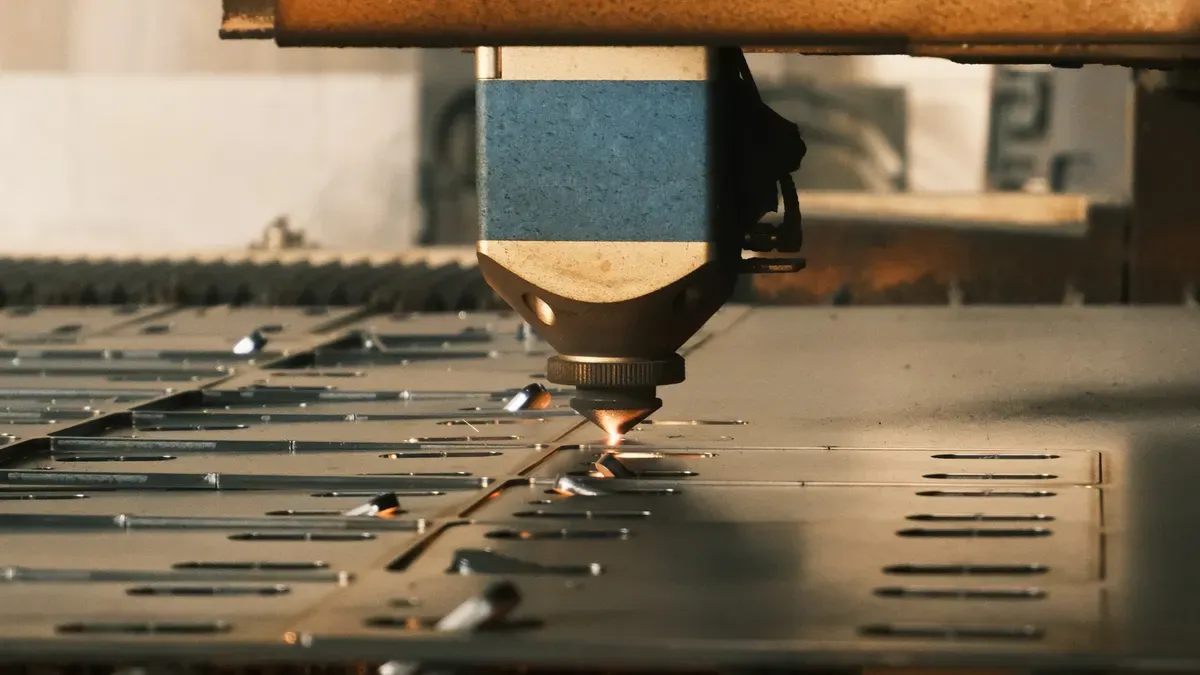
Fiber laser cutting works well for L-brackets, U-brackets, gusset plates, and mounting brackets. The laser makes clean edges with tight tolerances. Complex shapes with small holes work better on a fiber laser machine than on a punch press. This process fits parts that are 0.5 mm to 12 mm thick.
Send a 2D CAD drawing in DXF or DWG format. Include the material type, thickness, and finish requirements. The factory can unfold your 3D model if you have one. A good chinese fiber laser manufacturer gives feedback within 24 hours. This keeps the laser quoting process fast.
A reliable factory checks laser tolerances with measurement tools on every batch. It holds its laser machine to ±0.03~0.05 mm. Look for ISO 9001 certification as a baseline. Testing a sample order shows the consistent result before you scale up production.
Yes. Many factories offer in-house powder coating, brushing, and anodizing. This full sheet metal fabrication process removes handoffs between shops. Your finished bracket arrives ready to assemble. Ask about the finishing options when you request your quote.


 AddressNo. 66 Xingpu Road, Lujia Town,Kunshan City, Factory Buildings 3 and 4
  en
en
 English
 繁体中文
繁体中文 Italian
 Spanish
 Japanese
 Portuguese
 Korean
 Russian
 French
 German
 Estonian
 Arabic
 Indonesian


 Message