Choosing a sheet metal fabrication supplier is rarely just about finding a factory that can cut and bend metal. For industrial buyers, the real question is whether the supplier can turn drawings into repeatable parts, keep dimensions stable from batch to batch, and support the kind of production rhythm that real equipment projects require.
This becomes even more important when sourcing from overseas. A supplier may have a long machine list, but if engineering communication is weak, process control is inconsistent, or production planning is not disciplined, the project can still become difficult. That is why buyers looking for a long-term partner in China should evaluate more than basic capacity.
For many industrial applications, a capable sheet metal fabrication supplier in China should be able to combine laser cutting, bending, welding, and assembly support into one coordinated workflow. The strength is not in any single process alone. It is in how those processes work together to produce stable, usable parts for real equipment.
A good supplier should be able to discuss your drawing in practical manufacturing terms. That includes more than material type and thickness. They should also be able to talk about bend radius, edge condition, hole-to-bend distance, tolerance risk, flatness after cutting, assembly sequence, and whether the design is suitable for efficient production.
This is where many sourcing problems begin. A supplier may say yes to a project without raising any manufacturability concerns. Later, the same project runs into cracking near bends, unstable angle control, distortion after welding, or hole position issues that affect installation.
A stronger supplier usually asks better questions early. They want to understand:
● final application of the part
● material grade and thickness
● cosmetic or structural requirements
● critical dimensions
● fit-up requirements with mating parts
● whether the part is for prototype, pilot, or stable batch production
● whether surface treatment comes before or after fabrication
● packing and transport needs
This kind of communication saves time because it reduces avoidable rework later.
For most industrial sheet metal projects, laser cutting and bending are the two core forming steps. They are different operations, but they need to be planned and controlled together. If the cutting result does not match the bending requirements, even a simple part can become difficult to assemble or unstable in production.
Laser cutting defines the flat pattern of the part. It affects outer contours, hole positions, slots, edge quality, and the overall geometry that will later go into bending. A supplier with good cutting capability should be able to maintain clean contours, stable hole quality, and limited heat impact across common materials such as carbon steel, stainless steel, aluminum, copper, and brass. For parts with tight edge conditions or direct assembly requirements, this matters a great deal.
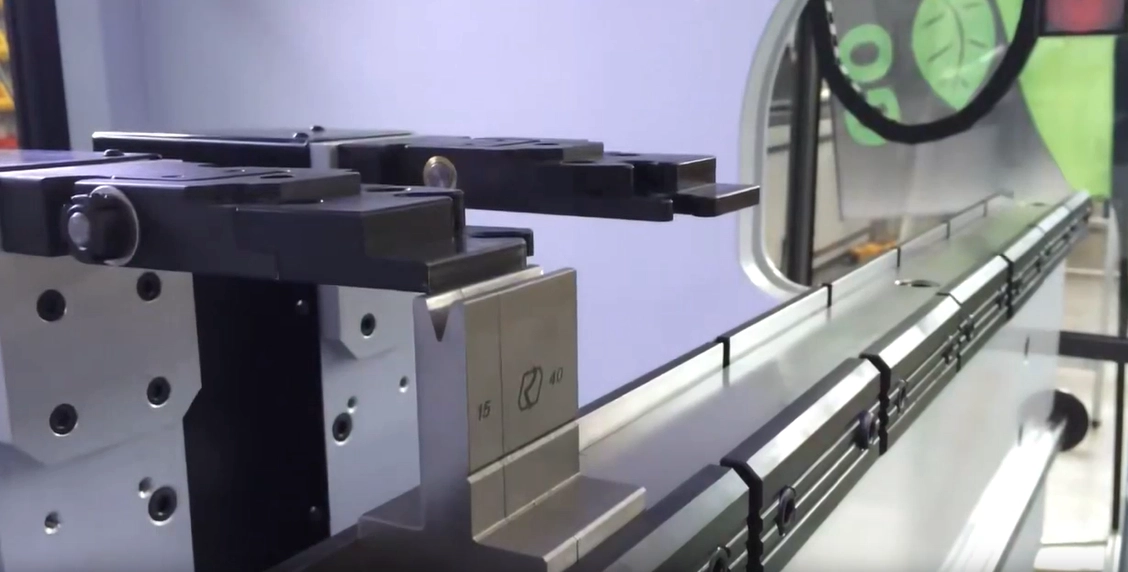
Bending then turns the flat blank into a functional structure. At this stage, angle consistency, bend sequence, backgauge control, straightness, and deformation control all affect whether the part will match the final assembly. If these points are not managed well, installation becomes more difficult and dimensional variation increases.
A reliable supplier should be able to explain how laser cutting and bending are connected through one coordinated fabrication process. For example, they should be able to discuss:
● how they handle thin versus thick materials
● how they control heat-affected zone during cutting
● how they plan the flat pattern to suit later bending
● how they arrange bend sequence for the final shape
● how they choose tooling for small-radius or long-length bending
● how they prevent edge damage, cracking, or deformation
● how they keep angle consistency over repeated batch production
If a factory treats laser cutting and bending as two separate workshop actions, part quality can easily become unstable. If the supplier manages them as one connected fabrication workflow, the final result is usually more consistent and easier to assemble.
Many industrial equipment parts are not just simple flat brackets. They may include boxes, C-shaped profiles, Z-shaped sections, cover panels, electrical enclosures, support frames, mounting plates, or multi-bend structures.
That is why one of the first things to confirm is shape capability. A reliable supplier should not only say that they do custom sheet metal fabrication. They should be able to explain what kinds of shapes they make regularly and how they approach more difficult structures.
For instance, suppliers with stronger bending capability can often support:
● one-piece box structures
● narrow-channel bends
● long side panels
● sharp-angle panels
● precision chassis parts
● enclosure housings
● multi-step formed sheet parts
This matters because complex parts are where real process capability shows up. Simple parts can be made by many workshops. Consistent multi-bend parts with controlled straightness and angle accuracy are a better indicator of whether the supplier is suitable for industrial equipment programs.
A good first sample is useful, but it does not tell the whole story. The more important question is whether the supplier can keep the same result after 500 parts, 5,000 parts, or after a design revision.
Repeatability in sheet metal fabrication depends on several factors:
● cutting stability
● backgauge accuracy
● tooling selection
● material consistency
● operator discipline
● work instruction control
● inspection standards
● changeover management
If a supplier cannot explain their repeatability method, that usually means the process depends too much on operator experience rather than system control.
A stronger supplier will usually describe how they confirm first articles, how they inspect in-process dimensions, how they check final batches, and how they record key production data. For OEM and industrial buyers, this level of control is often more important than one-time sample quality.
A sheet metal supplier serving decorative retail products is different from one serving industrial equipment. Equipment projects usually involve more than appearance. They also involve assembly fit, structural rigidity, service access, electrical or mechanical integration, and long-term reliability.
For industrial buyers, it is worth choosing a supplier that understands applications such as:
● machine covers
● equipment enclosures
● electrical boxes
● support brackets
● structural frames
● cabinets
● operating panels
● protection guards
● mounting structures
This matters because equipment parts often need a balance of precision and practicality. A panel may need good appearance, but it also needs consistent bend geometry so that it fits the frame correctly. A box may need clean cutting, but it also needs enough rigidity after fabrication to survive transport and installation.
A supplier familiar with industrial equipment fabrication usually makes better decisions around process sequence, tolerance priorities, reinforcement design, and downstream usability.
Not every project starts with stable high-volume demand. Some begin with prototype samples, then move to pilot runs, then to repeat batch production. Others require different materials for the same basic part family.
A practical sheet metal fabrication supplier in China should be able to support this kind of variation. That includes experience with:
● carbon steel
● stainless steel
● aluminum
● copper
● brass
● titanium in selected cases
● laminated or composite sheet in special applications
They should also be able to support different project stages without making the process unnecessarily rigid. For example, prototype work may need faster drawing review and flexible setup. Repeat production may need better fixture planning, packaging consistency, and delivery coordination.
If a supplier only works well at one stage, they may become a bottleneck as the project develops.
Some factories talk about quality as if it is a final inspection step. That is not enough for custom sheet metal fabrication. Real quality control starts before production and continues during the process.
A reliable supplier should have methods to control:
● blank size and contour
● hole accuracy
● edge condition
● bend angle
● bend sequence consistency
● straightness on long parts
● fit of assembled structures
● cosmetic surface condition
This is especially important for laser-cut and bent parts because small variation in the early step can create larger fit-up problems later. A stronger supplier does not wait until the end to discover issues. They control them at process level.
For buyers, one useful sign is whether the supplier can explain how they prevent defects, not just how they sort them after production.
A supplier may have strong fabrication equipment and still struggle with delivery if internal coordination is weak. That is why production management is a major part of supplier evaluation.
For custom equipment parts, buyers should pay attention to how the factory handles:
● order planning
● drawing revision control
● material scheduling
● workshop coordination
● inventory tracking
● quality records
● project follow-up
Factories with better internal systems usually handle mixed projects more smoothly, especially when several custom parts move at once. For overseas buyers, this matters because communication delays and production confusion are harder to fix remotely.
A supplier with structured management is more likely to support stable lead times, clear project status, and consistent output across batches.
Choosing a sheet metal fabrication supplier in China should not be based only on whether they can quote a part. It should be based on whether they can support the real needs of industrial manufacturing over time.
A dependable supplier should be able to:
● understand drawings in manufacturing terms
● combine laser cutting and bending effectively
● support custom shapes and structures
● keep repeatability under control
● work across different materials
● understand industrial equipment applications
● manage quality through the process
● support delivery with organized internal systems
That combination is what turns a fabrication workshop into a useful long-term partner.
For buyers sourcing equipment housings, structural panels, cabinets, brackets, and custom assemblies, the best supplier is usually not the one with the longest machine list. It is the one that can connect engineering, production, and service in a practical way.
For companies evaluating custom sheet metal fabrication in China, that is the standard worth using.


 AddressNo. 66 Xingpu Road, Lujia Town,Kunshan City, Factory Buildings 3 and 4
  en
en
 English
 繁体中文
繁体中文 Italian
 Spanish
 Japanese
 Portuguese
 Korean
 Russian
 French
 German
 Estonian
 Arabic
 Indonesian


 Message