In automotive manufacturing, suppliers are constantly asked to deliver more than just parts. They need to deliver stable dimensions, repeatable quality, good surface condition, and production efficiency that can support long-term programs. This is one reason progressive die stamping remains such an important process for automotive metal parts.
For many brackets, hinges, reinforcements, covers, motor-related parts, and structural metal components, progressive die stamping offers a practical balance between speed, precision, and consistency. When the tooling and process are developed correctly, it can turn coil material into finished or near-finished parts in a continuous flow, reducing extra handling and improving output stability. For automotive projects that require both scale and repeatability, Progressive Die Stamping is often one of the most effective manufacturing solutions.
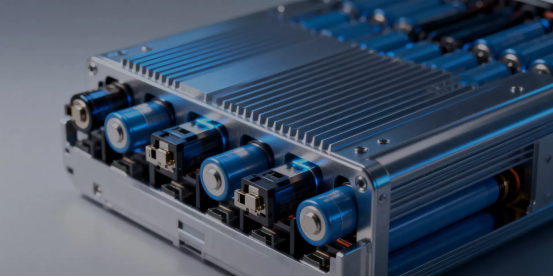
At the same time, stamping is not just about production speed. In the automotive sector, it is closely tied to part performance, assembly efficiency, traceability, and supply chain stability. This is especially true as vehicle platforms continue to evolve and more manufacturers move toward lighter structures, new energy systems, and tighter quality requirements. For companies working in the automotive metal parts field, understanding where progressive die stamping fits is important when selecting the right process for different component types.
Automotive metal parts usually share a few common production characteristics. First, volumes are often high. Second, the parts need dimensional consistency because they must fit into downstream welding, assembly, or module integration. Third, many parts involve multiple features, such as holes, bends, flanges, embossed sections, reinforcing ribs, or formed profiles. If these features are created through separate operations, cycle time increases and variation risk becomes harder to control.
Progressive die stamping addresses that problem by placing several operations into one die sequence. Material moves from station to station, and each station performs a specific task such as punching, blanking, drawing, flanging, shaping, or trimming. By the time the strip reaches the final stage, the part is much closer to the required finished form.
In automotive applications, that approach is useful because it reduces part handling, shortens production flow, and helps maintain stable feature-to-feature relationships. For OEM and Tier suppliers, that usually means fewer secondary steps, smoother assembly, and better repeatability in mass production.
Automotive programs do not usually reward processes that only work well in small batches. Once a part enters stable supply, the manufacturer needs output that can be maintained shift after shift.
Progressive die stamping is well suited to this environment because it supports continuous production. Depending on part structure and tooling design, output can be significantly higher than machining-based routes for sheet metal components. That does not just help with total capacity. It also improves delivery rhythm, especially when the program involves recurring schedules and steady replenishment.
This matters for automotive supply chains because production planning is closely linked to reliability. A process that can run at stable speed and stable quality is easier to schedule than one that depends heavily on repeated manual operations.
Assembly problems often come from variation that seems small on paper but becomes serious at the next station. Hole position drift, poor flatness, inconsistent flange angle, and unstable formed features can all affect fit-up.
Progressive die stamping helps control this because key features are built into the same tooling route. Instead of moving the part between unrelated operations, the part progresses through a controlled die structure where station relationships can be managed more tightly.
For automotive brackets, hinge-related parts, motor laminations, small structural reinforcements, and connection hardware, this consistency is a major advantage. A part that comes off the press ready for direct assembly is far more useful than one that needs repeated manual adjustment.
A common misunderstanding is that stamping only works for simple flat parts. In reality, well-designed progressive tooling can handle a wide range of automotive geometries.
Deep drawing, side punching, flanging, shaping, and rib formation can be integrated into the process depending on the part design. That makes progressive stamping useful not only for flat blanks, but also for parts with three-dimensional structure.
This is important in automotive manufacturing, where a large number of metal parts combine structural function with packaging constraints. Components often need to fit around surrounding systems, maintain rigidity, and still remain suitable for high-volume production. Progressive stamping can support that balance when the part is engineered with manufacturability in mind.
Material utilization becomes increasingly important as part volumes rise. Even a small percentage improvement matters over long production cycles.
With proper strip layout, progressive die stamping can achieve better material efficiency than less optimized cutting methods. This is especially valuable when using stainless steel, coated materials, silicon steel, aluminum, or other materials where waste directly affects overall manufacturing cost and supply stability.
For automotive manufacturers, better material use is not only a financial issue. It also connects to sustainability targets and more disciplined resource control across the supply chain.
Some automotive parts go directly into assembly. Others go to coating, welding, or further subassembly. In either case, surface condition matters.
A stable stamping process can help preserve surface quality, especially when material handling, die design, lubrication, and burr control are managed correctly. This is important for visible metal parts, coated parts, shielding components, and parts where burrs or scratches create downstream risk.
In production, poor surface performance often causes more trouble than expected. It can delay assembly, trigger sorting, or create rework that was not planned at quotation stage. That is why automotive buyers usually pay close attention not only to dimension reports, but also to edge condition and appearance consistency.
The automotive industry uses progressive die stamping in a wide range of parts, from small precision components to larger structural parts.
A practical example is motor core production for new energy systems. Thin-gauge electrical steel requires high accuracy, good burr control, and repeatable stacking-related performance. In these applications, stamping precision directly affects downstream motor efficiency and assembly quality.
Door hinge components are another good example. These parts may require high-strength steel, deep drawing, side features, and strict position control. When processed properly, stamping can achieve the required geometry without additional machining, which improves efficiency and keeps the part flow simpler.
Other common applications include:
The exact process route will vary depending on part thickness, material type, geometry, and volume, but the principle remains the same: progressive stamping works best where continuous production, dimensional consistency, and integrated operations are important.
The benefits of progressive die stamping are real, but they do not happen automatically. In automotive projects, results depend on the strength of the full manufacturing system behind the press line.
Automotive parts often need more than a basic die. The tool has to support production life, dimensional consistency, and stable forming performance over long runs. Tool steel choice, insert design, simulation, maintenance planning, and in-die function integration all matter.
Stable feeding is critical, especially for thinner materials or high-speed running. Servo feeding, automated roll handling, and fast die change systems improve both process control and production flexibility.
Automotive stamping is not only about making parts; it is about proving control. First-piece inspection, in-process checks, final comparison, defect monitoring, and data traceability all help reduce risk. If each batch can be traced back to material lot, die number, operator, and process data, response speed becomes much better when questions arise.
A factory that supports automotive stamping well usually combines press capacity with project management, quality control, and cross-department coordination. That is where certifications and digital systems matter. They help turn process capability into stable customer delivery.
Progressive die stamping continues to be one of the most practical processes for automotive metal parts because it matches the reality of the industry. Automotive manufacturing needs repeatability, volume, efficiency, and dimensional control. It also needs suppliers that can support changing product requirements without losing production discipline.
When applied to the right parts, progressive die stamping can reduce process complexity, improve assembly performance, and support long-term program stability. For OEM and industrial buyers, the real value is not just in fast production. It is in getting stamped parts that are consistent enough to support real-world automotive manufacturing without creating extra work downstream.
For that reason, progressive die stamping remains a key manufacturing route for many automotive and new energy metal components, especially where production scale and part consistency have to go together.


 AddressNo. 66 Xingpu Road, Lujia Town,Kunshan City, Factory Buildings 3 and 4
  en
en
 English
 繁体中文
繁体中文 Italian
 Spanish
 Japanese
 Portuguese
 Korean
 Russian
 French
 German
 Estonian
 Arabic
 Indonesian




 Message