Finding a sheet metal fabrication manufacturer is not difficult. Finding one that can support a project smoothly from drawing review to repeat production is much harder.
Many buyers start with a simple checklist: machine list, factory size, and whether the supplier says they can handle custom work. Those things matter, but they do not tell the whole story. In real industrial projects, reliability usually depends on how well the manufacturer understands the part, controls the process, communicates engineering issues, and keeps production consistent when requirements change.
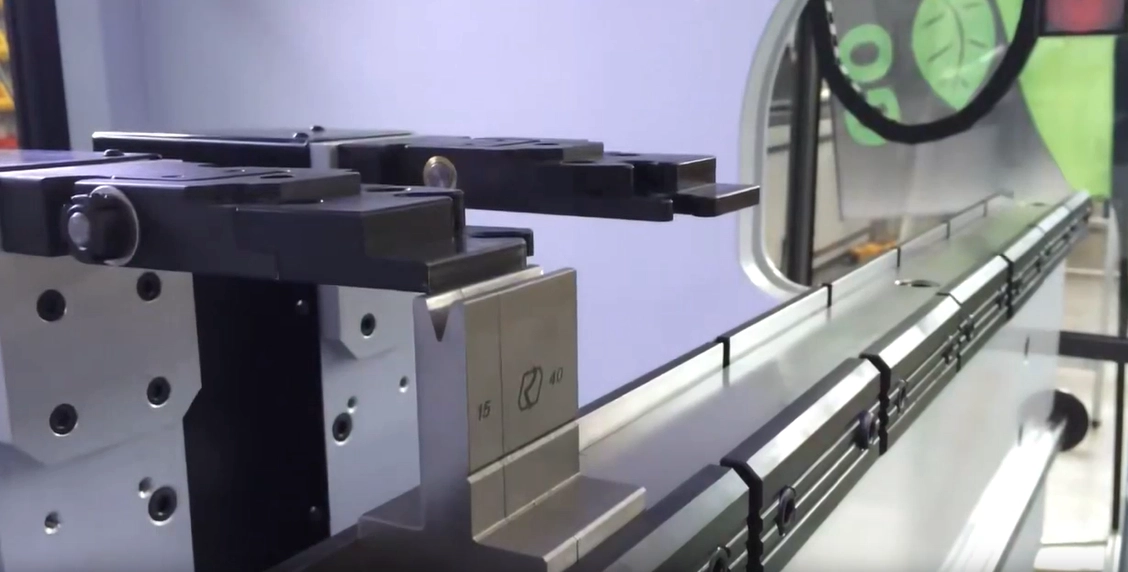
This is why choosing a sheet metal fabrication partner should go beyond comparing quotations or workshop photos. A reliable manufacturer should be able to help reduce project risk, support assembly requirements, and keep quality stable across every batch. For buyers sourcing custom enclosures, structural parts, machine housings, electrical boxes, cabinets, and support frames, a capable sheet metal fabrication manufacturershould bring both process strength and practical project support.
The first sign of a reliable manufacturer usually appears before production begins.
A weaker supplier often reviews drawings at a very superficial level. They confirm thickness, material, and quantity, then move directly to quotation. A stronger supplier will usually go further. They will review whether the part is practical for laser cutting, whether the bend sequence is reasonable, whether small holes are too close to the bend line, whether the chosen inner radius is realistic, and whether the final structure can be made without distortion or unnecessary secondary work.
This matters because many production issues start in the drawing stage. A cabinet panel may look simple, but if the bend order is wrong, it may become difficult to control the final dimensions. A bracket may look easy to cut, but if the slot geometry is not suitable for fabrication, assembly may become unstable later. A reliable manufacturer should be able to identify these issues early and discuss them clearly.
In other words, reliability is not only about making what the drawing shows. It is also about knowing what the drawing means in manufacturing.
For most industrial sheet metal parts, manufacturing is not a single operation. It is a chain.
Laser cutting creates the blank and defines the contour. Bending gives the part its functional shape. Welding may join sections into a larger assembly. Surface treatment may protect or improve appearance. Inspection confirms whether the result matches the intended use.
If a manufacturer cannot coordinate these steps well, part quality becomes harder to control. Even when the individual operations are acceptable, the final result may still be inconsistent.
This is why it is worth checking whether the factory has a process chain that fits your part type. In many cases, laser cutting and bending are the foundation. A reliable supplier should be able to explain how they move from raw sheet to formed part without losing dimensional control.
For example, laser cutting should provide stable contours, clean edges, accurate holes, and a limited heat-affected zone. Bending should provide repeatable angle control, proper straightness, and suitable forming capability for box, C-shape, Z-shape, and other structural parts. If both processes are controlled as one connected workflow, the final part is much more likely to be usable without extra adjustment.
Many factories promote cutting speed, but buyers should focus more on control.
A reliable sheet metal fabrication manufacturer should be able to process different materials cleanly and consistently, including carbon steel, stainless steel, aluminum, copper, and brass where needed. More importantly, the cutting result should support what comes next. Holes should be placed accurately. Sharp corners should remain stable. Edges should be suitable for bending or direct assembly. Heat impact should be managed so the material does not create problems in later operations.
For parts with assembly holes, mounting slots, fine cutouts, or visible contours, cutting quality directly affects the finished product. A supplier that can keep cutting stable across different materials and thickness ranges is usually much easier to work with in real projects than one that only performs well on a narrow set of parts.
Bending is one of the clearest ways to judge whether a manufacturer is truly reliable.
A part can be laser cut accurately and still fail in actual use if the bending process is unstable. Poor angle repeatability, inconsistent flange size, deformation in long sections, or weak control of small-radius bends can all cause trouble during assembly.
A good manufacturer should be able to support more than basic 90-degree bends. They should understand one-time forming where possible, high precision angle control, small-radius bending for chassis or panel work, long straightness for larger sections, and multi-step bends for boxes, discs, C-shaped profiles, and Z-shaped parts.
This is important because many industrial buyers are not sourcing flat blanks. They need finished or near-finished parts that can go directly into assembly. If the manufacturer can control bending well, the part becomes easier to install and the overall project becomes more stable.
Not every sheet metal part serves the same purpose.
A frame for industrial equipment is different from a thin electrical enclosure. A machine cover is different from a crane electrical box. A support structure for automation equipment has different requirements from a visible stainless steel housing.
This is why buyers should check whether the supplier understands the actual application of the part. Reliable manufacturers usually ask where the part will be used, what it connects to, whether appearance matters, whether it carries load, whether it needs sealing, and whether it must fit into a larger assembly.
That kind of awareness changes how the part is made. A manufacturer serving industrial projects should know when straightness matters more than surface appearance, when edge quality affects wiring or installation, and when a box structure needs better rigidity rather than just acceptable dimensions on paper.
Application understanding is especially useful in custom fabrication because two parts with similar drawings may still need different process priorities.
A good sample can create confidence, but repeatability is what keeps the program running.
A reliable manufacturer should be able to make the same part again and again with minimal drift. That means controlling not only the machine, but also the material, work instructions, tooling selection, process settings, and inspection points.
This becomes critical when parts are reordered over time or when the customer needs multiple batches to fit the same assembly standard. If each batch behaves differently, the cost of coordination and correction quickly increases.
Reliable suppliers usually build repeatability into the process by checking first pieces carefully, monitoring key dimensions during production, and comparing final parts before release. They do not rely on luck or operator intuition alone.
For OEM and industrial projects, this is often one of the most practical definitions of supplier reliability.
Many buyers think reliability only means stable quality. In practice, it also means being able to respond well when the project changes.
Custom sheet metal projects often involve design revisions, small engineering changes, urgent replenishment, mixed-batch production, or new packaging requirements. A reliable manufacturer should be able to respond to these situations without turning every update into a major disruption.
That does not mean the supplier should promise everything immediately. It means they should have a clear internal process for handling changes. They should be able to confirm what is affected, what needs to be updated, and how production timing or tooling setup will change.
Manufacturers with better internal coordination usually handle these situations more smoothly. They can keep the project moving while still maintaining process discipline.
Reliable fabrication is not built by inspection alone, but inspection is still a necessary part of the system.
A good manufacturer should have a practical quality control approach that matches the part. For sheet metal fabrication, that may include contour inspection after cutting, angle and dimension checks after bending, fit verification for assemblies, and visual confirmation for surface-sensitive parts.
Traceability is also important. If a problem happens, the manufacturer should be able to identify when the batch was made, what material was used, who handled it, and how it was checked. This is especially important for industrial customers with recurring production and strict downstream requirements.
Quality control becomes much more valuable when it is linked to process records instead of being treated as a separate final step.
Some delivery issues are not caused by fabrication problems at all. They are caused by poor coordination.
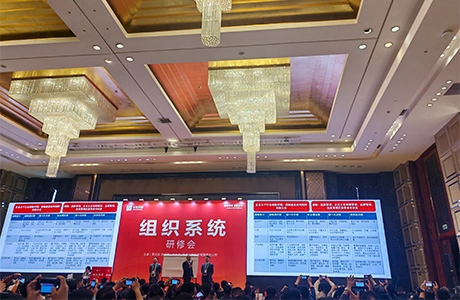
A manufacturer may have the right machines and still create delays if sales, production, purchasing, and quality do not work together. That is why internal management systems matter. The ability to connect project information, production status, inventory, and order planning often has a direct effect on reliability.
A manufacturer with better process management is usually more transparent, faster in communication, and less likely to create confusion during execution. For buyers working with overseas suppliers, this matters a lot because visibility is harder to maintain from a distance.
A reliable sheet metal fabrication manufacturer is not simply a factory that owns cutting and bending equipment. It is a supplier that understands drawings correctly, manages the process chain well, controls repeatability, responds professionally to change, and keeps project communication grounded in manufacturing reality.
For industrial buyers, reliability often comes from a combination of engineering review, laser cutting control, bending consistency, application understanding, inspection discipline, and internal coordination. When these pieces are in place, custom sheet metal fabrication becomes much more predictable.
That is the kind of manufacturer worth building a long-term partnership with.


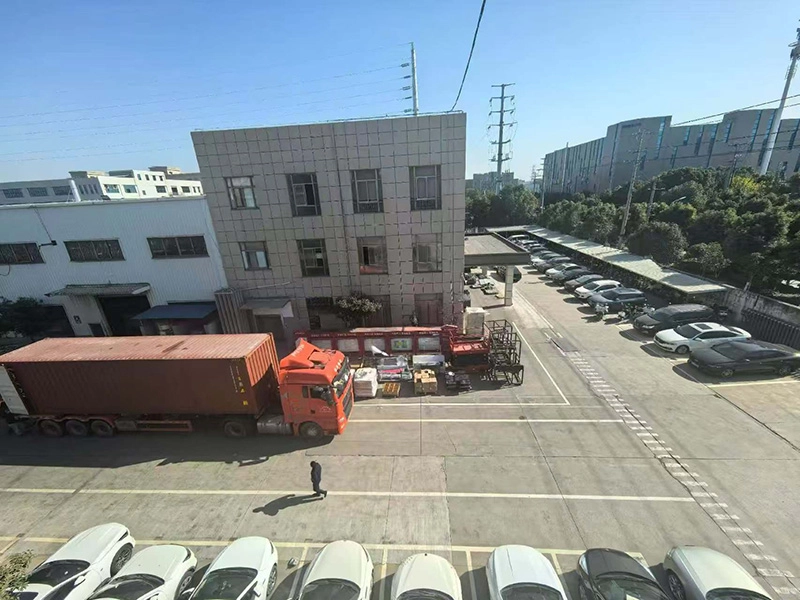
 AddressNo. 66 Xingpu Road, Lujia Town,Kunshan City, Factory Buildings 3 and 4
  en
en
 English
 繁体中文
繁体中文 Italian
 Spanish
 Japanese
 Portuguese
 Korean
 Russian
 French
 German
 Estonian
 Arabic
 Indonesian



 Message