Industrial equipment rarely depends on standard metal parts alone. In many real production environments, equipment builders need parts that fit a specific structure, support a defined function, and work reliably with surrounding assemblies. That is where custom sheet metal fabrication becomes important.
For industrial equipment manufacturers, standard off-the-shelf parts often create limitations. Hole positions may not match, enclosure sizes may be wrong, cable routing may be awkward, and support structures may require unnecessary welding or machining adjustments. Custom fabrication solves these problems by turning design requirements into usable metal parts that can move directly into equipment assembly.
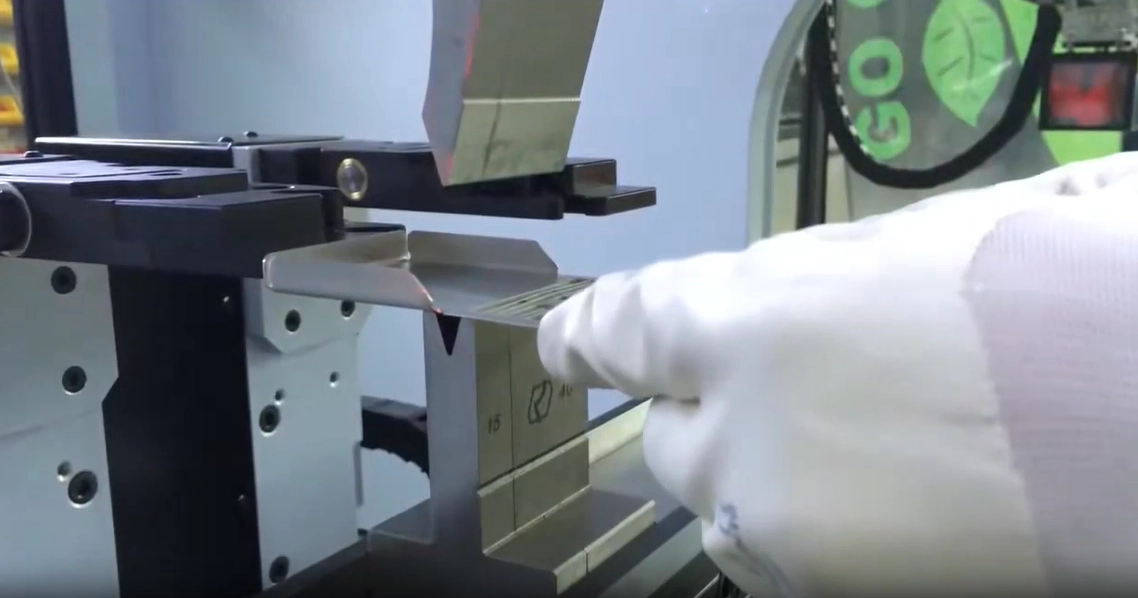
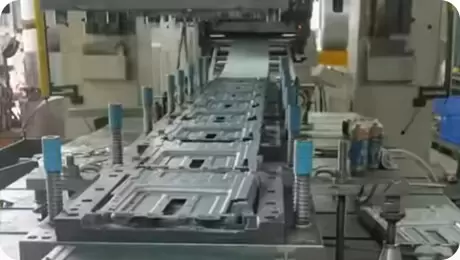
A well-managed sheet metal fabrication process usually combines laser cutting, bending, welding, and related finishing steps into one practical production flow. When these processes are planned correctly, manufacturers can produce equipment parts with better structural consistency, more efficient assembly, and fewer downstream modifications. For industrial projects, that is often the difference between a part that merely exists on paper and one that works smoothly on the shop floor.
Industrial equipment usually has stricter practical requirements than general consumer products. The parts are expected to fit with motors, electrical systems, pneumatic components, covers, brackets, and support frames. In many cases, they also need to withstand vibration, repeated operation, transport handling, or maintenance access.
That means sheet metal parts for industrial use are not just simple shells. They often function as:
● structural supports
● protective covers
● electrical enclosures
● mounting plates
● control cabinets
● machine frames
● access panels
● ventilation housings
● cable management structures
Because of this, custom sheet metal fabrication is often selected not only for shape flexibility, but also for practicality. Designers can tailor the size, bend form, reinforcement layout, hole pattern, and material choice to match the equipment itself rather than adapting the equipment to a generic part.
One of the most common applications is the production of equipment enclosures and protective housings.
These parts are used to protect internal components from dust, accidental contact, and external impact. In some cases, they also improve service access by allowing removable covers, inspection openings, or maintenance panels. For electrical and control systems, enclosure design also affects heat dissipation, cable routing, grounding, and safety spacing.
Custom fabrication is useful here because enclosure requirements vary widely. One project may need a compact stainless steel housing with precise edge quality. Another may need a larger cabinet-like structure with multiple bends, mounting positions, and welded reinforcements. A standard box usually does not fit those needs well.
Laser cutting helps create accurate cutouts for switches, connectors, vents, and mounting features. Bending then forms the enclosure body into a more rigid structure. If the design is planned well, a single sheet can often be bent into a box or U-shape, reducing splicing and simplifying final assembly.
Machine covers are another major application area.
In industrial equipment, covers are used to protect moving parts, reduce exposure to dust or debris, and improve operator safety. Depending on the machine type, the cover may need to include viewing windows, removable sections, access holes, or integrated support points.
This is where bending capability becomes especially useful. A supplier that can form sharp angles, maintain long straightness, and complete complex multi-bend structures in one process can deliver covers that are easier to install and more stable in use.
For example, larger equipment often needs side panels or top covers with long straight edges. If these are poorly formed, the final appearance suffers and the panels may not align correctly with the frame. For this reason, high straightness control is often just as important as basic dimensional tolerance.
Custom sheet metal fabrication gives equipment builders more freedom to match covers to the actual machine layout rather than forcing a compromise between protection and fit.
Electrical boxes are one of the most practical examples of custom fabrication in industrial equipment.
These parts may look simple from the outside, but their functional requirements are usually specific. They need the correct size for internal devices, the correct hole and cutout layout for terminals and cable entries, and enough structural stability to support field use. In some cases, they also need mounting flanges, hinges, locks, or sealing features.
This is why custom fabrication is often preferred over modifying standard boxes. A well-made custom electrical box reduces installation work, avoids layout conflicts, and creates a cleaner finished assembly.
Laser cutting supports accurate openings and mounting holes. Bending creates box geometry and improves rigidity. Welding and finishing can then complete the structure if a more complex cabinet or reinforced design is needed.
For industrial equipment manufacturers, the value of a properly fabricated box is simple: internal components fit better, assembly moves faster, and field installation becomes more predictable.
Not all important sheet metal parts are large. Many of the most critical parts in industrial equipment are smaller brackets and support structures.
These components hold sensors, motors, cable trays, control panels, cylinders, guides, and auxiliary devices in the correct position. If the bracket geometry is inconsistent, the entire piece of equipment may become harder to assemble or calibrate.
Custom sheet metal fabrication works well for these parts because it allows the designer to match hole positions, bend angles, slot features, and reinforcement shapes to the actual function. Even a simple bracket can require accurate forming if it connects to multiple surrounding components.
This type of application also shows the advantage of combining cutting and bending in one controlled workflow. If hole positions are cut accurately and the bend sequence is managed well, the final bracket is more likely to install correctly without manual modification.
For industrial machinery, that reliability saves time across many repeated assemblies.
Some equipment uses sheet metal not just for outer covers but for internal structure.
Precision chassis parts, inner partitions, rack sections, and formed support members are common in many industrial systems. These parts may need multiple bends, tight feature relationships, and enough rigidity to support electrical or mechanical components inside the equipment.
This is where custom fabrication becomes more than just metal cutting. It becomes part of the product structure itself.
A supplier with good bending capability can help form box sections, C-shapes, Z-shapes, trays, and other profiles that provide stiffness without requiring heavier fabricated assemblies. This can improve material efficiency and simplify the product design.
When internal structure is designed well, it helps with cable organization, module mounting, inspection access, and overall equipment stability.
Some industrial equipment parts are fabricated sheet metal components because they need to direct airflow, manage heat, or protect sensitive zones without restricting operation.
Examples include:
● ventilated covers
● air guide channels
● perforated screens
● fan protection housings
● shielding structures
● airflow partitions
These parts often need more than basic cutting. They may require closely spaced holes, shaped openings, louver-style features, formed channels, or specific bend geometry to guide airflow properly.
Custom fabrication allows these functions to be built into the metal part itself, which reduces separate assembly steps and often results in a cleaner equipment layout.
For industrial applications where cooling or internal airflow matters, this can be a practical design advantage.
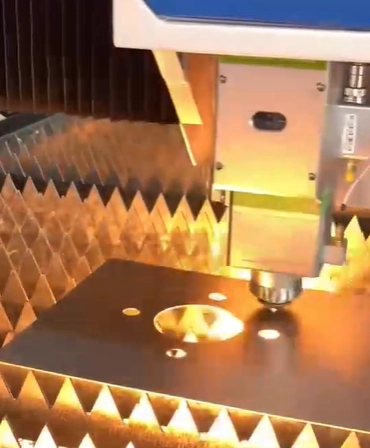
Across all of these use cases, two processes appear again and again: laser cutting and bending.
Laser cutting is valuable because it handles complex geometries well. It supports detailed contours, internal cutouts, mounting holes, and custom part shapes with good precision. It also works across multiple materials commonly used in equipment production, including carbon steel, stainless steel, aluminum, copper, and brass.
Bending is equally important because it turns flat sheet into functional structure. For equipment parts, this often means more than a simple right angle. It may involve small-radius bends, multi-step shapes, one-piece boxes, long side panels, and repeated bend features that must stay consistent in production.
Together, these two processes allow a manufacturer to build equipment parts that are structurally useful, assembly-ready, and adaptable to custom designs.
For industrial equipment projects, the supplier should do more than make parts to drawing. A good fabrication partner should also be able to support manufacturability, suggest practical adjustments where needed, and maintain stable output as projects move from sample to production.
That usually means the supplier should be able to support:
● drawing review from a fabrication perspective
● material selection based on application
● stable laser cutting for custom geometry
● repeatable bending for structural consistency
● welded assembly where needed
● dimensional inspection and process records
● batch production with consistent fit and finish
The supplier’s value increases when they understand the equipment application behind the drawing, not just the drawing itself.
Custom sheet metal fabrication plays a practical role in industrial equipment because it helps turn specific engineering requirements into real, usable parts. It supports enclosures, covers, brackets, electrical boxes, chassis structures, and many other applications where fit, function, and manufacturability all matter.
For equipment manufacturers, the main benefit is not simply customization for its own sake. It is the ability to build parts that fit the machine properly, simplify assembly, and perform reliably in real working conditions.
That is why custom sheet metal fabrication remains an important manufacturing approach for industrial equipment projects, especially when standard parts are not enough and production needs to follow the design rather than the other way around.


 AddressNo. 66 Xingpu Road, Lujia Town,Kunshan City, Factory Buildings 3 and 4
  en
en
 English
 繁体中文
繁体中文 Italian
 Spanish
 Japanese
 Portuguese
 Korean
 Russian
 French
 German
 Estonian
 Arabic
 Indonesian


 Message