For OEM projects, evaluating a steel welding supplier is never just about whether the factory can make a weld. The real issue is whether the factory can deliver the same weld quality, dimensional stability, and production rhythm across repeated batches while meeting inspection and traceability requirements.
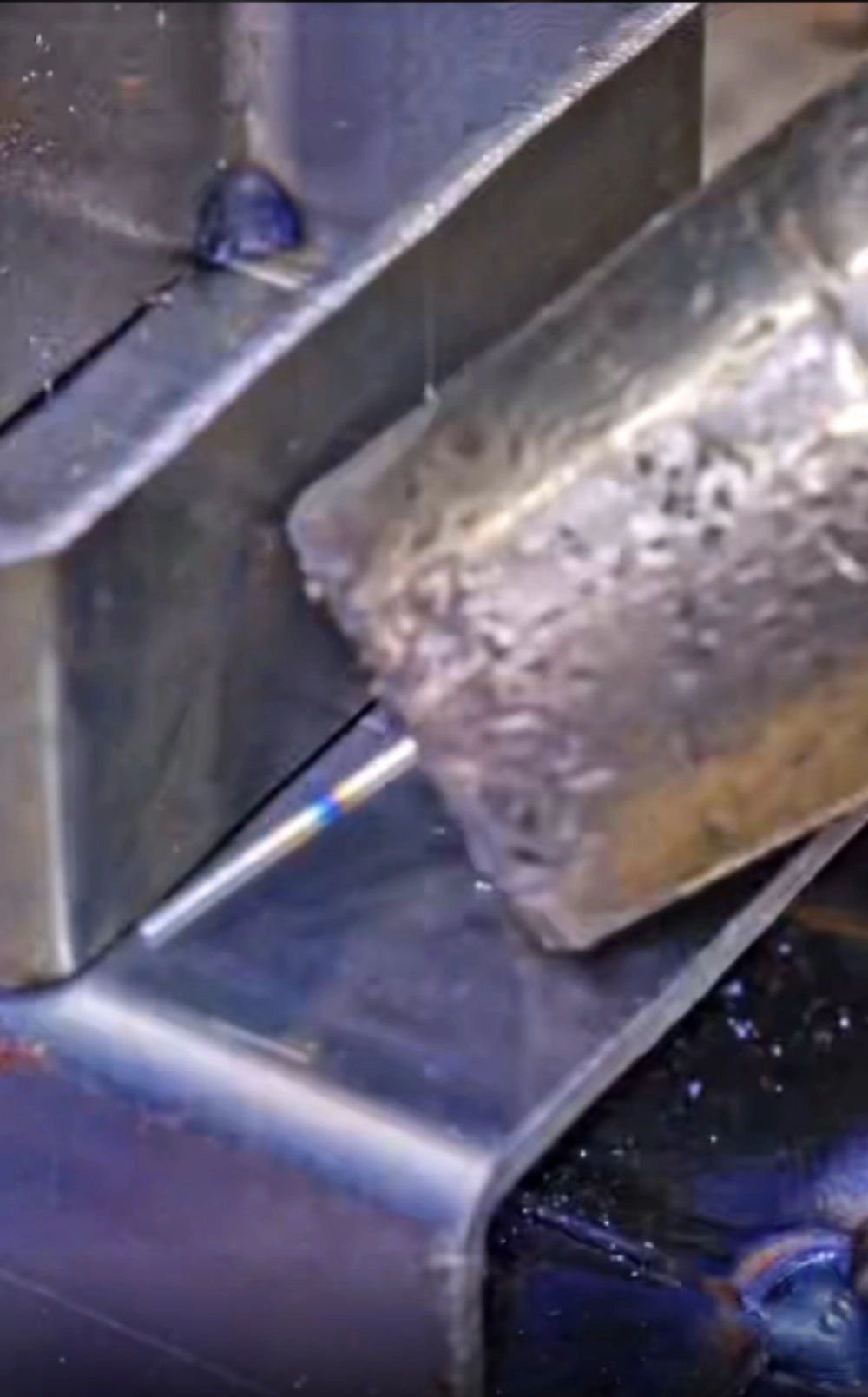
That is why a steel welding factory service should be evaluated as a complete manufacturing process. Buyers need to understand not only the welding method itself, but also how the supplier handles materials, seam types, equipment matching, first-piece verification, online monitoring, and mass production control. On Hehua Machinery’s MIG Welding page, gas shielded welding is presented as a process for high-speed deposition, low spatter, broad thickness coverage, all-position welding, and stable surface quality. For OEM buyers, these are useful technical indicators, but they are most valuable when linked to real project execution.
OEM projects usually mean repeat business, multi-batch delivery, and tight consistency requirements. A supplier may be able to produce a good sample, but that is not enough. The important question is whether the same weld quality can be maintained over time.
Hehua’s capability information is relevant here because it gives measurable production scope. The page states a plate thickness range from 0.8 mm to 60 mm, all-position welding, batch capacity from 1 to 100,000 pieces, and 24-hour continuous operation. It also notes maximum workpiece size of 3500 × 1500 × 800 mm within robot arm reach.
For OEM evaluation, this matters because production stability is closely connected to process range. A supplier with defined process windows is more likely to control repeatability than a supplier that describes capability only in general language.
Steel welding for OEM work is not one fixed operation. Different projects require different seam forms, and the factory should be able to explain how it manages each one.
Hehua lists butt welds, fillet welds, lap welds, circumferential seams, and 3D curved seams. It also describes all-position welding, including flat, horizontal, vertical, overhead, and full circumferential welding.
That matters for OEM buyers because seam type affects everything from fixture design to weld path programming and inspection method. A motor base with a circumferential seam does not require the same process approach as a structural plate with a double-sided groove. A factory that can clearly describe seam-specific control usually has a more mature welding system.
A steel welding factory should not be judged only by how many welding stations it owns. More important is whether the equipment is properly matched to the steel thickness, batch volume, and weld quality requirements of the project.
Hehua’s page lists several equipment systems with different roles. The Fronius TPS 500i Pulse with FANUC M-20iA is positioned for carbon steel and stainless steel from 0.8 mm to 8 mm with spatter no more than 1 g/min. The MAG robot island with 3 × 500 A double wire is described for 60 mm thick plate, multi-layer and multi-pass welding, improving cycle time by 40 percent and fitting construction machinery boom applications. The CO₂ handheld units are used for prototype repair, first-piece verification, and real-time current and voltage collection.
For OEM projects, this kind of equipment structure is important. It shows that the factory does not rely on one setup for all parts. Instead, it assigns different welding systems to thinner steel, thicker structural parts, and pre-production verification work.
In OEM manufacturing, speed matters because welding can easily become a bottleneck. But deposition speed only helps if the factory can still maintain weld quality.
Hehua states that with 1.2 mm solid wire at 300 A, gas shielded welding can achieve a deposition rate of 5 kg/h, which is about three times faster than manual arc welding. It also notes low-spatter pulse and dual-pulse modes with spatter no more than 1 g/min, making post-weld cleaning minimal.
This is relevant for OEM evaluation because the goal is not simply to weld faster. The goal is to increase throughput while still reducing unstable bead shape, excess spatter, and rework. A reliable factory should be able to explain where higher efficiency helps and where additional control is needed.
For OEM steel parts, weld quality is not only about penetration. Surface condition affects painting, assembly, and downstream finishing.
Hehua’s capability table states that the surface is free of pores and undercuts, with Ra ≤ 2.5 μm and paint-ready condition.
From an OEM perspective, this is a meaningful point. If the weld surface is stable and paint-ready, the supplier is reducing extra grinding and cleanup time. That improves flow into the next process and makes mass production easier to manage.
A supplier that cannot control undercut, pores, or spatter may still deliver welded parts, but those parts create more hidden work later.
A welding factory becomes more credible when it provides application-based examples instead of generic claims.
Hehua’s first case study is a WEG motor base MAG ring seam using Q355B hot-rolled plate, 4 mm thick and 400 mm in diameter. The seam is an outer circumferential docking weld with single-side welding and double-side forming. The process uses MAG pulse 280 A, 80 percent Ar plus 20 percent CO₂, and robot speed of 0.6 m/min. The result is 4.5 mm penetration depth, no undercut, X-ray Grade I film rate of 99 percent, and monthly production of 50,000 pieces.
This case is useful for OEM buyers because it shows how the factory handles steel welding where seam quality and repeat output both matter. It also shows the use of radiographic inspection results rather than only visual claims.
Another relevant steel case is the construction machinery thick plate example. It uses Q690D high-strength steel, 40 mm thick, with double-sided groove preparation. The process uses MAG dual wire 500 A plus 400 A, multi-layer and multi-pass welding, and 3 mm robot swing. The stated result is impact energy of at least 47 J at -40°C, tensile strength of at least 690 MPa, and 25 percent savings in welding materials.
This example matters because it shows heavy steel welding performance, not only lighter-gauge work. For OEM buyers in machinery and structural applications, that is a strong sign of process depth.
A reliable steel welding supplier should also understand shielding gas selection. Gas choice directly affects spatter, penetration, bead appearance, and process stability.
Hehua states that 80 percent Ar plus 20 percent CO₂ is used for carbon steel and stainless steel, providing minimal spatter and bright welds. Pure CO₂ is described as suitable for thick plate base coating, with slightly higher spatter.
This is useful for OEM evaluation because it shows that the factory is not using one generic gas setup for all work. Instead, process conditions are being adjusted according to application goals.
OEM projects need more than acceptable welds. They need traceable welds.
Hehua’s quality section states that it uses ISO 15614-1 MAG welding process certification, online laser seam tracking for real-time width and offset compensation, and automatic defect marking. It also explains that QR code engraving records furnace number, welder number, current, voltage, and speed, and that each batch includes first-piece profile checking, stretching and bending testing, plus 10 percent appearance inspection and ultrasonic sampling during mass production.
This is exactly the kind of information OEM buyers should ask for. Traceability helps when deviations appear, and it also reflects how disciplined the factory is in daily production management.
Some OEM projects fail not in mass production, but in the transition between sample approval and stable output. That is why first-piece verification capability matters.
Hehua’s use of handheld CO₂ welding equipment for prototype repair and first-piece verification is important here. It suggests the factory does not treat sampling and production as disconnected activities. Instead, it uses verification work as part of the broader production control system.
For OEM buyers, this can be an advantage because it shortens the feedback loop between engineering confirmation and production readiness.
Evaluating a steel welding factory service for OEM projects means looking at much more than weld appearance. Buyers should review weld type coverage, steel thickness capability, equipment matching, deposition efficiency, surface quality, case evidence, gas selection, prototype support, and traceability.
Based on the information published by Hehua Machinery, the factory presents its MIG welding service as a structured process with defined capability ranges, application-specific equipment, steel welding case support, and certified traceability controls. For OEM buyers, that is the right direction for evaluation: not whether a factory can weld steel once, but whether it can support steel welding projects repeatedly, predictably, and at production level.


 AddressNo. 66 Xingpu Road, Lujia Town,Kunshan City, Factory Buildings 3 and 4
  en
en
 English
 繁体中文
繁体中文 Italian
 Spanish
 Japanese
 Portuguese
 Korean
 Russian
 French
 German
 Estonian
 Arabic
 Indonesian


 Message