
For equipment used in medical services, the enclosure and storage structure needs to balance practical function, structural stability, surface quality, and consistent assembly. When the product is manufactured as a customized metal enclosure, every stage from sheet metal cutting to final assembly can affect the finished result.
In this project, Hehua Machinery Technology (Kunshan) Co., Ltd. manufactured customized Smart Lockers for customer TMiRob. The product is designed for use in medical services and was manufactured according to the specified dimensions, material, surface treatment, and production process.
The Smart Lockers have an overall size of 660 × 450 × 1980 mm and use SPCC as the main material. The manufacturing process covers laser cutting, bending, welding, painting, and assembly.
Rather than treating these operations as separate production tasks, Hehua coordinated them as a complete sheet metal manufacturing process. This approach helps maintain consistency between individual panels and assembled structures while allowing the project to meet the requirements of the final application.
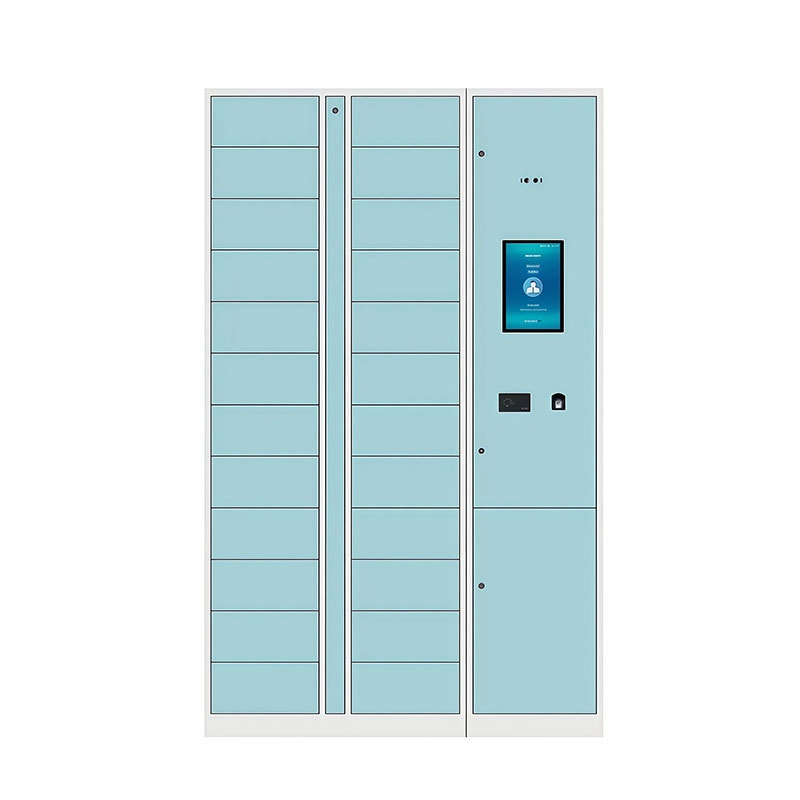
The main information for the TMiRob project is as follows:
Part name: Smart Lockers
Customer: TMiRob
Application: Medical Services
Material: SPCC
Part size: 660 × 450 × 1980 mm
Treatment: Surface treatment
Manufacturing crafts: Laser cutting, bending, welding, painting, assembly
The product's dimensions give it a relatively tall and narrow configuration. With a height of 1980 mm, controlling the relationship between individual sheet metal panels and the final assembled structure is an important part of production.
For a metal locker used in a professional environment, the finished product needs to have a stable structure and consistent external appearance. This makes process coordination important from the first cutting operation through final assembly.
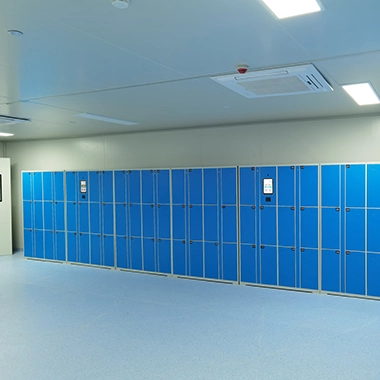
The project uses SPCC as the specified material.
SPCC is commonly used for cold-rolled sheet metal applications and is suitable for manufacturing products that require forming, welding, surface treatment, and painting.
For this project, the material selection is closely connected with the manufacturing route. The production process requires the sheet material to be cut into the required profiles, formed through bending, joined through welding, treated on the surface, and finally assembled into the completed locker structure.
Material preparation therefore needs to be considered together with the downstream processes.
The dimensions and structure of the Smart Lockers also require the manufacturing team to consider how individual sheet metal parts will fit together after bending and welding. Proper process planning helps reduce unnecessary adjustment during the later assembly stage.
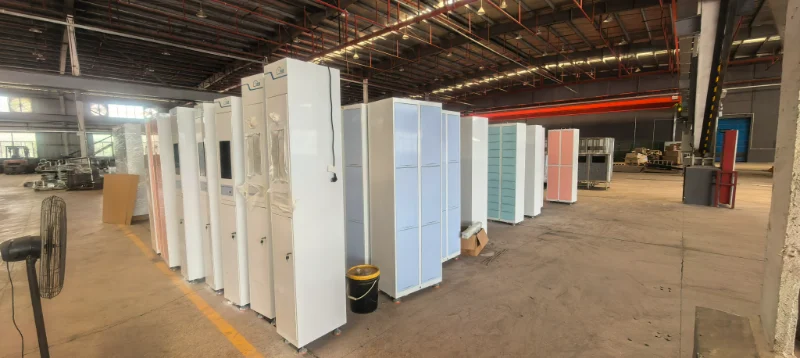
Laser cutting is the first major fabrication process in the project.
The sheet material needs to be divided into different components according to the product design. These components may include external panels, internal structures, doors, support sections, and other sheet metal parts required for the final locker assembly.
Laser cutting provides a controlled way to produce the required profiles before the parts move to bending and welding.
For a product measuring 660 × 450 × 1980 mm, the relationship between different panels is important. If the dimensions of individual components are inconsistent, the problem can become more visible during bending or final assembly.
Therefore, cutting is not simply about separating material. It establishes the dimensional basis for the subsequent manufacturing stages.
Hehua's production team coordinates the cutting process with the later bending and assembly requirements so that the individual components can be processed and fitted together efficiently.
After laser cutting, the sheet metal components move into bending.
Bending changes the flat sheet into the required structural profiles. At this stage, dimensional control and forming consistency are important because the resulting bends determine how different components will connect with each other.
The next major process is welding.
Welding is used to join the relevant sheet metal components and establish the overall structure of the locker. The welding process needs to provide sufficient structural connection while controlling deformation that could affect the final dimensions or appearance.
For a tall product such as this Smart Lockers project, welding sequence and structural stability need to be considered together. Excessive deformation during welding can make subsequent assembly more difficult and may affect the alignment of doors, panels, and other components.
Hehua therefore treats laser cutting, bending, and welding as connected processes rather than independent operations.
After fabrication and welding, the product undergoes surface treatment and painting.
Surface treatment is an important part of the manufacturing process for a metal product used in medical services. It affects the final surface condition and appearance of the completed equipment.
Painting also provides a consistent external finish across the different sheet metal components.
Before painting, the fabricated structure needs to be properly prepared. Welding areas, edges, and other surfaces need to be considered as part of the overall finishing process.
For a product that will be placed in a professional service environment, visual consistency is also important. Differences between individual panels or visible manufacturing marks can affect the appearance of the final product.
By incorporating surface treatment and painting into the defined production route, Hehua can manage the transition from fabricated metal structure to finished equipment enclosure.
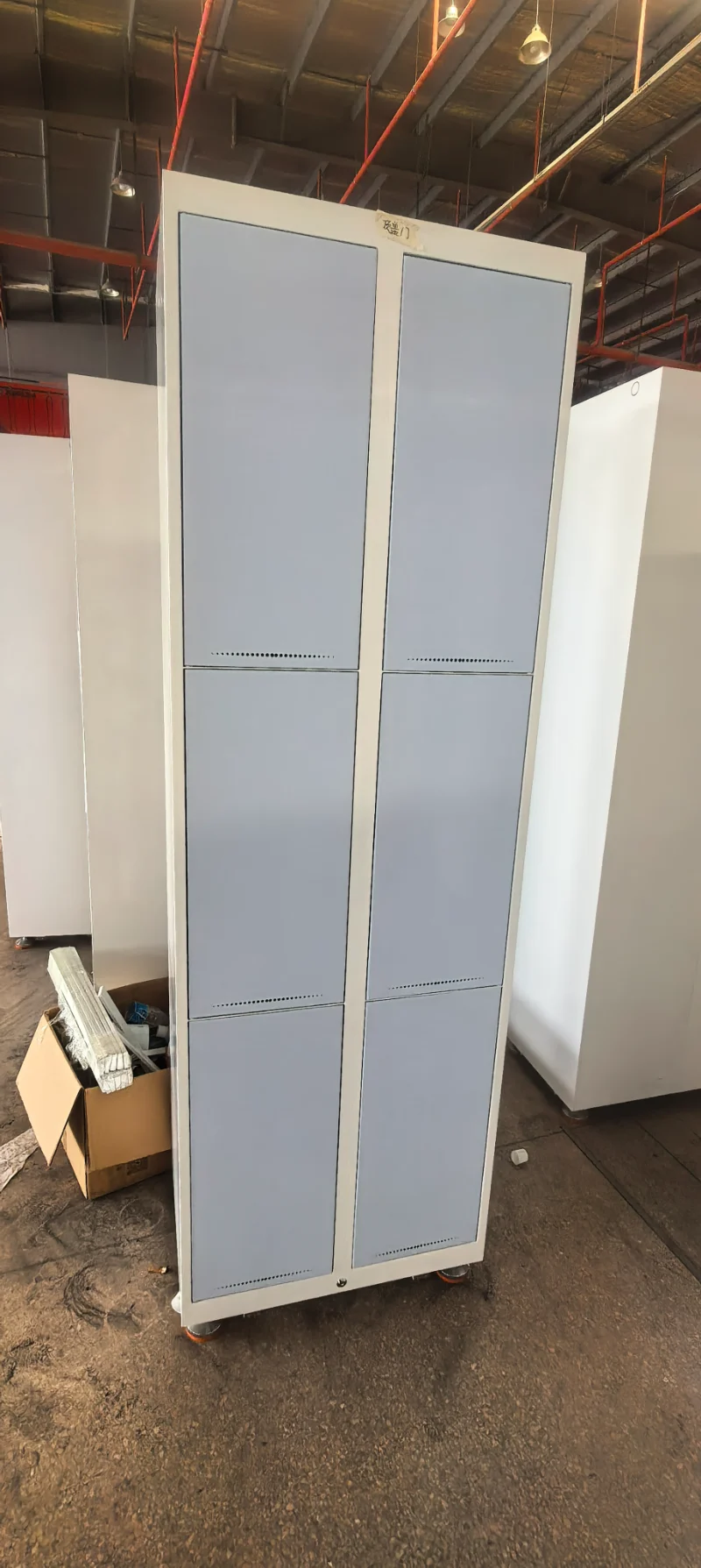
The final stage of the project is assembly.
After laser cutting, bending, welding, and painting have been completed, the individual parts are brought together to form the finished Smart Lockers.
Assembly provides the final check of how the different manufactured components work together.
For a product with dimensions of 660 × 450 × 1980 mm, assembly requires attention to the alignment of the main structure and the fit between individual components.
The manufacturing team needs to ensure that the finished parts can be assembled according to the intended structure without unnecessary adjustment.
This is one of the reasons why dimensional control at earlier stages is important. Problems that appear during assembly can often originate from cutting, bending, or welding.
Managing the complete manufacturing process within one project framework allows Hehua to trace these relationships more effectively.
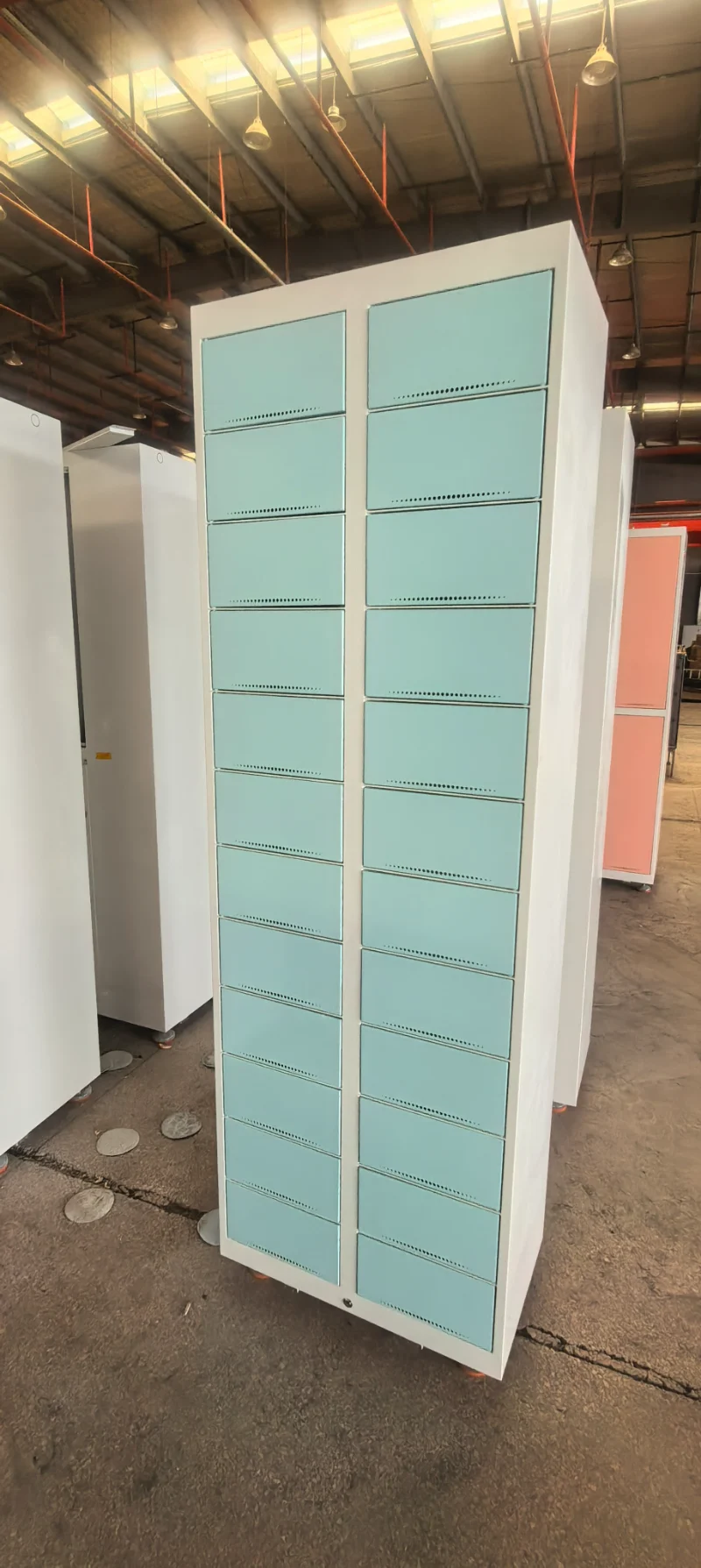
The TMiRob project reflects Hehua's broader experience in manufacturing key metal parts and components for high-end equipment.
Shanghai Hehua Machinery Technology Co., Ltd. was established in 2005, while its subsidiary, Hehua Machinery Technology (Kunshan) Co., Ltd., was established in 2018.
Hehua specializes in customized metal manufacturing for automotive, rail transit, aerospace, wind power, nuclear power, industrial machinery, semiconductor sealing and testing equipment, new energy equipment, and other high-end equipment manufacturing applications.
The company operates a manufacturing plant covering more than 17,800 square meters at No. 66, Xingpu Road, Lujia Town, Kunshan City, Jiangsu Province, with more than 160 employees.
Its professional project technical team can provide services from design and development through manufacturing. Both companies also have independent import and export rights, allowing Hehua to provide customers with services covering production and export.
Hehua has passed ISO 9001 quality management system certification and IATF 16949 automotive quality system certification. The company has also obtained EN 15085 rail vehicle and parts welding system certification, and its welders have obtained EN ISO 9606-1 qualification certification.
Although the TMiRob project is focused on sheet metal fabrication and assembly, these established quality management practices provide the foundation for managing customized manufacturing projects.
The company also uses the Zhibang International ERP intelligent management system to manage its overall business processes. The system covers sales, customers, projects, production, inventory, procurement, human resources, finance, and office operations.
For customized products, connecting customer requirements with production planning and manufacturing activities is important. A structured project management system helps different departments work around the same project information.
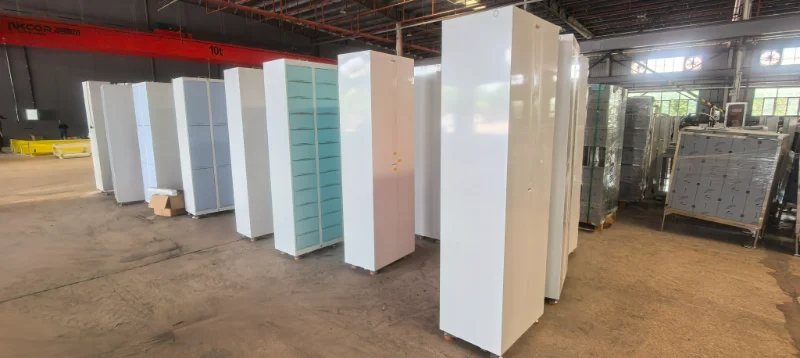
The TMiRob project demonstrates how a relatively straightforward-looking metal enclosure can involve several connected manufacturing processes.
The 660 × 450 × 1980 mm dimensions, SPCC material, surface treatment requirement, and final medical service application all need to be considered when developing the manufacturing route.
Laser cutting establishes the basic dimensions of the individual components. Bending forms the required structures, while welding connects the fabricated parts. Surface treatment and painting prepare the finished metal structure, and assembly brings the individual components together into the completed product.
Each stage contributes to the final result.
For customized metal manufacturing, controlling only one production step is not enough. The complete process needs to be coordinated around the final application and assembly requirements.
Through its manufacturing experience and project management capabilities, Hehua Machinery Technology (Kunshan) Co., Ltd. provides customers with integrated metal fabrication services covering multiple production stages.
For TMiRob, the Smart Lockers project demonstrates Hehua's ability to turn a specified sheet metal design into a completed product for medical service applications.
From laser cutting and bending to welding, painting, and final assembly, Hehua continues to provide practical customized manufacturing solutions for customers requiring reliable metal structures and equipment components.
The completed Smart Lockers project is another example of how Hehua manages customized metal manufacturing from individual sheet metal components through to the finished product.


 AddressNo. 66 Xingpu Road, Lujia Town,Kunshan City, Factory Buildings 3 and 4
  en
en
 English
 繁体中文
繁体中文 Italian
 Spanish
 Japanese
 Portuguese
 Korean
 Russian
 French
 German
 Estonian
 Arabic
 Indonesian






 Message